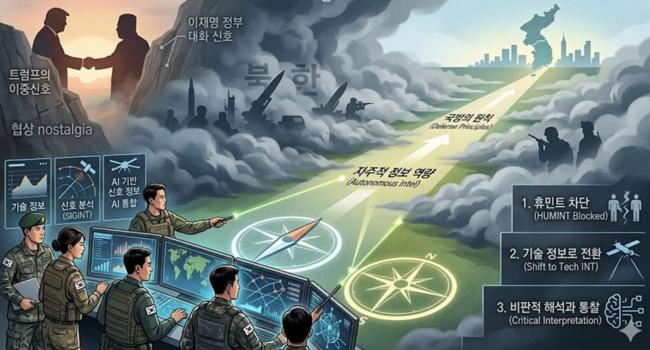
U.S. President Donald Trump has recently been sending mixed signals to North Korea. On one hand, he is evoking nostalgia for a "successful negotiator" by sharing past photos with Chairman Kim Jong Un, while on the other, he is shaking the existing denuclearization principles by labeling North Korea a "nuclear power." It's akin to a startled turtle recoiling at the sight of a pot lid.
President Trump's actions starkly contrast with the consistent dialogue signals sent by the current Lee Jae-myung administration. The present government is unceasingly knocking on North Korea's door for dialogue, presenting three principles: the cessation of loudspeaker broadcasts, the prohibition of civilian leaflet distribution, and the exclusion of "unification by absorption."
Even in a joint statement with the EU, which included condemning North Korea-Russia military cooperation, not recognizing North Korea as a nuclear state, and urging improvements in North Korean human rights as core agenda items, it appears that North Korean-related content was deleted from the domestic announcement to avoid provoking Pyongyang.
However, the reason North Korea consistently remains silent is clear: "strategic circumvention." Pyongyang calculates that leveraging the variable of Trump to gain recognition as a "nuclear state" is far more advantageous for regime survival and negotiation power than direct dialogue with the South Korean government. In other words, the dialogue proposals from the Lee Jae-myung administration are relegated to a lower priority in North Korea's calculations, secondary to a "big deal with Trump."
Amidst the imbalance of Trump's signals and dialogue, with information being obscured, we must not lose our way. Security begins with "eyes that see the unseen." Reading the enemy's intentions and anticipating the direction of their hidden barbs is the essence of intelligence. Yet, in today's 2026, the Korean Peninsula's security environment is itself an "information fog" that prevents us from seeing an uncertain battlefield.
North Korea, a closed regime, has become an even more impenetrable black box with the collapse of our human intelligence capabilities. Even our ally, the United States, limits the sharing of North Korean intelligence "selectively" based on its own political calculations, or sometimes pushes the situation into a realm beyond our control, regardless of our will.
At this juncture, we must ask a poignant question: "Are we truly advocating for peace and holding the steering wheel of our own security?"
1. The collapse of North Korea's internal intelligence network has exposed the most vulnerable link in our defense.
Human intelligence (HUMINT) is the ultimate human intelligence asset for understanding the enemy's innermost intentions. However, even when HUMINT is blocked, we must not fall into the trap of "seeing only what we want to see." While we once knew even the breakfast menus of North Korean high-ranking officials by lunchtime, if their movements are now cut off, we must shift our focus to technical intelligence, the realm of cold data.
In modern information warfare, the answers lie within the flow of data rather than physical contact. Satellites, high-altitude drones, and AI-based signal intelligence are powerful tools that can read the subtle noises emanating from North Korea's vast system.
True intelligence capability stems from the insight into "how to interpret" that data. It is only when the "analysis of North Korean intelligence" by experts who understand the historical context of the Korean Peninsula and the psychological mechanisms of the enemy, combined with vast data analyzed by artificial intelligence, that intelligence becomes strategic wisdom, not mere numbers.
2. The Trump administration's unconventional approach to North Korea presents a significant test for us.
When the United States, by recognizing North Korea as a "nuclear power," orchestrates a premature peace event, will we remain mere bystanders to that scenario, or will we position ourselves as remote observers and coordinators?
In the past, we made the mistake of over-relying on U.S. intelligence assets, to the point where we could not voice our concerns even when our core security interests were compromised. This is why intelligence sharing cannot merely be about "data transfer." Intelligence autonomy signifies high-level investment in securing intelligence assets. In a country that prosecutes the sending of Pyongyang drones as a foreign exchange offense for 7,000 instances of North Korean trash balloons, intelligence autonomy appears precarious.
This is precisely why our military must enhance its independent reconnaissance assets and transform the ROK-U.S. intelligence-sharing system from one of unilateral benefit to a "symmetrical analytical partnership."
3. The thicker the information fog, the clearer the principles of defense must be.
This involves constant preparedness for the "worst-case scenario." We must face the reality of nuclear weapons advancement hidden behind the dazzling performances of Trump and Kim Jong Un. This means "field-oriented integrated defense." If HUMINT is blocked, we must complete a multi-layered surveillance network that integrates tactical information generated in real-time across all domains, from the border areas to cyberspace, to immediately identify the enemy's intentions.
Finally, we must guard against "security fatigue" and "political indifference" within our society. Security is not the exclusive property of any particular regime, nor should it be reduced to a tool for any political faction. In an era of crisis where information is blocked, strong national consensus is the foundational strength of our defense.
Walking through fog is frightening. However, those who know their destination and take a step will not get lost. Neither North Korea's closed nature nor America's uncertainty are uncontrollable variables if we possess the ability to analyze and judge information ourselves.
What we need now are not more "secrets." We must dispel the information fog through technology, humanistic insight, and bipartisan unity for security. We must once again ask ourselves and answer: are we currently seeing the United States' intentions regarding North Korea and North Korea's reality, or are we only seeing the illusion they want us to see?
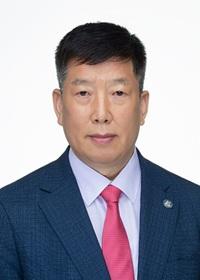
◆ Park Pil-kyu, Member
Editorial Board Member, Hankook Ilbo
40th graduating class, Korea Military Academy

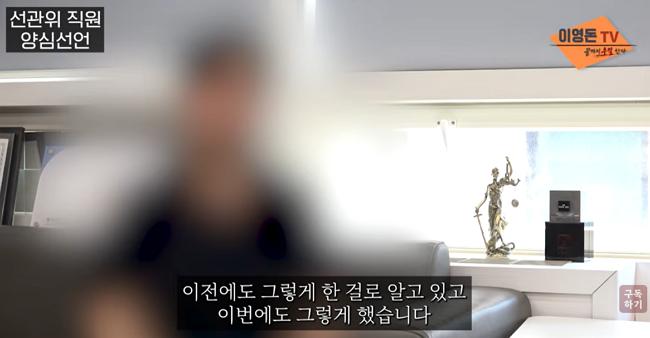 [Focus] Why did the dedicated communication network, checked three times, stop?... Three questions about the "Wi-Fi connection" for early voting
In the broadcast of Lee Young-don TV on the 16th, a current National Election Commission official exposes the reality of the 6.3 local elections based on direct experience. [Photo=Screenshot fr
[Focus] Why did the dedicated communication network, checked three times, stop?... Three questions about the "Wi-Fi connection" for early voting
In the broadcast of Lee Young-don TV on the 16th, a current National Election Commission official exposes the reality of the 6.3 local elections based on direct experience. [Photo=Screenshot fr
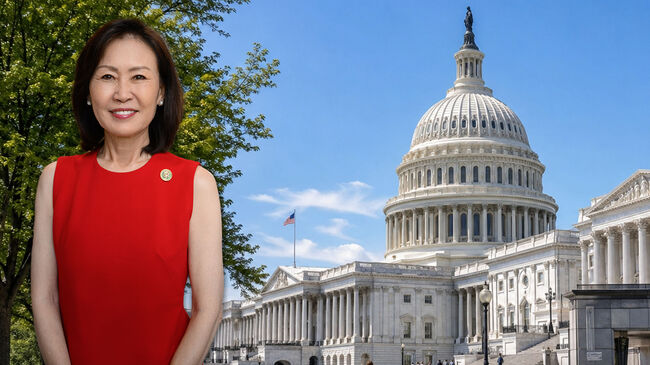 US Ambassador to Korea Nominated to Senate: Final Countdown
The Senate confirmation of Michelle Steel, the nominee for U.S. Ambassador to South Korea, is imminent. The Senate is scheduled to vote on the confirmation resolution for nominee Steel on Wednesday, t
US Ambassador to Korea Nominated to Senate: Final Countdown
The Senate confirmation of Michelle Steel, the nominee for U.S. Ambassador to South Korea, is imminent. The Senate is scheduled to vote on the confirmation resolution for nominee Steel on Wednesday, t
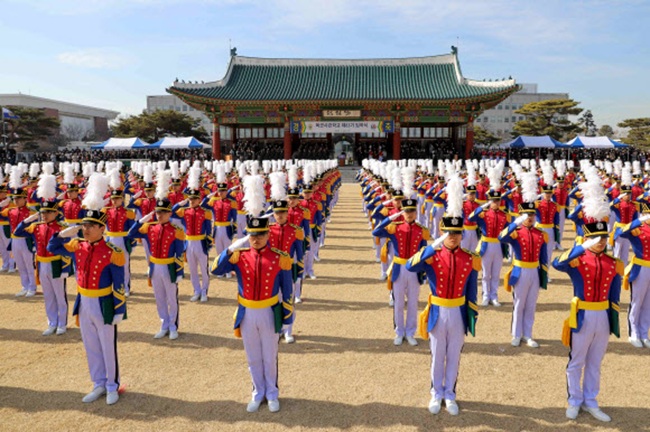 "Prioritizing Prudence Over Speed for ROTC Reorganization and Integration"... Former ROTC Superintendents Issue Public Appeal
The alumni of the Korea Military Academy emphasized that 'Hwarangdae' in Taereung, Seoul, is not merely an educational facility but a historical asset imbued with the legitimacy of the ROK Armed Force
"Prioritizing Prudence Over Speed for ROTC Reorganization and Integration"... Former ROTC Superintendents Issue Public Appeal
The alumni of the Korea Military Academy emphasized that 'Hwarangdae' in Taereung, Seoul, is not merely an educational facility but a historical asset imbued with the legitimacy of the ROK Armed Force
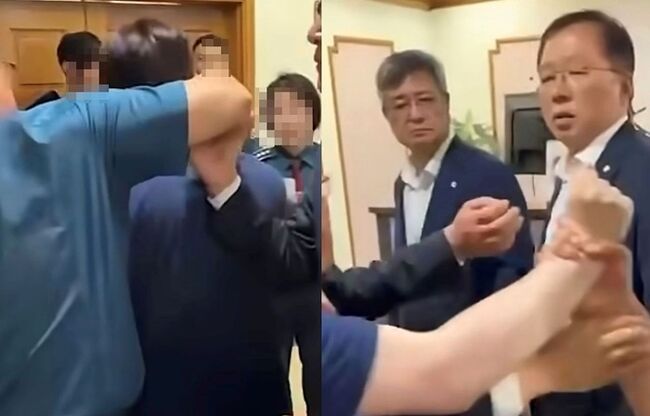 People's Power Party, Seoul Metropolitan Police Agency Commissioner & Security Division Chief involved in 'assaulting aides' controversy, charged with embezzlement and assault
Floor Leader Chung Jin-sik criticized on social media, stating, "During our party's lawmakers' protest visit to the Seoul Metropolitan Police Agency, the head of the SMPA's security division committed
People's Power Party, Seoul Metropolitan Police Agency Commissioner & Security Division Chief involved in 'assaulting aides' controversy, charged with embezzlement and assault
Floor Leader Chung Jin-sik criticized on social media, stating, "During our party's lawmakers' protest visit to the Seoul Metropolitan Police Agency, the head of the SMPA's security division committed
 "US government finds Korean telecom companies with 'suspected China ties' on Mythos pre-use list"
Anthropic Logo [Reuters=Yonhap News]The Trump administration in the United States had considered export controls after identifying an issue where Anthropic allowed a company with suspected ties to Chi
"US government finds Korean telecom companies with 'suspected China ties' on Mythos pre-use list"
Anthropic Logo [Reuters=Yonhap News]The Trump administration in the United States had considered export controls after identifying an issue where Anthropic allowed a company with suspected ties to Chi
 Jang Won-young sparks controversy over airport ID check while wearing a mask… Airport Corporation "Strengthening procedural guidance"
Jang Won-young of IVE [Yonhap News] The Korea Airports Corporation will strengthen guidance on identity verification procedures following a recent controversy involving idol group IVE's Jang Won-
Jang Won-young sparks controversy over airport ID check while wearing a mask… Airport Corporation "Strengthening procedural guidance"
Jang Won-young of IVE [Yonhap News] The Korea Airports Corporation will strengthen guidance on identity verification procedures following a recent controversy involving idol group IVE's Jang Won-
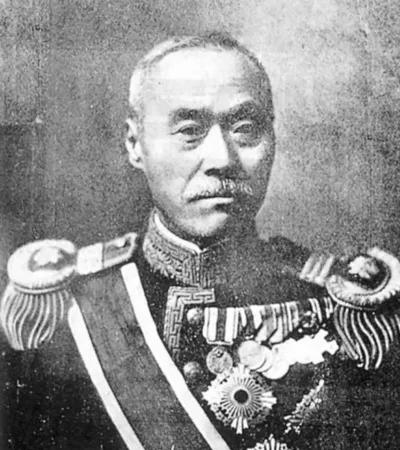 [Special Contribution: Matsuyama] "Why I Signed the Unification Treaty"... The 21st Century Yi Wan-yong's White Paper (Apologia)
Yi Wanjong in his old ageYi Wanjong. My name has already been set in stone as a traitor to history. Schools teach that I was a traitor, and people remember me as the quintessential figure who sold out
[Special Contribution: Matsuyama] "Why I Signed the Unification Treaty"... The 21st Century Yi Wan-yong's White Paper (Apologia)
Yi Wanjong in his old ageYi Wanjong. My name has already been set in stone as a traitor to history. Schools teach that I was a traitor, and people remember me as the quintessential figure who sold out
 [Photo] Election Commission staff, deeply absorbed in 'golf swing practice' amidst all this
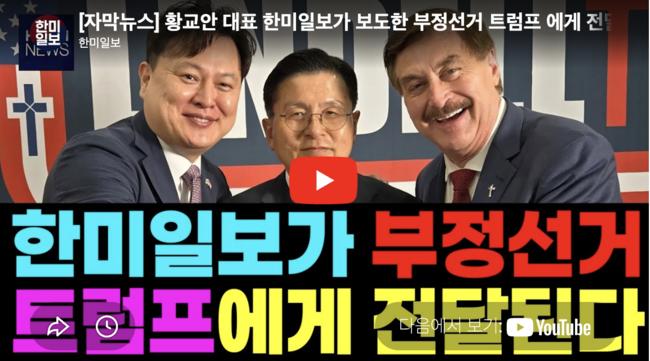 [영상] ‘트럼프 절친’ 린델 “한국 부정선거 트럼프에게 알려주겠다”
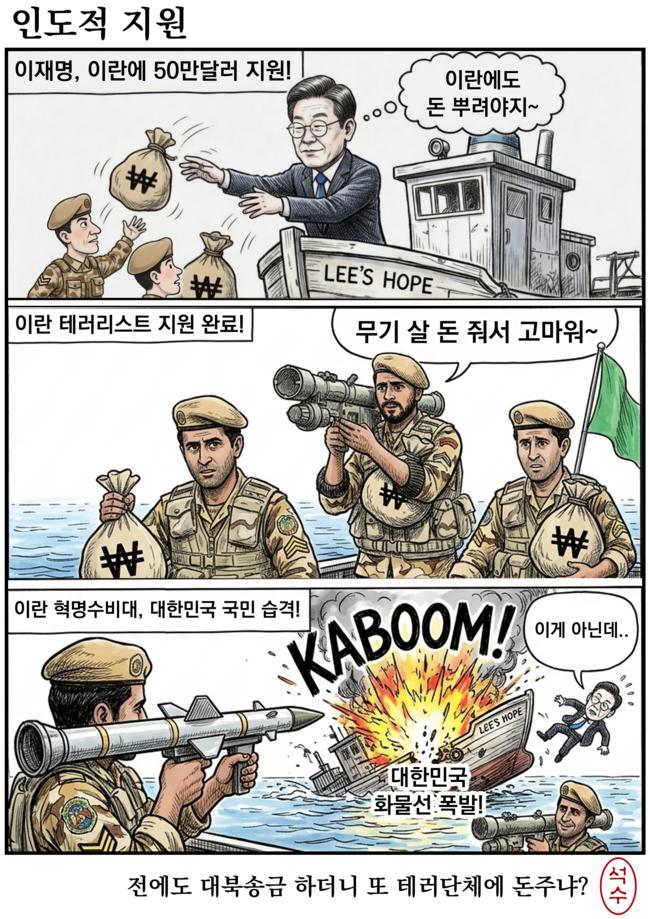 [시사만화] 인도적 지원

 List
List