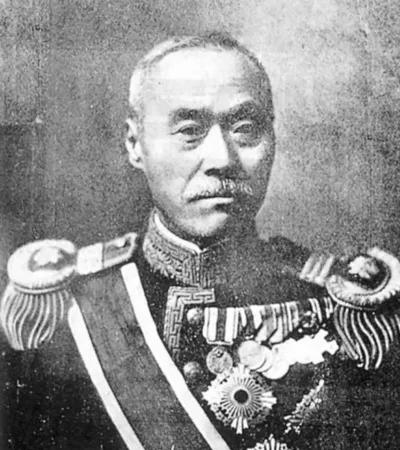
 Yi Wanjong in his old age
Yi Wanjong. My name has already been set in stone as a traitor to history. Schools teach that I was a traitor, and people remember me as the quintessential figure who sold out the nation. My name has become the opposite of a loyal subject, and it is even used metaphorically to severely criticize someone.
I am not someone unaware of how I am perceived. On the contrary, I know better than anyone. However, if posterity is to judge me, should they not at least hear what I saw and what I thought? While the victor's record is necessary, the testimony of the vanquished should also remain.
I do not wish to be remembered as a hero. I simply want to speak about the era in which I lived and why I made the decisions I did.
The Korean Empire I witnessed was not the romantic nation depicted in textbooks. Anyone could speak of the need to protect national sovereignty. But where was the strength to protect it?
Joseon had lived within the order of Neo-Confucianism for centuries, but the world had already moved into a new era following the Industrial Revolution. Britain, France, and Germany had become industrial powerhouses, and the United States was expanding its influence across the Pacific to Asia. Japan, after the Meiji Restoration, had reformed its state system, modernized its military, and adopted Western technologies.
However, Joseon remained fixated on factional strife, hereditary privilege, principles, and righteousness. We were unaware of where the world was heading, and even if we were, we lacked the capacity to follow. There were many voices worried about the nation, but the capacity to actually reform the state was insufficient. I could not deny this fact.
When the Sino-Japanese War broke out, I already saw that Joseon's fate was changing. Joseon had long relied on Qing China, but Qing was disastrously defeated by Japan. There were also expectations that Russia would become a new patron. However, the Russo-Japanese War also ended in Japan's victory.
I believed Joseon's future was effectively decided the moment that war ended. Japan had won, and Russia had withdrawn. The international community operated on the logic of power. The United States adjusted its interests with Japan, and Britain recognized Japan as an ally. There was no nation anywhere that would take up arms for Joseon.
We were not the center of the world. In the calculations of the great powers, Joseon was merely a variable. I faced that harsh reality and acknowledged it.
Many people say that we should have fought to the end, despite everything. They speak of the sacrifices of the righteous armies and the spirit of independence. I do not doubt their loyalty. However, from the perspective of managing a nation, different questions had to be asked. Could we win a fight?
War is not waged by will alone. It requires an army, weapons, finances, and diplomacy. Japan was a modern nation, and we were not. The Japanese army had defeated Qing China and Russia. Yet, Joseon lacked a proper arms industry and a modern defense system.
Emotions do not stop bullets. Patriotism cannot overcome artillery shells. I believed that a war with no chance of victory would only increase the sacrifices of the people. Some would call that cowardice. But I did not see recklessness and courage as the same thing.
The most important issue, in my view, was the people. A nation ultimately exists for its people. The preservation of the dynasty itself is not the goal. I prioritized the survival of countless people over whether the nation's name would remain or disappear.
What would have happened if there had been a full-scale conflict with Japan? Countless villages would have been burned, farmlands devastated, and people would have starved. While the honor gained from a certain defeat might be substantial, the lives of the people would not have been. I wanted, at the very least, to reduce that damage.
Posterity may condemn that judgment. However, I made my choice within the realities of that time.
Another reason was the change of the era. I did not choose annexation out of love for Japan. I saw the source of Japan's strength. It was modernization. Railways, ports, communication networks, financial systems, modern education, and administrative structures made Japan powerful. Joseon had failed to achieve such changes.
I believed that even under Japanese rule, new systems and technologies would eventually be introduced. Of course, this does not mean justifying colonial rule. However, I judged that Joseon's own strength at the time was insufficient to achieve that transformation.
From the perspective of posterity, it may have been a wrong judgment. However, I was not giving up entirely on Joseon's future; I was contemplating a different form of survival.
People say I acted out of a desire for power, wealth, and glory. I have no intention of evading that criticism. In fact, I received titles and enjoyed economic benefits after annexation. That is an undeniable fact. However, if I had been solely pursuing personal gain, there would have been no reason to endure such immense criticism.
I already knew. I knew that once the nation gained independence, my name would be the first target of condemnation. I knew I could not receive the respect of future generations. Nevertheless, I did not change my judgment. Because the reality I was witnessing was heavier and more brutal than the ideals others spoke of.
I am not a hero. I am not someone who fought with my life on the line like the independence activists. I was a politician who judged that the tide of the times could not be resisted. Some will call me a coward, and some will call me a realist. But at least I knew what I was choosing.
I saw Joseon as already defeated. And I tried to find a path to survival for a defeated nation. Whether that choice was correct remains a subject of debate today. And it will continue to be so.
However, there is one thing I want to say. People of future generations judge the past knowing the outcome. But I had to make decisions without knowing the outcome.
There were countless possibilities before me, and none of them was a perfect path. I chose the path I believed to be the most realistic under the information and conditions of that era. If that is my excuse, then it is an excuse. But it is also the last statement I can leave before history.
While I may not be remembered as a hero who loved Joseon, I want to say that I was not someone who made decisions while ignoring the realities of the era in which I lived.
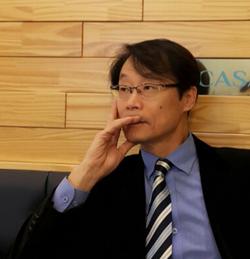
◆ Song San (송산)
Poet and researcher of history and philosophy. Former director of the Syngman Rhee Institute. Currently serves as senior researcher at the Korean Modern and Contemporary History Research Association and as the head of the philosophy forum Lyceum. He has published four poetry collections, co-translated 'Heroes of Cape Chichagov,' and authored the non-fiction books 'Joseon, a Myth,' 'Humanities on a Tatami Mat,' and 'A Liberal's Reading of Gramsci.' Song San is a pen name.

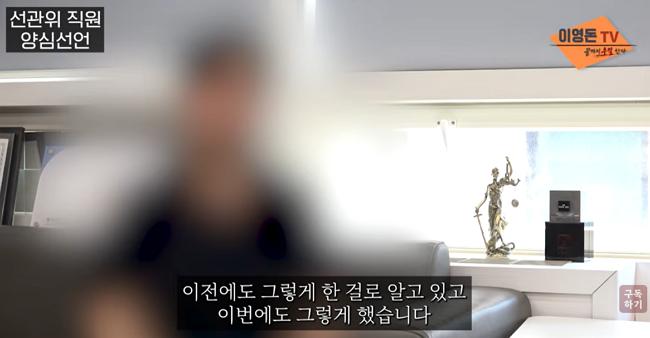 [Focus] Why did the dedicated communication network, checked three times, stop?... Three questions about the "Wi-Fi connection" for early voting
In the broadcast of Lee Young-don TV on the 16th, a current National Election Commission official exposes the reality of the 6.3 local elections based on direct experience. [Photo=Screenshot fr
[Focus] Why did the dedicated communication network, checked three times, stop?... Three questions about the "Wi-Fi connection" for early voting
In the broadcast of Lee Young-don TV on the 16th, a current National Election Commission official exposes the reality of the 6.3 local elections based on direct experience. [Photo=Screenshot fr
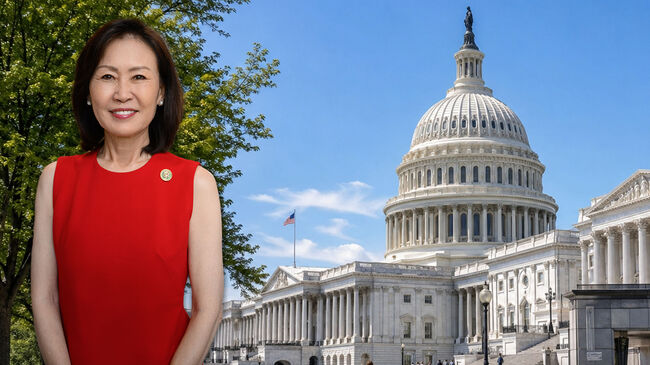 US Ambassador to Korea Nominated to Senate: Final Countdown
The Senate confirmation of Michelle Steel, the nominee for U.S. Ambassador to South Korea, is imminent. The Senate is scheduled to vote on the confirmation resolution for nominee Steel on Wednesday, t
US Ambassador to Korea Nominated to Senate: Final Countdown
The Senate confirmation of Michelle Steel, the nominee for U.S. Ambassador to South Korea, is imminent. The Senate is scheduled to vote on the confirmation resolution for nominee Steel on Wednesday, t
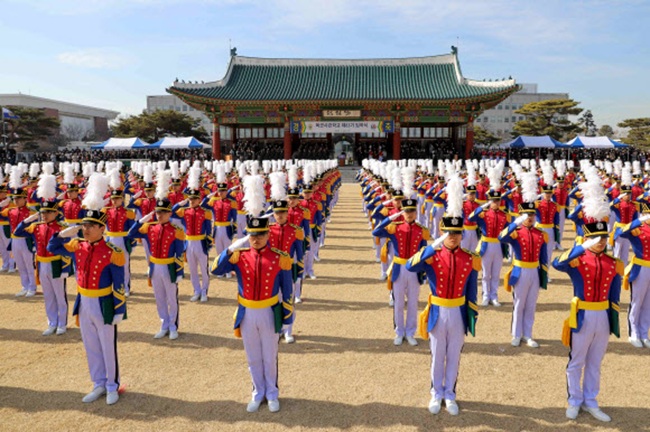 "Prioritizing Prudence Over Speed for ROTC Reorganization and Integration"... Former ROTC Superintendents Issue Public Appeal
The alumni of the Korea Military Academy emphasized that 'Hwarangdae' in Taereung, Seoul, is not merely an educational facility but a historical asset imbued with the legitimacy of the ROK Armed Force
"Prioritizing Prudence Over Speed for ROTC Reorganization and Integration"... Former ROTC Superintendents Issue Public Appeal
The alumni of the Korea Military Academy emphasized that 'Hwarangdae' in Taereung, Seoul, is not merely an educational facility but a historical asset imbued with the legitimacy of the ROK Armed Force
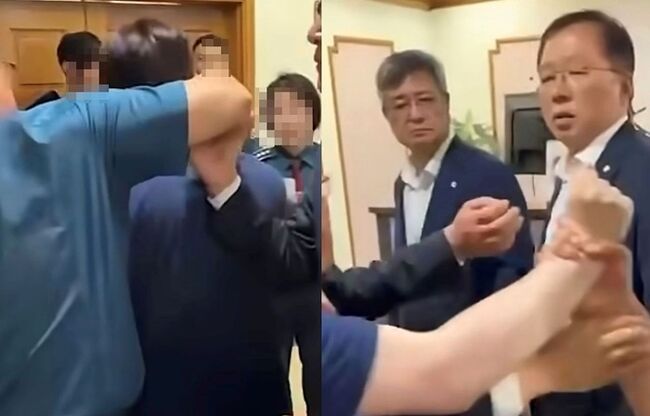 People's Power Party, Seoul Metropolitan Police Agency Commissioner & Security Division Chief involved in 'assaulting aides' controversy, charged with embezzlement and assault
Floor Leader Chung Jin-sik criticized on social media, stating, "During our party's lawmakers' protest visit to the Seoul Metropolitan Police Agency, the head of the SMPA's security division committed
People's Power Party, Seoul Metropolitan Police Agency Commissioner & Security Division Chief involved in 'assaulting aides' controversy, charged with embezzlement and assault
Floor Leader Chung Jin-sik criticized on social media, stating, "During our party's lawmakers' protest visit to the Seoul Metropolitan Police Agency, the head of the SMPA's security division committed
 "US government finds Korean telecom companies with 'suspected China ties' on Mythos pre-use list"
Anthropic Logo [Reuters=Yonhap News]The Trump administration in the United States had considered export controls after identifying an issue where Anthropic allowed a company with suspected ties to Chi
"US government finds Korean telecom companies with 'suspected China ties' on Mythos pre-use list"
Anthropic Logo [Reuters=Yonhap News]The Trump administration in the United States had considered export controls after identifying an issue where Anthropic allowed a company with suspected ties to Chi
 Jang Won-young sparks controversy over airport ID check while wearing a mask… Airport Corporation "Strengthening procedural guidance"
Jang Won-young of IVE [Yonhap News] The Korea Airports Corporation will strengthen guidance on identity verification procedures following a recent controversy involving idol group IVE's Jang Won-
Jang Won-young sparks controversy over airport ID check while wearing a mask… Airport Corporation "Strengthening procedural guidance"
Jang Won-young of IVE [Yonhap News] The Korea Airports Corporation will strengthen guidance on identity verification procedures following a recent controversy involving idol group IVE's Jang Won-
 [Photo] Election Commission staff, deeply absorbed in 'golf swing practice' amidst all this
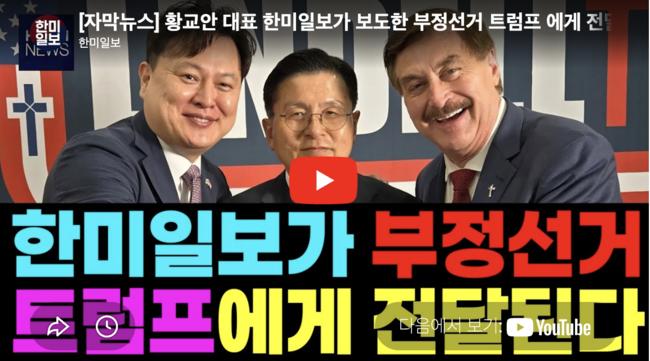 [영상] ‘트럼프 절친’ 린델 “한국 부정선거 트럼프에게 알려주겠다”
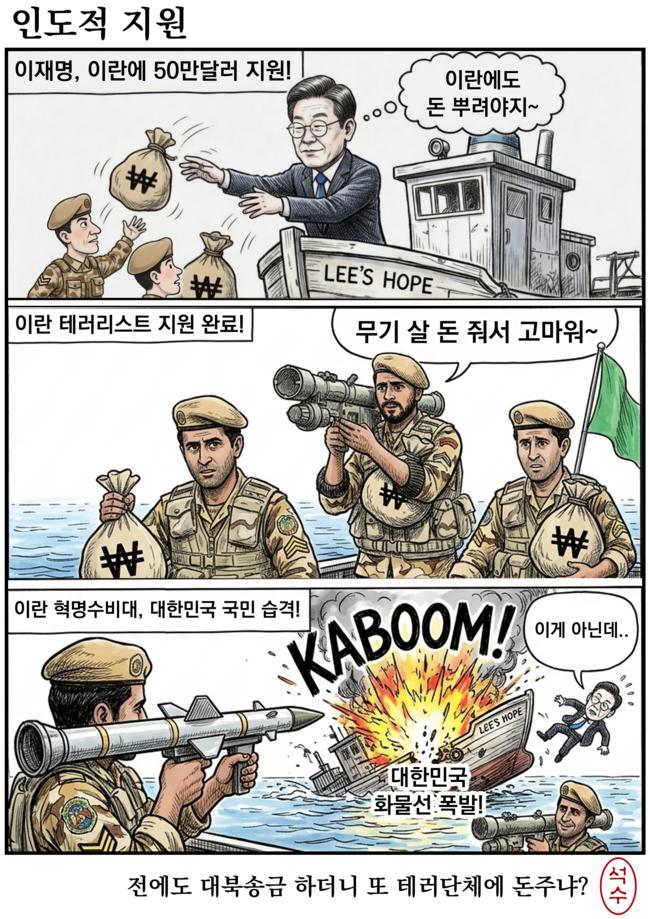 [시사만화] 인도적 지원

 List
List