Following the Eungma Apartment fire, we began to consider the "cost of safety" in multi-unit residential buildings. Every time unfortunate casualties occur, "evacuation drills" and "fire safety equipment inspections" are repeatedly emphasized as obvious and crucial tasks. However, how long will we continue to focus on "feeling sorrow over a fire, analyzing what went wrong, and planning evacuation strategies?" It is time to seek proactive systems that fundamentally prevent fires before they even start.
1. Transition from 'Post-Incident Detection' to 'Real-time Forecasting'
The fire safety systems we have known until now have largely been 'reactive,' triggering alarms and bells after detecting smoke or heat. However, recent technological innovations have entered the realm of 'forecasting,' reading the signs of a fire in advance.
The high-end apartment complex 'The Aston Hannam' has recently introduced the AI fire forecasting system 'Fire4cast,' the first of its kind in Korea. This is a forecasting system that goes beyond simple detectors, with AI analyzing diverse data such as the building's electrical patterns, temperature changes, and past fire history 24/7 in real-time. It is a system that prevents the risk of fire by detecting electrical anomalies or overheating signals before flames even appear, issuing warnings to building managers and residents.
Apartment safety ratings will now be determined not by 'how quickly residents can evacuate,' but by 'how perfectly fires can be forecasted.'
2. Breaking the Stereotype of 'Large-scale Renovation' for Older Buildings with 'Wireless Intelligence'
The biggest reason residents of older apartments are reluctant to replace fire safety equipment is the large-scale renovation work involved, which requires 'drilling through walls, dismantling ceilings, and bearing cleaning costs.' However, wireless automatic fire detection systems (wireless fire detection equipment), proven in industrial sites and mid-sized buildings, have completely overcome these limitations.
The innovative case of the Ansan Dongyang Building, which resolved the complex wiring and massive renovation costs of wired fire safety equipment – a persistent problem in older buildings – using a wireless smart fire detection system, serves as an example. Installation was simplified without the need for extensive wiring, drastically reducing construction costs and time. In actual fire situations, it successfully led to early detection and suppression, becoming an unparalleled safety model for fire prevention in older buildings.
The key is 'real-time automatic dissemination.' By establishing a system that directly transmits text and voice alerts not only to building owners and managers but also to the 119 fire station immediately upon fire detection, the golden time for response has been secured. This is the most realistic and powerful safety alternative that older apartment complexes can implement immediately without major renovations.
3. Four Pillars for the Transition to Fire Forecasting
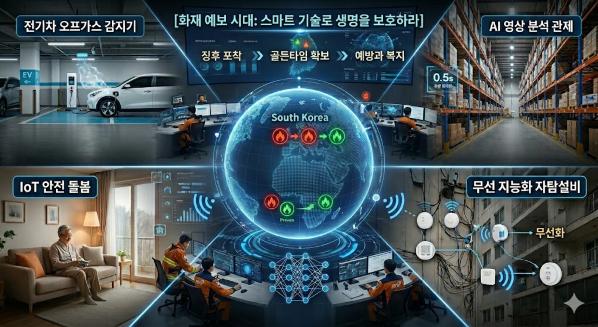
Fire safety innovation must extend beyond multi-unit residential buildings to industrial sites and the lives of vulnerable populations. For fire forecasting to become commonplace and mandatory, prerequisite tasks are necessary. ▶ For electric vehicle fires in underground parking lots, 'AI off-gas detectors' that capture micro-gases before thermal runaway should be mandated in charging areas to preemptively neutralize ticking time bombs. ▶ For logistics warehouses with high ceilings where detection is delayed, 'AI video analysis and monitoring' that identifies flames and smoke in 0.5 seconds should eliminate blind spots and shorten the golden time.
▶ For elderly households with residents living alone who are slow to evacuate, 'IoT safety care' that transmits real-time information on fires and inability to move should be established to realize fire safety welfare. ▶ The complex wired-centric fire safety practices and regulatory cartels that hinder all these innovations must be broken, and the transition to wireless equipment must be institutionalized.
Fires must now be the subject of 'prediction,' not 'response.' The four pillars of battery gas sensing, AI vision, IoT care, and wireless technology are the key to ending the brutal history of post-incident responses and are crucial for Korea's fire safety industry.
We must boldly dismantle outdated practices and regulatory cartels that obstruct innovation and institutionalize a prevention-centered safety net so that our society can escape the threat of fire. The era of fire forecasting, where technology protects people, should not be delayed any further.
◆ CEO Youngjin Cho
CEO of Rose AI
What do you think of this article?

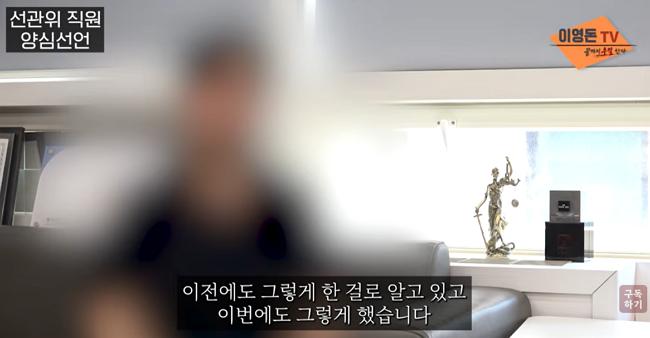 [Focus] Why did the dedicated communication network, checked three times, stop?... Three questions about the "Wi-Fi connection" for early voting
In the broadcast of Lee Young-don TV on the 16th, a current National Election Commission official exposes the reality of the 6.3 local elections based on direct experience. [Photo=Screenshot fr
[Focus] Why did the dedicated communication network, checked three times, stop?... Three questions about the "Wi-Fi connection" for early voting
In the broadcast of Lee Young-don TV on the 16th, a current National Election Commission official exposes the reality of the 6.3 local elections based on direct experience. [Photo=Screenshot fr
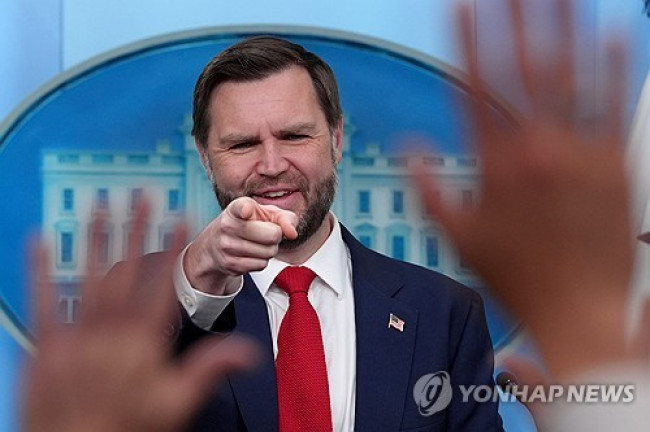 White House: "Vance Postpones Switzerland Trip"... US-Iran Follow-up Negotiations Delayed
U.S. Vice President Vance [AP=Yonhap News]The White House announced on the 18th (local time) that the visit to Switzerland by Vice President J.D. Vance, which was scheduled for follow-up working-level
White House: "Vance Postpones Switzerland Trip"... US-Iran Follow-up Negotiations Delayed
U.S. Vice President Vance [AP=Yonhap News]The White House announced on the 18th (local time) that the visit to Switzerland by Vice President J.D. Vance, which was scheduled for follow-up working-level
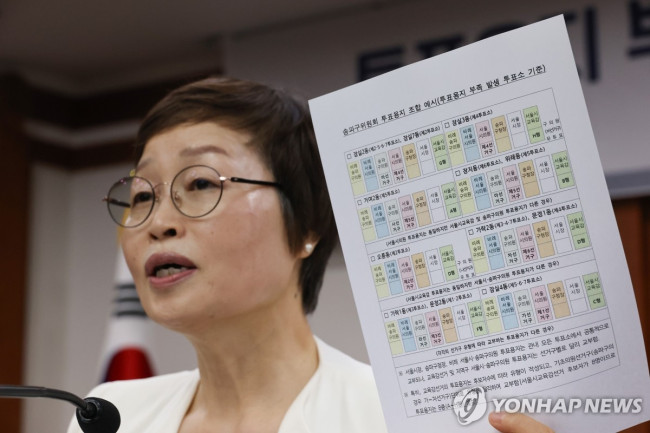 Fact-Finding Committee: "Total mismanagement of election administration... Recommend referral for investigation of Noh Tae-hak and others."
On the 19th, Cho Hyun-wook, chairman of the 'Investigation Committee for the Ballot Paper Shortage Incident', briefs the final investigation results at the National Election Commission in Gwacheon, Gy
Fact-Finding Committee: "Total mismanagement of election administration... Recommend referral for investigation of Noh Tae-hak and others."
On the 19th, Cho Hyun-wook, chairman of the 'Investigation Committee for the Ballot Paper Shortage Incident', briefs the final investigation results at the National Election Commission in Gwacheon, Gy
 Prosecution Demands 2 Years Imprisonment and Fine for Lee Hwa-young for Perjury and Splitting Donations
Former Gyeonggi Province Vice Governor Lee Hwa-young, who appeared as a witness at a hearing related to the Ssangbangul North Korea remittance case held by the parliamentary special committee for the
Prosecution Demands 2 Years Imprisonment and Fine for Lee Hwa-young for Perjury and Splitting Donations
Former Gyeonggi Province Vice Governor Lee Hwa-young, who appeared as a witness at a hearing related to the Ssangbangul North Korea remittance case held by the parliamentary special committee for the
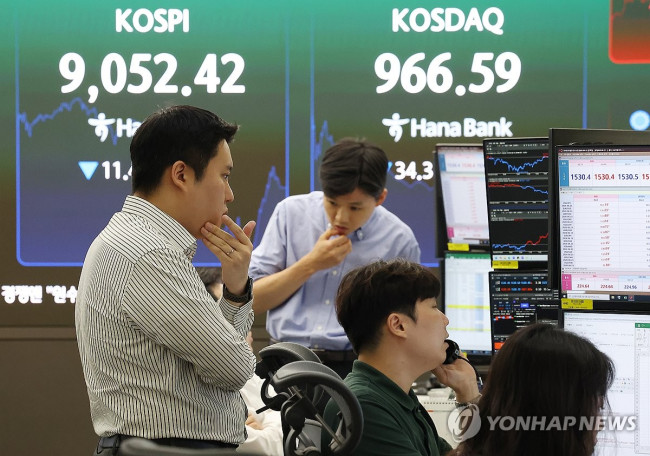 KOSPI slightly falls, clinging to the 9,000 mark... intra-day volatility of 553p
On the 19th, the KOSPI and KOSDAQ indices are displayed on a large screen at the Hana Bank headquarters in Jung-gu, Seoul. On this day, the KOSPI closed at 9,052.42, down 11.42 points (0.13%) from the
KOSPI slightly falls, clinging to the 9,000 mark... intra-day volatility of 553p
On the 19th, the KOSPI and KOSDAQ indices are displayed on a large screen at the Hana Bank headquarters in Jung-gu, Seoul. On this day, the KOSPI closed at 9,052.42, down 11.42 points (0.13%) from the
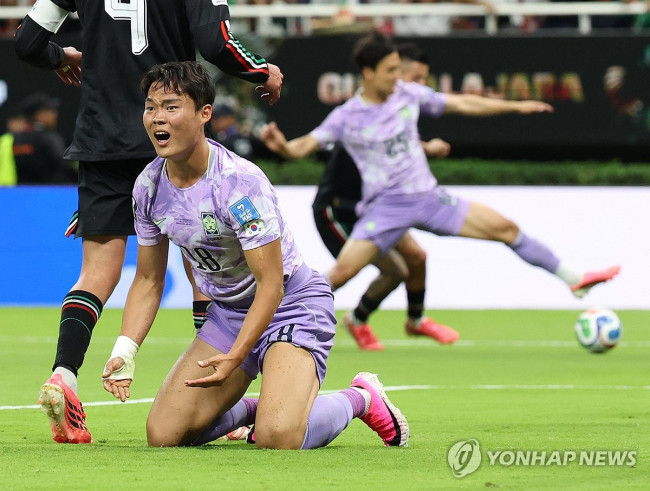 Hong Myung-bo's team loses 0-1 to host nation Mexico
The 2026 North, Central America and Caribbean World Cup Group A second round match between South Korea and Mexico held at the Guadalajara Stadium in Zapopan, Mexico, on the 18th (local time). National
Hong Myung-bo's team loses 0-1 to host nation Mexico
The 2026 North, Central America and Caribbean World Cup Group A second round match between South Korea and Mexico held at the Guadalajara Stadium in Zapopan, Mexico, on the 18th (local time). National
 [Photo] Current status of Chairman Hwang Kyo-ahn and lawyer Park Joo-hyun attending the US election fraud fighter summit
Lawyer Park Joo-hyun with lawyer Peter Ticktin, who was pardoned by U.S. President Donald Trump. [Facebook]Hwang Kyo-ahn, leader of the Liberty and Innovation Party (second from left), informing about
[Photo] Current status of Chairman Hwang Kyo-ahn and lawyer Park Joo-hyun attending the US election fraud fighter summit
Lawyer Park Joo-hyun with lawyer Peter Ticktin, who was pardoned by U.S. President Donald Trump. [Facebook]Hwang Kyo-ahn, leader of the Liberty and Innovation Party (second from left), informing about
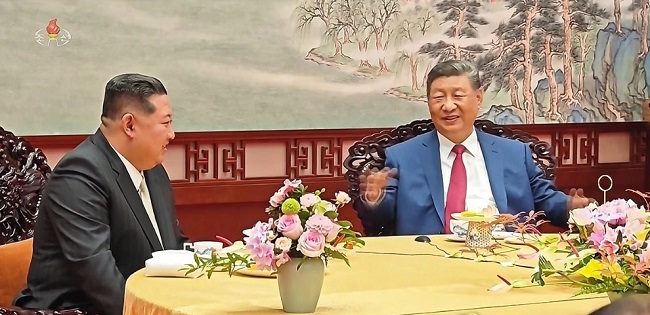 [Kim Tae-san Column] A Defector's View on Xi Jinping's Visit to North Korea
The banquet hall during the inter-Korean summit, as shown by Korean Central TV on the 6th. [Yonhap News] President Xi Jinping visited North Korea from June 8th to 9th. Many political, military, a
[Kim Tae-san Column] A Defector's View on Xi Jinping's Visit to North Korea
The banquet hall during the inter-Korean summit, as shown by Korean Central TV on the 6th. [Yonhap News] President Xi Jinping visited North Korea from June 8th to 9th. Many political, military, a
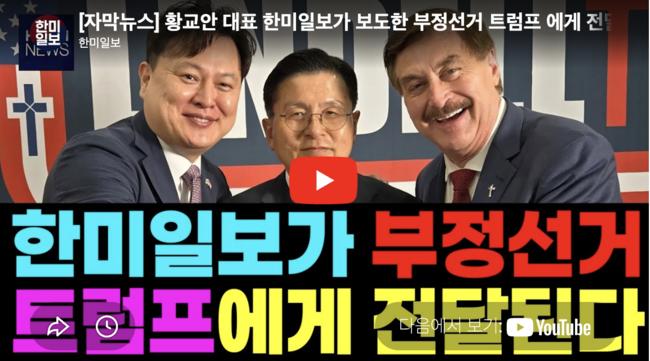 [Video] 'Trump's close friend' Lindell "I will inform Trump about South Korea's fraudulent election"
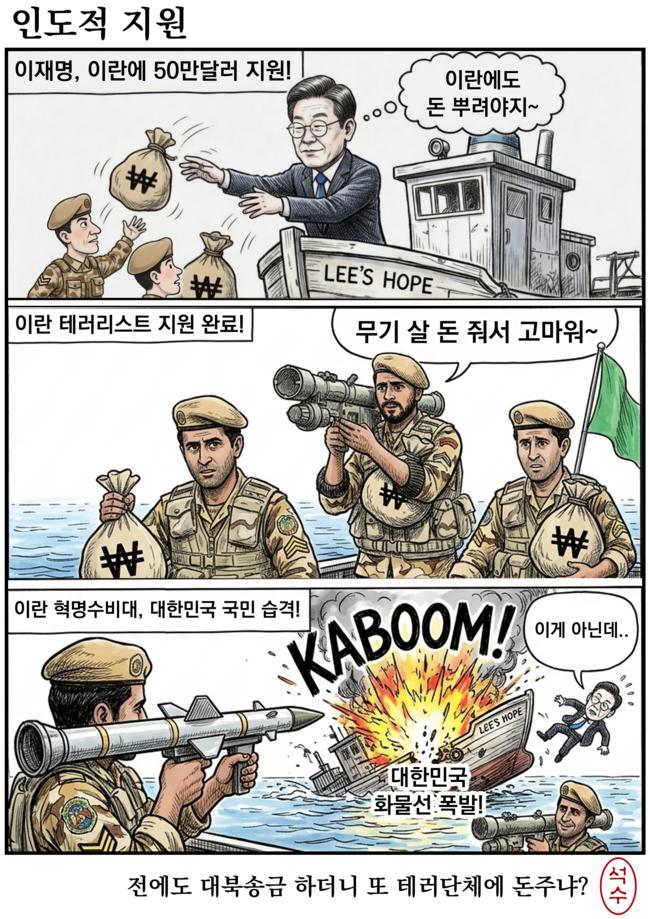 [Editorial Cartoon] Humanitarian Aid

 List
List