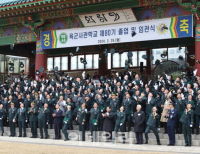
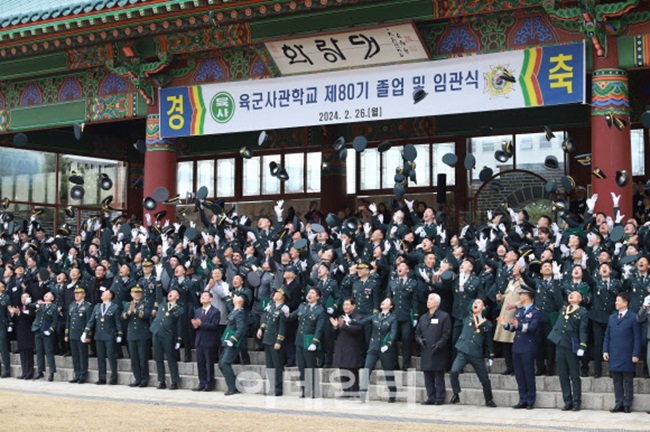
 Officers at the 80th graduation and commissioning ceremony at the Korea Military Academy throw their caps in the air to celebrate. [Photo=Army]
The proposed integration policy for the military academies, currently being pushed by the government and met with strong opposition from Korea Military Academy (KMA) graduates, is sure to become a "Returning Boomerang" that will hit back and cause harm to those who threw it.
It may even deliver a more decisive blow than the aftermath of the "June 3rd local elections," where doubts about election fraud are escalating.
The current government is proceeding with the integration of the Army, Navy, and Air Force academies between September 2025 and April 2026, effectively leading to the closure of the KMA. The plan is to establish a new "National Military University" to integrate the three academies as colleges, with the first and second years housed separately from the third and fourth years. The KMA would then be relocated to a provincial area, and apartments would be built on its current site (Hwarangdae).
The KMA Alumni Association, an organization of retired officers, has expressed bewilderment and has held two policy review forums to expose the injustices of the government's policy. They have also strongly urged the Ministry of National Defense to reconsider and withdraw the policy, and to hold public hearings for mutual communication.
The first reason why the military academy integration policy is unjust is that while the government claims it aims to "enhance joint operational capabilities," this ignores the basic military common sense that joint effects are only powerful when the expertise of each branch—Army, Navy, and Air Force—is highly specialized.
Furthermore, joint operations are typically learned in earnest from the rank of major, so they are not particularly urgent or important during the cadet years.
Second, the KMA's grounds at Hwarangdae are historically the cradle of the Republic of Korea Armed Forces and a sacred site where senior cadets shed blood in the Korean War. To lose Hwarangdae, steeped in history and tradition, is tantamount to shattering the pride and honor of KMA cadets and active and retired officers.
Relocating the KMA to a provincial area will lead to a decline in the quality of cadets, and separating students by year will dilute the mentorship and solidarity between seniors and juniors, as well as the patriotism and will to defend the nation that has been fostered through rigorous training.
Ultimately, the traditional spirit of loyalty of the KMA, which has been the cornerstone of national defense and the defense of the liberal democratic system, will be annihilated. The nation will then follow a path of self-destruction, weakening its security by destroying its final bastion of elite officer training.
"Tradition and expertise" are fundamental to combat effectiveness, as emphasized even by the world-renowned military strategist Napoleon. If the military academies are integrated and leave Hwarangdae, this foundation will be trampled upon. Therefore, KMA graduates cannot help but view this situation as the gravest crisis for national security.
A more significant issue is that the defense authorities are evading clear answers to the KMA Alumni Association's just concerns and are not even providing a forum for discussion, such as public hearings. This act stigmatizes the current left-wing government, which has espoused democracy, as a thoroughly undemocratic dictatorial regime.
Especially on an issue as paramount as national security, which is the top national interest, ignoring the process of seeking public consensus and stubbornly pushing ahead in a dismissive manner is an act of treating the people's safety with utter disregard, and it deserves public condemnation.
If the defense authorities ultimately ignore the position of the KMA Alumni Association, this policy will be clearly identified as unjust during the process of examining its merits and demerits, and it will face fierce resistance not only from KMA graduates but from all patriotic citizens.
The stance of the KMA Alumni Association, which opposes the integration of the military academies, is firm and resolute. Unlike the government's political calculations to uproot elite educational institutions by labeling the KMA as a hotbed of sedition, the KMA is strictly apolitical.
All KMA graduates will strive to the best of their ability, holding firm to the belief that their cause is just. From the moment they entered the Korea Military Academy, their youthful view of life and death became intertwined with their view of the nation, and they were equipped with a security perspective focused on dedicating themselves to national security and defense, the highest national interests.
Military personnel serving on the security front, unlike ordinary citizens, undergo continuous training to prepare for the worst-case scenarios. They have diligently worked to cultivate the split-second judgment needed not only to win on the battlefield but also to protect the lives of their subordinates. Even their academic exams as cadets were an extension of this training.
Therefore, their decision-making process in crisis situations is largely similar, reaching a tacit understanding. This means their ability to assess situations has developed rationally through extensive training. They have complete trust in their own abilities honed through this process, and that conviction ultimately becomes the strength that protects the Republic of Korea.
Even now, as aging veterans who have long since left military service, that sentiment remains unchanged. When the roots of nation, people, justice, and honor that they embraced for four years of their youth are being torn out, and my entire life is losing its luster, why would I hesitate? Defending the KMA will now be the most rewarding mission of my remaining life.
The government authorities who are dictatorially pushing for the integration of military academies will ultimately be recorded as anti-democratic forces, anti-national forces that undermine defense capabilities against adversaries by annihilating the mental fortitude of the three military academies, that is, as criminals aiding the enemy.
Current military personnel, including KMA graduates, who were compelled to obey superior orders, whether willingly or unwillingly, stood in court as seditionists for obeying the president during the December 12 martial law. Now, the roles of offense and defense will be reversed.
To survive today and live on in history tomorrow, those currently in service must do their utmost. It is time to speak truth to power at the risk of their careers. If not, they must find appropriate measures to quell public opposition to the integration and provide a definitive answer to the Alumni Association. The repercussions of this misguided policy will surely return to someone. If not now, then certainly in the not-too-distant future.
P.S.: I hope this article serves as a warning to policy makers and an encouragement to KMA graduates.
On May 18th, a female member of the National Assembly's National Defense Committee, attending the second policy forum diagnosing the military academy integration issue, stated, "This matter should be elevated from an issue concerning only military academy graduates to a national security concern for the entire nation," and added, "I sincerely ask you to persevere to the end, as per the KMA cadet creed."
We, the KMA graduates, will follow those words.
◆ Kim Myung-soo (一鼓)
KMA Class of 1971 (27th class)
Retired Army Major
Former Head of North Korea Psychological Warfare Division, Agency for National Security Planning

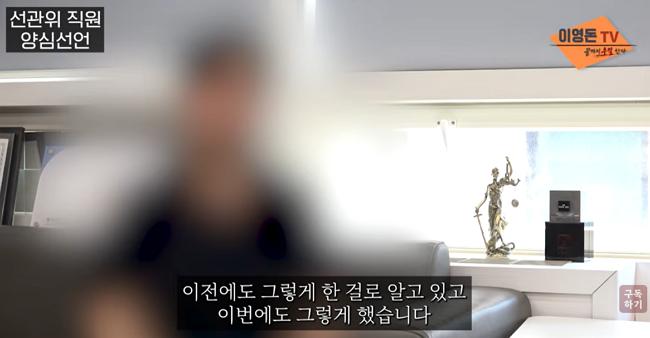 [Focus] Why did the dedicated communication network, checked three times, stop?... Three questions about the "Wi-Fi connection" for early voting
In the broadcast of Lee Young-don TV on the 16th, a current National Election Commission official exposes the reality of the 6.3 local elections based on direct experience. [Photo=Screenshot fr
[Focus] Why did the dedicated communication network, checked three times, stop?... Three questions about the "Wi-Fi connection" for early voting
In the broadcast of Lee Young-don TV on the 16th, a current National Election Commission official exposes the reality of the 6.3 local elections based on direct experience. [Photo=Screenshot fr
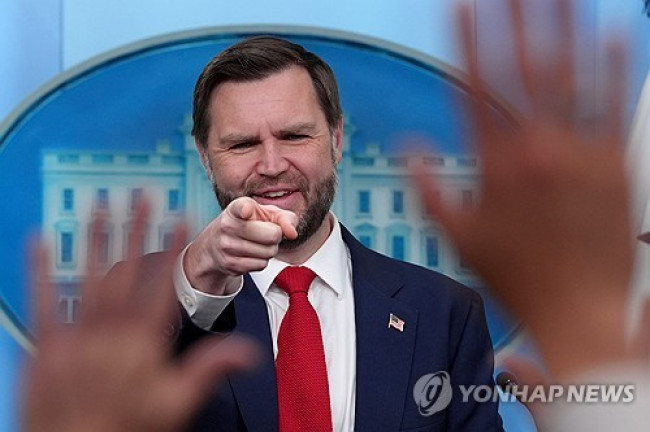 White House: "Vance Postpones Switzerland Trip"... US-Iran Follow-up Negotiations Delayed
U.S. Vice President Vance [AP=Yonhap News]The White House announced on the 18th (local time) that the visit to Switzerland by Vice President J.D. Vance, which was scheduled for follow-up working-level
White House: "Vance Postpones Switzerland Trip"... US-Iran Follow-up Negotiations Delayed
U.S. Vice President Vance [AP=Yonhap News]The White House announced on the 18th (local time) that the visit to Switzerland by Vice President J.D. Vance, which was scheduled for follow-up working-level
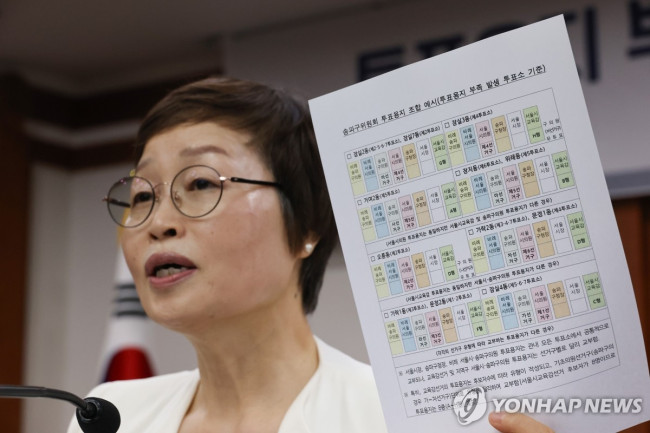 Fact-Finding Committee: "Total mismanagement of election administration... Recommend referral for investigation of Noh Tae-hak and others."
On the 19th, Cho Hyun-wook, chairman of the 'Investigation Committee for the Ballot Paper Shortage Incident', briefs the final investigation results at the National Election Commission in Gwacheon, Gy
Fact-Finding Committee: "Total mismanagement of election administration... Recommend referral for investigation of Noh Tae-hak and others."
On the 19th, Cho Hyun-wook, chairman of the 'Investigation Committee for the Ballot Paper Shortage Incident', briefs the final investigation results at the National Election Commission in Gwacheon, Gy
 Prosecution Demands 2 Years Imprisonment and Fine for Lee Hwa-young for Perjury and Splitting Donations
Former Gyeonggi Province Vice Governor Lee Hwa-young, who appeared as a witness at a hearing related to the Ssangbangul North Korea remittance case held by the parliamentary special committee for the
Prosecution Demands 2 Years Imprisonment and Fine for Lee Hwa-young for Perjury and Splitting Donations
Former Gyeonggi Province Vice Governor Lee Hwa-young, who appeared as a witness at a hearing related to the Ssangbangul North Korea remittance case held by the parliamentary special committee for the
 Is the Chosun-JoongAng-Donga stronghold crumbling… JoongAng Ilbo, lacking funds, finally applies for workout program
There is immense interest in whether a monumental shift will occur in the South Korean newspaper industry, leading to the downfall of the Chosun-JoongAng-Dong-A axis.The first signal flare was fired b
Is the Chosun-JoongAng-Donga stronghold crumbling… JoongAng Ilbo, lacking funds, finally applies for workout program
There is immense interest in whether a monumental shift will occur in the South Korean newspaper industry, leading to the downfall of the Chosun-JoongAng-Dong-A axis.The first signal flare was fired b
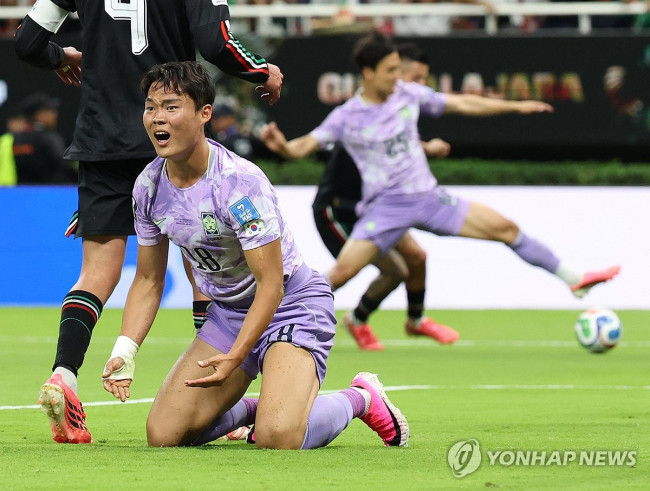 Hong Myung-bo's team loses 0-1 to host nation Mexico
The 2026 North, Central America and Caribbean World Cup Group A second round match between South Korea and Mexico held at the Guadalajara Stadium in Zapopan, Mexico, on the 18th (local time). National
Hong Myung-bo's team loses 0-1 to host nation Mexico
The 2026 North, Central America and Caribbean World Cup Group A second round match between South Korea and Mexico held at the Guadalajara Stadium in Zapopan, Mexico, on the 18th (local time). National
 [Photo] Current status of Chairman Hwang Kyo-ahn and lawyer Park Joo-hyun attending the US election fraud fighter summit
Lawyer Park Joo-hyun with lawyer Peter Ticktin, who was pardoned by U.S. President Donald Trump. [Facebook]Hwang Kyo-ahn, leader of the Liberty and Innovation Party (second from left), informing about
[Photo] Current status of Chairman Hwang Kyo-ahn and lawyer Park Joo-hyun attending the US election fraud fighter summit
Lawyer Park Joo-hyun with lawyer Peter Ticktin, who was pardoned by U.S. President Donald Trump. [Facebook]Hwang Kyo-ahn, leader of the Liberty and Innovation Party (second from left), informing about
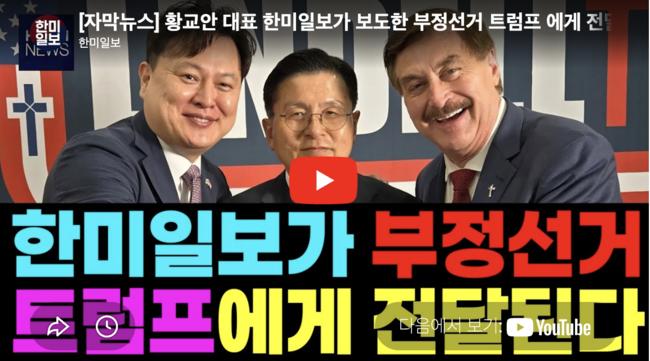 [Video] 'Trump's close friend' Lindell "I will inform Trump about South Korea's fraudulent election"
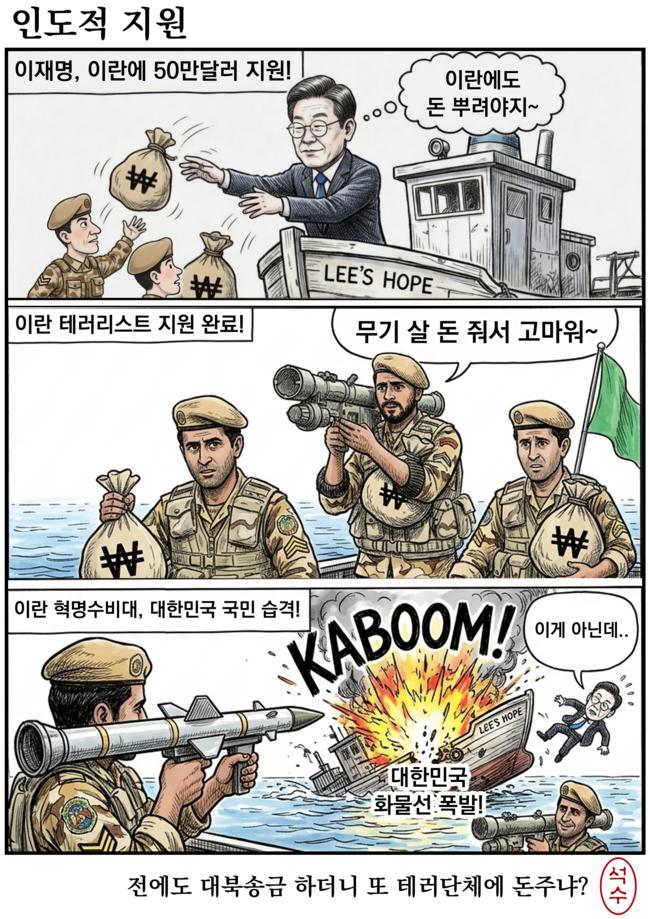 [Editorial Cartoon] Humanitarian Aid

 List
List