- Blockaid Releases On-Chain Security Report for First Half of 2026
- The two cases with the highest damages in the first half of the year are suspected to be linked to the North Korean Lazarus Group
 North Korea (PG) [Produced by Kang Min-ji]
An analysis has found that $1.1 billion (approximately 1.6 trillion won) in virtual assets was stolen globally in the first half of this year, with more than half of the total losses attributed to incidents suspected to be the work of North Korea.
Blockchain security firm BlockAid released its '2026 First Half On-Chain Security Report' on the 28th, stating that it reached this conclusion after analyzing 212 virtual asset exploit (vulnerability attack) incidents.
The number of virtual asset hacking incidents in the first half of this year has already surpassed three times the total number of incidents for all of last year, marking the highest figure recorded on a semi-annual basis.
The report identified the two largest hacking incidents in terms of losses in the first half as being the work of 'TraderTraitor,' a sub-organization of the North Korean hacking group Lazarus.
The largest loss occurred in the hacking of the decentralized finance (DeFi) platform 'Kelp DAO,' where $292 million (approximately 426.4 billion won) was stolen.
Another DeFi platform, 'Drift,' was also found to have suffered hacking losses of $285 million (approximately 416.1 billion won) in less than 12 minutes.
TraderTraitor, the entity behind these incidents, is also known to have been responsible for the $1.5 billion (approximately 2.19 trillion won) hacking of the virtual asset exchange Bybit that occurred in February of last year.
The report explained that targeting the vulnerabilities of smart contracts (technology that automatically executes transactions between parties when certain conditions are met on the blockchain) remains the most common type of hacking.
However, it noted that in the first half of the year, attacks targeted various vulnerabilities including private keys, signatures, bridge infrastructure, and backend systems, with damages from attacks on operating systems other than smart contracts accounting for 74% of the total.
BlockAid advised that as more institutions adopt stablecoins, asset tokenization, and on-chain payments, protecting the overall infrastructure and operating systems of digital assets has become increasingly important.
Ido Ben-Natan, CEO and co-founder of BlockAid, said, "Attackers are no longer just breaching code; they are attacking the systems and access points that manage virtual assets."
He added, "As digital assets have become a part of the broader financial system, institutions must implement security strategies that can protect the entire transaction process, from authorization to execution."
What do you think of this article?

 [Statement by the Seo-beo-kka Korea Military Academy Save-the-Nation Comrades Association] ㉛ Recount the Votes Publicly, as the Previous Recount Concealed Election Fraud
Tongyeong Mayoral Election Recount [Photo=Yonhap News]South Korea's liberal democracy is dying. The National Election Commission (NEC) and the judiciary, which have plummeted into criminal syndicates
[Statement by the Seo-beo-kka Korea Military Academy Save-the-Nation Comrades Association] ㉛ Recount the Votes Publicly, as the Previous Recount Concealed Election Fraud
Tongyeong Mayoral Election Recount [Photo=Yonhap News]South Korea's liberal democracy is dying. The National Election Commission (NEC) and the judiciary, which have plummeted into criminal syndicates
 Trump: "The U.S. and South Korea are united by a firm alliance... a pillar of peace in the Indo-Pacific"
President Trump's message commemorating the Korean War Armistice Agreement [Captured from the White House website]U.S. President Donald Trump issued a message emphasizing the robust ROK-U.S. alliance
Trump: "The U.S. and South Korea are united by a firm alliance... a pillar of peace in the Indo-Pacific"
President Trump's message commemorating the Korean War Armistice Agreement [Captured from the White House website]U.S. President Donald Trump issued a message emphasizing the robust ROK-U.S. alliance
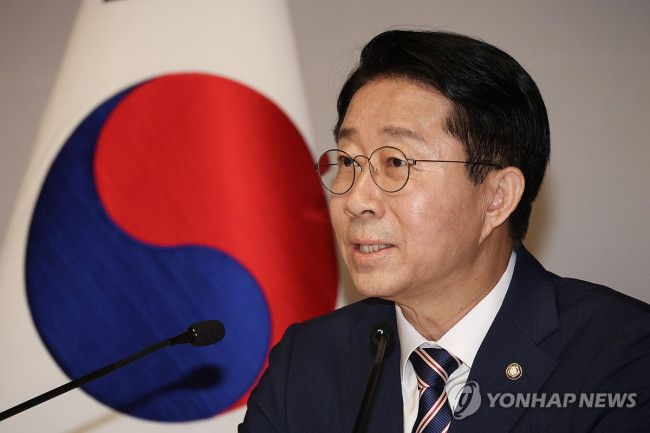 Chairman Cho's Mention of 'Constitutional Amendment for Presidential Re-election' Sparks Controversy… Ruling Party 'On Edge', Opposition 'Backlash'
National Assembly Speaker Jo Jeong-sik holding a press conference [Seoul=Yonhap News] National Assembly Speaker Jo Jeong-sik is sparking controversy both within and outside political circles afte
Chairman Cho's Mention of 'Constitutional Amendment for Presidential Re-election' Sparks Controversy… Ruling Party 'On Edge', Opposition 'Backlash'
National Assembly Speaker Jo Jeong-sik holding a press conference [Seoul=Yonhap News] National Assembly Speaker Jo Jeong-sik is sparking controversy both within and outside political circles afte
 Attorney Do Tae-woo: “Discrepancies in Voter Count and Improper Sealing Confirmed in Tongyeong Mayoral Recount… Official Request for Further Verification Filed with Gyeongnam Election Commission”
A bundle of out-of-district early voting ballots photographed by attorney Do Tae-woo at the Tongyeong mayoral election recount site. A clear, solid line visible on the side of the ballots raises suspi
Attorney Do Tae-woo: “Discrepancies in Voter Count and Improper Sealing Confirmed in Tongyeong Mayoral Recount… Official Request for Further Verification Filed with Gyeongnam Election Commission”
A bundle of out-of-district early voting ballots photographed by attorney Do Tae-woo at the Tongyeong mayoral election recount site. A clear, solid line visible on the side of the ballots raises suspi
 Stock Market Crash 'Black Tuesday'… KOSPI down 10.8%, KOSDAQ down 7.7%
The KOSPI fell by more than 5% in early trading on the 28th, triggering a sell-side sidecar.On the 28th, the KOSPI plunged by more than 10%.Due to the sharp decline, a sell-side sidecar—a temporary
Stock Market Crash 'Black Tuesday'… KOSPI down 10.8%, KOSDAQ down 7.7%
The KOSPI fell by more than 5% in early trading on the 28th, triggering a sell-side sidecar.On the 28th, the KOSPI plunged by more than 10%.Due to the sharp decline, a sell-side sidecar—a temporary
 [World Heritage Committee] 25 New World Heritage Sites Inscribed in Busan… South Korea Successfully Expands 'Getbol' Listing
The Chairperson of the World Heritage Committee speaks at the plenary session of the 48th session of the World Heritage Committee, held at BEXCO in Busan on the 20th. [Photo: Yonhap News]A total of 25
[World Heritage Committee] 25 New World Heritage Sites Inscribed in Busan… South Korea Successfully Expands 'Getbol' Listing
The Chairperson of the World Heritage Committee speaks at the plenary session of the 48th session of the World Heritage Committee, held at BEXCO in Busan on the 20th. [Photo: Yonhap News]A total of 25
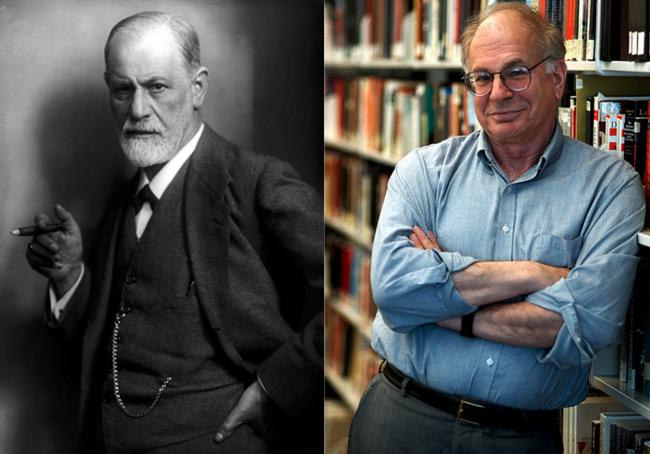 [Special Contribution: Songsan] Do You Think Before You Act, or Act Before You Think?
Sigmund Freud (left), who first systematized the world of the ‘unconscious’ as an invisible driving force determining human behavior and psychology, and Daniel Kahneman, a Princeton Univer
[Special Contribution: Songsan] Do You Think Before You Act, or Act Before You Think?
Sigmund Freud (left), who first systematized the world of the ‘unconscious’ as an invisible driving force determining human behavior and psychology, and Daniel Kahneman, a Princeton Univer
 [Photo] Evidence of Election Fraud Flooding U.S. Media… Trump Had 2.7 Million Votes Stolen
 [Video] U.S. Semiquincentennial Air Show... 'Art in the Sky' streaks across New York
 [Editorial Cartoon] A Draconian Law That Undermines Freedom of Expression

 List
List