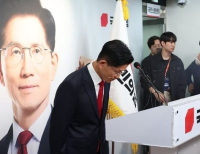
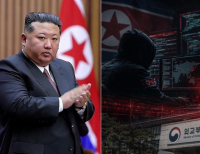
Coupang. Yonhap News TV
 Editorial Board Member·Korea Military Academy Class of '80The incident where Coupang customer information was leaked externally on a large scale revealed South Korea's backwardness in security rather than the company's. The Coupang situation serves as a warning that if security awareness collapses, individuals, companies, and nations exist as mere shells without substance, and nations first collapse from within.
1. Security is a vital system that protects the substance of individuals, organizations, and nations.
Security goes beyond simply blocking external intrusions; it is a modern survival system that protects individual identity and national sovereignty by safeguarding the meaning, patterns, and context of information without distortion. Security is a vital system that safely manages elements whose knowledge by adversaries or enemies would cause fatal damage, such as national defense, industrial technology, state policy, and cultural information, thereby protecting personal information, organizational interests, and national strategies.
However, classified meeting materials are leaked externally, and military-related information, statistics, and secrets are sometimes misused as tools for political disputes. A nation is not protected by weapons alone. The security awareness and serious attitude of those who handle secrets are crucial. The sight of generals on trial damaging the military's standing with unnecessary remarks is deeply disappointing and concerning. Security must evolve from inconvenient management to life management.
Personal information leakage exposes the vast secrets of an individual's life, including preferences, lifestyle rhythms, consumption habits, and even interpersonal relationships, to the outside world. This is a heinous act of stripping away personal privacy and a malicious act of exposing the collective consciousness of society. In the digital age, personal information leakage is an infringement of self-esteem and a dereliction of duty by a state that fails to protect its citizens.
2. Military security leaks are treason that hands over a nation's tactical and strategic intentions to the enemy.
Military security is a survival system that protects national continuity and sovereignty, from our military formations to counter-attack operations. The entire nation has witnessed and remembers horrific instances of security breaches. The act of handing over a USB to an enemy leader at the Panmunjom Tteudodari, providing enemy forces with construction blueprints laid on the Han River seabed, and exposing military secrets under the guise of parliamentary inquiries are equivalent to exposing the arteries and nerves of the defense system. Security breaches are acts of treason that reveal our intentions and readiness status to the enemy before a battle even begins.
Security breaches that exploit the immunity of those in power should be seen not as mistakes but as intentional acts. Revealing the flight paths of enemy drones while blaming our responses instead of the enemy's attack, thereby exposing military secrets, core facilities, and the "heart of the nation" to the enemy, constitutes an act of sedition. In the digital age, military security leaks and the use of military secrets as tools for political disputes must be punished by veterans.
In the history of warfare, most defeats stem from security breaches rather than military inferiority. The decryption of German codes led to the fall of Stalingrad, and the leakage of Japanese military codes resulted in the defeat at Midway. The leakage of military secrets in the early stages of the Korean War delayed strategic responses, leading to miscalculations due to piecemeal deployments without knowledge of enemy information. The U.S. military's Operation Desert Storm paralyzed and collapsed the Iraqi command structure by intercepting their communication network. When security falters, the military's command system is paralyzed, and the nation loses its ability to survive. Security is survival, and complacency is the beginning of defeat.
The Coupang incident revealed that rather than technical vulnerabilities, it was the security awareness and "security attitude" to protect our information and secrets that collapsed first. Organizations with weak security awareness tend to dismiss alarms as insignificant, omit regulations due to cumbersome procedures, and dismiss signs of danger with the word "surely not." Security incidents arise not from system errors but from a lack of security awareness and complacency.
3. Documents that cannot be protected should not be created.
If one is not confident in maintaining security, no documents should be created. As the number of people involved in handling security increases, responsibility management must be implemented. Security is not mere technology; it is an act of protecting substance. The responsibility structure must be clarified from before information is produced. Companies and public institutions must strengthen their security responsibility structures to perceive security not as a cost but as a foundation for survival. Organizations with weak security lose competitiveness and trust, and eventually perish due to their inherent contradictions.
▲ Implement measures to enhance security literacy among those in positions of power and leadership: Leaders must accurately understand the importance of secrets and the weight of responsibility. Non-compliance with security regulations and carelessness by leaders lead to cracks in the entire national system. Security must evolve from mere regulations to a faith that protects our information. Leaders who lack security awareness and even use the military as a tool for political disputes should be considered traitors aiding the enemy. Security is not a means of control but a minimum survival tool to protect liberal democracy.
▲ Check security vulnerabilities from the enemy's perspective: A nation's continuity crumbles not from external attacks but when internal security awareness is weak. What we need are not grand countermeasures. Every time a document is created, a piece of equipment is handled, or information is transferred, security vulnerabilities must be checked from the enemy's perspective, and self-discipline must be exercised.
When national security falters, the nation self-destructs from within. If personal information is leaked, individuals lose their substance, their will, and their sovereign freedom, existing as mere phantoms. Through the Coupang incident, we are now painfully learning the importance of security and must arm ourselves with security awareness for the survival of individuals, organizations, and the nation.
Editorial Board Member, Hanmi Ilbo

 [Statement by the Seo-beo-kka Korea Military Academy Save-the-Nation Comrades Association] ㉛ Recount the Votes Publicly, as the Previous Recount Concealed Election Fraud
Tongyeong Mayoral Election Recount [Photo=Yonhap News]South Korea's liberal democracy is dying. The National Election Commission (NEC) and the judiciary, which have plummeted into criminal syndicates
[Statement by the Seo-beo-kka Korea Military Academy Save-the-Nation Comrades Association] ㉛ Recount the Votes Publicly, as the Previous Recount Concealed Election Fraud
Tongyeong Mayoral Election Recount [Photo=Yonhap News]South Korea's liberal democracy is dying. The National Election Commission (NEC) and the judiciary, which have plummeted into criminal syndicates
 What is the significance of the "Trump 2028" red hats that keep making a comeback?
It is noteworthy that President Donald Trump is "intentionally" fueling controversy over whether he can actually run in the 2028 presidential election, even though it is "highly likely he is seriously
What is the significance of the "Trump 2028" red hats that keep making a comeback?
It is noteworthy that President Donald Trump is "intentionally" fueling controversy over whether he can actually run in the 2028 presidential election, even though it is "highly likely he is seriously
 Jin Cummings: “North Korea says it will increase the number of spies, so what is the government doing?”
U.S. political columnist Gene Cummings has publicly questioned the South Korean government, asking, "North Korea is declaring that it will increase its number of spies, so what is the South Kore
Jin Cummings: “North Korea says it will increase the number of spies, so what is the government doing?”
U.S. political columnist Gene Cummings has publicly questioned the South Korean government, asking, "North Korea is declaring that it will increase its number of spies, so what is the South Kore
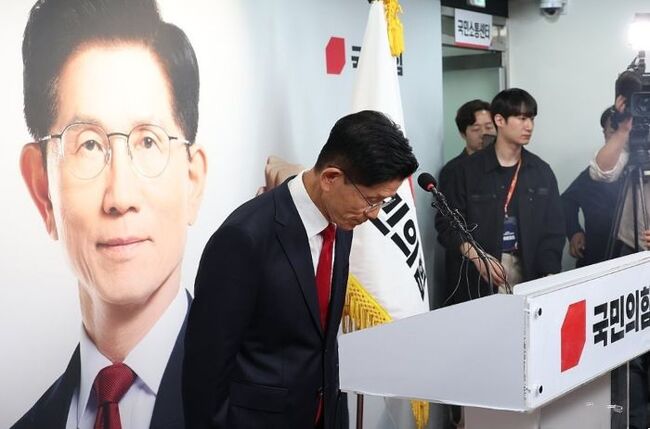 “Too little, too late?…” Kim Moon-soo, who previously conceded his presidential election defeat, now demands a special counsel investigation into ‘allegations of election fraud in the 2025 presidential election’
People Power Party presidential candidate Kim Moon-soo concedes defeat during a press conference at the party headquarters in Yeouido, Seoul, on June 4, 2025. [Joint Press Corps]As allegations emerge
“Too little, too late?…” Kim Moon-soo, who previously conceded his presidential election defeat, now demands a special counsel investigation into ‘allegations of election fraud in the 2025 presidential election’
People Power Party presidential candidate Kim Moon-soo concedes defeat during a press conference at the party headquarters in Yeouido, Seoul, on June 4, 2025. [Joint Press Corps]As allegations emerge
 Stock Market Crash 'Black Tuesday'… KOSPI down 10.8%, KOSDAQ down 7.7%
The KOSPI fell by more than 5% in early trading on the 28th, triggering a sell-side sidecar.On the 28th, the KOSPI plunged by more than 10%.Due to the sharp decline, a sell-side sidecar—a temporary
Stock Market Crash 'Black Tuesday'… KOSPI down 10.8%, KOSDAQ down 7.7%
The KOSPI fell by more than 5% in early trading on the 28th, triggering a sell-side sidecar.On the 28th, the KOSPI plunged by more than 10%.Due to the sharp decline, a sell-side sidecar—a temporary
 [World Heritage Committee] 25 New World Heritage Sites Inscribed in Busan… South Korea Successfully Expands 'Getbol' Listing
The Chairperson of the World Heritage Committee speaks at the plenary session of the 48th session of the World Heritage Committee, held at BEXCO in Busan on the 20th. [Photo: Yonhap News]A total of 25
[World Heritage Committee] 25 New World Heritage Sites Inscribed in Busan… South Korea Successfully Expands 'Getbol' Listing
The Chairperson of the World Heritage Committee speaks at the plenary session of the 48th session of the World Heritage Committee, held at BEXCO in Busan on the 20th. [Photo: Yonhap News]A total of 25
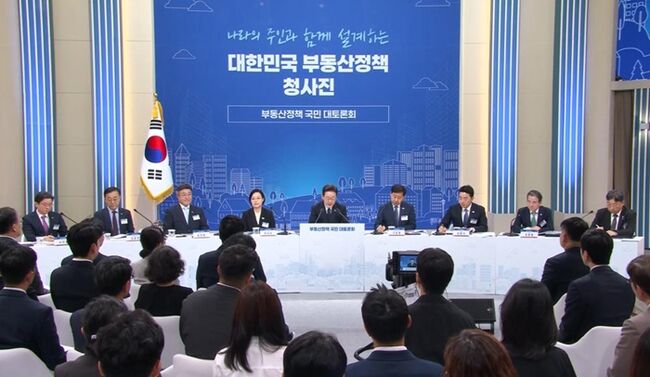 [Liberal Democratic Party Statement] Calling it a Grand Real Estate Debate… It Was Nothing More Than a Private Party Among Themselves
The 'National Grand Debate on Real Estate Policy' held on July 23rd and 27th. [Photo=Yonhap News]The 'National Grand Debate on Real Estate Policy,' hosted by the Lee Jae-myung administration under the
[Liberal Democratic Party Statement] Calling it a Grand Real Estate Debate… It Was Nothing More Than a Private Party Among Themselves
The 'National Grand Debate on Real Estate Policy' held on July 23rd and 27th. [Photo=Yonhap News]The 'National Grand Debate on Real Estate Policy,' hosted by the Lee Jae-myung administration under the
 [Photo] Evidence of Election Fraud Flooding U.S. Media… Trump Had 2.7 Million Votes Stolen
 [Video] U.S. Semiquincentennial Air Show... 'Art in the Sky' streaks across New York
 [Editorial Cartoon] A Draconian Law That Undermines Freedom of Expression

 List
List