A baseball bat and ball that U.S. President Donald Trump presented to Lee Jae-myung during their summit in Gyeongju.
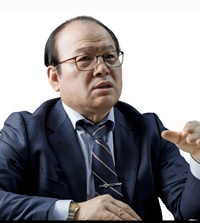 Ju Eun-sik, Editorial Writer · Director of the Korea Strategy InstituteThe baseball bat that U.S. President Donald Trump handed to President Lee Jae-myung at the APEC summit in Gyeongju was more than just a souvenir; its intentions were too clear. In diplomacy, gifts are messages, and for a leader like Trump, who masterfully combines symbolism, gestures, and unspoken pressure, such items are almost certainly designed with a specific meaning.
Lee Jae-myung has stated multiple times in the past, "I am not afraid of dying, but I am afraid of baseball bats." His childhood experience of injury while working at a baseball glove factory, and the resulting fear and aversion to baseball bats, are widely known. Given that Trump was aware of this context, his choice of a baseball bat was not a gesture of goodwill but a diplomatic signal of warning, or a display of power dynamics that suggests, "There will be consequences if you do not follow the rules." In the U.S., a baseball bat is both a sports tool and, at times, a symbol of "sanctions imposed on those who disrupt order." In Korea, while baseball bats are used in games, they are also tools wielded by gangsters to strike opponents. Trump, aware of both these cultural nuances, used this symbolism to implicitly warn Lee Jae-myung: "We will impose sanctions if you break the rules." To borrow Trump's own phrase, this was a "Big Stick without a smile."
This scene aligns perfectly with the recently released U.S. National Security Strategy (NSS) for 2025. Many have focused on the usual keywords like countering China, sanctioning Russia, and strengthening the Indo-Pacific strategy. However, a sentence that clearly indicates close attention to the Korean Peninsula stands out: "Abuse of power in the name of protecting democracy will not be tolerated, and those who perpetrate such abuses will be held accountable. The freedoms of expression, religion and conscience, and the right of citizens to choose and direct their own government are fundamental rights that can never be infringed. The United States will strongly demand that countries that claim to share these principles adhere to them in both word and deed. Even if they are allies, we will clearly oppose elite-led undemocratic restrictions on liberty." This sentence is not mere diplomatic rhetoric or a declaration of abstract values; it is a declaration of a change in alliance management standards. The U.S. now intends to trust only those alliances where genuine freedom and accountability are in operation, not merely "formal democratic alliances." Those familiar with the political realities of Korea will undoubtedly feel a chill upon reading this passage.
Lee Jae-myung's security outlook is an even greater concern. He has repeatedly made statements that downplay joint military exercises as "costly" and view defense cost-sharing as merely an "opportunity to leverage anti-American sentiment." He has also indicated an understanding that he himself could pursue personal diplomacy with Kim Jong-un, similar to what Trump has attempted. However, North Korea defines South Korea as "two hostile states" and is escalating tensions on the peninsula with tactical nuclear weapons and ICBMs. In this context, joint exercises are not a cost but insurance, and defense cost-sharing is not tribute but essential maintenance for an alliance to function. Ignoring this and resorting to anti-American rhetoric for domestic political gain will cause South Korea to lose credibility on the U.S. strategic map. The U.S. is strengthening its structure to counter and encircle China in its Indo-Pacific strategy, demanding that Japan and South Korea share the costs. This is an adjustment made possible by our alliance and a partnership to confront a common enemy. Yet, the approach of the Lee Jae-myung administration disregards this, treating the alliance as a "bargaining chip," and even framing engagement with China as "balancing."
What is even more serious about Lee Jae-myung's security outlook are the signals revealed in his appointments. Appointing Kim Min-seok, who was punished for the bombing of the U.S. Cultural Center, as Prime Minister, and Lee Jong-seok, who fueled security anxieties with his "inherent approach" to North Korea, as Director of the National Intelligence Service, is not a mere coincidence or mistake. It clearly indicates a direction. It is entirely open to interpretation as signals of distancing from the U.S., increased engagement with China, and a readjustment of the ROK-U.S. alliance. Such appointments not only provoke U.S. wariness but also come close to undermining the foundation of the ROK-U.S. alliance by South Korea itself. China is not an ally. China does not guarantee security; instead, it demands political subjugation, intelligence infiltration, and economic dependence. Bills are already being proposed in South Korea to impose criminal penalties for criticizing China, and analyses suggest that Chinese funds are infiltrating deep into society, including culture, academia, and media. China's infiltration is quiet but deep. It is taking root across South Korea through what is called "Chu Han Jeon," or "Silent Invasion."
The 2025 NSS defines China not merely as a competitor but as a "systemic challenger." This means that the U.S. will prolong its strategic confrontation with China and demand clear choices from its allies. At this juncture, any move by South Korea that deviates from the general direction of U.S. strategy will result in a drastic limitation, not an expansion, of its alliance freedoms. It is a dangerous misjudgment for the Lee Jae-myung administration to mistake this for an "expansion of autonomous space." In reality, as U.S. trust wanes, South Korea's diplomatic space will shrink, and South Korea risks being relegated to a "managed entity" by the U.S.
In all these contexts, Trump's baseball bat is not a symbol but a message. It means that if you follow the rules, it's just a part of the game, but if you break them, it becomes a tool for sanctions. In diplomacy, symbols are faster than words, and gestures are more precise than declarations. The very fact that Lee Jae-myung accepted Trump's bat as merely a "souvenir" is the core of the problem. A leader who misunderstands the rules of an alliance as subject to negotiation and reduces shifts in international strategy to domestic political calculations cannot bear the responsibility for national security. What Korea needs now is not the skill of smiling for photos, but the ability to read the strategic language hidden within symbols and pressure. The bat handed over in Gyeongju was not a decoration but a warning. I wondered why a baseball bat was chosen as a gift, but seeing the contents of the National Security Strategy revealed its clear meaning.
Ju Eun-sik, Editorial Writer · Director of the Korea Strategy Institute

 [Statement by the Seo-beo-kka Korea Military Academy Save-the-Nation Comrades Association] ㉛ Recount the Votes Publicly, as the Previous Recount Concealed Election Fraud
Tongyeong Mayoral Election Recount [Photo=Yonhap News]South Korea's liberal democracy is dying. The National Election Commission (NEC) and the judiciary, which have plummeted into criminal syndicates
[Statement by the Seo-beo-kka Korea Military Academy Save-the-Nation Comrades Association] ㉛ Recount the Votes Publicly, as the Previous Recount Concealed Election Fraud
Tongyeong Mayoral Election Recount [Photo=Yonhap News]South Korea's liberal democracy is dying. The National Election Commission (NEC) and the judiciary, which have plummeted into criminal syndicates
 What is the significance of the "Trump 2028" red hats that keep making a comeback?
It is noteworthy that President Donald Trump is "intentionally" fueling controversy over whether he can actually run in the 2028 presidential election, even though it is "highly likely he is seriously
What is the significance of the "Trump 2028" red hats that keep making a comeback?
It is noteworthy that President Donald Trump is "intentionally" fueling controversy over whether he can actually run in the 2028 presidential election, even though it is "highly likely he is seriously
 Jin Cummings: “North Korea says it will increase the number of spies, so what is the government doing?”
U.S. political columnist Gene Cummings has publicly questioned the South Korean government, asking, "North Korea is declaring that it will increase its number of spies, so what is the South Kore
Jin Cummings: “North Korea says it will increase the number of spies, so what is the government doing?”
U.S. political columnist Gene Cummings has publicly questioned the South Korean government, asking, "North Korea is declaring that it will increase its number of spies, so what is the South Kore
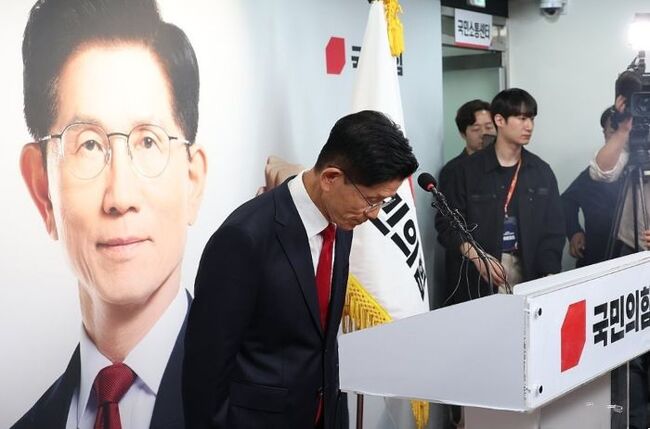 “Too little, too late?…” Kim Moon-soo, who previously conceded his presidential election defeat, now demands a special counsel investigation into ‘allegations of election fraud in the 2025 presidential election’
People Power Party presidential candidate Kim Moon-soo concedes defeat during a press conference at the party headquarters in Yeouido, Seoul, on June 4, 2025. [Joint Press Corps]As allegations emerge
“Too little, too late?…” Kim Moon-soo, who previously conceded his presidential election defeat, now demands a special counsel investigation into ‘allegations of election fraud in the 2025 presidential election’
People Power Party presidential candidate Kim Moon-soo concedes defeat during a press conference at the party headquarters in Yeouido, Seoul, on June 4, 2025. [Joint Press Corps]As allegations emerge
 Stock Market Crash 'Black Tuesday'… KOSPI down 10.8%, KOSDAQ down 7.7%
The KOSPI fell by more than 5% in early trading on the 28th, triggering a sell-side sidecar.On the 28th, the KOSPI plunged by more than 10%.Due to the sharp decline, a sell-side sidecar—a temporary
Stock Market Crash 'Black Tuesday'… KOSPI down 10.8%, KOSDAQ down 7.7%
The KOSPI fell by more than 5% in early trading on the 28th, triggering a sell-side sidecar.On the 28th, the KOSPI plunged by more than 10%.Due to the sharp decline, a sell-side sidecar—a temporary
 [World Heritage Committee] 25 New World Heritage Sites Inscribed in Busan… South Korea Successfully Expands 'Getbol' Listing
The Chairperson of the World Heritage Committee speaks at the plenary session of the 48th session of the World Heritage Committee, held at BEXCO in Busan on the 20th. [Photo: Yonhap News]A total of 25
[World Heritage Committee] 25 New World Heritage Sites Inscribed in Busan… South Korea Successfully Expands 'Getbol' Listing
The Chairperson of the World Heritage Committee speaks at the plenary session of the 48th session of the World Heritage Committee, held at BEXCO in Busan on the 20th. [Photo: Yonhap News]A total of 25
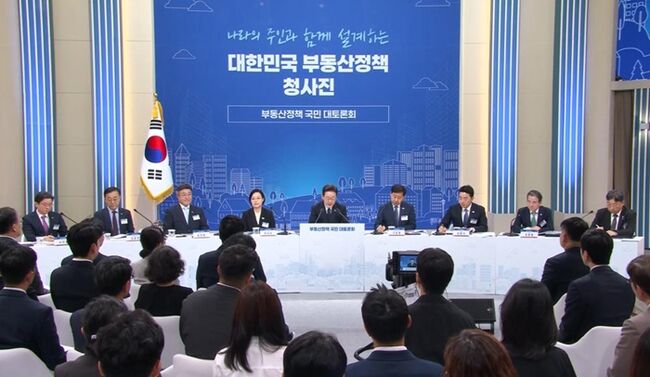 [Liberal Democratic Party Statement] Calling it a Grand Real Estate Debate… It Was Nothing More Than a Private Party Among Themselves
The 'National Grand Debate on Real Estate Policy' held on July 23rd and 27th. [Photo=Yonhap News]The 'National Grand Debate on Real Estate Policy,' hosted by the Lee Jae-myung administration under the
[Liberal Democratic Party Statement] Calling it a Grand Real Estate Debate… It Was Nothing More Than a Private Party Among Themselves
The 'National Grand Debate on Real Estate Policy' held on July 23rd and 27th. [Photo=Yonhap News]The 'National Grand Debate on Real Estate Policy,' hosted by the Lee Jae-myung administration under the
 [Photo] Evidence of Election Fraud Flooding U.S. Media… Trump Had 2.7 Million Votes Stolen
 [Video] U.S. Semiquincentennial Air Show... 'Art in the Sky' streaks across New York
 [Editorial Cartoon] A Draconian Law That Undermines Freedom of Expression

 List
List