On September 9, 1948, members of the North Korean cabinet pose for a commemorative photo shortly after the establishment of the North Korean regime. Kim Il-sung, in the center, served as Prime Minister, with Pak Heon-yeong (left) and Hong Myeong-hui on either side, each serving as Deputy Prime Ministers.
1949 was the year when the Southern Labor Party (Namro-dang) effectively lost its viability as a political organization in South Korea.
To define this period solely as a "time of oppression" would be an error in historical interpretation. The events of 1949 were not a continuous series of unjust victimizations but rather the process by which an already failed path collapsed in reality.
Since 1946, Namro-dang had chosen a policy of operating through underground organizations, violence, and reliance on external powers, rather than engaging in legitimate political competition. 1949 marked the point when that choice could no longer be sustained.
From this point onward, the long-standing tactics of pro-North leftists began to solidify. This is a method of reframing failure not as an error, but as "evidence of oppression."
The Southern Labor Party: Activities from 1946 to 1949
The Southern Labor Party officially launched through its founding convention on November 23-24, 1946. The first chairman was Heo Heon, with Pak Heon-yeong and Lee Gi-seok as vice-chairmen.
At this point, the direction was already clear. The priority was given to methods that disrupted the political climate and destabilized the system, rather than legitimate competition through elections and assemblies.
Let's examine its subsequent actions through a timeline.
After August 1945: Involvement in the Joseon Jeongpansa forged banknote incident
September 1946: Led the nationwide general strike
October 1946: Daegu-Gyeongbuk October Uprising
March 1, 1947: Clashes at commemorative rally
April 1948: Jeju April 3rd Armed Uprising
October 1948: Yeosu-Suncheon Rebellion
This series of events was the result of Namro-dang's continuous policy choices. Unable to gain popular support through votes, Namro-dang fixed its direction towards violence, armed struggle, and underground organizations, and this choice led to its collapse in 1949.
Precursors to Namro-dang's collapse already appeared in 1948. The highest leader, Pak Heon-yeong, did not return to South Korea after attending the South-North Joint Conference held in Pyongyang in April 1948. While often referred to as "defection to the North," it was more accurately a choice to avoid political responsibility in the South Korean political reality.
Instead of resolving the policy failures within South Korea or taking political responsibility before the public, the leader moved into the North Korean power structure. This demonstrated that the "South Korean revolution" that Namro-dang had proclaimed was not, in reality, an indigenous political line. The resolution of defeat was sought not in the South, but in the North.
The event symbolizing the collapse of Namro-dang in 1949 was the National Assembly spy case. This case, which occurred between May and August 1949, involved the arrest and indictment of several incumbent National Assembly members on suspicion of infiltrating the Assembly under orders from Namro-dang's underground organizations.
The investigation began with the testimony of Namro-dang member Jeon Woo-gyeom. National Assembly members such as Lee Mun-won, Lee Gu-su, and Choi Tae-gyu were implicated.
While the legal judgment of this case is debatable, one fact is clear: Namro-dang chose a method of undermining institutions from within, rather than gaining power through popular choice.
This was a political ruin, not a revolution. Normal political parties change their policies and messages when they fail, but underground organizations delve deeper into the shadows as they fail. Namro-dang in 1949 was at that stage.
On June 24, 1949, Namro-dang was officially dissolved. By the end of June of the same year, the Workers' Party of Korea was formed through a merger with the North Korean Workers' Party. In this process, Namro-dang completely vanished as an independent political force and was absorbed as a subordinate component of Kim Il-sung's regime.
This scene is significant. It is because an organization that championed "nation" and "independence" ultimately resulted in a structure subordinate to the North Korean regime. This is where the habit that pro-North leftists repeatedly demonstrate—speaking of independence outwardly while being swayed by North Korea's interests in their actual judgments—is formed.
Turning 'Victimhood' into Political Capital
Even after the dissolution of Namro-dang, residual organizations remained throughout South Korea. In August-September 1949, large-scale arrests continued in Seoul, Gyeonggi, and Jeolla provinces. On September 21, 1949, the Seoul Metropolitan Police Agency announced the arrest of approximately 1,000 people, including the leadership of the Namro-dang Seoul chapter.
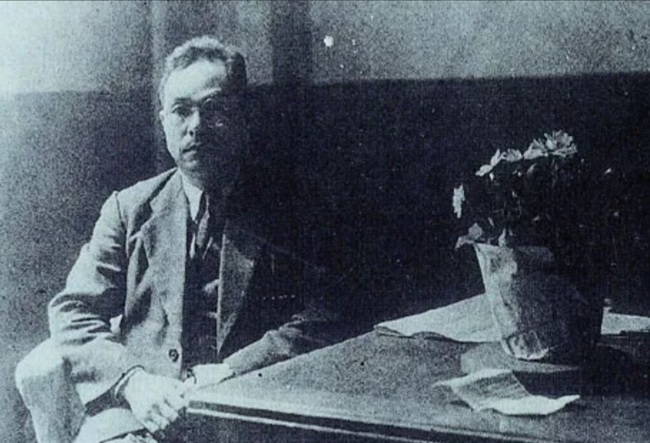 Pak Heon-yeong around 1946.
This figure may be exaggerated due to the nature of announcements at the time. The term "subversive elements" is also clearly the language of power.
However, what is clear is that the political environment of 1949 was not a field for legitimate competition but a phase of rooting out underground organizations. Namro-dang was no longer a political force, and its residual organizations were caught and suppressed by the intelligence networks of the police and military.
In April of the same year, 1949, the government organized the National Guidance Alliance. Its official purpose was the enlightenment and management of left-wing defectors. This system would later be connected to the tragedies of the Korean War and leave deep scars.
However, from the perspective of 1949, the state created a dual structure that separated left-wing remnants into targets for "defection and management" by the government, and targets for "eradication" by the police.
This structure provided a highly favorable environment for the survival of Namro-dang's remnants. As their organizations collapsed, they turned their sense of victimhood into their political capital by framing it as, "We were not defeated, we were oppressed."
To avoid examining their failures, which would undermine their ideology, the remnants of Namro-dang employed the strategy of transforming their failures into persecution.
Strictly speaking, the final collapse of Namro-dang's underground core led to the arrest of Kim Sam-ryong and Lee Ju-ha, Pak Heon-yeong's subordinates, in March 1950. This event signifies the practical end of Namro-dang's remaining underground organizations.
However, the decisive turning point had already passed in 1949, as the departure of leadership, dissolution of the organization, large-scale arrests, and failure to infiltrate institutions were all concentrated within that single year.
The collapse of Namro-dang's remaining organizations in 1949 is not merely a historical event. It is the prototype of the method of processing defeat that pro-North leftists have repeated for the past 80 years.
That is, "If we admit defeat, we must revise our ideology." "Our ideology cannot be revised, so we turn defeat into victimhood." 1949 was the year this formula was first completed, and it has been repeated countless times since.
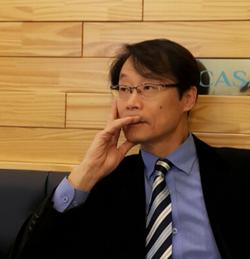
◆ Songsan
A poet and researcher of history and philosophy. He served as a director of the Syngman Rhee Institute and currently acts as a senior researcher for the Korean Modern and Contemporary History Research Association and the representative of the philosophy forum Lyceum. He has published four poetry collections and co-translated "Heroes of Hook Ridge." Songsan is a pen name.

 Iranian Foreign Ministry: "Continuing Message Exchanges with the U.S. and Activities of Mediating Countries"
Esmaeil Baghaei, Spokesperson for the Iranian Ministry of Foreign Affairs [Xinhua, Yonhap News file photo]Esmaeil Baghaei, spokesperson for the Iranian Ministry of Foreign Affairs, stated on the 26th
Iranian Foreign Ministry: "Continuing Message Exchanges with the U.S. and Activities of Mediating Countries"
Esmaeil Baghaei, Spokesperson for the Iranian Ministry of Foreign Affairs [Xinhua, Yonhap News file photo]Esmaeil Baghaei, spokesperson for the Iranian Ministry of Foreign Affairs, stated on the 26th
 President Yoon: "Do You Think You Are Safe from the Special Counsel?"... Final Statement Video Released
President Yoon Suk Yeol rebuking the special prosecutor on the 24th. [Court video / @birds_justice X account subtitle GIF] A video of President Yoon Suk Yeol's closing statement at his trial rega
President Yoon: "Do You Think You Are Safe from the Special Counsel?"... Final Statement Video Released
President Yoon Suk Yeol rebuking the special prosecutor on the 24th. [Court video / @birds_justice X account subtitle GIF] A video of President Yoon Suk Yeol's closing statement at his trial rega
 President Yoon, regarding the first-instance ruling on the Public Official Election Act: “An excessive political verdict that distorts the facts… We will appeal immediately.”
The first-instance sentencing hearing for President Yoon Suk Yeol regarding violations of the Public Official Election Act is being broadcast live at Seoul Station on the 27th. [Photo=Yonhap News]Pres
President Yoon, regarding the first-instance ruling on the Public Official Election Act: “An excessive political verdict that distorts the facts… We will appeal immediately.”
The first-instance sentencing hearing for President Yoon Suk Yeol regarding violations of the Public Official Election Act is being broadcast live at Seoul Station on the 27th. [Photo=Yonhap News]Pres
 WSJ: "SK Hynix ADR Premium Is a Sign of AI Trading Overheat"
Advertisement for SK Hynix ADR listing in New York's Times Square [Reuters=Yonhap News file photo]The Wall Street Journal (WSJ) has pointed out that the price of SK Hynix’s American Depositary Recei
WSJ: "SK Hynix ADR Premium Is a Sign of AI Trading Overheat"
Advertisement for SK Hynix ADR listing in New York's Times Square [Reuters=Yonhap News file photo]The Wall Street Journal (WSJ) has pointed out that the price of SK Hynix’s American Depositary Recei
 'Godfather of Japanese Mystery Novels' Keigo Higashino Passes Away After Battle with Cancer at 68
Famous Japanese mystery novelist Keigo Higashino [AFP=Yonhap News]It has been belatedly reported that Keigo Higashino, the "godfather of Japanese mystery novels" and author of bestsellers such as "The
'Godfather of Japanese Mystery Novels' Keigo Higashino Passes Away After Battle with Cancer at 68
Famous Japanese mystery novelist Keigo Higashino [AFP=Yonhap News]It has been belatedly reported that Keigo Higashino, the "godfather of Japanese mystery novels" and author of bestsellers such as "The
 [Park Pil-kyu Security Column] To the Ignorant Trying to Clothe a Beast in Sheep's Clothing
Rep. Kim Byung-joo of the Democratic Party of Korea [Photo=Yonhap News]“The Air Force Academy doesn't teach you how to fly a plane!” “The Army, Navy, and Air Force academies are exactly the
[Park Pil-kyu Security Column] To the Ignorant Trying to Clothe a Beast in Sheep's Clothing
Rep. Kim Byung-joo of the Democratic Party of Korea [Photo=Yonhap News]“The Air Force Academy doesn't teach you how to fly a plane!” “The Army, Navy, and Air Force academies are exactly the
 [Issue Diagnosis] Two Effects of the Election Petition Review
 [Photo] Evidence of Election Fraud Flooding U.S. Media… Trump Had 2.7 Million Votes Stolen
 [Video] U.S. Semiquincentennial Air Show... 'Art in the Sky' streaks across New York
 [Editorial Cartoon] A Draconian Law That Undermines Freedom of Expression

 List
List