 A police officer being subjected to a people's tribunal. The People's Committee massacred military personnel, police, and their families through people's tribunals.
When the war broke out on June 25, 1950, it wasn't just the front lines that collapsed.
Administration and public security collapsed first. The vacuum left by the retreat of the ROK Army and police was filled by the occupation of the North Korean People's Army, and People's Committees were organized in various localities. Enforcement organizations, under names like the Security Bureau, Branch Office, Self-Defense Force, and Public Security Corps, were rapidly established.
The Truth and Reconciliation Commission (hereinafter referred to as the TRC) also explains that the governance of occupied areas operated primarily through People's Committees and Security Bureaus. The power vacuum was not left unfilled for long; it was soon occupied by other forms of authority.
People's Committees Massacred Families of ROK Army and Police Arbitrarily
In this process, targets for "retaliatory killings" were set. If the "individuals" of the ROK Army and police could not be apprehended, their families were taken. Fathers, mothers, wives, children, and siblings were all taken together.
The reason was the label of being from a "police family" or a "ROK Army family." They did not investigate what the individuals had actually done or what specific crimes they had committed. Family relationships themselves became the charge.
Lists circulated, leaders were appointed, and in many places, public executions were carried out. Abductions often happened at night, and the places of detention were usually public halls, schools, Security Bureau detention centers, riverbanks, air-raid shelters, or valleys.
They were buried alive, shot, or bludgeoned to death. Cases of preventing the recovery of bodies were also common. This was not combat; it was political assassination targeting civilians. It was a method of power to instill fear by targeting families.
Gahak-ri, Daedeok-myeon, Jangheung-gun, Jeollanam-do. On September 9, 1950, Security Bureau members and People's Committee officials raided the home of Lee Guk-bin. His son, Lee Dae-jin (born 1909), was dragged to the public hall.
At the scene, the person in charge stated in front of the residents that "the son and brother are police officers, so they are from a reactionary family," and reports and testimonies remain that a summary execution followed immediately.
"What crime did you commit?" was not asked. The stigma of being a "police family" was sufficient. This atrocity was not confined to Jangheung that day. The same logic was repeated in neighboring areas.
Records also exist showing the situation immediately after the occupation of Seoul. A document dated July 8, 1950, contains propaganda and broadcast slogans stating that "Korean police formed the middle class." This was incitement designed to define police as "class enemies" and stir up public hostility.
What happened on the ground was brutal. Police officers themselves were arrested and executed, followed by violence against their families.
This series of events cannot be simply summarized as "the chaos of war." This is because a process of targeting, arrest, and execution or disappearance was repeated. When a process is repeated, it is not an accidental occurrence.
Looking at the case of Paju in northern Gyeonggi Province, the pattern becomes even clearer. Around September 26, 1950, the People's Army and local leftists dragged residents to the Security Bureau and imprisoned them. A case recorded in TRC documents details a shooting that occurred on September 30 in an air-raid shelter in front of Jeonjin Bridge in Dupodong, Jeokseong-myeon, where victims were shot with their hands bound.
The examples above may seem like individual incidents. However, the structure is the same. "Drag away, bind, kill." This combination was repeated in many regions.
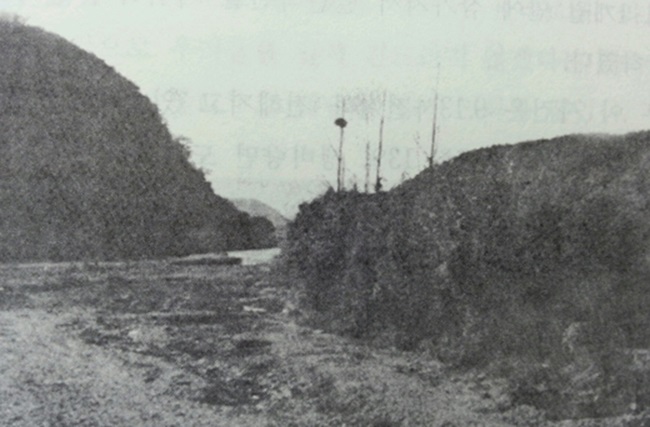 On the night of September 13, 1951, "evil reactionary" forces of the 57th Division massacred 20 police officers with spears and sickles after declaring them as such.
The South Korean government conducted investigations into civilian casualties during the Korean War multiple times during and after the war. The Ministry of Public Information investigated damages in Seoul in September 1950, followed by nationwide investigations in 1952 (1st) and 1953 (2nd).
Jeong Byung-joon's research on the Korean War provides a relatively detailed account of the investigation process and its limitations.
Naturally, as these investigations were conducted in the immediate aftermath of the war and during a period of post-war turmoil, administrative documents sufficient to fully restore the criteria and procedures by which individual victim lists were compiled are often not preserved.
Therefore, it has been pointed out that, by today's standards, it is difficult to uniformly assess the accuracy of numbers and detailed items.
However, the fact that there were large-scale casualties by hostile forces, namely the People's Army, local leftists, and guerrillas, and that these included individuals branded as collaborators with the state, such as police and public officials, and their families, remains unshaken.
This is evident even from the types of incidents confirmed by the TRC. "Incidents of sacrifice by hostile forces" were categorized separately, and cases from all over the country were accumulated. Media reports also repeatedly confirm this.
In April 2024, there was a report that the TRC had established the truth about "the sacrifice of approximately 1,700 religious figures by North Korean forces and leftist forces." In areas like Yeongam, Jeollanam-do, the TRC also made truth determination decisions regarding civilian casualties caused by the People's Army and local leftists.
The violence during the war was not committed by only one state power. Leftist occupation and guerrilla forces in the North and South also systematically murdered civilians. In particular, "families of the ROK Army and police" were easy targets due to their significant impact in spreading fear. If an entire family is eradicated, the neighborhood falls silent within days. Fear-based rule operates this way.
Who Made These Deaths "Non-Existent"?
Now, the issue is not with the gun but with the pen. It is not about who pulled the trigger, but about who erased those deaths from the records. The group that performed this role was pro-North Korean leftist intellectuals.
The killings of police and ROK Army families that occurred in occupied areas were renamed in their writings. Expressions like "regional conflict," "retaliation," "left-right clashes," "tragedy of war," and "confrontation in the liberation space" were repeatedly used. These terms were employed to erase the perpetrators.
The actual operating entities—the People's Army, local leftists, Security Bureau members, and People's Committees—were omitted from the sentences, leaving only emotional and abstract words. When written this way, responsibility disappears. When responsibility disappears, the perpetrators lose their names, and the victims lose their incidents. No trials, no compensation, no commemoration occur.
Pro-North Korean leftist intellectuals did not stop there. They intentionally distorted the proportion of violence during the war. In their narratives, the focus was always on "state violence." The Bodo League, preemptive arrests, and massacres of prison inmates were repeatedly highlighted. This led to research, commemoration, and education.
The murder of civilians by the People's Army and local leftists was not covered with the same intensity. Incidents where families of police and public officials were targeted and killed were consistently relegated to the background. The reasons were similar: "lack of data," "difficulty in confirmation," "judgment withheld." Such phrases were essentially a de facto absolution.
This disparity was also evident during the TRC's investigation process. Cases of perpetrators being ROK military or police were incorrectly registered and then corrected to hostile forces, and debates surrounding this were repeated. However, social attention remained focused on one side.
The result was the formation of a victim hierarchy within the narrative structure created by pro-North Korean leftist intellectuals. Some deaths became national memories, while others were pushed aside as individual misfortunes.
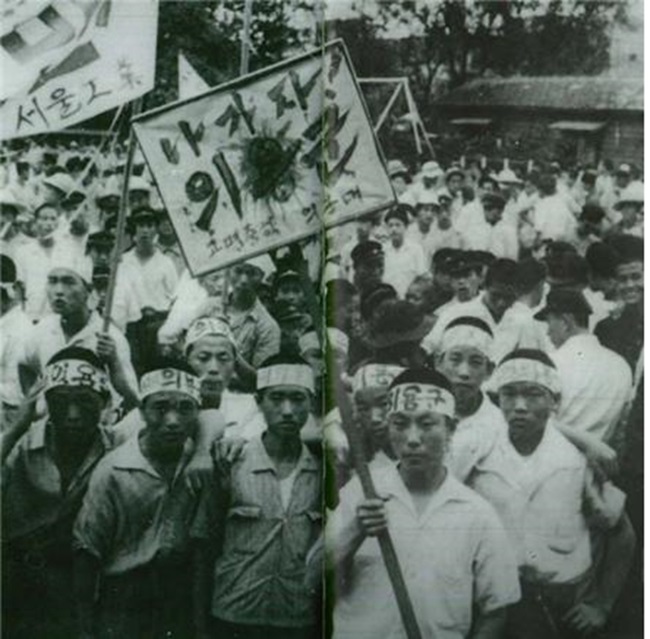 Young students mobilized for the North Korean "Volunteer Army" recruitment.
In this process, the surviving families of police and public officials remained silent. Silence was not a voluntary choice. They suffered disadvantages for speaking out. The label of being from a "police family" continued to be a disadvantage for a long time. Disadvantages followed in employment, marriage, and community relations. Therefore, they did not speak. Or rather, they could not speak.
This silence is not a matter of individual disposition or choice. It is because there was no space in this society where they could speak. If intellectuals, the media, publishers, and textbooks did not address these incidents, the experiences of the victims could not be elevated to public history.
Incidents not recorded do not become national memory; they remain as individual memories. Then, the surviving families come to believe that their experiences are exceptional cases.
If dates like September 9, 1950, in Jangheung are not inscribed in history, survivors remain isolated, thinking, "This only happened to our family."
Even after time has passed, the attitude has not significantly changed. Pro-North Korean leftist intellectuals have closed the door on these incidents with the phrase "mutual tragedy." They have made everyone a victim by including perpetrators and victims in the same sentence. This approach is convenient but erases the truth.
The case of police families being dragged away and shot without reason is not in the same category as casualties from combat during a battle. One is a targeted killing. The other is combat damage. Treating them with equal weight is not scholarship but distortion.
To this, the word "unavoidable" is added. Leftist retaliatory killings are explained by the intensity of the wartime situation, while state violence is defined as a structural crime.
The same standard is not applied. It is a double standard. When a double standard becomes entrenched, a hierarchy of victims is created. Some deaths receive memorial monuments, while others do not even receive a name.
The last resort is the phrase "lack of data." It is true that wartime data is incomplete. However, pro-North Korean leftist intellectuals did not use this incompleteness as a starting point for their investigations; they used it as a concluding statement.
Since there is no data, they do not address it. Since they do not address it, testimonies disappear. As testimonies disappear, data further diminishes. In this vicious cycle, the victims are forced into silence once again.
The retaliatory killings of ROK Army and police families in 1950-1951 were not a byproduct of the war. They were political assassinations carried out by the occupying power targeting civilians to instill fear.
As in the case of September 9, 1950, in Jangheung, records remain of the actual utterance, "You're a police family, so you're executed." TRC documents and media reports repeatedly confirm that such incidents of sacrifices by hostile forces existed throughout the country.
Despite this, there is a reason why these incidents have remained outside of history. It is not only because of the perpetrators with guns, but also because of the "organizers" with pens. Pro-North Korean leftist intellectuals played a role in erasing this violence. As a result, the surviving families were silent for a long time, local communities closed their mouths, and the suffering aged without being recorded.
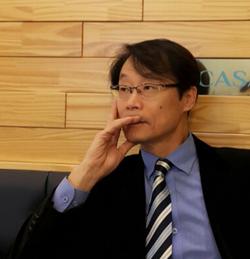
◆ Songsan
A poet and researcher of history and philosophy. He served as a director of the Syngman Rhee Institute and currently serves as a research advisor for the Association for Modern Korean History Research and CEO of the Philosophy Forum Lyceion. He has published four poetry collections and co-translated "Heroes of the Chosin Reservoir." Songsan is a pen name.

 Iranian Foreign Ministry: "Continuing Message Exchanges with the U.S. and Activities of Mediating Countries"
Esmaeil Baghaei, Spokesperson for the Iranian Ministry of Foreign Affairs [Xinhua, Yonhap News file photo]Esmaeil Baghaei, spokesperson for the Iranian Ministry of Foreign Affairs, stated on the 26th
Iranian Foreign Ministry: "Continuing Message Exchanges with the U.S. and Activities of Mediating Countries"
Esmaeil Baghaei, Spokesperson for the Iranian Ministry of Foreign Affairs [Xinhua, Yonhap News file photo]Esmaeil Baghaei, spokesperson for the Iranian Ministry of Foreign Affairs, stated on the 26th
 President Yoon: "Do You Think You Are Safe from the Special Counsel?"... Final Statement Video Released
President Yoon Suk Yeol rebuking the special prosecutor on the 24th. [Court video / @birds_justice X account subtitle GIF] A video of President Yoon Suk Yeol's closing statement at his trial rega
President Yoon: "Do You Think You Are Safe from the Special Counsel?"... Final Statement Video Released
President Yoon Suk Yeol rebuking the special prosecutor on the 24th. [Court video / @birds_justice X account subtitle GIF] A video of President Yoon Suk Yeol's closing statement at his trial rega
 President Yoon, regarding the first-instance ruling on the Public Official Election Act: “An excessive political verdict that distorts the facts… We will appeal immediately.”
The first-instance sentencing hearing for President Yoon Suk Yeol regarding violations of the Public Official Election Act is being broadcast live at Seoul Station on the 27th. [Photo=Yonhap News]Pres
President Yoon, regarding the first-instance ruling on the Public Official Election Act: “An excessive political verdict that distorts the facts… We will appeal immediately.”
The first-instance sentencing hearing for President Yoon Suk Yeol regarding violations of the Public Official Election Act is being broadcast live at Seoul Station on the 27th. [Photo=Yonhap News]Pres
 WSJ: "SK Hynix ADR Premium Is a Sign of AI Trading Overheat"
Advertisement for SK Hynix ADR listing in New York's Times Square [Reuters=Yonhap News file photo]The Wall Street Journal (WSJ) has pointed out that the price of SK Hynix’s American Depositary Recei
WSJ: "SK Hynix ADR Premium Is a Sign of AI Trading Overheat"
Advertisement for SK Hynix ADR listing in New York's Times Square [Reuters=Yonhap News file photo]The Wall Street Journal (WSJ) has pointed out that the price of SK Hynix’s American Depositary Recei
 'Godfather of Japanese Mystery Novels' Keigo Higashino Passes Away After Battle with Cancer at 68
Famous Japanese mystery novelist Keigo Higashino [AFP=Yonhap News]It has been belatedly reported that Keigo Higashino, the "godfather of Japanese mystery novels" and author of bestsellers such as "The
'Godfather of Japanese Mystery Novels' Keigo Higashino Passes Away After Battle with Cancer at 68
Famous Japanese mystery novelist Keigo Higashino [AFP=Yonhap News]It has been belatedly reported that Keigo Higashino, the "godfather of Japanese mystery novels" and author of bestsellers such as "The
 [Park Pil-kyu Security Column] To the Ignorant Trying to Clothe a Beast in Sheep's Clothing
Rep. Kim Byung-joo of the Democratic Party of Korea [Photo=Yonhap News]“The Air Force Academy doesn't teach you how to fly a plane!” “The Army, Navy, and Air Force academies are exactly the
[Park Pil-kyu Security Column] To the Ignorant Trying to Clothe a Beast in Sheep's Clothing
Rep. Kim Byung-joo of the Democratic Party of Korea [Photo=Yonhap News]“The Air Force Academy doesn't teach you how to fly a plane!” “The Army, Navy, and Air Force academies are exactly the
 [Issue Diagnosis] Two Effects of the Election Petition Review
 [Photo] Evidence of Election Fraud Flooding U.S. Media… Trump Had 2.7 Million Votes Stolen
 [Video] U.S. Semiquincentennial Air Show... 'Art in the Sky' streaks across New York
 [Editorial Cartoon] A Draconian Law That Undermines Freedom of Expression

 List
List









