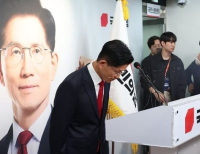
Minister of Health and Welfare Cho Kyung-hoon speaks at the 1st National Pension Fund Management Committee meeting for 2026, held at the Government Complex Seoul in Jongno-gu, Seoul on January 26. 2026.1.26 [Photo=Yonhap News]
The recent controversy over the "sealing of National Pension fund management meeting minutes" is not a simple conflict over information disclosure.
It is a case where the risk of market distortion, known as front-running, and the responsibility for verifying the management of public funds have collided head-on.
The core of the problem lies in the choice to effectively abandon one aspect for the sake of another.
The National Pension recently adjusted its domestic stock allocation upward from 14.4% to 14.9%. While this is only a 0.5 percentage point increase numerically, it represents a fund movement of approximately 5 trillion won, considering the fund's scale.
Upon the announcement of this decision, the market immediately reacted, particularly focusing on large-cap stocks like Samsung Electronics.
This provides ample room for interpretation as a "front-running" phenomenon, where the market first buys stocks expected to be purchased by the National Pension before the actual transaction occurs.
Front-running refers to the act of market participants who, having gained advance knowledge of the trading direction or plans of institutions managing large funds, profit by buying or selling in advance of the actual execution of those trades.
While not exclusively a concept limited to illegal activities, significant information asymmetry can distort price formation and result in disadvantageous conditions being passed on to pension funds or public funds, which are the ultimate buyers.
In particular, for a fund as large and with a relatively predictable trading direction as the National Pension, front-running can act as a structural risk. Therefore, the National Pension's claim for sealing the minutes to manage the risk of front-running has a certain validity.
△ The fact that the pension fund is large, its execution methods are predictable, and its market impact is significant.
△ That excessive disclosure of detailed management discussions could lead to amplified market anticipation,
△ And that the costs incurred could ultimately fall upon the pension assets of the public.
From this perspective, it is difficult to deny the judgment that a certain level of non-disclosure is unavoidable.
However, the problem lies beyond this point.
This sealing of meeting minutes was not a simple staggered disclosure but was implemented in a way that seals the core discussions for an extended period.
The channels through which external parties can verify who made the decision, on what grounds, whether policy considerations were involved, and whether management principles were consistently applied have been effectively blocked.
Under the guise of preventing front-running, the accountability structure for managing public funds has been sealed along with it.
The National Pension is not a private fund.
It is a public fund established through mandatory contributions from citizens, and its management decisions have a ripple effect akin to policy.
Therefore, independence should not be secured through sealing but should be established on the possibility of ex-post verification. Independence without verification is closer to opacity than autonomy.
More importantly, sealing the meeting minutes does not actually prevent front-running.
The adjustments in allocation and the direction of investment have already been disclosed, and the market can calculate the fund size and target asset classes. Even if detailed discussions are hidden, the market reads the direction.
Consequently, this sealing has eliminated verification without reducing front-running.
Major overseas pension funds do not escape the same dilemma.
Instead of immediate full disclosure or permanent sealing, they opt for conditional disclosure with a certain time lag.
They manage market impact while leaving the rationale for decisions and the decision-making structure available for ex-post verification.
The underlying premise is that front-running is something to be managed, not a reason to abandon verification.
The essence of this controversy is not 'whether the National Pension intervened in the market.'
It is the question of 'whether it is justifiable to completely block the verifiability of public decisions for the sake of preventing front-running.'
Front-running cannot be entirely eliminated, but verification must be retained.
Unless this question is answered, the sealing of meeting minutes will inevitably remain a choice that consumes trust, rather than a choice for the market.

 [Statement by the Seo-beo-kka Korea Military Academy Save-the-Nation Comrades Association] ㉛ Recount the Votes Publicly, as the Previous Recount Concealed Election Fraud
Tongyeong Mayoral Election Recount [Photo=Yonhap News]South Korea's liberal democracy is dying. The National Election Commission (NEC) and the judiciary, which have plummeted into criminal syndicates
[Statement by the Seo-beo-kka Korea Military Academy Save-the-Nation Comrades Association] ㉛ Recount the Votes Publicly, as the Previous Recount Concealed Election Fraud
Tongyeong Mayoral Election Recount [Photo=Yonhap News]South Korea's liberal democracy is dying. The National Election Commission (NEC) and the judiciary, which have plummeted into criminal syndicates
 What is the significance of the "Trump 2028" red hats that keep making a comeback?
It is noteworthy that President Donald Trump is "intentionally" fueling controversy over whether he can actually run in the 2028 presidential election, even though it is "highly likely he is seriously
What is the significance of the "Trump 2028" red hats that keep making a comeback?
It is noteworthy that President Donald Trump is "intentionally" fueling controversy over whether he can actually run in the 2028 presidential election, even though it is "highly likely he is seriously
 Jin Cummings: "North Korea says it will increase the number of spies, so what is the government doing?"
U.S. political columnist Gene Cummings has publicly questioned the South Korean government, asking, "North Korea is announcing plans to increase its number of spies, yet what is the South Korean
Jin Cummings: "North Korea says it will increase the number of spies, so what is the government doing?"
U.S. political columnist Gene Cummings has publicly questioned the South Korean government, asking, "North Korea is announcing plans to increase its number of spies, yet what is the South Korean
 Attorney Do Tae-woo: “Discrepancies in Voter Count and Improper Sealing Confirmed in Tongyeong Mayoral Recount… Official Request for Additional Verification Submitted to Gyeongnam Election Commission”
A bundle of mail-in early voting ballots captured by lawyer Do Tae-woo at the Tongyeong mayoral election recount site. A clear solid line, raising suspicions of election fraud, is visible on the side
Attorney Do Tae-woo: “Discrepancies in Voter Count and Improper Sealing Confirmed in Tongyeong Mayoral Recount… Official Request for Additional Verification Submitted to Gyeongnam Election Commission”
A bundle of mail-in early voting ballots captured by lawyer Do Tae-woo at the Tongyeong mayoral election recount site. A clear solid line, raising suspicions of election fraud, is visible on the side
 Stock Market Crash 'Black Tuesday'… KOSPI down 10.8%, KOSDAQ down 7.7%
The KOSPI fell by more than 5% in early trading on the 28th, triggering a sell-side sidecar.On the 28th, the KOSPI plunged by more than 10%.Due to the sharp decline, a sell-side sidecar—a temporary
Stock Market Crash 'Black Tuesday'… KOSPI down 10.8%, KOSDAQ down 7.7%
The KOSPI fell by more than 5% in early trading on the 28th, triggering a sell-side sidecar.On the 28th, the KOSPI plunged by more than 10%.Due to the sharp decline, a sell-side sidecar—a temporary
 [World Heritage Committee] 25 New World Heritage Sites Inscribed in Busan… South Korea Successfully Expands 'Getbol' Listing
The Chairperson of the World Heritage Committee speaks at the plenary session of the 48th session of the World Heritage Committee, held at BEXCO in Busan on the 20th. [Photo: Yonhap News]A total of 25
[World Heritage Committee] 25 New World Heritage Sites Inscribed in Busan… South Korea Successfully Expands 'Getbol' Listing
The Chairperson of the World Heritage Committee speaks at the plenary session of the 48th session of the World Heritage Committee, held at BEXCO in Busan on the 20th. [Photo: Yonhap News]A total of 25
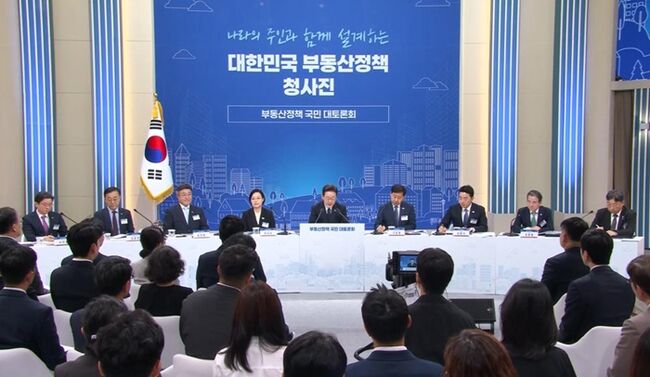 [Liberal Democratic Party Statement] Calling it a Grand Real Estate Debate… It Was Nothing More Than a Private Party Among Themselves
The 'National Grand Debate on Real Estate Policy' held on July 23rd and 27th. [Photo=Yonhap News]The 'National Grand Debate on Real Estate Policy,' hosted by the Lee Jae-myung administration under the
[Liberal Democratic Party Statement] Calling it a Grand Real Estate Debate… It Was Nothing More Than a Private Party Among Themselves
The 'National Grand Debate on Real Estate Policy' held on July 23rd and 27th. [Photo=Yonhap News]The 'National Grand Debate on Real Estate Policy,' hosted by the Lee Jae-myung administration under the
 [Photo] Evidence of Election Fraud Flooding U.S. Media… Trump Had 2.7 Million Votes Stolen
 [Video] U.S. Semiquincentennial Air Show... 'Art in the Sky' streaks across New York
 [Editorial Cartoon] A Draconian Law That Undermines Freedom of Expression

 List
List