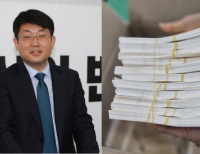
Screenshot of TV Chosun's preview broadcast for a debate between Lee Jun-seok and Jeon Han-gil on election fraud.
Legacy media has long been at the center of public discourse, having played a role in broadcasting national events and bringing political debates into institutional frameworks.
However, perceptions of broadcasting have clearly changed recently.
While the cancellation of TV Chosun's 'End of Election Fraud Debate' and JTBC's exclusive Winter Olympics broadcast controversy are examples from different spheres, they have strengthened the perception that legacy media can no longer stand at the center of public discourse.
The debate was halted, and the gold medals were delivered via subtitles. From that moment on, viewers began referring to broadcasting not as legacy, but as 'old'.
'End of Election Fraud Debate' Halted Due to Censorship
TV Chosun's planned 'End of Election Fraud Debate' was ultimately canceled due to internal review burdens. While the broadcaster explained it was a decision made considering regulations and legal responsibilities, online reactions were indifferent.
Reactions such as "The public discourse moves elsewhere the moment the debate is blocked" and "If broadcasters don't take risks, who will?" followed.
The issue is not the cancellation of a specific program, but the structure through which debates are viewed.
US presidential debates are institutionally maintained despite harsh remarks and confrontations, due to the perception that debates are a democratic process rather than mere broadcast content.
In contrast, in Korea, broadcasters' programming responsibilities still take precedence, and the potential risk of statements themselves dictates whether a program can continue.
As a result, a trend of controversial topics moving from terrestrial broadcasting to online platforms is repeatedly observed.
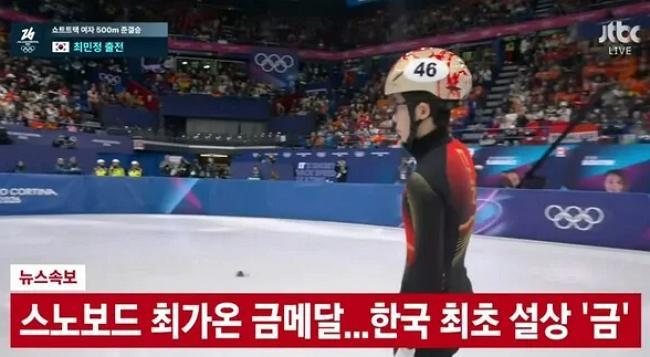 JTBC, which held exclusive rights to the Winter Olympics broadcast, was airing the short track speed skating event at the time. [Photo = JTBC Screenshot]
Exclusive Winter Olympics Broadcast, The Paradox of Monopoly
JTBC has secured domestic broadcast rights for the Olympics from 2026 to 2032, effectively establishing an exclusive system.
While the contract amount has not been disclosed, market estimates range from hundreds of billions of won to up to approximately 1 trillion won. However, despite the high cost and exclusive structure, viewer reactions were mixed.
At the moment of winning a gold medal, which should have been met with cheers, subtitles appeared on screen before the actual competition.
When Korea's first-ever gold medal in snowboarding was broadcast on a secondary channel and only reported via subtitles on the main channel, reactions included "I saw the gold medal through subtitles" and "This isn't exclusive broadcasting, it's restricted viewership."
With the influence of live, TV-centric broadcasts being diluted in a mobile-centric viewing environment, it is argued that we are in an era where exclusivity no longer means dominating the public discourse.
Is the Neglect of Terrestrial Broadcasters to Be Tolerated?
The Olympics being absent from terrestrial broadcasts was not the only issue. The 'End of Election Fraud Debate' also failed to clear the hurdle of terrestrial broadcasting.
While it may appear to be the choice of a specific broadcaster, in effect, it signifies that the entire terrestrial broadcasting sector did not accept this debate as an agenda for public discourse.
The fact that terrestrial broadcasters, which have emphasized their public service role, chose silence in the face of the most controversial topics is a particularly painful point.
Online reactions included, "Why is a debate possible on YouTube but impossible on terrestrial channels?" and "Other platforms eventually fill the void left by terrestrial broadcasters' neglect."
Debates shunned by terrestrial broadcasters do not disappear. They simply become more intensely amplified outside of the broadcast sphere.
Their Role Has Changed, Not Just Their Name
The reason traditional broadcasting is called 'old media' is not due to outdated technology. It is because of the perception that media that once opened public discourse by embracing debate is now seen as a platform that prioritizes censorship and legal risks.
The cancellation of the 'End of Election Fraud Debate' and the controversy over the exclusive Olympics broadcast may seem like separate incidents, but they illustrate how viewer perceptions change when choices to reduce risk are repeated.
Debates that fail to open public discourse and broadcasts that miss crucial moments are no longer called legacy. This is not because their name has changed, but because their role has changed.
The question facing broadcasting now is simple.
"Will they manage controversy, or will they embrace it?"
The moment that choice ends, the term 'old media' becomes an evaluation, not a metaphor.
The moment public discourse is abandoned, broadcasting walks itself to the side of the era.
Click here to pre-order your subscription to Weekly Hanmiilbo
Inquiries: 02-2088-1201

 [Statement by the Seo-beo-kka Korea Military Academy Save-the-Nation Comrades Association] ㉛ Recount the Votes Publicly, as the Previous Recount Concealed Election Fraud
Tongyeong Mayoral Election Recount [Photo=Yonhap News]South Korea's liberal democracy is dying. The National Election Commission (NEC) and the judiciary, which have plummeted into criminal syndicates
[Statement by the Seo-beo-kka Korea Military Academy Save-the-Nation Comrades Association] ㉛ Recount the Votes Publicly, as the Previous Recount Concealed Election Fraud
Tongyeong Mayoral Election Recount [Photo=Yonhap News]South Korea's liberal democracy is dying. The National Election Commission (NEC) and the judiciary, which have plummeted into criminal syndicates
 What is the significance of the "Trump 2028" red hats that keep making a comeback?
It is noteworthy that President Donald Trump is "intentionally" fueling controversy over whether he can actually run in the 2028 presidential election, even though it is "highly likely he is seriously
What is the significance of the "Trump 2028" red hats that keep making a comeback?
It is noteworthy that President Donald Trump is "intentionally" fueling controversy over whether he can actually run in the 2028 presidential election, even though it is "highly likely he is seriously
 Jin Cummings: "North Korea says it will increase the number of spies, so what is the government doing?"
U.S. political columnist Gene Cummings has publicly questioned the South Korean government, asking, "North Korea is announcing plans to increase its number of spies, yet what is the South Korean
Jin Cummings: "North Korea says it will increase the number of spies, so what is the government doing?"
U.S. political columnist Gene Cummings has publicly questioned the South Korean government, asking, "North Korea is announcing plans to increase its number of spies, yet what is the South Korean
 Attorney Do Tae-woo: “Discrepancies in Voter Count and Improper Sealing Confirmed in Tongyeong Mayoral Recount… Official Request for Further Verification Filed with Gyeongnam Election Commission”
A bundle of out-of-district early voting ballots photographed by attorney Do Tae-woo at the Tongyeong mayoral election recount site. A clear, solid line visible on the side of the ballots raises suspi
Attorney Do Tae-woo: “Discrepancies in Voter Count and Improper Sealing Confirmed in Tongyeong Mayoral Recount… Official Request for Further Verification Filed with Gyeongnam Election Commission”
A bundle of out-of-district early voting ballots photographed by attorney Do Tae-woo at the Tongyeong mayoral election recount site. A clear, solid line visible on the side of the ballots raises suspi
 Stock Market Crash 'Black Tuesday'… KOSPI down 10.8%, KOSDAQ down 7.7%
The KOSPI fell by more than 5% in early trading on the 28th, triggering a sell-side sidecar.On the 28th, the KOSPI plunged by more than 10%.Due to the sharp decline, a sell-side sidecar—a temporary
Stock Market Crash 'Black Tuesday'… KOSPI down 10.8%, KOSDAQ down 7.7%
The KOSPI fell by more than 5% in early trading on the 28th, triggering a sell-side sidecar.On the 28th, the KOSPI plunged by more than 10%.Due to the sharp decline, a sell-side sidecar—a temporary
 [World Heritage Committee] 25 New World Heritage Sites Inscribed in Busan… South Korea Successfully Expands 'Getbol' Listing
The Chairperson of the World Heritage Committee speaks at the plenary session of the 48th session of the World Heritage Committee, held at BEXCO in Busan on the 20th. [Photo: Yonhap News]A total of 25
[World Heritage Committee] 25 New World Heritage Sites Inscribed in Busan… South Korea Successfully Expands 'Getbol' Listing
The Chairperson of the World Heritage Committee speaks at the plenary session of the 48th session of the World Heritage Committee, held at BEXCO in Busan on the 20th. [Photo: Yonhap News]A total of 25
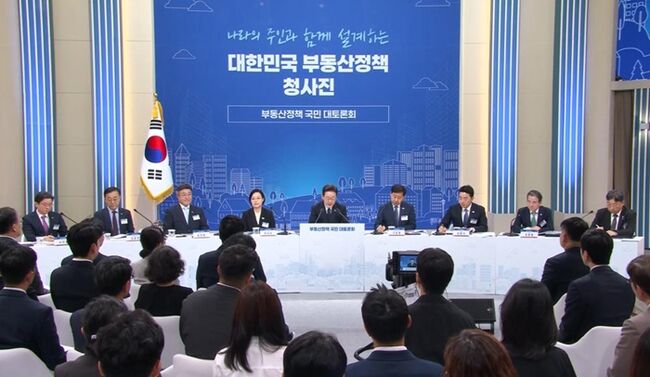 [Liberal Democratic Party Statement] Calling it a Grand Real Estate Debate… It Was Nothing More Than a Private Party Among Themselves
The 'National Grand Debate on Real Estate Policy' held on July 23rd and 27th. [Photo=Yonhap News]The 'National Grand Debate on Real Estate Policy,' hosted by the Lee Jae-myung administration under the
[Liberal Democratic Party Statement] Calling it a Grand Real Estate Debate… It Was Nothing More Than a Private Party Among Themselves
The 'National Grand Debate on Real Estate Policy' held on July 23rd and 27th. [Photo=Yonhap News]The 'National Grand Debate on Real Estate Policy,' hosted by the Lee Jae-myung administration under the
 [Photo] Evidence of Election Fraud Flooding U.S. Media… Trump Had 2.7 Million Votes Stolen
 [Video] U.S. Semiquincentennial Air Show... 'Art in the Sky' streaks across New York
 [Editorial Cartoon] A Draconian Law That Undermines Freedom of Expression

 List
List