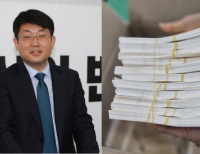
On the night of May 10, 1933, a massive book burning took place at Opernplatz in Berlin, Germany. [Photo=Holocaust Museum]
There was a time when the hand that wrote was restrained by an unseen force. There was an era when sentences were placed on the stake, printing permissions were controlled, and the act of publication was judged as an indicator of political loyalty.
Nazi Germany and the Burning of Thomas Mann
On the night of May 10, 1933, a massive book burning took place at Opernplatz (today's Bebelplatz) in Berlin, Germany. University students and Nazi party members burned books under the pretext of eliminating the "un-German spirit."
Among those flames were the works of Thomas Mann, Sigmund Freud, and Erich Maria Remarque.
In September of the same year, the Nazi regime established the Reich Chamber of Culture (Reichskulturkammer), which effectively mandated a registration system for literature, publishing, theater, film, and journalism. Those who were not registered could not work. Thought was managed through administrative procedure.
As a result, any writing that fundamentally criticized the regime disappeared from the public sphere. All that remained were echoes of the regime's slogans and silence.
Germany was a nation that had produced world-class philosophy and science in the 19th and early 20th centuries. Yet, within a few years, the public discourse converged into a single voice. In a space where diverse opinions could not collide, refutation was impossible. Complex reality was distilled into simple diagrams, and individuals were divided into heroes and traitors.
The Soviet Official Principle of 'Socialist Realism'
A similar development occurred in the Soviet Union. In April 1932, the Party issued a resolution to dissolve existing literary and artistic groups and form a unified organization. Subsequently, at the First Congress of Soviet Writers in 1934, "Socialist Realism" was adopted as the official creative principle.
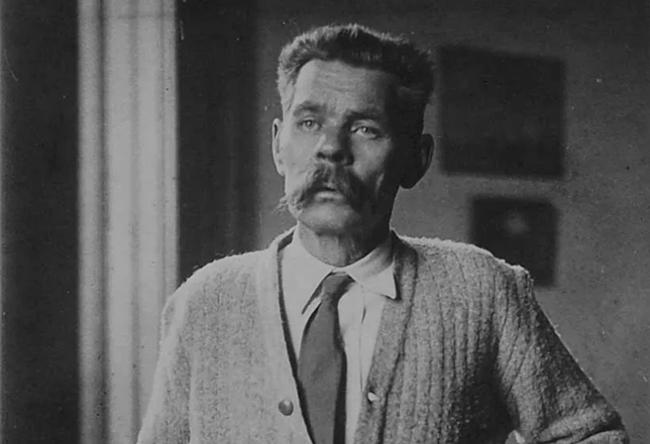 Maxim Gorky, the founder of Soviet "Socialist Realism."
Creation was no longer about exploring reality, but about depicting it in the direction prescribed by the state. Anna Akhmatova faced long periods where her work was restricted, and her poetry was passed down through recitation and hand-copying rather than print. Osip Mandelstam died in a transit camp near Vladivostok in 1938.
These cases show more than just the intensity of oppression. A deeper issue was the atrophy of thought. Writers calculated what they could say. They constantly gauged what was permissible, which expressions were safe, and which topics were dangerous.
Consequently, the areas left untouched gradually expanded. Inconvenient statistics were left uncited, and disadvantageous data were pushed to the margins. Academia could not move outside of the "safe zone."
Social Pressure Leads to Self-Censorship
Control was not always overt. Publishing permits, professional disadvantages, and social stigma functioned as indirect but powerful pressures. External surveillance led to internal self-restraint. As silence became a habit, areas of thought withered away. The muscles of reason grew weak through disuse.
Conversely, in spaces where open debate was permitted, a different scene unfolded. Between 1787 and 1788, the United States saw fierce debates surrounding the ratification of the Constitution.
The "Federalist Papers" were published anonymously, and rebuttals from the opposing side soon followed. Newspapers and pamphlets were filled with conflicting arguments. In that process, the principles of separation of powers and checks and balances took concrete shape. There was conflict, but that conflict was part of a process that solidified institutional foundations.
In Britain, the scope of journalistic activity widened after the pre-censorship system was weakened in 1695. Although the government felt uncomfortable, various viewpoints competed in the public sphere. Errors were exposed, and policies were corrected. Debate created noise, but that noise was the process by which the community corrected itself.
As the conduits of thought narrowed, the community's capacity for judgment weakened. In a space where opposing opinions disappeared, flawed policies became difficult to correct. In spaces where diverse ideas could clash, criticism functioned as a warning system.
Writing is not merely an individual hobby. It is a mechanism through which a society examines itself. When this mechanism is blocked, a community loses the power to discover its own errors. A society where writers compose their sentences in fear eventually loses the ability to doubt itself.
A Healthy Society Must Be Able to Express Diverse Thoughts
Therefore, diverse thoughts must be able to be expressed in the public sphere. Even uncomfortable arguments should emerge alongside their refutations. Writers should write according to their own judgment, not external permission. This is not a matter of individual face, but a condition directly linked to the intellectual health of society as a whole.
When the hand restraining the sentence disappears, exploration, refutation, and correction become possible. Control creates order on the surface, but in the long term, it impoverishes thought. An open environment sometimes brings confusion.
Yet, in that confusion, arguments become robust. When the conduits of thought are open, the community looks further ahead. When those conditions are maintained, writing can finally fulfill its intended role.
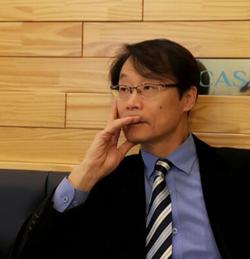
◆ Songsan
A poet and researcher of history and philosophy. Former director of the Rhee Syngman Institute. Currently serving as a research advisor for the Korea Modern and Contemporary History Research Association and representative of the philosophy forum "Lyceum." He has published four volumes of poetry, co-translated "Heroes of Heartbreak Ridge," and authored the historical psychology commentary "Joseon, Turned into Myth" (2026). He is actively engaged in the research and practice of the liberal cultural movement. Songsan is his pen name.

 [Statement by the Seo-beo-kka Korea Military Academy Save-the-Nation Comrades Association] ㉛ Recount the Votes Publicly, as the Previous Recount Concealed Election Fraud
Tongyeong Mayoral Election Recount [Photo=Yonhap News]South Korea's liberal democracy is dying. The National Election Commission (NEC) and the judiciary, which have plummeted into criminal syndicates
[Statement by the Seo-beo-kka Korea Military Academy Save-the-Nation Comrades Association] ㉛ Recount the Votes Publicly, as the Previous Recount Concealed Election Fraud
Tongyeong Mayoral Election Recount [Photo=Yonhap News]South Korea's liberal democracy is dying. The National Election Commission (NEC) and the judiciary, which have plummeted into criminal syndicates
 What is the significance of the "Trump 2028" red hats that keep making a comeback?
It is noteworthy that President Donald Trump is "intentionally" fueling controversy over whether he can actually run in the 2028 presidential election, even though it is "highly likely he is seriously
What is the significance of the "Trump 2028" red hats that keep making a comeback?
It is noteworthy that President Donald Trump is "intentionally" fueling controversy over whether he can actually run in the 2028 presidential election, even though it is "highly likely he is seriously
 Jin Cummings: "North Korea says it will increase the number of spies, so what is the government doing?"
U.S. political columnist Gene Cummings has publicly questioned the South Korean government, asking, "North Korea is announcing plans to increase its number of spies, yet what is the South Korean
Jin Cummings: "North Korea says it will increase the number of spies, so what is the government doing?"
U.S. political columnist Gene Cummings has publicly questioned the South Korean government, asking, "North Korea is announcing plans to increase its number of spies, yet what is the South Korean
 Attorney Do Tae-woo: “Discrepancies in Voter Count and Improper Sealing Confirmed in Tongyeong Mayoral Recount… Official Request for Further Verification Filed with Gyeongnam Election Commission”
A bundle of out-of-district early voting ballots photographed by attorney Do Tae-woo at the Tongyeong mayoral election recount site. A clear, solid line visible on the side of the ballots raises suspi
Attorney Do Tae-woo: “Discrepancies in Voter Count and Improper Sealing Confirmed in Tongyeong Mayoral Recount… Official Request for Further Verification Filed with Gyeongnam Election Commission”
A bundle of out-of-district early voting ballots photographed by attorney Do Tae-woo at the Tongyeong mayoral election recount site. A clear, solid line visible on the side of the ballots raises suspi
 Stock Market Crash 'Black Tuesday'… KOSPI down 10.8%, KOSDAQ down 7.7%
The KOSPI fell by more than 5% in early trading on the 28th, triggering a sell-side sidecar.On the 28th, the KOSPI plunged by more than 10%.Due to the sharp decline, a sell-side sidecar—a temporary
Stock Market Crash 'Black Tuesday'… KOSPI down 10.8%, KOSDAQ down 7.7%
The KOSPI fell by more than 5% in early trading on the 28th, triggering a sell-side sidecar.On the 28th, the KOSPI plunged by more than 10%.Due to the sharp decline, a sell-side sidecar—a temporary
 [World Heritage Committee] 25 New World Heritage Sites Inscribed in Busan… South Korea Successfully Expands 'Getbol' Listing
The Chairperson of the World Heritage Committee speaks at the plenary session of the 48th session of the World Heritage Committee, held at BEXCO in Busan on the 20th. [Photo: Yonhap News]A total of 25
[World Heritage Committee] 25 New World Heritage Sites Inscribed in Busan… South Korea Successfully Expands 'Getbol' Listing
The Chairperson of the World Heritage Committee speaks at the plenary session of the 48th session of the World Heritage Committee, held at BEXCO in Busan on the 20th. [Photo: Yonhap News]A total of 25
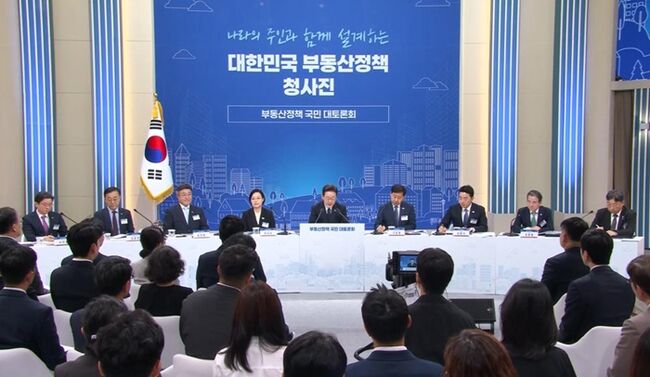 [Liberal Democratic Party Statement] Calling it a Grand Real Estate Debate… It Was Nothing More Than a Private Party Among Themselves
The 'National Grand Debate on Real Estate Policy' held on July 23rd and 27th. [Photo=Yonhap News]The 'National Grand Debate on Real Estate Policy,' hosted by the Lee Jae-myung administration under the
[Liberal Democratic Party Statement] Calling it a Grand Real Estate Debate… It Was Nothing More Than a Private Party Among Themselves
The 'National Grand Debate on Real Estate Policy' held on July 23rd and 27th. [Photo=Yonhap News]The 'National Grand Debate on Real Estate Policy,' hosted by the Lee Jae-myung administration under the
 [Photo] Evidence of Election Fraud Flooding U.S. Media… Trump Had 2.7 Million Votes Stolen
 [Video] U.S. Semiquincentennial Air Show... 'Art in the Sky' streaks across New York
 [Editorial Cartoon] A Draconian Law That Undermines Freedom of Expression

 List
List