 Today's South Korea is not facing threats from guns and swords, but rather its fundamental rights and freedom of expression are being curtailed due to the erosion of trust in public election procedures and systems, and the tyranny of legislative power. Furthermore, the violation of national institutional neutrality is infringing upon national sovereignty.
The spirit of March 1st is a declaration of national recovery, refusing to abandon human dignity, free will, and autonomy in the face of imperial violence. It is the archetype of national sovereignty, asserting that the people are the true masters of the nation.
The cry of March 1st in 1919 transcended the recovery of national sovereignty; it was an event that proclaimed to the world the universal principle of democracy: that power originates from the people, and no power can be exercised without their consent.
The spirit of March 1st embodies the will for self-determination and independence, rejecting foreign interference and domination. It is a charter of rights—freedom, sovereignty, independence, and justice—that forms the foundation of today's democracy.
However, in today's South Korea, national sovereignty is being shaken not by overt force but by invisible powers. Fundamental rights and freedom of expression are being curtailed due to the erosion of trust in public election procedures and systems, and the tyranny of legislative power. The violation of national institutional neutrality has also infringed upon national sovereignty.
National sovereignty has been gradually undermined not by foreign coercion, but by the collapse of election systems and procedures, suspicions of vote manipulation fueled by the opacity of the digital environment, the silence and concealment of the judiciary unable to prosecute even visible crimes, and public apathy. Election fraud in the 21st century is more devastating than the arbitrary oppression during the colonial period.
Therefore, we, as inheritors of the March 1st spirit, declare a code of action to defend the collapsed national sovereignty.
First, election fraud shall be defined as a malicious act that destroys the sovereignty of life, which is the essence of life itself.
Human life possesses inherent dignity that cannot be violated. The sovereignty of life grants individuals the right to protect and choose their dignified lives through national sovereignty.
A ballot, entrusted through national sovereignty, is not merely paper; it is the crystallization of the sovereignty of life, entrusting the voter's conscience and free will to society.
Those who respect life do not infringe upon the rights and sovereignty of others. The exercise of national sovereignty, which protects and safeguards the sovereignty of life, must not permit even a single instance of deficiency, suspicion, or fraud.
If national sovereignty is shaken, the sovereignty of life becomes a mere shell. Only when the sovereignty of life of each individual is respected can the national sovereignty of voters be truly realized.
National sovereignty is a fundamental right granted by the state, and it is also the oldest charter, awakening and declaring that each individual is the master of their own life. South Korea is a democratic nation where the people are sovereign, and all public officials are servants of the people.
Second, state institutions that manage and operate national sovereignty must guarantee transparency and fairness.
Institutions entrusted with managing elections on behalf of national sovereignty are defined by transparency and fairness. Not a single fraudulent ballot can be tolerated.
Deficiencies, suspicions, and opacity in election administration undermine public trust and the authority of the state. Therefore, election management bodies must resolve all questions raised by the public and establish verification structures that the public can directly inspect.
In particular, when election-related disputes, complaints, or accusations are filed, the judiciary must render a swift and fair judgment within six months, in accordance with law and principle. However, in reality, the potential for structural conflicts of interest between the National Election Commission and the judiciary has been consistently pointed out.
The structure where the National Election Commission is organized at national, provincial, and municipal levels, and judicial officials concurrently hold positions within the Election Commission, cannot guarantee fairness.
In such a concurrent position structure, even if election-related complaints and accusations are filed, investigations, the issuance of warrants, and trials cannot be conducted with sufficient independence. Leaving such institutional vulnerabilities unattended makes it impossible to guarantee the transparency and fairness that are the conditions for the existence of a democratic republic. Measures should be explored to select the Chairperson of the National Election Commission through public recruitment.
If even one objection is raised regarding transparency and fairness before or after an election, it shall be considered an infringement of national sovereignty, and the election supervisory authorities (prosecution and police) must immediately launch an investigation to ensure transparency and fairness.
Third, all election-related systems and data must be disclosed.
For the transparency of elections and the legitimacy of procedures, all systems and data must be fully disclosed.
All records related to national sovereignty must be indelible once stored and immediately accessible upon public request. All data, including servers, voter rolls, and early voting images, must be presented without concealment.
The function of maintaining the state through national sovereignty and the values of liberal democracy are non-negotiable. No institution can violate these principles. The people have the right to question the flow of power and to ascertain the legitimacy of procedures.
If a system for verifying suspicions does not function, national sovereignty will be reduced to a mere formality, and actual national sovereignty will devolve to those who obstruct verification, creating a lawless state.
Elections in the digital age also carry the possibility of manipulation through external factors and a loss of trust. Therefore, national-level checks, enhanced security, and transparent information disclosure are essential.
The election system must be configured on an independent network, insulated from any external influences, and continuously improved. National security and the election system are inseparable, as national sovereignty is synonymous with the nation itself.
Fourth, voting must embody the universal human values of freedom, sovereignty, independence, and justice.
Voting is an act of entrusting the dignity and will of an individual to society. The election system must stand on the universal values accumulated by humanity: universal, equal, direct, and secret suffrage. As the ultimate guardians of democracy, the people have the right and responsibility to demand that the system fulfill its original role.
Election procedures must be transparent enough for the public to verify them directly, and any digital or technical elements that cannot eliminate suspicion must be thoroughly excluded.
The voting and vote-counting processes must be designed with the utmost priority on public trust. The system should be improved through national consensus to abolish early voting, conduct in-person voting over two days, and complete all vote counting at polling stations.
The future of South Korea can only stand firm on the establishment of national sovereignty.
The power delegated by the people must be transparent to the people, and liberal democracy can only be fully protected through public participation and oversight.
We, as members of a liberal democratic republic, inheriting and protecting the values of freedom, independence, democracy, and justice left by the spirit of March 1st, declare our resolve to reclaim and safeguard national sovereignty.
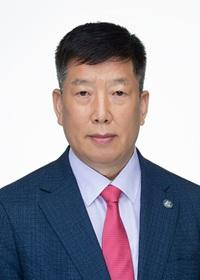
◆ Committee Member Park Pil-gyu
Editorial Board Member, Hankookilbo
40th graduating class, Korea Military Academy

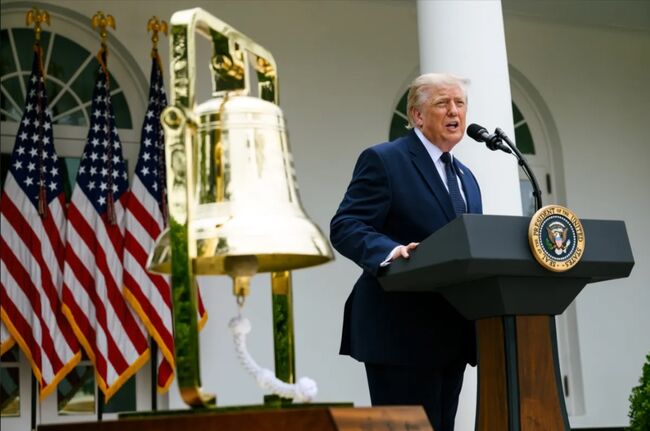 Trump pressures for rate cut again ahead of FOMC... "Should be the lowest in the world"
U.S. President Donald Trump. [Photo = The White House] U.S. President Donald Trump once again pressured the Federal Reserve, the U.S. central bank, to lower interest rates on the 27th (local time
Trump pressures for rate cut again ahead of FOMC... "Should be the lowest in the world"
U.S. President Donald Trump. [Photo = The White House] U.S. President Donald Trump once again pressured the Federal Reserve, the U.S. central bank, to lower interest rates on the 27th (local time
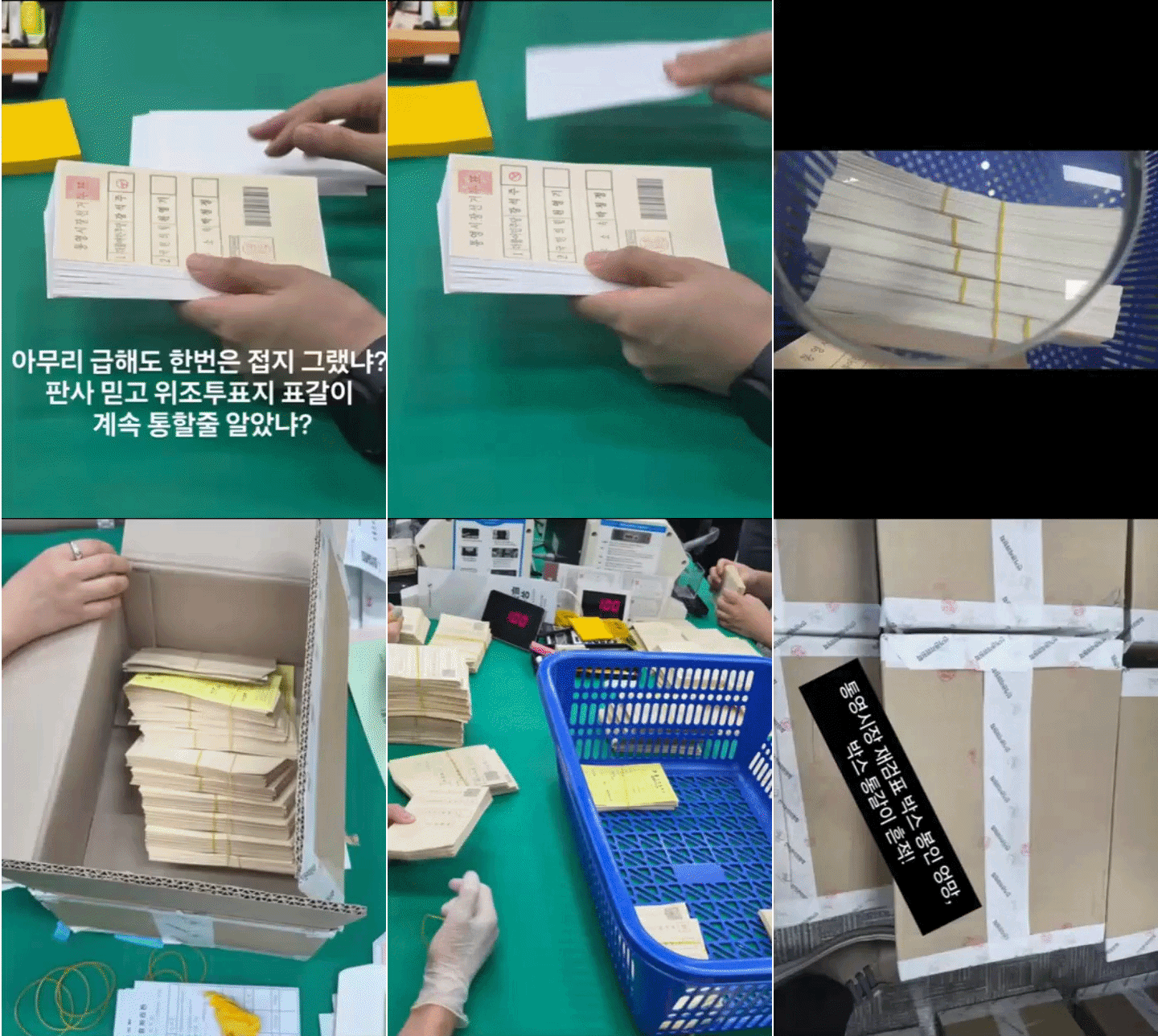 “Ignoring crisp ballots and damaged seals”… Tongyeong mayoral recount concludes with ‘no change in outcome,’ leaving suspicions and public outrage behind
Suspected counterfeit ballots discovered in Tongyeong [GIF from social media of Representative Hwang Kyo-ahn / Attorney Park Joo-hyun]During a recount of the Tongyeong mayoral election in South Gyeong
“Ignoring crisp ballots and damaged seals”… Tongyeong mayoral recount concludes with ‘no change in outcome,’ leaving suspicions and public outrage behind
Suspected counterfeit ballots discovered in Tongyeong [GIF from social media of Representative Hwang Kyo-ahn / Attorney Park Joo-hyun]During a recount of the Tongyeong mayoral election in South Gyeong
 President Yoon, regarding the first-instance ruling on the Public Official Election Act: “An excessive political verdict that distorts the facts… We will appeal immediately.”
The first-instance sentencing hearing for President Yoon Suk Yeol regarding violations of the Public Official Election Act is being broadcast live at Seoul Station on the 27th. [Photo=Yonhap News]Pres
President Yoon, regarding the first-instance ruling on the Public Official Election Act: “An excessive political verdict that distorts the facts… We will appeal immediately.”
The first-instance sentencing hearing for President Yoon Suk Yeol regarding violations of the Public Official Election Act is being broadcast live at Seoul Station on the 27th. [Photo=Yonhap News]Pres
 WSJ: "SK Hynix ADR Premium Is a Sign of AI Trading Overheat"
Advertisement for SK Hynix ADR listing in New York's Times Square [Reuters=Yonhap News file photo]The Wall Street Journal (WSJ) has pointed out that the price of SK Hynix’s American Depositary Recei
WSJ: "SK Hynix ADR Premium Is a Sign of AI Trading Overheat"
Advertisement for SK Hynix ADR listing in New York's Times Square [Reuters=Yonhap News file photo]The Wall Street Journal (WSJ) has pointed out that the price of SK Hynix’s American Depositary Recei
 'Godfather of Japanese Mystery Novels' Keigo Higashino Passes Away After Battle with Cancer at 68
Famous Japanese mystery novelist Keigo Higashino [AFP=Yonhap News]It has been belatedly reported that Keigo Higashino, the "godfather of Japanese mystery novels" and author of bestsellers such as "The
'Godfather of Japanese Mystery Novels' Keigo Higashino Passes Away After Battle with Cancer at 68
Famous Japanese mystery novelist Keigo Higashino [AFP=Yonhap News]It has been belatedly reported that Keigo Higashino, the "godfather of Japanese mystery novels" and author of bestsellers such as "The
 [Park Pil-kyu Security Column] To the Ignorant Trying to Clothe a Beast in Sheep's Clothing
Rep. Kim Byung-joo of the Democratic Party of Korea [Photo=Yonhap News]“The Air Force Academy doesn't teach you how to fly a plane!” “The Army, Navy, and Air Force academies are exactly the
[Park Pil-kyu Security Column] To the Ignorant Trying to Clothe a Beast in Sheep's Clothing
Rep. Kim Byung-joo of the Democratic Party of Korea [Photo=Yonhap News]“The Air Force Academy doesn't teach you how to fly a plane!” “The Army, Navy, and Air Force academies are exactly the
 [Issue Diagnosis] Two Effects of the Election Petition Review
 [Photo] Evidence of Election Fraud Flooding U.S. Media… Trump Had 2.7 Million Votes Stolen
 [Video] U.S. Semiquincentennial Air Show... 'Art in the Sky' streaks across New York
 [Editorial Cartoon] A Draconian Law That Undermines Freedom of Expression

 List
List










