Ahn Doo-hee (right) shot Baekbeom Kim Gu at Gyeonggyojang in Seoul on June 26, 1949.
To defend Ahn Doo-hee does not immediately mean to positively accept the assassination of Kim Gu.
On June 26, 1949, Ahn Doo-hee shot Baekbeom Kim Gu at Gyeonggyojang in Seoul. Numerous historical records consistently state that around 11:30 AM that day, Ahn Doo-hee, dressed in an army uniform, visited Gyeonggyojang, requested a meeting, and then fired his pistol upon meeting Kim Gu.
Kim Gu was born in 1876 and died in 1949, while Ahn Doo-hee was born in Yongcheon, North Pyongan Province, in 1917. After liberation, he moved south, was active in the Seobuk Youth Association, and entered the Korea Military Academy as part of the 8th graduating class in 1948. These fundamental facts remain unshaken.
The problem begins thereafter. For a long time, Korean society did not leave Ahn Doo-hee as merely a perpetrator.
He Was Burdened with a Symbolism Wider Than His Actual Act
A symbolism broader than his actual act was superimposed upon him. Some depicted him as a "demon embodying all sins of national betrayal," while others definitively labeled him as "a complete puppet of the Syngman Rhee regime." Still others treated him as merely a "subordinate who moved solely on money and orders, without any thought."
Conversely, another perspective asserts, "He was a complete lone perpetrator." The core of the argument for defending Ahn Doo-hee lies precisely here. Both the attitude of imposing more meaning than confirmed facts and the attitude of completely erasing confirmed circumstances are distortions of history.
First, the most common distortion surrounding Ahn Doo-hee is the assertion that "even though all the masterminds have been revealed, Ahn Doo-hee alone remained silent and defiant." The actual historical records are not that simple. After his arrest, Ahn Doo-hee strongly asserted his solitary act during the trial.
On August 6, 1949, at the High Military Court, he stated, "Simply put, my mind is at peace. I feel I have done what I needed to do by resolving political concerns through murder." He also left remarks suggesting that while he respected Kim Gu as a person, he believed he was politically in the right.
He even made statements that seemed to call for the death penalty. These statements are clearly documented. Therefore, the claim that "Ahn Doo-hee was a simple hired killer with no thoughts from beginning to end" does not align with historical records.
This does not mean his thoughts were correct, but rather that he was an individual who held his own political judgments and convictions.
Ahn Doo-hee Did Not Press the Button Without Thinking
Another distortion is the label of "Ahn Doo-hee was insane." However, looking at Ahn Doo-hee's history, he was not an unconnected wanderer without affiliation to any organization.
He graduated from Shinuiju Commercial School and had a history of entering the law department at Meiji University's vocational program in Japan. After liberation, he was involved with the Seobuk Youth Association and later entered the Korea Military Academy as part of the 8th graduating class.
To dismiss someone with such a background as a mere lunatic is simply a way to cover up the political nature of the incident. Ahn Doo-hee was clearly an individual with dangerous political beliefs, and those beliefs erupted into violence. He was not a machine that pressed a button without thinking.
At this point, defending Ahn Doo-hee does not mean glorifying his crime, but rather criticizing the subsequent simplification that portrays him as a more base and empty being than he actually was.
The third point to address is the explanation that "Ahn Doo-hee was a complete lone perpetrator, so there is nothing more to discuss." This also contradicts historical records. It is true that Ahn Doo-hee's own testimony of a solitary act exists.
However, at the same time, he has long been associated with the Seobuk Youth Association, the military, and Jeong Bo-seon after liberation. The Encyclopedia of Korean Culture also identifies the military as the primary mastermind behind Kim Gu's assassination, stating that while there is no direct evidence of Syngman Rhee's involvement, his intervention in the aftermath is confirmed.
The crucial point here is that to defend Ahn Doo-hee, one must look at this aspect more objectively. He is not the creator of all the sins of modern Korean history.
While Ahn Doo-hee was the perpetrator, the handling of the case after the incident makes it difficult to deny the possibility that someone protected him.
Attributing all historical malice solely to Ahn Doo-hee personally effectively erases the traces of power surrounding him. This is unfair to Ahn Doo-hee and detrimental to historical understanding.
This becomes even clearer in the handling of the case after the trial. Ahn Doo-hee was sentenced to life imprisonment by military court on August 6, 1949. However, in November of that year, his sentence was reduced to 15 years, and he was paroled on grounds of suspension of sentence execution on June 27, 1950.
Furthermore, on July 10, 1950, he was reinstated as a second lieutenant by special order of the Minister of National Defense, followed by a waiver of sentence on February 15, 1952, and retirement upon promotion to major on December 25, 1952.
Afterward, he managed a military supply food factory in Yanggu, Gangwon Province. This indicates that Ahn Doo-hee was not a completely abandoned individual from the moment of his crime until the end. Many aspects are difficult to explain without the protection of someone, the convenience of someone, or the turning of a blind eye by someone.
If so, the act of later generations making Ahn Doo-hee solely the "absolute evil" and directing their anger towards him becomes a way to obscure the actual workings of power. This is the meaning of defending Ahn Doo-hee.
He was undoubtedly a murderer, but he was also part of a larger scheme, and that aspect was not properly addressed, leading him to become a symbol of hell alone.
Park Ki-seo's Murder of Ahn Doo-hee Was Private Revenge and Should Not Be Glorified
The fourth distortion is the claim that "Ahn Doo-hee never apologized throughout his life." This is also only partially true. On February 28, 1992, Ahn Doo-hee visited Kim Gu's grave at Hyochang Park in Yongsan-gu, Seoul.
According to reports at the time, he prostrated himself before the grave and apologized, stating, "I kneel before the entire nation and apologize. However, there were no masterminds at the time of the crime, and it was an impulsive act." This single scene cannot prove the sincerity of his actions.
However, at least the clichéd portrayal of him "living his life with a mocking attitude" is not true to the facts. He publicly apologized. Whether that apology was late, credible, or calculated can be debated separately.
However, to erase the actual scene of his apology entirely and portray him solely as a "monster who felt no remorse" is another distortion of history. A defense of Ahn Doo-hee should revive these aspects.
The fifth, and most emotional, distortion concerning Ahn Doo-hee is the attitude of describing his death in 1996 as merely "the day justice was finally served."
Ahn Doo-hee was murdered by Park Ki-seo at his home in Sinheung-dong, Jung-gu, Incheon, on October 23, 1996. Park Ki-seo bludgeoned Ahn Doo-hee to death with a club inscribed with "Justice Rod" and subsequently surrendered. This incident was consumed by many as a cathartic act of revenge.
However, legally, it was a case of private revenge murder. The gravity of Ahn Doo-hee's crime and how Park Ki-seo's actions should be viewed from a legal standpoint are separate issues. Yet, Korean society has frequently conflated these two matters.
Because the anger towards Ahn Doo-hee was so great, the act of beating him to death was immediately glorified as a "verdict by the people." In this atmosphere, Ahn Doo-hee's actual guilt and fabricated guilt become indistinguishable.
While the crime he committed was grave enough on its own, Korean society did not stop there and piled on all its hatred. This is precisely why Ahn Doo-hee is wronged by historical distortion. While his crime should be judged as a crime, he should not be burdened with accusations and collective lynching that are exaggerated beyond the facts.
The sixth point to address is the exaggeration of Ahn Doo-hee as "the starting point of all evil" in Korean political history.
The assassination of Kim Gu was undoubtedly a significant event. However, the Korean Peninsula in 1948 and 1949 was already on the brink of explosion due to the establishment of separate governments in the North and South, the US-Soviet confrontation, left-right clashes, the Jeju 4·3 incident and the Yeosu rebellion, the failure of pro-Japanese collaborators to be purged, and debates over the establishment of a single government.
Ignoring these complex circumstances and stating that "because Ahn Doo-hee killed Kim Gu, all of South Korean history went wrong" is an overly simplistic historical interpretation. While Ahn Doo-hee was the perpetrator of a major event, attributing the entirety of modern Korean history to one person is a narrative that lacks balance.
The more he is demonized, the more the brutality of Korean politics at the time and the responsibility of state power are pushed to the background. This is also a form of excessive burdening of Ahn Doo-hee personally.
The seventh distortion is the attitude that "discussing Ahn Doo-hee itself is an insult to Kim Gu." Historical research cannot be conducted in this manner. Respecting Kim Gu and viewing Ahn Doo-hee accurately do not conflict. In fact, they should not conflict.
Baekbeom Kim Gu used Gyeonggyojang in Pyeong-dong, Jongno-gu, Seoul, as his office and residence after returning to Korea on November 23, 1945, and he passed away there on June 26, 1949. Gyeonggyojang is still designated as a historic site, bearing witness to that tragedy.
However, because that tragedy was so immense, objective description of Ahn Doo-hee became difficult. People felt that to elevate Kim Gu, Ahn Doo-hee had to be further diminished, and in that process, more was added than the actual facts.
But Kim Gu's greatness does not increase by exaggerating Ahn Doo-hee beyond a monster. Writing truthfully is, in fact, showing respect to Kim Gu.
The eighth point is that Ahn Doo-hee was constantly accused of "changing his words" during his lifetime. This is also only half true. He consistently asserted his solitary act publicly, and records indicate he gave different statements during private investigations.
The Committee for Investigating the Truth of the Assassination of Baekbeom Kim Gu, formed after the April 19 Revolution in 1960, stated on April 18, 1961, that they apprehended Ahn Doo-hee and obtained a confession about the masterminds. This point is clearly important.
However, at the same time, it is necessary to consider under what circumstances that statement was made, whether it was re-verified in court, and how much of it was direct fact versus later reconstruction.
Historians Must Record the Collision of Narratives Itself
Ahn Doo-hee's words conflict. Therefore, historians must record the conflict itself. One side alone should not be selectively presented. However, in Korean society, typically only the parts that suited one's palate were taken.
The purpose of writing in defense of Ahn Doo-hee is not to declare him innocent, but at the very least, to deal honestly with the statements and records of one individual.
The statement that Ahn Doo-hee is wronged does not mean he was an innocent victim. He was clearly the perpetrator of Kim Gu's murder, and in that regard, he cannot evade criticism. However, he was used as a symbol greater than his crime.
Some made him the "sum total of national betrayal," while others reduced him to "an individual's impulsive act." Neither is accurate. Ahn Doo-hee was an officer with political convictions, and at the same time, an individual showing signs of protection within a larger power structure.
He apologized, he remained silent, he was suspected of changing his words, and he ultimately died not by legal judgment but by private revenge. It is easy to reduce such a complex individual to the single word "monster." However, easy words often cut away the truth.
Therefore, defending Ahn Doo-hee means the following:
First, we should not portray him as an ignorant madman or an empty puppet. Second, we should not exaggerate his crime into all the failures of modern Korean history. Third, we should look at the concrete facts he left behind: his statements, his apology, the trial records, the process of his sentence execution and return to military service, and his murder in 1996, as they are.
Fourth, we should face the fact that the attitude of concentrating all blame solely on Ahn Doo-hee personally actually conceals the traces of the military and power surrounding him. Fifth, we should acknowledge that glorifying his murder as a "victory for justice" is detrimental to both the rule of law and historical understanding. Without these five points, the issue of Ahn Doo-hee becomes a slogan rather than research.
The gunshot on June 26, 1949, cannot be changed. The dates of the life sentence on August 6, 1949, the sentence reduction in November of that year, the suspension of sentence execution on June 27, 1950, the return to military service on July 10, the waiver of sentence on February 15, 1952, retirement as a major on December 25, the visit to Hyochang Park on February 28, 1992, and his murder at his home in Sinheung-dong, Incheon, on October 23, 1996, are also indelible.
These numbers and dates tell one thing. Ahn Doo-hee is not a simple one-line character. He was the perpetrator of the crime, and simultaneously, an object onto which Korean society has long superimposed its anger. In this regard, Ahn Doo-hee is wronged by historical distortion.
That injustice is not the injustice of innocence. It is the injustice of being burdened with more charges and symbolism than the facts warrant. The attitude needed before history is neither hero worship nor demonization. It is the act of meticulously distinguishing and recording the existing facts. The words of Korean society surrounding Ahn Doo-hee have often missed that distinction. In precisely that sense, defending Ahn Doo-hee is, in fact, closer to defending history.
◆ Songsan (송산)
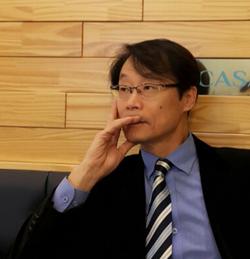
A poet and researcher of history and philosophy. Former director of the Syngman Rhee Institute. Currently serves as a senior researcher at the Korean Modern and Contemporary History Research Association and as the representative of the philosophy forum Lyceum. He has published four poetry collections, co-translated "Heroes of Hook Island," and published the historical psychology commentary "Joseon That Became a Myth" (2026). He is actively engaged in research and practice of the liberal cultural movement. Songsan is a pen name.

 Trump pressures for rate cut again ahead of FOMC... "Should be the lowest in the world"
U.S. President Donald Trump. [Photo = The White House] U.S. President Donald Trump once again pressured the Federal Reserve, the U.S. central bank, to lower interest rates on the 27th (local time
Trump pressures for rate cut again ahead of FOMC... "Should be the lowest in the world"
U.S. President Donald Trump. [Photo = The White House] U.S. President Donald Trump once again pressured the Federal Reserve, the U.S. central bank, to lower interest rates on the 27th (local time
 “Ignoring crisp ballots and damaged seals”… Tongyeong mayoral recount concludes with ‘no change in outcome,’ leaving suspicions and public outrage behind
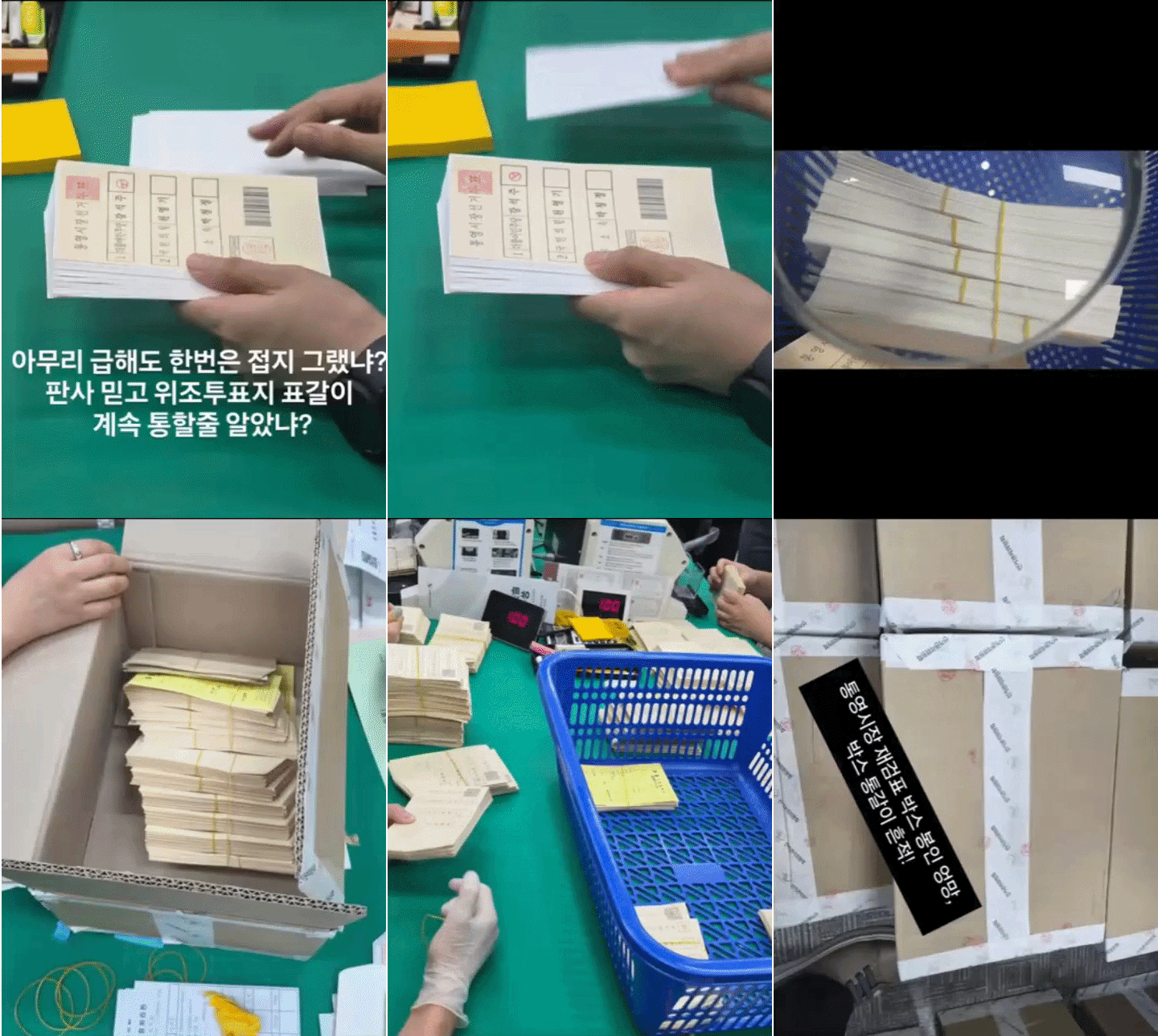
Suspected counterfeit ballots discovered in Tongyeong [GIF from social media of Representative Hwang Kyo-ahn / Attorney Park Joo-hyun]During a recount of the Tongyeong mayoral election in South Gyeong
“Ignoring crisp ballots and damaged seals”… Tongyeong mayoral recount concludes with ‘no change in outcome,’ leaving suspicions and public outrage behind
Suspected counterfeit ballots discovered in Tongyeong [GIF from social media of Representative Hwang Kyo-ahn / Attorney Park Joo-hyun]During a recount of the Tongyeong mayoral election in South Gyeong
 President Yoon, regarding the first-instance ruling on the Public Official Election Act: “An excessive political verdict that distorts the facts… We will appeal immediately.”
The first-instance sentencing hearing for President Yoon Suk Yeol regarding violations of the Public Official Election Act is being broadcast live at Seoul Station on the 27th. [Photo=Yonhap News]Pres
President Yoon, regarding the first-instance ruling on the Public Official Election Act: “An excessive political verdict that distorts the facts… We will appeal immediately.”
The first-instance sentencing hearing for President Yoon Suk Yeol regarding violations of the Public Official Election Act is being broadcast live at Seoul Station on the 27th. [Photo=Yonhap News]Pres
 WSJ: "SK Hynix ADR Premium Is a Sign of AI Trading Overheat"
Advertisement for SK Hynix ADR listing in New York's Times Square [Reuters=Yonhap News file photo]The Wall Street Journal (WSJ) has pointed out that the price of SK Hynix’s American Depositary Recei
WSJ: "SK Hynix ADR Premium Is a Sign of AI Trading Overheat"
Advertisement for SK Hynix ADR listing in New York's Times Square [Reuters=Yonhap News file photo]The Wall Street Journal (WSJ) has pointed out that the price of SK Hynix’s American Depositary Recei
 'Godfather of Japanese Mystery Novels' Keigo Higashino Passes Away After Battle with Cancer at 68
Famous Japanese mystery novelist Keigo Higashino [AFP=Yonhap News]It has been belatedly reported that Keigo Higashino, the "godfather of Japanese mystery novels" and author of bestsellers such as "The
'Godfather of Japanese Mystery Novels' Keigo Higashino Passes Away After Battle with Cancer at 68
Famous Japanese mystery novelist Keigo Higashino [AFP=Yonhap News]It has been belatedly reported that Keigo Higashino, the "godfather of Japanese mystery novels" and author of bestsellers such as "The
 [Park Pil-kyu Security Column] To the Ignorant Trying to Clothe a Beast in Sheep's Clothing
Rep. Kim Byung-joo of the Democratic Party of Korea [Photo=Yonhap News]“The Air Force Academy doesn't teach you how to fly a plane!” “The Army, Navy, and Air Force academies are exactly the
[Park Pil-kyu Security Column] To the Ignorant Trying to Clothe a Beast in Sheep's Clothing
Rep. Kim Byung-joo of the Democratic Party of Korea [Photo=Yonhap News]“The Air Force Academy doesn't teach you how to fly a plane!” “The Army, Navy, and Air Force academies are exactly the
 [Issue Diagnosis] Two Effects of the Election Petition Review
 [Photo] Evidence of Election Fraud Flooding U.S. Media… Trump Had 2.7 Million Votes Stolen
 [Video] U.S. Semiquincentennial Air Show... 'Art in the Sky' streaks across New York
 [Editorial Cartoon] A Draconian Law That Undermines Freedom of Expression

 List
List