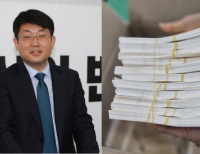
Minister of Planning and Budget Park Hong-geun speaks at the 'Government-Party Consultation on the 2026 Supplementary Budget' held at the National Assembly on March 26. [Photo=Yonhap News]
Welfare is necessary. The moment this premise is denied, the discussion becomes hollow. Markets are not perfect, and not all individuals stand at the same starting line. A social safety net is a basic condition for a modern state.
However, one question is missing here.
What is welfare creating?
Is current welfare creating protection, or is it creating dependence?
The moment this question is avoided, welfare becomes a structure, not a policy.
Cash-centric welfare policies have the strongest effect. They are immediately palpable, stimulate consumption, and quickly alleviate anxiety. They are also the most efficient political means.
However, this effect does not last long. Cash that does not lead to productivity is lost in one-time consumption, and greater finances are needed to maintain the same effect.
This is where repetition begins.
Support that initially begins out of necessity gradually transforms into a maintenance mechanism. Policies expand, and effects decrease. Attempting to reduce them causes shock, creating a structure that necessitates further expansion.
Once this process becomes entrenched, welfare is no longer an option but a necessity. It becomes an expenditure that cannot be cut.
This structure is not unfamiliar.
Immediate rewards, repetition, tolerance, and difficulty in withdrawal.
Dependent welfare creates an 'addiction structure' similar to drugs or cigarettes.
It initially reduces pain, but with repetition, a stronger stimulus is required, and at some point, it becomes impossible to maintain without it. The problem is that this operates not at an individual level, but at a national level.
This is why the term "welfare addiction" emerges.
While this expression is strong, it explains a part of reality. The important thing, however, is that welfare itself is not the problem. Welfare is necessary.
The problem arises the moment welfare replaces growth.
Welfare that expands in the absence of growth transforms into a structure where policies fill the income and opportunities that the economy should be creating. From this point on, the economy can no longer stand on its own and shifts to a state of being maintained by policies.
The Korean economy stands at this boundary.
Assets are tied up in real estate, households rely on debt, and industries are concentrated in a few sectors. If policies then focus on short-term stability, the economy gradually loses its self-reliance.
The weaker the power of growth becomes, the more welfare is needed, and the more welfare increases, the weaker the engine of growth becomes.
This cycle is simple.
Growth weakens → Welfare increases → Fiscal burden grows → Growth weakens again.
Once this structure is entrenched, welfare becomes an area that cannot be reduced. It becomes an expenditure that is politically and socially impossible to retract.
At this point, welfare becomes a structure, not a policy. And welfare, having become a structure, reinforces itself.
Therefore, the solution is not simple.
Reducing welfare is not the answer. That could create a greater shock. Nor is maintaining it in its current form the answer. That creates deeper dependence.
What is needed is a shift in direction.
Will welfare remain focused on maintaining consumption, or will it move towards a structure that creates productivity? Will it focus on distributing cash, or will it connect to education, technology, and jobs? Will it remain focused on short-term stability, or will it combine with long-term growth?
The answer to these questions determines the nature of welfare.
Welfare should help people get back on their feet. However, some current structures cause people to remain in their current state. If this is repeated, it becomes dependence, and if dependence is repeated, it becomes a structure.
And structures cannot be easily broken.
Welfare without growth ultimately cannot sustain welfare.
At that moment, welfare transforms from protection into a burden.
The problem with welfare is not its quantity, more or less.
The problem with welfare is its direction. Is it welfare that creates growth, or welfare that replaces growth?
As long as this question is avoided, welfare will continue to increase, and the economy will continue to weaken.

 [Statement by the Seo-beo-kka Korea Military Academy Save-the-Nation Comrades Association] ㉛ Recount the Votes Publicly, as the Previous Recount Concealed Election Fraud
Tongyeong Mayoral Election Recount [Photo=Yonhap News]South Korea's liberal democracy is dying. The National Election Commission (NEC) and the judiciary, which have plummeted into criminal syndicates
[Statement by the Seo-beo-kka Korea Military Academy Save-the-Nation Comrades Association] ㉛ Recount the Votes Publicly, as the Previous Recount Concealed Election Fraud
Tongyeong Mayoral Election Recount [Photo=Yonhap News]South Korea's liberal democracy is dying. The National Election Commission (NEC) and the judiciary, which have plummeted into criminal syndicates
 What is the significance of the "Trump 2028" red hats that keep making a comeback?
It is noteworthy that President Donald Trump is "intentionally" fueling controversy over whether he can actually run in the 2028 presidential election, even though it is "highly likely he is seriously
What is the significance of the "Trump 2028" red hats that keep making a comeback?
It is noteworthy that President Donald Trump is "intentionally" fueling controversy over whether he can actually run in the 2028 presidential election, even though it is "highly likely he is seriously
 Jin Cummings: “North Korea says it will increase the number of spies, so what is the government doing?”
U.S. political columnist Gene Cummings has publicly questioned the South Korean government, asking, "North Korea is declaring that it will increase its number of spies, so what is the South Kore
Jin Cummings: “North Korea says it will increase the number of spies, so what is the government doing?”
U.S. political columnist Gene Cummings has publicly questioned the South Korean government, asking, "North Korea is declaring that it will increase its number of spies, so what is the South Kore
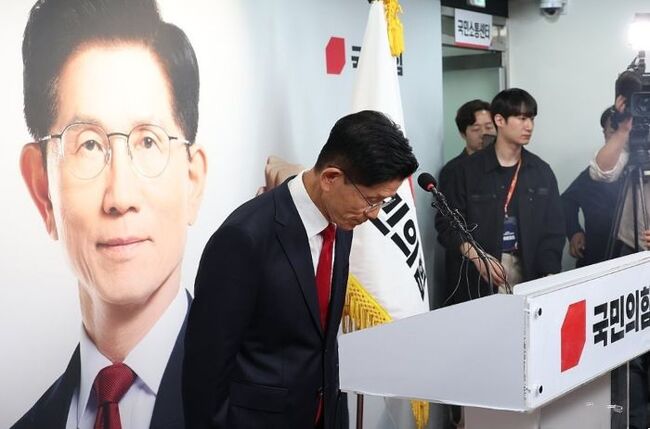 “Too little, too late?…” Kim Moon-soo, who previously conceded his presidential election defeat, now demands a special counsel investigation into ‘allegations of election fraud in the 2025 presidential election’
People Power Party presidential candidate Kim Moon-soo concedes defeat during a press conference at the party headquarters in Yeouido, Seoul, on June 4, 2025. [Joint Press Corps]As allegations emerge
“Too little, too late?…” Kim Moon-soo, who previously conceded his presidential election defeat, now demands a special counsel investigation into ‘allegations of election fraud in the 2025 presidential election’
People Power Party presidential candidate Kim Moon-soo concedes defeat during a press conference at the party headquarters in Yeouido, Seoul, on June 4, 2025. [Joint Press Corps]As allegations emerge
 Stock Market Crash 'Black Tuesday'… KOSPI down 10.8%, KOSDAQ down 7.7%
The KOSPI fell by more than 5% in early trading on the 28th, triggering a sell-side sidecar.On the 28th, the KOSPI plunged by more than 10%.Due to the sharp decline, a sell-side sidecar—a temporary
Stock Market Crash 'Black Tuesday'… KOSPI down 10.8%, KOSDAQ down 7.7%
The KOSPI fell by more than 5% in early trading on the 28th, triggering a sell-side sidecar.On the 28th, the KOSPI plunged by more than 10%.Due to the sharp decline, a sell-side sidecar—a temporary
 [World Heritage Committee] 25 New World Heritage Sites Inscribed in Busan… South Korea Successfully Expands 'Getbol' Listing
The Chairperson of the World Heritage Committee speaks at the plenary session of the 48th session of the World Heritage Committee, held at BEXCO in Busan on the 20th. [Photo: Yonhap News]A total of 25
[World Heritage Committee] 25 New World Heritage Sites Inscribed in Busan… South Korea Successfully Expands 'Getbol' Listing
The Chairperson of the World Heritage Committee speaks at the plenary session of the 48th session of the World Heritage Committee, held at BEXCO in Busan on the 20th. [Photo: Yonhap News]A total of 25
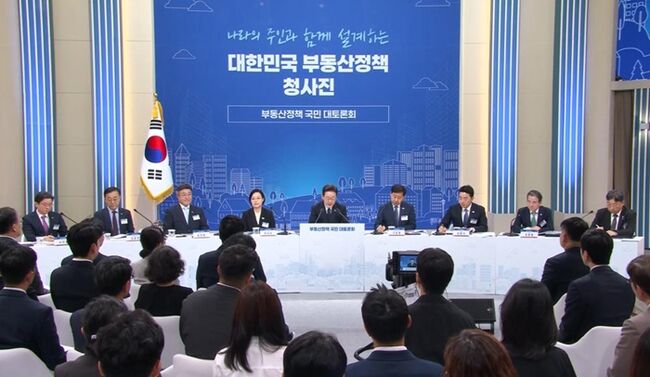 [Liberal Democratic Party Statement] Calling it a Grand Real Estate Debate… It Was Nothing More Than a Private Party Among Themselves
The 'National Grand Debate on Real Estate Policy' held on July 23rd and 27th. [Photo=Yonhap News]The 'National Grand Debate on Real Estate Policy,' hosted by the Lee Jae-myung administration under the
[Liberal Democratic Party Statement] Calling it a Grand Real Estate Debate… It Was Nothing More Than a Private Party Among Themselves
The 'National Grand Debate on Real Estate Policy' held on July 23rd and 27th. [Photo=Yonhap News]The 'National Grand Debate on Real Estate Policy,' hosted by the Lee Jae-myung administration under the
 [Photo] Evidence of Election Fraud Flooding U.S. Media… Trump Had 2.7 Million Votes Stolen
 [Video] U.S. Semiquincentennial Air Show... 'Art in the Sky' streaks across New York
 [Editorial Cartoon] A Draconian Law That Undermines Freedom of Expression

 List
List