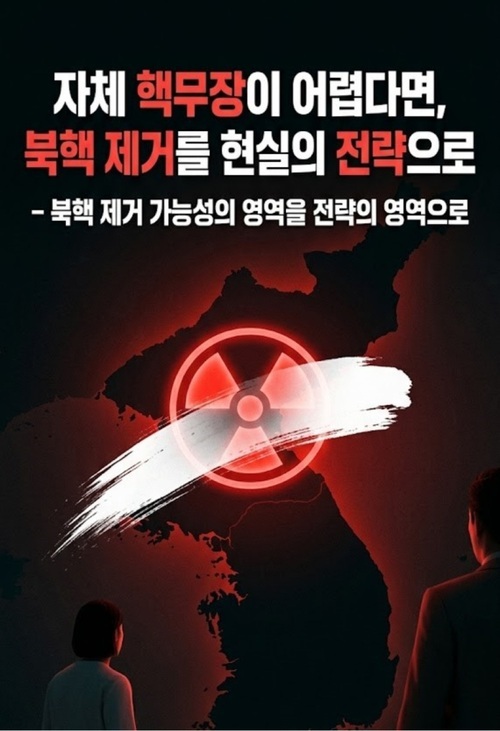
North Korea's nuclear armament has now become a practical variable for Korean Peninsula security. The actual deployment of North Korea's tactical nuclear weapons, the multi-warhead capability of its ICBMs, and its more covert underground nuclear facilities signify that North Korea has moved beyond mere nuclear possession into a stage where it can use nuclear weapons as a means of actual warfare. In particular, Kim Jong Un's recent designation of inter-Korean relations as those between 'hostile states,' discarding even the notion of a single people, is a dangerous signal that lowers the threshold for nuclear use and considers South Korea a primary enemy targetable at any time.
In this grave situation, we must ask ourselves: Should we persuade the U.S. establishment to pursue our own nuclear armament? Or should we forcibly eliminate North Korea's nuclear weapons? These two choices are not emotional slogans but matters of cold strategy for our survival.
The past 30 years of North Korean nuclear negotiations have failed to deter or even slow down its nuclear development. North Korea has exploited negotiations as a deceptive tactic to buy time, during which its nuclear capabilities have dramatically strengthened. Sanctions against North Korea have also lost their effectiveness due to the departure of China and Russia and North Korea's evasion capabilities. We must now acknowledge that the existing methods are not working and strategically consider even military options for the elimination of North Korea's nuclear weapons.
Are military options for the elimination of North Korea's nuclear weapons feasible?
Military means should always be the last resort. To even taboo the discussion of such options is strategic incompetence. North Korea's nuclear and missile facilities, like those in Iran, are dispersed underground, making complete physical elimination realistically difficult. However, the capability to neutralize the enemy's core facilities, command structure, and launch systems is, in itself, a powerful deterrent and a key element of our security.
The proposal for utilizing Electromagnetic Pulse (EMP) weapons, raised by some, also warrants attention. Conceptually, EMP is a means to paralyze North Korea's command and control systems by disabling its power grids, communication networks, and electronic equipment. Although uncertainties exist regarding civilian damage concerns and the difficulty of predicting its impact, making it risky for actual implementation, the current desperate security situation demands that even these theoretical alternatives be considered as realistic strategic assets. Securing precision strike capabilities to paralyze the core command hierarchy and electromagnetic disabling means will be one of the practical deterrent measures to counter the North Korean nuclear threat.
Do we have internal strategic consistency and the resolve to not recognize North Korea's nuclear status?
The attitude of the Ministry of Unification and related departments, which dismisses even discussions of our own nuclear armament as 'agitation' and blocks any debate, reveals strategic incompetence. Particularly, suspicions that high-level intelligence was leaked to North Korea and China during past progressive administrations have led to fatal consequences, causing even our ally, the United States, to distrust us, and has become a fundamental reason for blocking our own nuclear armament.
Without internal and external trust in our leadership, we cannot move even one step further from the current nuclear umbrella. Due to a lack of strategic consistency, inter-Korean policy fluctuates with each change of administration, and a lack of coordination with allies likely results in neighboring countries opposing even the redeployment of tactical nuclear weapons in South Korea.
Will fundamental changes occur within North Korea for the elimination of its nuclear weapons?
Nuclear weapons are a tool for the survival of the North Korean regime, and an opportunity for their elimination will only arise when the regime itself is shaken. Strategies to sow discord among the North Korean elite and weaken resident control by expanding external information inflow, though time-consuming, are the most realistic paths to minimize the cost of nuclear elimination.
However, the starting point for all these strategies lies in securing overwhelming deterrence. South Korea-U.S.-Japan security cooperation and the advancement of South Korea's "three-axis system" are not choices but preconditions for survival. Negotiations or pressure without the backing of deterrence will inevitably be ignored by Kim Jong Un and lose momentum.
Ultimately, the elimination of North Korea's nuclear weapons is not a task that the United States or the international community can solve on our behalf. Only when we, the principal parties, regain strategic consistency and maximize the effectiveness of extended deterrence based on alliance trust will the elimination of North Korea's nuclear weapons become a realistic goal. Only prepared nations can control nuclear weapons and, if necessary, secure strategic flexibility that includes independent nuclear options.
If, despite these strategic considerations, it is judged that the elimination of North Korea's nuclear weapons is realistically impossible, then we must proudly pursue our own nuclear armament by persuading U.S. President Trump. This is our last resort for national survival.
National security is a realm of survival for all citizens, irrespective of political parties. Therefore, national security is not a subject for political maneuvering but the highest policy for national survival. The security line should not dismiss but listen to critical voices regarding security. I hope that the security steering wheel, which has been self-removed by going against international trends, will be regained as soon as possible.
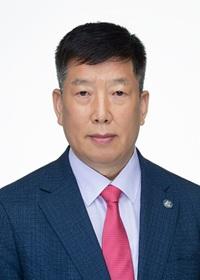
◆ Park Pil-gyu, Committee Member
Editor, Hankook-Ilbo
40th graduating class, Korea Military Academy

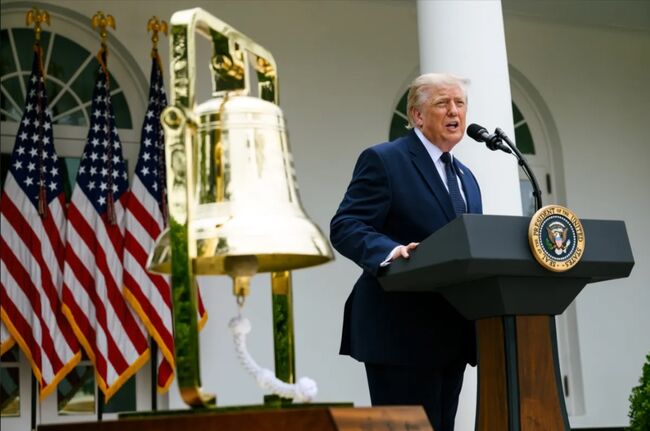 Trump pressures for rate cut again ahead of FOMC... "Should be the lowest in the world"
U.S. President Donald Trump. [Photo = The White House] U.S. President Donald Trump once again pressured the Federal Reserve, the U.S. central bank, to lower interest rates on the 27th (local time
Trump pressures for rate cut again ahead of FOMC... "Should be the lowest in the world"
U.S. President Donald Trump. [Photo = The White House] U.S. President Donald Trump once again pressured the Federal Reserve, the U.S. central bank, to lower interest rates on the 27th (local time
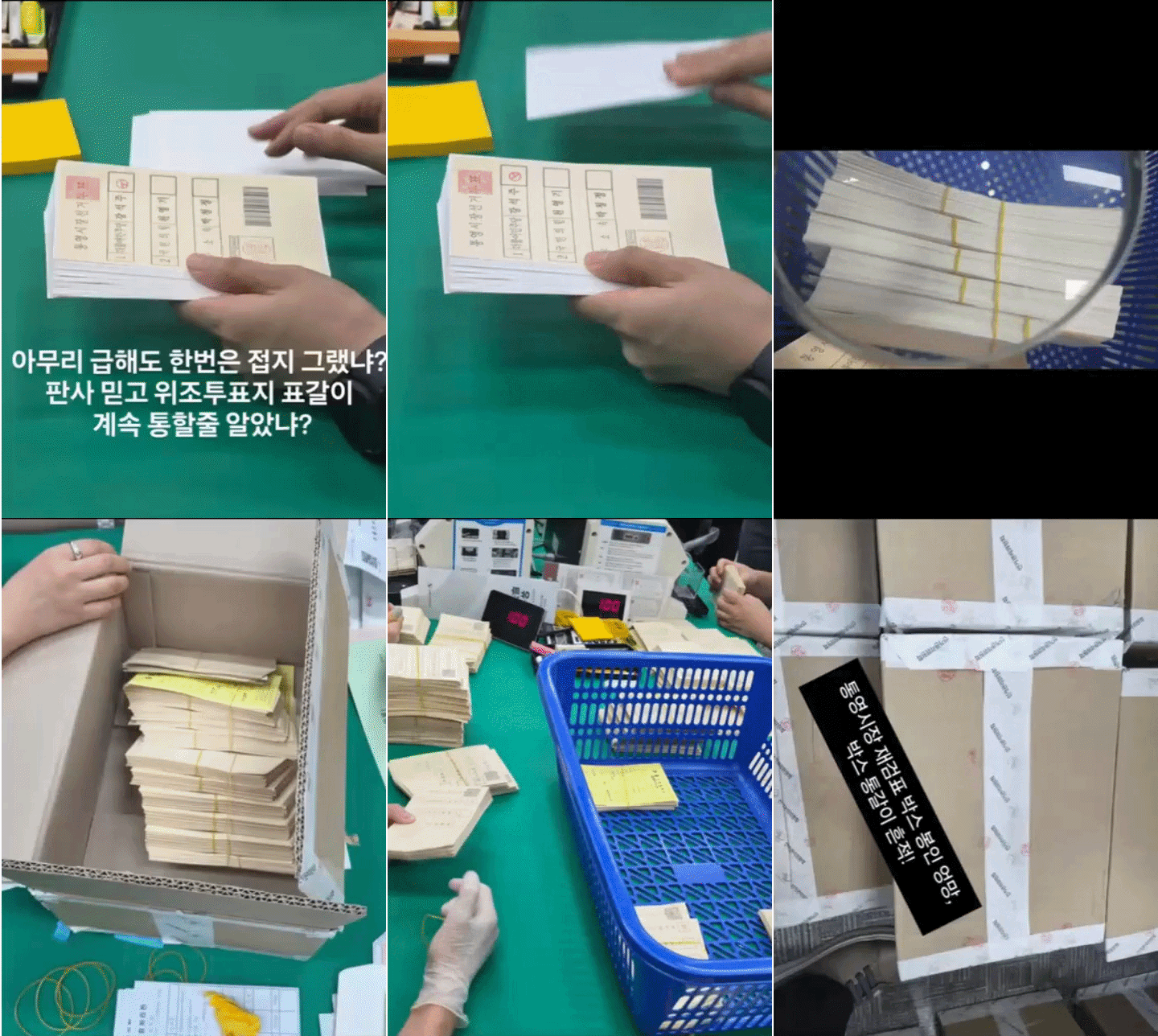 “Ignoring crisp ballots and damaged seals”… Tongyeong mayoral recount concludes with ‘no change in outcome,’ leaving suspicions and public outrage behind
Suspected counterfeit ballots discovered in Tongyeong [GIF from social media of Representative Hwang Kyo-ahn / Attorney Park Joo-hyun]During a recount of the Tongyeong mayoral election in South Gyeong
“Ignoring crisp ballots and damaged seals”… Tongyeong mayoral recount concludes with ‘no change in outcome,’ leaving suspicions and public outrage behind
Suspected counterfeit ballots discovered in Tongyeong [GIF from social media of Representative Hwang Kyo-ahn / Attorney Park Joo-hyun]During a recount of the Tongyeong mayoral election in South Gyeong
 President Yoon, regarding the first-instance ruling on the Public Official Election Act: “An excessive political verdict that distorts the facts… We will appeal immediately.”
The first-instance sentencing hearing for President Yoon Suk Yeol regarding violations of the Public Official Election Act is being broadcast live at Seoul Station on the 27th. [Photo=Yonhap News]Pres
President Yoon, regarding the first-instance ruling on the Public Official Election Act: “An excessive political verdict that distorts the facts… We will appeal immediately.”
The first-instance sentencing hearing for President Yoon Suk Yeol regarding violations of the Public Official Election Act is being broadcast live at Seoul Station on the 27th. [Photo=Yonhap News]Pres
 WSJ: "SK Hynix ADR Premium Is a Sign of AI Trading Overheat"
Advertisement for SK Hynix ADR listing in New York's Times Square [Reuters=Yonhap News file photo]The Wall Street Journal (WSJ) has pointed out that the price of SK Hynix’s American Depositary Recei
WSJ: "SK Hynix ADR Premium Is a Sign of AI Trading Overheat"
Advertisement for SK Hynix ADR listing in New York's Times Square [Reuters=Yonhap News file photo]The Wall Street Journal (WSJ) has pointed out that the price of SK Hynix’s American Depositary Recei
 'Godfather of Japanese Mystery Novels' Keigo Higashino Passes Away After Battle with Cancer at 68
Famous Japanese mystery novelist Keigo Higashino [AFP=Yonhap News]It has been belatedly reported that Keigo Higashino, the "godfather of Japanese mystery novels" and author of bestsellers such as "The
'Godfather of Japanese Mystery Novels' Keigo Higashino Passes Away After Battle with Cancer at 68
Famous Japanese mystery novelist Keigo Higashino [AFP=Yonhap News]It has been belatedly reported that Keigo Higashino, the "godfather of Japanese mystery novels" and author of bestsellers such as "The
 [Park Pil-kyu Security Column] To the Ignorant Trying to Clothe a Beast in Sheep's Clothing
Rep. Kim Byung-joo of the Democratic Party of Korea [Photo=Yonhap News]“The Air Force Academy doesn't teach you how to fly a plane!” “The Army, Navy, and Air Force academies are exactly the
[Park Pil-kyu Security Column] To the Ignorant Trying to Clothe a Beast in Sheep's Clothing
Rep. Kim Byung-joo of the Democratic Party of Korea [Photo=Yonhap News]“The Air Force Academy doesn't teach you how to fly a plane!” “The Army, Navy, and Air Force academies are exactly the
 [Issue Diagnosis] Two Effects of the Election Petition Review
 [Photo] Evidence of Election Fraud Flooding U.S. Media… Trump Had 2.7 Million Votes Stolen
 [Video] U.S. Semiquincentennial Air Show... 'Art in the Sky' streaks across New York
 [Editorial Cartoon] A Draconian Law That Undermines Freedom of Expression

 List
List