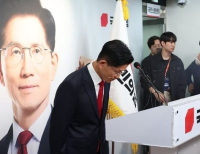
4월1일자로 발행할 ‘주간 한미일보’ 3호에 게재된 원고입니다. 시의성을 고려해 일정보다 앞당겨 게재합니다. <편집자주>
 Hwang Kyo-ahn, leader of the Freedom and Innovation Party, is interviewed by The Epoch Times at CPAC USA. [Photo provided by Freedom and Innovation]
The annual Conservative Political Action Conference (CPAC USA) was held in Grapevine, Texas, from March 25-28.
With the slogan "Action over Words," the event was largely reported as a reunion for the Republican camp ahead of this year's midterm elections, amidst a volatile political climate including the Iran war, rising oil prices, and internal divisions within MAGA.
While President Donald Trump was absent for the first time in a decade due to his response to the Iran war and Middle East issues, the international flavor of the conference was more prominent than in previous years, drawing attention.
Reuters and CPAC's own promotional materials highlighted Reza Pahlavi (former Crown Prince of Iran), Karol Navarre (President of Poland), and Flávio Bolsonaro (Federal Senator of Brazil) as key international speakers, focusing on "CPAC's global reach."
"Korea is in a grave crisis due to left-wing and communist forces."
The Brazilian figure, Flávio, is the son of former President Jair Bolsonaro, who was sentenced to 27 years in prison for alleged coup plotting after the Lula administration took office and was placed under house arrest for 90 days. His presence at CPAC, substituting for his father who was close to Trump, symbolically represents the difficult situation facing conservatives in Brazil today.
Meanwhile, Pahlavi used CPAC to connect the movement to overthrow the Islamic theocracy more deeply with the mainstream conservative narrative in the U.S. Navarre, known as a "pro-freedom" leader, presented a vision of a Europe centered on individual nations resisting the power of the European Union (EU).
CPAC, which began as a domestic U.S. event in 1974, appears to be evolving into a platform for a global conservative network sharing issues such as "restoring sovereignty," "defending the civilization of the free world," and "resisting left-wing or supranational power."
Within this context, Hwang Kyo-ahn's message as the leader of the Freedom and Innovation Party was even more direct and clear. He appealed that "the Republic of Korea, a blood ally with a special relationship with the United States, is in a grave crisis due to left-wing and communist forces," and that the core of this crisis is "the issue of election fraud."
From separate sessions and his main address to media interviews, meetings with key figures, and informal interactions with general attendees, Hwang consistently focused on the crisis in Korea, linking it to threats from China, the illegal and unjust impeachment of the president, suppression of freedom of speech and religion, and election fraud.
Furthermore, he is recognized for connecting these issues to argue that transparency in elections and institutional trust, in addition to taxes, immigration, gender, and borders, must be core agendas for global conservatives.
The organizers officially introduced Hwang as "a figure dedicated to national security, constitutional integrity, and combating government corruption," and even assigned him a speaking slot in a session titled "K-Pop Communist Hunters."
Under this session title, a parody of the global hit "K-Pop Demon Hunters," he was presented as a kind of "anti-communist figure" – a former prosecutor and former Prime Minister and acting President during the Park Geun-hye administration. Another noteworthy aspect was how the organizers disseminated their content.
"Expose Election Fraud" and "Release Yoon Suk-yeol" Chanted
CPAC's official Instagram posts summarized Hwang's remarks by focusing on the "election fraud" issue, and their Facebook and X accounts highlighted "calls for the immediate release of Yoon Suk-yeol."
While The Washington Times reported that Hwang "urged the White House to support the release of Yoon Suk-yeol" and "received a standing ovation after his main address," mainstream media outlets largely treated him as just one of over 80 speakers. However, the on-site reactions suggest future developments.
Videos show a large number of audience members approaching him with questions and requests for photos. The Reuters photo service distributed images of Hwang's main stage speech on the 27th as a separate item. The fact that the organizers placed Hwang on the main stage and re-disseminated his remarks selectively focusing on "election fraud" and "calls for the release of Yoon Suk-yeol" hints at the potential for specific agendas originating from Korea to gain traction within the U.S. conservative ecosystem.
CPAC 2026 also served to reaffirm the end of globalism, which Trump has identified as a "failed model," and the restoration of individual national sovereignty.
The efforts to end the theocratic dictatorship that has sponsored Islamic terrorist groups (Iran), resistance against supranational power centered on the EU (Poland), and discourse on election fraud and security crises from China (Korea) can all be summarized by the phrase "restoring sovereignty." In this context, Hwang repeatedly reminded the world that Korea is at the forefront of the global democratic system.
China, despite having largely overcome its long-standing sense of inferiority towards the West, still faces its final hurdle in the form of "universal suffrage." This point is also worth revisiting here.
While China may have suffered a blow to its reputation due to the arrest of Venezuela's Nicolás Maduro and questions arising about the combat effectiveness of weapons and equipment systems linked to China through the Iran conflict, it can still look forward to the future by focusing on scientific and technological advancements. However, the electoral system is something China cannot ultimately overcome.
This is the system where power holders are elected by one vote per adult citizen, born out of the arduous twists and turns of establishing modern civil society. To adopt this system, the one-party dictatorship must be relinquished. They would have to admit that the "democracy" they so often invoke is merely another term for "Do not dream of freedom," and "Follow the Communist Party forever" (永遠跟黨走) (because we will provide for you).
With the underlying sentiment that "The Communist Party elites will take care of everything, so why do we need voting rights?", it is difficult for China to refute the philosophical foundation and justification of universal suffrage. This is China's dilemma. If they cannot accept it as a hegemonic power, nor can they ignore it, then they must destroy it, wouldn't they?
This part is arguably the ultimate vulnerability of the free world, and Korea's concrete example has now been officially broadcast to the world. Perhaps it will be recalled as a historical significance of CPAC 2026 in the future.
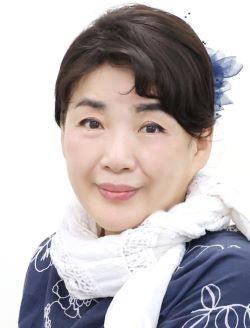
Lim Myung-shin, Former Deputy Director of International Affairs, Skydaily
Northeast Asia Researcher (Ph.D. in Chinese Studies)

 [Statement by the Seo-beo-kka Korea Military Academy Save-the-Nation Comrades Association] ㉛ Recount the Votes Publicly, as the Previous Recount Concealed Election Fraud
Tongyeong Mayoral Election Recount [Photo=Yonhap News]South Korea's liberal democracy is dying. The National Election Commission (NEC) and the judiciary, which have plummeted into criminal syndicates
[Statement by the Seo-beo-kka Korea Military Academy Save-the-Nation Comrades Association] ㉛ Recount the Votes Publicly, as the Previous Recount Concealed Election Fraud
Tongyeong Mayoral Election Recount [Photo=Yonhap News]South Korea's liberal democracy is dying. The National Election Commission (NEC) and the judiciary, which have plummeted into criminal syndicates
 What is the significance of the "Trump 2028" red hats that keep making a comeback?
It is noteworthy that President Donald Trump is "intentionally" fueling controversy over whether he can actually run in the 2028 presidential election, even though it is "highly likely he is seriously
What is the significance of the "Trump 2028" red hats that keep making a comeback?
It is noteworthy that President Donald Trump is "intentionally" fueling controversy over whether he can actually run in the 2028 presidential election, even though it is "highly likely he is seriously
 Jin Cummings: “North Korea says it will increase the number of spies, so what is the government doing?”
U.S. political columnist Gene Cummings has publicly questioned the South Korean government, asking, "North Korea is declaring that it will increase its number of spies, so what is the South Kore
Jin Cummings: “North Korea says it will increase the number of spies, so what is the government doing?”
U.S. political columnist Gene Cummings has publicly questioned the South Korean government, asking, "North Korea is declaring that it will increase its number of spies, so what is the South Kore
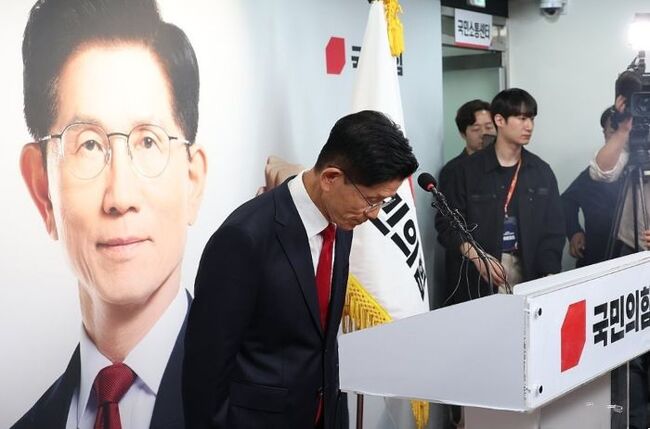 “Too little, too late?…” Kim Moon-soo, who previously conceded his presidential election defeat, now demands a special counsel investigation into ‘allegations of election fraud in the 2025 presidential election’
People Power Party presidential candidate Kim Moon-soo concedes defeat during a press conference at the party headquarters in Yeouido, Seoul, on June 4, 2025. [Joint Press Corps]As allegations emerge
“Too little, too late?…” Kim Moon-soo, who previously conceded his presidential election defeat, now demands a special counsel investigation into ‘allegations of election fraud in the 2025 presidential election’
People Power Party presidential candidate Kim Moon-soo concedes defeat during a press conference at the party headquarters in Yeouido, Seoul, on June 4, 2025. [Joint Press Corps]As allegations emerge
 Stock Market Crash 'Black Tuesday'… KOSPI down 10.8%, KOSDAQ down 7.7%
The KOSPI fell by more than 5% in early trading on the 28th, triggering a sell-side sidecar.On the 28th, the KOSPI plunged by more than 10%.Due to the sharp decline, a sell-side sidecar—a temporary
Stock Market Crash 'Black Tuesday'… KOSPI down 10.8%, KOSDAQ down 7.7%
The KOSPI fell by more than 5% in early trading on the 28th, triggering a sell-side sidecar.On the 28th, the KOSPI plunged by more than 10%.Due to the sharp decline, a sell-side sidecar—a temporary
 [World Heritage Committee] 25 New World Heritage Sites Inscribed in Busan… South Korea Successfully Expands 'Getbol' Listing
The Chairperson of the World Heritage Committee speaks at the plenary session of the 48th session of the World Heritage Committee, held at BEXCO in Busan on the 20th. [Photo: Yonhap News]A total of 25
[World Heritage Committee] 25 New World Heritage Sites Inscribed in Busan… South Korea Successfully Expands 'Getbol' Listing
The Chairperson of the World Heritage Committee speaks at the plenary session of the 48th session of the World Heritage Committee, held at BEXCO in Busan on the 20th. [Photo: Yonhap News]A total of 25
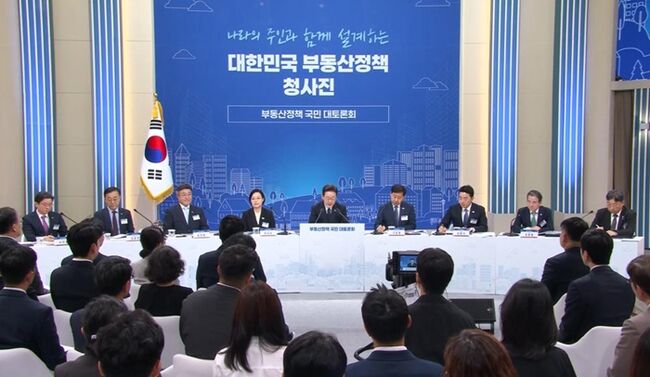 [Liberal Democratic Party Statement] Calling it a Grand Real Estate Debate… It Was Nothing More Than a Private Party Among Themselves
The 'National Grand Debate on Real Estate Policy' held on July 23rd and 27th. [Photo=Yonhap News]The 'National Grand Debate on Real Estate Policy,' hosted by the Lee Jae-myung administration under the
[Liberal Democratic Party Statement] Calling it a Grand Real Estate Debate… It Was Nothing More Than a Private Party Among Themselves
The 'National Grand Debate on Real Estate Policy' held on July 23rd and 27th. [Photo=Yonhap News]The 'National Grand Debate on Real Estate Policy,' hosted by the Lee Jae-myung administration under the
 [Photo] Evidence of Election Fraud Flooding U.S. Media… Trump Had 2.7 Million Votes Stolen
 [Video] U.S. Semiquincentennial Air Show... 'Art in the Sky' streaks across New York
 [Editorial Cartoon] A Draconian Law That Undermines Freedom of Expression

 List
List