Crown Prince Yi Un (center) posing for a commemorative photo surrounded by the cabinet of Yi Wan-yong just before the Japan-Korea Annexation. The Japan-Korea Annexation, also known as Gyeongsul Gukchi (National Humiliation of Gyeongsul), was the event in which the Korean Empire was annexed as part of the Empire of Japan and destroyed on August 29, 1910.
A nation does not vanish suddenly or by chance. It only appears to collapse abruptly. A country falls when the errors accumulated over a long period reach a critical point.
When we look at history, there are clearly recurring patterns when nations collapse. A society that cannot read these patterns is destined to follow the path of national ruin.
First is the attitude of denying reality.
When a crisis strikes, a normal nation accurately recognizes it and prepares countermeasures. However, a declining nation moves in the opposite direction. It downplays problems or dismisses them as exaggerated external propaganda.
In the 19th century, Joseon did not view the pressure from Western powers and Japan as a crisis of its system, and China postponed fundamental reforms even after its defeat in the Opium Wars. The attitude of not admitting a crisis wastes the entire time for response.
Second is the state where ideology overwhelms reality.
A nation must move flexibly, like a living organism, according to the situation. However, a declining nation rigidifies itself by being bound to a specific ideology or cause.
The Neo-Confucian order of Joseon suppressed military and economic reforms by upholding moral principles. The old regime of France also collapsed into revolution after ignoring the need for change within the logic that justified its class system. Ideology can provide direction, but it cannot replace reality.
Third is the absence of responsible elites.
The level of leadership is the first thing revealed when a nation is shaken. There must be a structure to admit and manage failures when they occur. However, just before national collapse, responsibility disappears.
Policy failures are attributed to the system, and diplomatic failures are blamed on the other party. Power is maintained, but the function of making decisions and taking responsibility is paralyzed. In this state, the nation loses its way.
Fourth is the disregard for military power.
The survival of a nation is ultimately linked to power. Morality and principles are important, but they do not ward off external pressure. Joseon prioritized moral politics over military spending, and the Song dynasty had weak military power relative to its economic strength. The results were repeatedly confirmed. A nation lacking power has its destiny decided by the will of others.
Fifth is the entrenchment of external dependence.
Diplomacy is a skill of managing balance. However, declining nations tend to lean towards dependence on a specific power. In the late Joseon period, the objects of dependence merely changed from China to Russia and Japan, but the structure remained the same.
The Byzantine Empire also relied on external mercenaries and alliances, ultimately losing its ability to be self-reliant. A nation that cannot make its own decisions will eventually move according to the decisions of others.
Sixth is the deepening of internal division.
For a nation to be maintained, a minimum set of common standards is necessary. However, just before national collapse, politics shifts from maintaining the community to eliminating the opposition.
The factional strife in Joseon took precedence over state governance, and the late Roman Republic also saw political divisions lead to civil war. When the interior is divided, external shocks become much more easily a fatal blow.
Seventh is the collapse of the economic base.
A nation is run by finances. When taxes are not collected and production decreases, all functions weaken simultaneously. The disorder of the Samjeong (three taxes) in the late Joseon period collapsed state finances, and in the late Roman Empire, declining tax revenue and increasing military spending occurred simultaneously. If finances falter, neither the military, the administration, nor social order can be maintained.
Eighth is an excessive attachment to the past.
Declining societies tend to repeatedly talk about past glories. They try to maintain self-confidence based on past successes without solving present problems. However, the past does not substitute for the present. Rather, it functions as a mechanism that prevents one from facing reality.
All these factors do not operate independently. Ideological excess is layered on top of the denial of reality, and on top of that, the irresponsibility of the elite operates, followed by military weakening and external dependence. When internal divisions deepen and the economy falters, the nation enters a state where it can no longer recover its balance on its own. At this stage, collapse becomes a matter of time.
History does not repeat itself. Only humans repeat the same judgments.
There are ample past examples accumulated. The issue lies in the willingness to read them. The rise and fall of a nation are not a matter of luck but the result of judgment. And that judgment always manifests not as a present choice, but as the sum of accumulated attitudes.
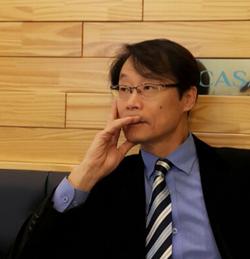
◆ Song San
A poet and a researcher of history and philosophy. Former director of the Rhee Syngman Institute. Currently serving as a senior researcher at the Korean Modern and Contemporary History Research Society and the representative of the philosophy forum Lyceum. He has published four poetry collections, co-translated 'Heroes of Cape Chogok,' and authored 'Joseon Became a Myth' and 'Humanities on a Tatami Mat.' He is currently actively engaged in research and practice for the liberal cultural movement. Song San is a pen name.

 [Statement by the Seo-beo-kka Korea Military Academy Save-the-Nation Comrades Association] ㉛ Recount the Votes Publicly, as the Previous Recount Concealed Election Fraud
Tongyeong Mayoral Election Recount [Photo=Yonhap News]South Korea's liberal democracy is dying. The National Election Commission (NEC) and the judiciary, which have plummeted into criminal syndicates
[Statement by the Seo-beo-kka Korea Military Academy Save-the-Nation Comrades Association] ㉛ Recount the Votes Publicly, as the Previous Recount Concealed Election Fraud
Tongyeong Mayoral Election Recount [Photo=Yonhap News]South Korea's liberal democracy is dying. The National Election Commission (NEC) and the judiciary, which have plummeted into criminal syndicates
 What is the significance of the "Trump 2028" red hats that keep making a comeback?
It is noteworthy that President Donald Trump is "intentionally" fueling controversy over whether he can actually run in the 2028 presidential election, even though it is "highly likely he is seriously
What is the significance of the "Trump 2028" red hats that keep making a comeback?
It is noteworthy that President Donald Trump is "intentionally" fueling controversy over whether he can actually run in the 2028 presidential election, even though it is "highly likely he is seriously
 Jin Cummings: “North Korea says it will increase the number of spies, so what is the government doing?”
U.S. political columnist Gene Cummings has publicly questioned the South Korean government, asking, "North Korea is declaring that it will increase its number of spies, so what is the South Kore
Jin Cummings: “North Korea says it will increase the number of spies, so what is the government doing?”
U.S. political columnist Gene Cummings has publicly questioned the South Korean government, asking, "North Korea is declaring that it will increase its number of spies, so what is the South Kore
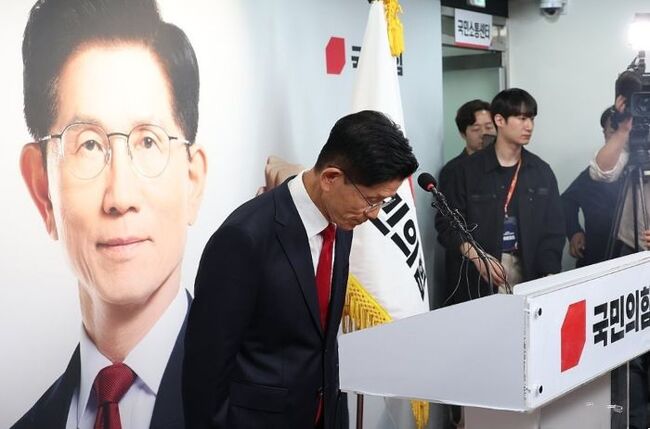 “Too little, too late?…” Kim Moon-soo, who previously conceded his presidential election defeat, now demands a special counsel investigation into ‘allegations of election fraud in the 2025 presidential election’
People Power Party presidential candidate Kim Moon-soo concedes defeat during a press conference at the party headquarters in Yeouido, Seoul, on June 4, 2025. [Joint Press Corps]As allegations emerge
“Too little, too late?…” Kim Moon-soo, who previously conceded his presidential election defeat, now demands a special counsel investigation into ‘allegations of election fraud in the 2025 presidential election’
People Power Party presidential candidate Kim Moon-soo concedes defeat during a press conference at the party headquarters in Yeouido, Seoul, on June 4, 2025. [Joint Press Corps]As allegations emerge
 Stock Market Crash 'Black Tuesday'… KOSPI down 10.8%, KOSDAQ down 7.7%
The KOSPI fell by more than 5% in early trading on the 28th, triggering a sell-side sidecar.On the 28th, the KOSPI plunged by more than 10%.Due to the sharp decline, a sell-side sidecar—a temporary
Stock Market Crash 'Black Tuesday'… KOSPI down 10.8%, KOSDAQ down 7.7%
The KOSPI fell by more than 5% in early trading on the 28th, triggering a sell-side sidecar.On the 28th, the KOSPI plunged by more than 10%.Due to the sharp decline, a sell-side sidecar—a temporary
 [World Heritage Committee] 25 New World Heritage Sites Inscribed in Busan… South Korea Successfully Expands 'Getbol' Listing
The Chairperson of the World Heritage Committee speaks at the plenary session of the 48th session of the World Heritage Committee, held at BEXCO in Busan on the 20th. [Photo: Yonhap News]A total of 25
[World Heritage Committee] 25 New World Heritage Sites Inscribed in Busan… South Korea Successfully Expands 'Getbol' Listing
The Chairperson of the World Heritage Committee speaks at the plenary session of the 48th session of the World Heritage Committee, held at BEXCO in Busan on the 20th. [Photo: Yonhap News]A total of 25
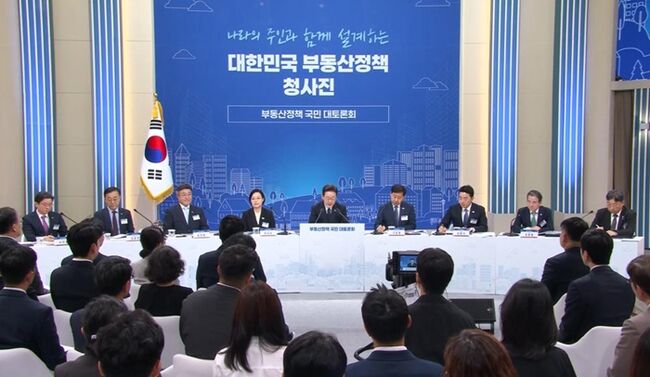 [Liberal Democratic Party Statement] Calling it a Grand Real Estate Debate… It Was Nothing More Than a Private Party Among Themselves
The 'National Grand Debate on Real Estate Policy' held on July 23rd and 27th. [Photo=Yonhap News]The 'National Grand Debate on Real Estate Policy,' hosted by the Lee Jae-myung administration under the
[Liberal Democratic Party Statement] Calling it a Grand Real Estate Debate… It Was Nothing More Than a Private Party Among Themselves
The 'National Grand Debate on Real Estate Policy' held on July 23rd and 27th. [Photo=Yonhap News]The 'National Grand Debate on Real Estate Policy,' hosted by the Lee Jae-myung administration under the
 [Photo] Evidence of Election Fraud Flooding U.S. Media… Trump Had 2.7 Million Votes Stolen
 [Video] U.S. Semiquincentennial Air Show... 'Art in the Sky' streaks across New York
 [Editorial Cartoon] A Draconian Law That Undermines Freedom of Expression

 List
List