The 'political-economic cartel,' widely recognized as the most robust yet destructive collusion in modern society, is the primary culprit behind fostering conflict and undermining the foundations of the national economy.
Political power wields the sharp sword of licensing authority, while capital power constructs its own fortress with the shield of limitless financial resources. This predatory collaboration transcends mere corruption, shattering market fairness and stripping citizens of their fundamental rights.
This article analyzes the mechanisms by which this colossal black hole erodes the present and future of our community.
1. Entrenched Interests' Collusion That Stifles Development and Innovation
Capitalism thrives through continuous technological innovation, creating new wealth. However, capital colluding with power chooses the easy path of erecting artificial barriers to entry, rather than creating value through diligent effort.
When certain politicians suppress competitors with legislation or regulations favorable to specific companies, a quid pro quo is established: companies offer political funding or guarantee post-retirement positions in return.
Notable examples of privatizing public resources include the fraudulent collection of solar power subsidies during the Moon Jae-in administration, the LH corruption allegations related to the '3rd New Town speculative investment suspicions' in 2021 and the 'rebar omission' incident in 2023, and the 'interest cartel' between educational authorities and large cram schools surrounding the government's policy to eliminate 'killer questions' in June 2023.
The market's self-cleansing mechanism is paralyzed in the process of political and economic collusion. Even capable startups attempting to enter the market are inevitably frustrated by robust regulatory networks and walls of collusion. Ultimately, political-economic collusion does not expand the economic pie; it prevents newcomers from accessing it to monopolize the existing pie. The inefficiencies that arise from stalled innovation are borne entirely by the 99% of citizens.
2. Sophisticated Plunder: Cartels Cloaked in Law and Policy
While past collusion involved briefcases of cash exchanged in back rooms, modern cartels have evolved into far more sophisticated 'policy cartels' with a veneer of legality. They legitimately extract profits through the design of subsidies that favor specific industries, the creation of regulations that kill competitors, and bid-rigging in large-scale national projects.
△ Global Examples: In the early years of Putin's presidency, Russia's 'Oligarchs' monopolized key national assets through political collusion, leading the country into a deformed structure solely focused on resource extraction. America's 'military-industrial complex' exemplifies sophisticated collusion, where giant defense contractors lobby for inflated and unnecessary defense budgets.
△ Domestic Examples: The Daejang-dong and El-Crest scandals demonstrate how the authority to change land use for public benefit was transformed into a tool for astronomical private profit. The 'construction cartel,' which overlooks shoddy inspections through the practice of former officials receiving preferential treatment, starkly reveals a cruel reality where human lives are traded for profit. They disguise their privileges with grandiose rhetoric of 'strengthening national competitiveness' to blind the public.
3. The Fiction of Trickle-Down Effect and Entrenched Polarization
The logic most frequently employed by cartels to justify their actions is the 'trickle-down effect.' This argument posits that benefits bestowed upon the top will eventually flow downwards. However, blind capital has pooled and stagnated only within its fortress. Under the guise of 'public interest' and 'economic revitalization,' the flow of capital has not trickled down but has become entrenched within specific networks (former officials, school ties, regional ties).
While the political sphere has pushed for labor flexibility and tax cuts in response to capital's demands, social welfare for ordinary citizens has been reduced due to budget constraints. As monopolies raised consumer prices, the real wages of ordinary people stagnated. Ultimately, political-economic collusion is the root cause that paralyzes wealth redistribution and entrenches polarization, stripping society of its dynamism.
The government's direct provision of public funds to ordinary citizens, particularly in the form of COVID-19 relief before the 2020 general election and current support for the Iran war, cannot escape suspicion of being 'pre-election campaigning' and has widened the wealth gap. Support for local currencies and domestic gift certificates has become a source of revenue for colluding agencies and those who engage in fraudulent claims, ultimately meaning public funds do not benefit ordinary citizens but circulate within the entrenched elite, exacerbating polarization.
4. The Power of Oversight to Dismantle Political-Economic Cartels
Political-economic cartels reign supreme over law and market, dreaming of an eternal empire. However, it is crucial to remember that their power originates from the mandate of citizens, and their capital is derived from the dedication of company employees. The only way to dismantle this robust fortress of money and power is through the rigorous oversight of citizens and institutional reform.
To eliminate political-economic cartels, transparency in political party funding must be enhanced, and a strict punishment system for embezzlement and fraud must be enforced. Prohibiting preferential treatment for former public officials by barring them from employment in related companies and publicly disclosing data from licensing processes are practical measures to neutralize cartel designs.
If we fail to break the bizarre chain of crime where money buys power and power is converted back into money, the future of our community is bleak. We must redesign a fair playing field where the efforts of all are rewarded, not the illicit gains of a few. Systems that do not change on their own must be changed by the power of citizens. A reform to dismantle outdated political-economic collusion is more urgently needed now than ever before.
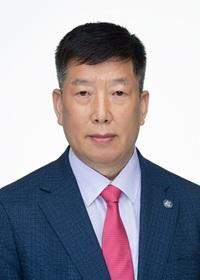
◆ Park Pil-kyu
Editor-in-Chief, Hanmi Daily
Korea Military Academy, Class of 40

 [Statement by the Seo-beo-kka Korea Military Academy Save-the-Nation Comrades Association] ㉛ Recount the Votes Publicly, as the Previous Recount Concealed Election Fraud
Tongyeong Mayoral Election Recount [Photo=Yonhap News]South Korea's liberal democracy is dying. The National Election Commission (NEC) and the judiciary, which have plummeted into criminal syndicates
[Statement by the Seo-beo-kka Korea Military Academy Save-the-Nation Comrades Association] ㉛ Recount the Votes Publicly, as the Previous Recount Concealed Election Fraud
Tongyeong Mayoral Election Recount [Photo=Yonhap News]South Korea's liberal democracy is dying. The National Election Commission (NEC) and the judiciary, which have plummeted into criminal syndicates
 What is the significance of the "Trump 2028" red hats that keep making a comeback?
It is noteworthy that President Donald Trump is "intentionally" fueling controversy over whether he can actually run in the 2028 presidential election, even though it is "highly likely he is seriously
What is the significance of the "Trump 2028" red hats that keep making a comeback?
It is noteworthy that President Donald Trump is "intentionally" fueling controversy over whether he can actually run in the 2028 presidential election, even though it is "highly likely he is seriously
 Jin Cummings: “North Korea says it will increase the number of spies, so what is the government doing?”
U.S. political columnist Gene Cummings has publicly questioned the South Korean government, asking, "North Korea is declaring that it will increase its number of spies, so what is the South Kore
Jin Cummings: “North Korea says it will increase the number of spies, so what is the government doing?”
U.S. political columnist Gene Cummings has publicly questioned the South Korean government, asking, "North Korea is declaring that it will increase its number of spies, so what is the South Kore
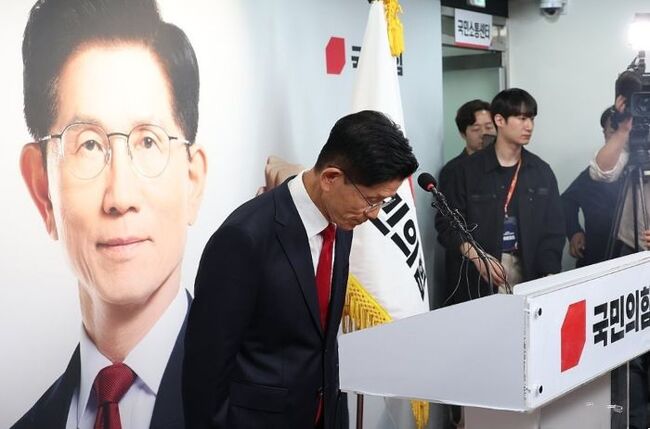 “Too little, too late?…” Kim Moon-soo, who previously conceded his presidential election defeat, now demands a special counsel investigation into ‘allegations of election fraud in the 2025 presidential election’
People Power Party presidential candidate Kim Moon-soo concedes defeat during a press conference at the party headquarters in Yeouido, Seoul, on June 4, 2025. [Joint Press Corps]As allegations emerge
“Too little, too late?…” Kim Moon-soo, who previously conceded his presidential election defeat, now demands a special counsel investigation into ‘allegations of election fraud in the 2025 presidential election’
People Power Party presidential candidate Kim Moon-soo concedes defeat during a press conference at the party headquarters in Yeouido, Seoul, on June 4, 2025. [Joint Press Corps]As allegations emerge
 Stock Market Crash 'Black Tuesday'… KOSPI down 10.8%, KOSDAQ down 7.7%
The KOSPI fell by more than 5% in early trading on the 28th, triggering a sell-side sidecar.On the 28th, the KOSPI plunged by more than 10%.Due to the sharp decline, a sell-side sidecar—a temporary
Stock Market Crash 'Black Tuesday'… KOSPI down 10.8%, KOSDAQ down 7.7%
The KOSPI fell by more than 5% in early trading on the 28th, triggering a sell-side sidecar.On the 28th, the KOSPI plunged by more than 10%.Due to the sharp decline, a sell-side sidecar—a temporary
 [World Heritage Committee] 25 New World Heritage Sites Inscribed in Busan… South Korea Successfully Expands 'Getbol' Listing
The Chairperson of the World Heritage Committee speaks at the plenary session of the 48th session of the World Heritage Committee, held at BEXCO in Busan on the 20th. [Photo: Yonhap News]A total of 25
[World Heritage Committee] 25 New World Heritage Sites Inscribed in Busan… South Korea Successfully Expands 'Getbol' Listing
The Chairperson of the World Heritage Committee speaks at the plenary session of the 48th session of the World Heritage Committee, held at BEXCO in Busan on the 20th. [Photo: Yonhap News]A total of 25
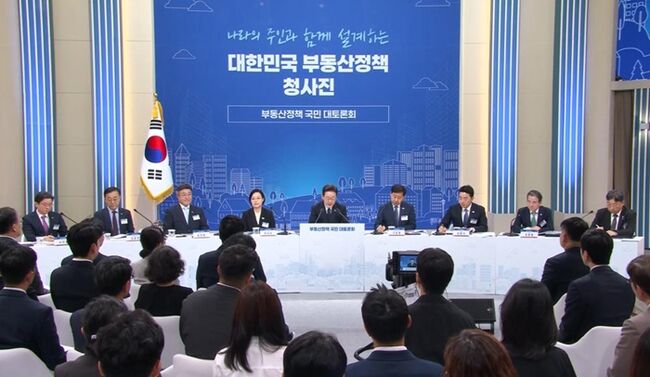 [Liberal Democratic Party Statement] Calling it a Grand Real Estate Debate… It Was Nothing More Than a Private Party Among Themselves
The 'National Grand Debate on Real Estate Policy' held on July 23rd and 27th. [Photo=Yonhap News]The 'National Grand Debate on Real Estate Policy,' hosted by the Lee Jae-myung administration under the
[Liberal Democratic Party Statement] Calling it a Grand Real Estate Debate… It Was Nothing More Than a Private Party Among Themselves
The 'National Grand Debate on Real Estate Policy' held on July 23rd and 27th. [Photo=Yonhap News]The 'National Grand Debate on Real Estate Policy,' hosted by the Lee Jae-myung administration under the
 [Photo] Evidence of Election Fraud Flooding U.S. Media… Trump Had 2.7 Million Votes Stolen
 [Video] U.S. Semiquincentennial Air Show... 'Art in the Sky' streaks across New York
 [Editorial Cartoon] A Draconian Law That Undermines Freedom of Expression

 List
List