On September 17, 1787, representatives from nine states gathered at Independence Hall in Philadelphia, U.S., to sign the U.S. Constitution. An oil painting by Howard Christy.
Not, "If many people want it, it can happen," but, "Even if many people want it, they cannot go beyond the Constitution."
The United States teaches students about 'democracy'. The word 'democracy' appears frequently in American school textbooks. Words like elections, voting, citizen participation, and freedom are also common.
Therefore, at first glance, the U.S. might seem like a country that teaches students that "majority rule is most important." One might think that what most people agree on becomes the standard for politics. However, the core of actual American civic education does not lie there.
What the United States truly aims to instill in students is the idea that "Even if many people want it, they cannot go beyond the Constitution," rather than "If many people want it, it can happen."
This is not just a nicely phrased statement. It is directly reflected in the criteria the U.S. government actually uses to evaluate students. The National Center for Education Statistics (NCES), under the U.S. Department of Education, administers a test to assess the civic education levels of students nationwide. This is the NAEP Civic Assessment.
This test does not merely ask how interested students are in politics or if they enjoy voting. The purpose of this test is to verify whether students possess the "knowledge and abilities necessary to live as citizens within America's constitutional democracy." The key here is the word "constitutional" preceding "democracy."
While the U.S. teaches democracy, it teaches democracy that is bound by the Constitution, not just democracy itself. In the U.S., democracy is not a force that moves freely; it is politics that can only operate within the confines of the Constitution.
Therefore, in U.S. schools, the civic education students learn does not end with the statement, "The people are sovereign." The next sentence is more important: "Even the sovereign is under the Constitution."
American students learn this from a young age. It is true that the people are the sovereign of the nation. However, being sovereign does not mean they can do anything they please. There are things that cannot be done, even if many people agree. This is because, in the U.S., even the people cannot go beyond the Constitution.
They learn that the rights of a minority cannot be taken away just because the majority wants it, that one cannot stand above the law even after winning an election, and that a president cannot run the country as they wish.
Consequently, in U.S. school civics classes, the Constitution is studied before voting. They learn about the Bill of Rights and the separation of powers. They study federalism, checks and balances, and the rule of law. American students learn "How far can the winner go?" before learning "Who won?"
This is the most crucial framework of American civic education. Elections are important. However, they are taught that elections are not everything. The U.S. teaches students that "Winning an election doesn't mean you can do anything," but rather, "Even if you win an election, you cannot go beyond the Constitution."
In this regard, the U.S. carefully teaches Athenian democracy. Athens is introduced as the origin of democracy. Students learn that in ancient Greece, Athenian citizens gathered in the agora to debate and vote directly.
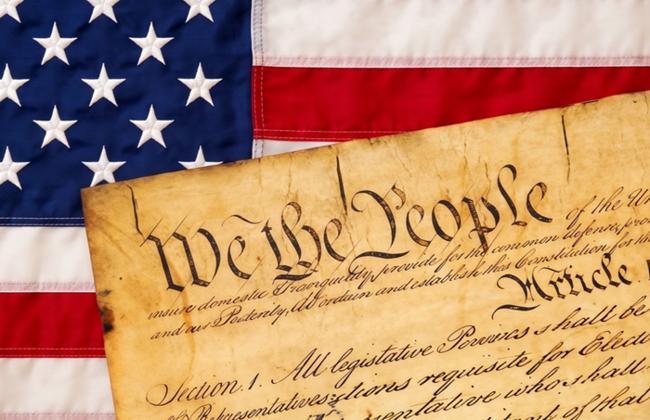 What the United States truly aims to instill in students is the idea that "Even if many people want it, they cannot go beyond the Constitution," rather than "If many people want it, it can happen."
Athens is presented as a very important first instance of direct citizen participation in politics. They also learn about institutions like the Assembly, juries, debates, and the lottery system. When asked where democracy began, American students are taught to think of Athens.
However, American schools do not teach Athens as a perfect political model to be followed. This is where the attitude of American education diverges. Athens is presented not only as the beginning of democracy but also as a case study showing how easily democracy can be destabilized.
They learn through the Athenian example what happens when many people get agitated at once, what unfolds when a skilled orator leads the crowd, and how easily dangerous decisions can be made when the majority is angry.
The trial of Socrates is a prime example. While American students learn the value of citizen participation through Athens, they also learn a warning that the excitement of the majority can become dangerous at any moment.
The U.S. teaches students that "citizens must participate in politics." But it does not stop there. It also teaches that "the will of the citizens must be filtered through institutions." This is why the U.S. respects Athens while not following it exactly. Participation is important, but it is not sufficient on its own. The will of the citizens is necessary, but the U.S. believes that this will must also be organized within laws and institutions.
This idea is also found in the writings of the American Founding Fathers. James Madison, one of the architects of the U.S. Constitution, warned against "pure democracy" in Federalist No. 10. Pure democracy, in this context, refers to a system where citizens gather directly in one place to make political decisions, essentially a model like Athens.
Madison believed that in such a system, it is difficult to prevent the passions of the majority and that the nation can easily become unstable if factions grow too powerful. Therefore, the U.S. saw a republic, where citizens elect representatives to make decisions on their behalf, as safer than a system where citizens make all decisions directly.
Madison clearly explained the reasons why a republic is superior to a pure democracy. First, citizens' will can be filtered once by electing representatives. Second, as the country becomes larger and more populous, diverse ideas are mixed, making it difficult for any single faction to easily gain unchecked power. This idea remains at the core of American civic education. While American students learn about democracy, the system they actually learn is a representative republic.
Therefore, the politics that American students learn is not Athenian direct democracy, but a republic with elections. The people elect representatives, but the representatives are also under the Constitution. Even when a president is elected, Congress checks their power. Even when Congress makes laws, the Supreme Court reviews whether they align with the Constitution. Even if the federal government holds power, state governments have their own distinct authorities. Even if the majority agrees, an individual's fundamental rights cannot be arbitrarily infringed. American students learn precisely this order.
Conversely, the Roman Republic is studied in much greater depth in American civic education. The reason is that the Roman Republic was the actual model that American founders referred to when designing their own system. The very term "Senate" in the U.S. originates from Rome. Concepts such as the term limits for public officials, representative government, separation of powers, accountability of public office, civic duty, and the public good are also linked to the Roman Republic. The U.S. does not teach Rome merely as an ancient empire. Rome is presented as a political textbook demonstrating "how to make a nation endure for a long time."
The term "civic virtue" frequently appears in this context. While the word may sound complex, its meaning is not. It refers to an attitude of considering the good of the entire community rather than just one's own self-interest. The U.S. does not just teach students about "my rights"; it also teaches about "my responsibilities." This is a significant characteristic of American civic education. American schools do not aim to produce individuals who only clamor for their rights. They aim to cultivate citizens who understand their rights and their responsibilities.
Therefore, American students learn that they must obey the law. They learn that they must pay taxes. They learn the responsibility of participating in trials as jurors. They learn that they must serve their local communities. They learn that they must be able to debate public issues. American civic education spends more time teaching "What I must bear" rather than "What I can receive."
American civic education repeatedly emphasizes four main areas.
The first is constitutional education. Students study the Declaration of Independence, the Constitution, the Bill of Rights, amendments, and the Federalist Papers. In the U.S., freedom is not a fiery slogan but an institution written in text. They learn that freedom is protected within the sentences of the Constitution.
The second is limited government education. The U.S. teaches that government is necessary. However, it also teaches that government can be dangerous. Therefore, they learn that the president, Congress, and the judiciary must all hold each other in check. Power is not something to be trusted but something to be restrained.
The third is civic duty education. American schools do not view citizens as individuals with only rights. Citizens are taught as individuals who have the responsibility to obey laws, pay taxes, participate in juries, and work for their communities.
The fourth is the education for the maintenance of the republic. The national flag, the founding of the nation, Constitution Day, the Declaration of Independence, memories of wars, and memories of sacrifices are incorporated into civic education. This is not just a class to learn political common sense. It is education to nurture citizens who will maintain the republic of the United States for a long time.
The U.S. teaches both Athenian democracy and the Roman Republic. However, it places greater emphasis on Rome. Athens serves as a starting point, illustrating where democracy began. Rome serves as a practical textbook, demonstrating how to maintain a nation for a long time, how to divide power, and what responsibilities citizens have.
The U.S. speaks of democracy. However, what it actually trains students in is a republic. American students are taught to trust the Constitution rather than to aspire to direct democracy like the Athenian Assembly. They learn that majority rule is important, but they also learn that majority rule must be under the law and institutions. In American classrooms, Athens is the name that explains the beginning, while Rome is the name that teaches the laws for operating a nation. Therefore, the core of American civic education is closer to the concept of a constitutional republic than to the word democracy.

◆ Song San (송산)
Poet and researcher of history and philosophy. Former director of the Syngman Rhee Institute. Currently serves as an advisor to the Korean Modern and Contemporary History Research Association and as the representative of the philosophy forum Lyceum. Has published four collections of poetry, co-translated "Heroes of the Hookes Coast," and authored "Joseon That Became Myth" and "Humanities on the Tatami." Currently actively engaged in research and practice of liberal cultural movements. Song San is a pen name.

 [Statement by the Seo-beo-kka Korea Military Academy Save-the-Nation Comrades Association] ㉛ Recount the Votes Publicly, as the Previous Recount Concealed Election Fraud
Tongyeong Mayoral Election Recount [Photo=Yonhap News]South Korea's liberal democracy is dying. The National Election Commission (NEC) and the judiciary, which have plummeted into criminal syndicates
[Statement by the Seo-beo-kka Korea Military Academy Save-the-Nation Comrades Association] ㉛ Recount the Votes Publicly, as the Previous Recount Concealed Election Fraud
Tongyeong Mayoral Election Recount [Photo=Yonhap News]South Korea's liberal democracy is dying. The National Election Commission (NEC) and the judiciary, which have plummeted into criminal syndicates
 What is the significance of the "Trump 2028" red hats that keep making a comeback?
It is noteworthy that President Donald Trump is "intentionally" fueling controversy over whether he can actually run in the 2028 presidential election, even though it is "highly likely he is seriously
What is the significance of the "Trump 2028" red hats that keep making a comeback?
It is noteworthy that President Donald Trump is "intentionally" fueling controversy over whether he can actually run in the 2028 presidential election, even though it is "highly likely he is seriously
 Jin Cummings: “North Korea says it will increase the number of spies, so what is the government doing?”
U.S. political columnist Gene Cummings has publicly questioned the South Korean government, asking, "North Korea is declaring that it will increase its number of spies, so what is the South Kore
Jin Cummings: “North Korea says it will increase the number of spies, so what is the government doing?”
U.S. political columnist Gene Cummings has publicly questioned the South Korean government, asking, "North Korea is declaring that it will increase its number of spies, so what is the South Kore
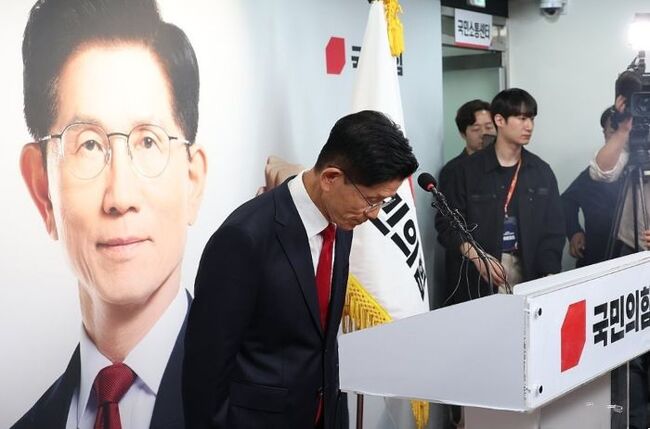 “Too little, too late?…” Kim Moon-soo, who previously conceded his presidential election defeat, now demands a special counsel investigation into ‘allegations of election fraud in the 2025 presidential election’
People Power Party presidential candidate Kim Moon-soo concedes defeat during a press conference at the party headquarters in Yeouido, Seoul, on June 4, 2025. [Joint Press Corps]As allegations emerge
“Too little, too late?…” Kim Moon-soo, who previously conceded his presidential election defeat, now demands a special counsel investigation into ‘allegations of election fraud in the 2025 presidential election’
People Power Party presidential candidate Kim Moon-soo concedes defeat during a press conference at the party headquarters in Yeouido, Seoul, on June 4, 2025. [Joint Press Corps]As allegations emerge
 Stock Market Crash 'Black Tuesday'… KOSPI down 10.8%, KOSDAQ down 7.7%
The KOSPI fell by more than 5% in early trading on the 28th, triggering a sell-side sidecar.On the 28th, the KOSPI plunged by more than 10%.Due to the sharp decline, a sell-side sidecar—a temporary
Stock Market Crash 'Black Tuesday'… KOSPI down 10.8%, KOSDAQ down 7.7%
The KOSPI fell by more than 5% in early trading on the 28th, triggering a sell-side sidecar.On the 28th, the KOSPI plunged by more than 10%.Due to the sharp decline, a sell-side sidecar—a temporary
 [World Heritage Committee] 25 New World Heritage Sites Inscribed in Busan… South Korea Successfully Expands 'Getbol' Listing
The Chairperson of the World Heritage Committee speaks at the plenary session of the 48th session of the World Heritage Committee, held at BEXCO in Busan on the 20th. [Photo: Yonhap News]A total of 25
[World Heritage Committee] 25 New World Heritage Sites Inscribed in Busan… South Korea Successfully Expands 'Getbol' Listing
The Chairperson of the World Heritage Committee speaks at the plenary session of the 48th session of the World Heritage Committee, held at BEXCO in Busan on the 20th. [Photo: Yonhap News]A total of 25
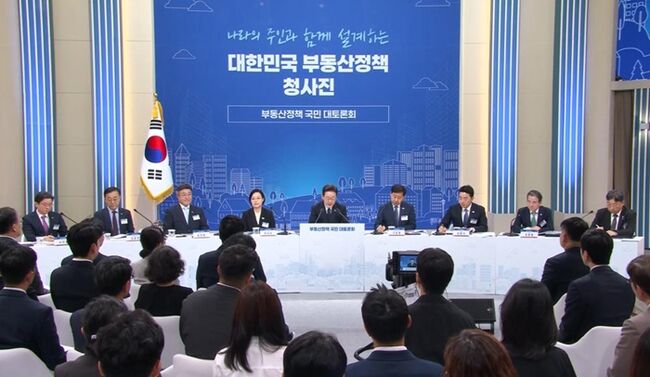 [Liberal Democratic Party Statement] Calling it a Grand Real Estate Debate… It Was Nothing More Than a Private Party Among Themselves
The 'National Grand Debate on Real Estate Policy' held on July 23rd and 27th. [Photo=Yonhap News]The 'National Grand Debate on Real Estate Policy,' hosted by the Lee Jae-myung administration under the
[Liberal Democratic Party Statement] Calling it a Grand Real Estate Debate… It Was Nothing More Than a Private Party Among Themselves
The 'National Grand Debate on Real Estate Policy' held on July 23rd and 27th. [Photo=Yonhap News]The 'National Grand Debate on Real Estate Policy,' hosted by the Lee Jae-myung administration under the
 [Photo] Evidence of Election Fraud Flooding U.S. Media… Trump Had 2.7 Million Votes Stolen
 [Video] U.S. Semiquincentennial Air Show... 'Art in the Sky' streaks across New York
 [Editorial Cartoon] A Draconian Law That Undermines Freedom of Expression

 List
List