 "The reason South Korea succeeded is that it built an 'inclusive economic system' that protects private property, encourages education, and ensures fair competition." [Photo=Yonhap News]
Nobel Laureates' Evaluation of South Korea's Economic Achievements
Professors Daron Acemoglu, James Robinson, and Simon Johnson, winners of the 2024 Nobel Memorial Prize in Economic Sciences, analyzed in their work "Why Nations Fail" that South Korea succeeded because it built an "inclusive economic system" that protects private property, encourages education, and ensures fair competition. In particular, Professor James Robinson evaluated, "Former President Park Chung-hee's export-led policies ignited explosive growth, and subsequent 'democratization' institutionalized this into sustainable development."
Professor Joel Mokyr, a recipient of the 2025 prize, lauded Korea as "a country that miraculously grew from post-war ruins to one of the wealthiest nations in the world," emphasizing that Korea's success was not merely due to luck but to its system of acquiring knowledge and connecting it to technological innovation.
The Miracle of Industrialization and Modernization Built on Ruins
In the 1950s, Korea was a land of despair, with all industrial facilities destroyed by the Korean War. Yet, in just a few decades, South Korea achieved the "Miracle on the Han River" and rose to become one of the world's top 10 economic powers. Currently, only seven countries worldwide meet the criteria of the "30-50 Club," with a population of over 50 million and a per capita income exceeding $30,000.
Year | South Korea | North Korea | Japan | Notes |
1960 | Approx. $79 | Approx. $120~150 | Approx. $470 | North Korea had a temporary advantage due to infrastructure from the Japanese colonial period and aid from the socialist bloc. |
1972 | Approx. $320 | Approx. $310 | Approx. $2,900 | The crucial period when South Korea surpassed North Korea. |
1989 | Approx. $5,500 | Approx. $900 | Approx. $25,000 | Rapid growth in South Korea and stagnation in the North Korean regime. |
2020 | Approx. $31,500 | Approx. $1,200 | Approx. $40,000 | The North-South gap expanded to approximately 25-30 times. |
The prosperity we enjoy today is by no means a product of chance. It is an achievement born from the combination of national leadership and the people's "unyielding will" amidst extreme constraints, including North Korea's constant military provocations and unstable domestic and international political-economic environments.
While any leadership will have its merits and demerits, the 30 years from the 1960s to the 1980s were an era of national prosperity and military strength (富國强兵) where South Korea achieved remarkable development and earned global admiration. The leadership's decisions and infrastructure development implemented through numerous development strategies during this period have become a massive engine supporting South Korea's survival and prosperity today.
1960s: The Era's Spirit of "We Can Do It" to Overcome Poverty
If the 1950s were a period of nation-building that laid the groundwork for liberal democracy and a market economy through post-war reconstruction and the signing of the Mutual Defense Treaty between the ROK and the US, the 1960s were a period of national reconstruction that fully launched economic development. Until the early 1960s, Koreans suffered from the hardships of the spring famine, known as the "barley hump." The spirit of the era was encapsulated in the single phrase "Let's live well," which was sublimated into the "Can do Spirit."
The government spearheaded the "Five-Year Economic Development Plans." In a situation of extreme poverty with an absolute shortage of capital and resources, the nation boldly chose an imbalanced growth strategy that concentrated investment in strategic industries with high growth potential (export-oriented heavy and chemical industries) and regions, thereby spreading their ripple effects throughout the entire economy for national survival. Had a balanced growth and distribution strategy been adopted, growth would have been delayed, wealth accumulation would have been distant, and ultimately, the nation would have fallen into a vicious cycle of poverty with nothing to share.
Loans were secured by collateralizing the salaries of Korean miners and nurses dispatched to West Germany for three years. The $800 million from the claims settlement fund obtained through the normalization of diplomatic relations between Korea and Japan was used as a catalyst for industrialization. This funding was invested in national infrastructure development, such as the construction of Pohang Steel and the Gyeongbu Expressway, forming the foundation for South Korea's logistics revolution and export industrialization.
Furthermore, recognizing that in a resource-scarce nation, human capital is the most important asset, KIST was established, and outstanding overseas talents were recruited. In rural areas, the Saemaul Undong (New Village Movement), based on diligence, self-help, and cooperation, reformed the consciousness of the people and laid the foundation for self-reliance, becoming a development strategy for numerous developing countries worldwide. Participation in the Vietnam War also laid the foundation for defense modernization, and the foreign currency earned through the dedication of dispatched soldiers became key seed money for economic development. The intense survival strategy of trying to achieve both security and economic growth simultaneously, under the slogan "Let's fight and work," permeated the 1960s.
1970s: The Decision for Heavy and Chemical Industries and the Precursor to K-Defense
While the 1960s laid the foundation with light industry-focused import substitution and export drives, the 1970s were the "era of heavy and chemical industries" that fundamentally transformed South Korea's industrial structure. Starting from 1972, when per capita income began to surpass that of North Korea, the government staked its fate on nurturing heavy and chemical industries such as electronics, steel, machinery, automobiles, petrochemicals, shipbuilding, and nuclear power.
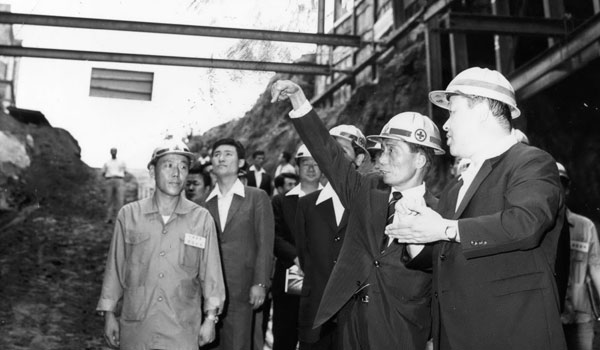 President Park Chung-hee inspects a subway construction site in 1971.
Pohang Steel, Yeochon Petrochemical Complex, automobiles and shipbuilding in Ulsan, and the electronics industrial complex in Gumi, which are now globally competitive, were developed during this period. The "Yulgok Project" is particularly noteworthy. This strategy, where heavy and chemical industries would serve as the foundation of the civilian economy during peacetime and the core of the defense industry during wartime, became the origin of "K-Defense," which the world is now watching with great interest. It created a virtuous cycle where economic development directly led to strengthened national defense capabilities.
The national health insurance system was expanded nationwide to improve public health and quality of life, establishing a social safety net. The nation also made a full-scale entry into the overseas construction market, sparking the so-called "Middle East Boom" and earning substantial foreign currency. The expansion of large city infrastructure, such as the construction of the Seoul subway, also began in earnest during this period. Without the bold decision to foster heavy and chemical industries in the 1970s, South Korea's manufacturing competitiveness today would not exist.
1980s: The Information and Communications Revolution, the Semiconductor Myth, and Globalization
The 1980s marked a period of qualitative leap for South Korea, moving beyond quantitative growth. The development of semiconductors, dubbed the "rice of industry," faced numerous objections and skepticism at the time, but a combination of strong leadership drive and bold investment from private companies (Samsung, Hyundai, LG) resulted in a miracle that conquered the global market. This achievement, reaching the world's No. 1 position in memory semiconductors through the collaboration of government, research institutes, and corporations, remains a core engine for South Korea today (approximately 23% of domestic manufacturing value-added, 20% of global semiconductor production capacity).
Furthermore, the development of the TDX electronic exchange enabled the pioneering of the "Information Superhighway," leading South Korea to become an information and communications powerhouse. This was a communications revolution that served as the foundation for Korea's future status as an IT powerhouse. The 1988 Seoul Olympics was a historic event that showcased these economic achievements to the world, inscribing South Korea as a key player on the global stage. Through the comprehensive development of the Han River, the face of the capital city, Seoul, was renewed, and the successful hosting of the Olympics instilled a strong sense of pride in the Korean people that they could finally move towards becoming an advanced nation.
Let Us Open a Great Future Based on the History of Success
The 30 years from the 1960s to the 1980s were a precious period when the nation of South Korea wrote a magnificent epic, moving from survival to prosperity. The strong will of leadership, the spirit of challenge from entrepreneurs, and the dedication of the people, armed with the belief of "We can do it," formed a trinity that completed the Miracle on the Han River.
Today, we live on the foundation of economic prosperity and security built by these 30 years. However, amidst rapidly changing international dynamics and technological hegemony competition, we cannot afford to remain complacent with past achievements. The foresight to see the future and the execution power to make the impossible possible, demonstrated by previous generations, are core values that we today must reaffirm. Furthermore, we must maintain sustainable growth potential and achieve national unity with a spirit of fairness and distribution.
The history of national prosperity and military strength is not merely a record of the past but a solemn challenge and a testament to hope for us, who must design the next 100 years. Building upon the precious achievements of these 30 years, South Korea must once again embark on a great journey to lead the world.
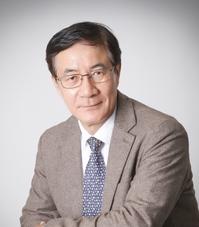
◆ Dr. Shin Dong-choon
Doctor of Public Administration, Chairman of the Global Aerospace Industry Association, Representative of the National Coalition for Unification. After passing the 21st Higher Civil Service Examination, he has had a dynamic career including public service, CEO of a company, university professor, media columnist, author, and chairman of the Global Aerospace Industry Association.

 Iranian Foreign Ministry: "Continuing Message Exchanges with the U.S. and Activities of Mediating Countries"
Esmaeil Baghaei, Spokesperson for the Iranian Ministry of Foreign Affairs [Xinhua, Yonhap News file photo]Esmaeil Baghaei, spokesperson for the Iranian Ministry of Foreign Affairs, stated on the 26th
Iranian Foreign Ministry: "Continuing Message Exchanges with the U.S. and Activities of Mediating Countries"
Esmaeil Baghaei, Spokesperson for the Iranian Ministry of Foreign Affairs [Xinhua, Yonhap News file photo]Esmaeil Baghaei, spokesperson for the Iranian Ministry of Foreign Affairs, stated on the 26th
 President Yoon: "Do You Think You Are Safe from the Special Counsel?"... Final Statement Video Released
President Yoon Suk Yeol rebuking the special prosecutor on the 24th. [Court video / @birds_justice X account subtitle GIF] A video of President Yoon Suk Yeol's closing statement at his trial rega
President Yoon: "Do You Think You Are Safe from the Special Counsel?"... Final Statement Video Released
President Yoon Suk Yeol rebuking the special prosecutor on the 24th. [Court video / @birds_justice X account subtitle GIF] A video of President Yoon Suk Yeol's closing statement at his trial rega
 President Yoon, regarding the first-instance ruling on the Public Official Election Act: “An excessive political verdict that distorts the facts… We will appeal immediately.”
The first-instance sentencing hearing for President Yoon Suk Yeol regarding violations of the Public Official Election Act is being broadcast live at Seoul Station on the 27th. [Photo=Yonhap News]Pres
President Yoon, regarding the first-instance ruling on the Public Official Election Act: “An excessive political verdict that distorts the facts… We will appeal immediately.”
The first-instance sentencing hearing for President Yoon Suk Yeol regarding violations of the Public Official Election Act is being broadcast live at Seoul Station on the 27th. [Photo=Yonhap News]Pres
 WSJ: "SK Hynix ADR Premium Is a Sign of AI Trading Overheat"
Advertisement for SK Hynix ADR listing in New York's Times Square [Reuters=Yonhap News file photo]The Wall Street Journal (WSJ) has pointed out that the price of SK Hynix’s American Depositary Recei
WSJ: "SK Hynix ADR Premium Is a Sign of AI Trading Overheat"
Advertisement for SK Hynix ADR listing in New York's Times Square [Reuters=Yonhap News file photo]The Wall Street Journal (WSJ) has pointed out that the price of SK Hynix’s American Depositary Recei
 'Godfather of Japanese Mystery Novels' Keigo Higashino Passes Away After Battle with Cancer at 68
Famous Japanese mystery novelist Keigo Higashino [AFP=Yonhap News]It has been belatedly reported that Keigo Higashino, the "godfather of Japanese mystery novels" and author of bestsellers such as "The
'Godfather of Japanese Mystery Novels' Keigo Higashino Passes Away After Battle with Cancer at 68
Famous Japanese mystery novelist Keigo Higashino [AFP=Yonhap News]It has been belatedly reported that Keigo Higashino, the "godfather of Japanese mystery novels" and author of bestsellers such as "The
 [Park Pil-kyu Security Column] To the Ignorant Trying to Clothe a Beast in Sheep's Clothing
Rep. Kim Byung-joo of the Democratic Party of Korea [Photo=Yonhap News]“The Air Force Academy doesn't teach you how to fly a plane!” “The Army, Navy, and Air Force academies are exactly the
[Park Pil-kyu Security Column] To the Ignorant Trying to Clothe a Beast in Sheep's Clothing
Rep. Kim Byung-joo of the Democratic Party of Korea [Photo=Yonhap News]“The Air Force Academy doesn't teach you how to fly a plane!” “The Army, Navy, and Air Force academies are exactly the
 [Issue Diagnosis] Two Effects of the Election Petition Review
 [Photo] Evidence of Election Fraud Flooding U.S. Media… Trump Had 2.7 Million Votes Stolen
 [Video] U.S. Semiquincentennial Air Show... 'Art in the Sky' streaks across New York
 [Editorial Cartoon] A Draconian Law That Undermines Freedom of Expression

 List
List









