This was a week where tensions surrounding the Strait of Hormuz once again became the starting point for the market.
At the beginning of the week, the market first factored in concerns about Iran-related blockades, uncertainties in shipping traffic, and the possibility of a renewed surge in international oil prices. However, as the week progressed, market attention shifted from war news to corporate earnings, AI investments, and the profit outlook for technology stocks.
This week's global market was not one that ignored geopolitical risks. However, it was also not a market solely driven by geopolitical risks.
The New York stock market fluctuated based on news related to Hormuz.
On the 20th, the New York stock market saw a slight decline amid renewed Middle East tensions, and weakness continued on the 21st due to concerns about negotiation impasses. However, on the 22nd, it rebounded as expectations for a ceasefire extension coincided with strong earnings. On the 23rd, geopolitical uncertainties and concerns about the earnings of some large technology companies weighed on the market again.
International oil prices were the market's primary variable throughout the week.
When oil prices threatened the $100 per barrel mark from the mid-to-high $90s, the market recalculated inflation and interest rate paths.
Rising oil prices increase the burden on prices, and the burden of prices delays the Federal Reserve's interest rate cut expectations. When interest rate expectations falter, the valuations of technology and growth stocks also become unstable.
However, oil prices themselves were not the core of the market this week.
The more important question that emerged was whether companies could protect their profits despite the oil price shock.
Indeed, the U.S. market channeled funds into companies with better-than-expected earnings, even with lingering Middle East risks, and reacted coldly to companies that revealed burdens from AI investments or concerns about slowing growth.
Seoul cannot avoid the same questions.
As Korea has a high dependence on energy imports, rising oil prices can directly lead to increased corporate costs, a worsening trade balance, and pressure on the won-dollar exchange rate. Therefore, Seoul does not solely focus on the easing of war news. It also considers whether oil prices are stabilizing, the exchange rate is calming down, and if foreign capital inflows can be sustained in the Korean stock market.
The conclusion of Money Radar this week is clear.
The market saw Hormuz, but it wasn't solely buying Hormuz. The market saw oil prices, but it didn't move solely based on them.
This week, capital didn't just stop at avoiding fear; it began to seek out areas where profits remained strong amidst the fear.
The trend this week can be summarized in one sentence.
"Hormuz shook the market, but earnings held it together."
Next week's checkpoints are threefold:
First, further volatility in the Strait of Hormuz and international oil prices. Whether oil prices rise above $100 per barrel or stabilize amidst negotiation expectations could differentiate inflation and interest rate expectations.
Second, the extent of the U.S. earnings season expansion. The earnings of some large technology companies are not enough. We need to see if strong earnings spread to AI infrastructure, power semiconductors, industrials, and consumer goods.
Third, the won-dollar exchange rate and foreign capital flows. The further rise of the Korean market depends less on the index itself and more on exchange rate stability and the continuation of foreign buying.
※ This article is a news-style commentary on market trends, not investment advice. Actual stock prices and capital flows may vary depending on exchange rates, oil prices, geopolitical variables, corporate earnings, and policy changes.

 [Statement by the Seobeokka KMA Patriots Association] ㉛ Recount the ballots openly, as the previous recount covered up election fraud
Recount of the Tongyeong mayoral election [Photo=Yonhap News]South Korea's liberal democracy is dying. The National Election Commission (NEC), which has degraded into a criminal organization through t
[Statement by the Seobeokka KMA Patriots Association] ㉛ Recount the ballots openly, as the previous recount covered up election fraud
Recount of the Tongyeong mayoral election [Photo=Yonhap News]South Korea's liberal democracy is dying. The National Election Commission (NEC), which has degraded into a criminal organization through t
 What is the significance of the "Trump 2028" red hat that keeps reappearing?
It is noteworthy that while it is "highly likely" that President Donald Trump is "seriously considering" a run for the presidency in 2028, he is also "deliberately" fueling speculation regarding wheth
What is the significance of the "Trump 2028" red hat that keeps reappearing?
It is noteworthy that while it is "highly likely" that President Donald Trump is "seriously considering" a run for the presidency in 2028, he is also "deliberately" fueling speculation regarding wheth
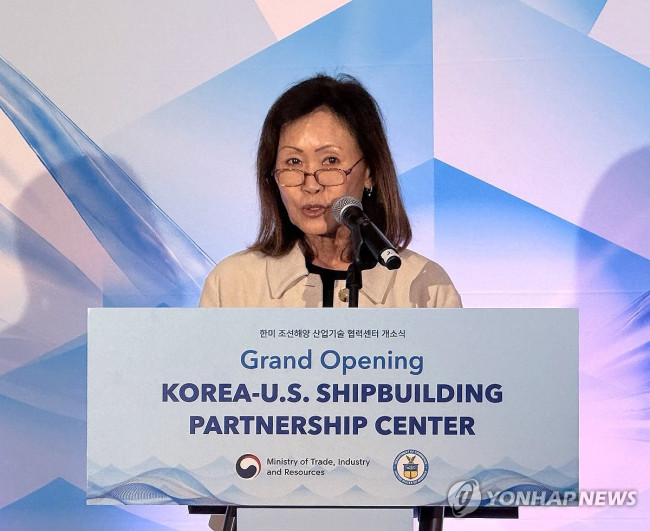 First U.S. Ambassador of Trump's Second Term to Arrive This Week… Will It Provide Momentum to Resolve Pending Issues?
U.S. Ambassador to South Korea Michelle Steel speaks at the opening ceremony of the Korea-U.S. Shipbuilding Cooperation Center held at the Mayflower Hotel in Washington, D.C., on the 23rd (local time)
First U.S. Ambassador of Trump's Second Term to Arrive This Week… Will It Provide Momentum to Resolve Pending Issues?
U.S. Ambassador to South Korea Michelle Steel speaks at the opening ceremony of the Korea-U.S. Shipbuilding Cooperation Center held at the Mayflower Hotel in Washington, D.C., on the 23rd (local time)
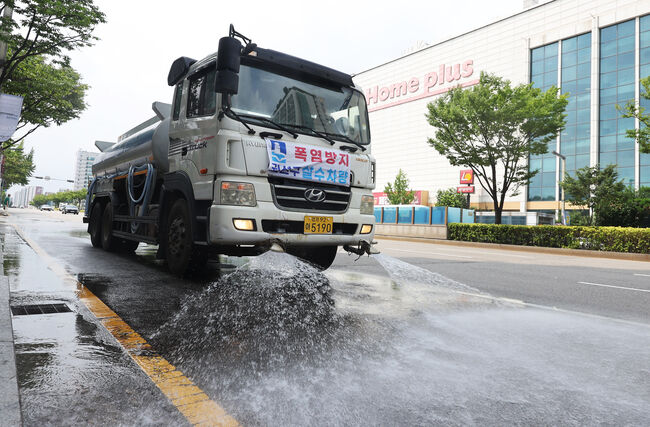 The Korean Peninsula wrapped in a thick blanket of scorching high pressure… Will the 1994 record be broken?
On the 28th, as the heatwave continues, a water sprinkler truck sprays water on Hyowon-ro, Gwonseon-gu, Suwon, Gyeonggi Province. [Photo = Yonhap News]The hottest years on record are considered to be
The Korean Peninsula wrapped in a thick blanket of scorching high pressure… Will the 1994 record be broken?
On the 28th, as the heatwave continues, a water sprinkler truck sprays water on Hyowon-ro, Gwonseon-gu, Suwon, Gyeonggi Province. [Photo = Yonhap News]The hottest years on record are considered to be
 Stock Market Crash 'Black Tuesday'… KOSPI down 10.8%, KOSDAQ down 7.7%
The KOSPI fell by more than 5% in early trading on the 28th, triggering a sell-side sidecar.On the 28th, the KOSPI plunged by more than 10%.Due to the sharp decline, a sell-side sidecar—a temporary
Stock Market Crash 'Black Tuesday'… KOSPI down 10.8%, KOSDAQ down 7.7%
The KOSPI fell by more than 5% in early trading on the 28th, triggering a sell-side sidecar.On the 28th, the KOSPI plunged by more than 10%.Due to the sharp decline, a sell-side sidecar—a temporary
 [World Heritage Committee] 25 New World Heritage Sites Inscribed in Busan… South Korea Successfully Expands 'Getbol' Listing
The Chairperson of the World Heritage Committee speaks at the plenary session of the 48th session of the World Heritage Committee, held at BEXCO in Busan on the 20th. [Photo: Yonhap News]A total of 25
[World Heritage Committee] 25 New World Heritage Sites Inscribed in Busan… South Korea Successfully Expands 'Getbol' Listing
The Chairperson of the World Heritage Committee speaks at the plenary session of the 48th session of the World Heritage Committee, held at BEXCO in Busan on the 20th. [Photo: Yonhap News]A total of 25
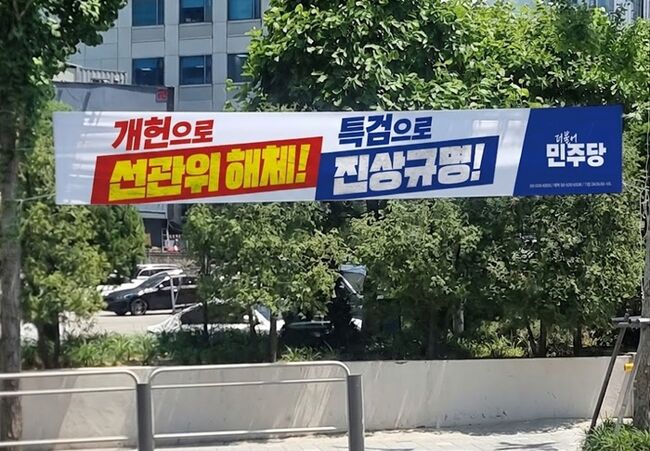 [Cho Yang-geon Column] The NEC: Facing a Fate of "Discarding the Dog After the Hunt"
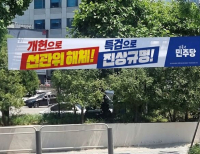
Banner calling for the "dissolution of the NEC" posted by the Democratic Party. [AI-generated image]Banners calling for the "dissolution of the National Election Commission (NEC)" posted by the Democr
[Cho Yang-geon Column] The NEC: Facing a Fate of "Discarding the Dog After the Hunt"
Banner calling for the "dissolution of the NEC" posted by the Democratic Party. [AI-generated image]Banners calling for the "dissolution of the National Election Commission (NEC)" posted by the Democr
 [Photo] Evidence of Election Fraud Flooding U.S. Media… Trump Had 2.7 Million Votes Stolen
 [Video] U.S. Semiquincentennial Air Show... 'Art in the Sky' streaks across New York
 [Editorial Cartoon] A Draconian Law That Undermines Freedom of Expression

 List
List