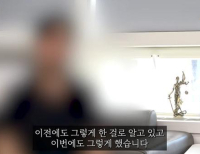
On the 16th, Lee Young-don TV exposed the reality of the June 3rd local elections through the direct experience of a current National Election Commission (NEC) official. [Photo=Screen capture from Lee Young-don TV]
Table of Contents
① A National Investigation Without Eyewitnesses is Like a 'Donut Without Filling'
② The Full Picture of the June 3rd Election Management to be Revealed by the National Investigation
③ Constitutional Amendment is a Long-Term Task; The Law on Courts Specializing in Sedition Should Be Followed
A national investigation has begun to uncover the truth behind the deprivation of suffrage in the June 3rd local elections. However, if the NEC officials who witnessed the use of Wi-Fi, those who personally transported ballots, voters who were unable to cast their ballots, and observers who witnessed the transfer of ballot boxes and the vote counting process are not called to testify, this national investigation will inevitably be like a 'donut without filling'.
The Special Committee for the National Investigation was launched on the 18th and will operate for 45 days until August 1st. The investigation will proceed with briefings from the National Election Commission, followed by the selection of witnesses and reference persons, on-site verification, and public hearings. Ultimately, the first critical juncture of the national investigation lies in who will be summoned as a witness.
Calling Only Agency Heads Will End with "I Was Not Informed."
Former NEC Chairman Roh Tae-ak, former and current Secretary-Generals, and executives from the Seoul Metropolitan Election Commission and Songpa-gu Election Commission must be summoned as witnesses. This is to hold them accountable for the reduction in ballot printing volume and the collapse of the command and reporting structure.
However, a national investigation that only summons agency heads to the witness stand will struggle to reveal the reality on the ground. Agency heads can respond by saying, "I was not informed," "It was a judgment made on-site," or "I believe it was handled according to regulations."
The NEC's own fact-finding committee confirmed the overall systemic failures due to the malfunctioning reporting structure to higher committees and the chain of command. It recommended the investigation of 12 individuals, including former Chairman Roh Tae-ak, and disciplinary action for six staff members. To ensure the national investigation goes beyond merely reiterating the self-investigation results, it is crucial to identify those who actually received instructions and carried out tasks under the decision-makers.
The Wi-Fi Whistleblower Must Be the First to Take the Stand
The primary candidate to consider is the current NEC official who appeared in the interview on Lee Young-don TV.
This whistleblower claimed to have witnessed the use of Wi-Fi to operate the voter registration terminal when communication equipment failed at a pre-voting polling station, and stated that related content remained in internal KakaoTalk chat rooms. The whistleblower also raised issues regarding identity verification procedures, modifications to voting and counting figures, and discrepancies in the number of absentee ballots sent outside the jurisdiction.
Currently, these are merely the whistleblower's claims, and they have not undergone objective verification. This is precisely why the National Assembly should summon them to receive sworn testimony.
The special committee must inquire about which polling station experienced the failure, when it occurred, who instructed the Wi-Fi connection, what communication equipment was used, and what instructions and reports remain in the internal chat rooms. Subsequently, the poll managers of the relevant polling station, the person in charge of the voter registration terminal, on-site technical support personnel, and representatives of the maintenance company should be summoned to corroborate testimony.
The National Assembly has no reason to assume the whistleblower's claims as fact beforehand, nor to accept the NEC's explanations first. A national investigation is about allowing the whistleblower to state what they directly witnessed and enabling the NEC to confirm or refute it with records.
Those Who Directly Transported Ballots Must Be Called
In ballot management, individuals who directly transported and received ballots are more important than executives.
It is necessary to sequentially confirm who removed the unnumbered ballots from storage, who recorded the serial numbers, how many were placed in which containers, which vehicles were used for transport, and who received them at the polling station.
During the NEC's fact-finding process, it was revealed that not only regular staff but also administrative assistants and social service personnel were mobilized for ballot delivery. Furthermore, delays in on-site support and reporting occurred due to the process of assigning serial numbers to unnumbered ballots.
Therefore, those who directly transported and received the ballots must be summoned as witnesses. On-site testimony regarding how many ballots were received, at what time and place, and to whom they were delivered is more crucial than an executive's response of "It was handled according to regulations."
Observers and Disenfranchised Voters Are Also Witnesses
Party-appointed observers who witnessed polling station disruptions, those who saw the sealing and transfer of ballot boxes, and observers who verified the extension of voting hours and the commencement of vote counting are also key witnesses.
Most importantly, voters who arrived at the polling station but were unable to cast their ballots must be summoned. The chairman of the NEC's fact-finding committee stated that 12 voters who received waiting tickets at polling station No. 2 in Jamsil 7-dong were confirmed to have ultimately been unable to vote.
However, there is a possibility that individuals who left without receiving a waiting ticket, those who returned home due to long waiting times, and those who did not return because they were unaware of the resumption of voting may exist separately.
Disenfranchised voters are not mere reference persons to adorn the national investigation. They are the individuals who were actually denied their right to vote due to the state's election management failure. Given that the official title of the national investigation includes "Fact-Finding on the Infringement of Citizens' Suffrage," there is no reason to exclude victims from the witness stand.
As Sworn Witnesses, Not Reference Persons
Those who directly witnessed and executed actions should, whenever possible, be selected as witnesses rather than reference persons. Sworn witnesses who make false statements are subject to perjury charges under the National Assembly Testimony and Evidence Act.
The identity and personal safety of whistleblowers must be thoroughly protected. Measures such as closed-door hearings, restricted video and audio exposure, the installation of screens, and protection against career disadvantages must be implemented concurrently. If the whistleblower's identity is exposed while they are on the witness stand, further testimony will inevitably cease.
Witness examinations should not be concluded by summoning individuals one by one and hearing prepared answers. Testimony from the Wi-Fi whistleblower and on-site managers, ballot transporters and receivers, vote counting observers and supervisors, and data entry personnel and those who issued correction orders must be cross-referenced based on the same records.
A national investigation that summons only high-ranking officials while excluding eyewitnesses is not fact-finding. It is merely an opportunity to hear the NEC's explanations. The success or failure of this national investigation hinges not on how many high-ranking individuals are summoned, but on whether those who directly witnessed, directly executed, and directly suffered harm can be placed on the witness stand.

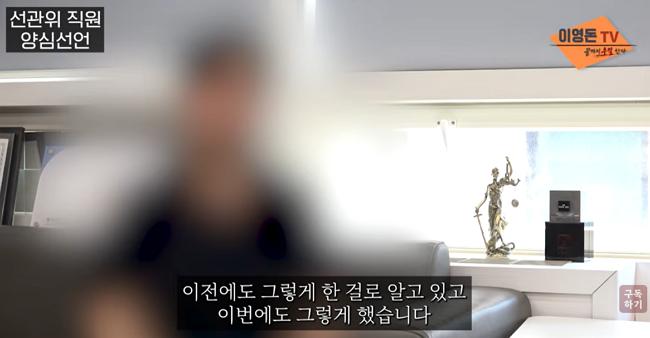 [Focus] Why did the dedicated communication network, checked three times, stop?... Three questions about the "Wi-Fi connection" for early voting
In the broadcast of Lee Young-don TV on the 16th, a current National Election Commission official exposes the reality of the 6.3 local elections based on direct experience. [Photo=Screenshot fr
[Focus] Why did the dedicated communication network, checked three times, stop?... Three questions about the "Wi-Fi connection" for early voting
In the broadcast of Lee Young-don TV on the 16th, a current National Election Commission official exposes the reality of the 6.3 local elections based on direct experience. [Photo=Screenshot fr
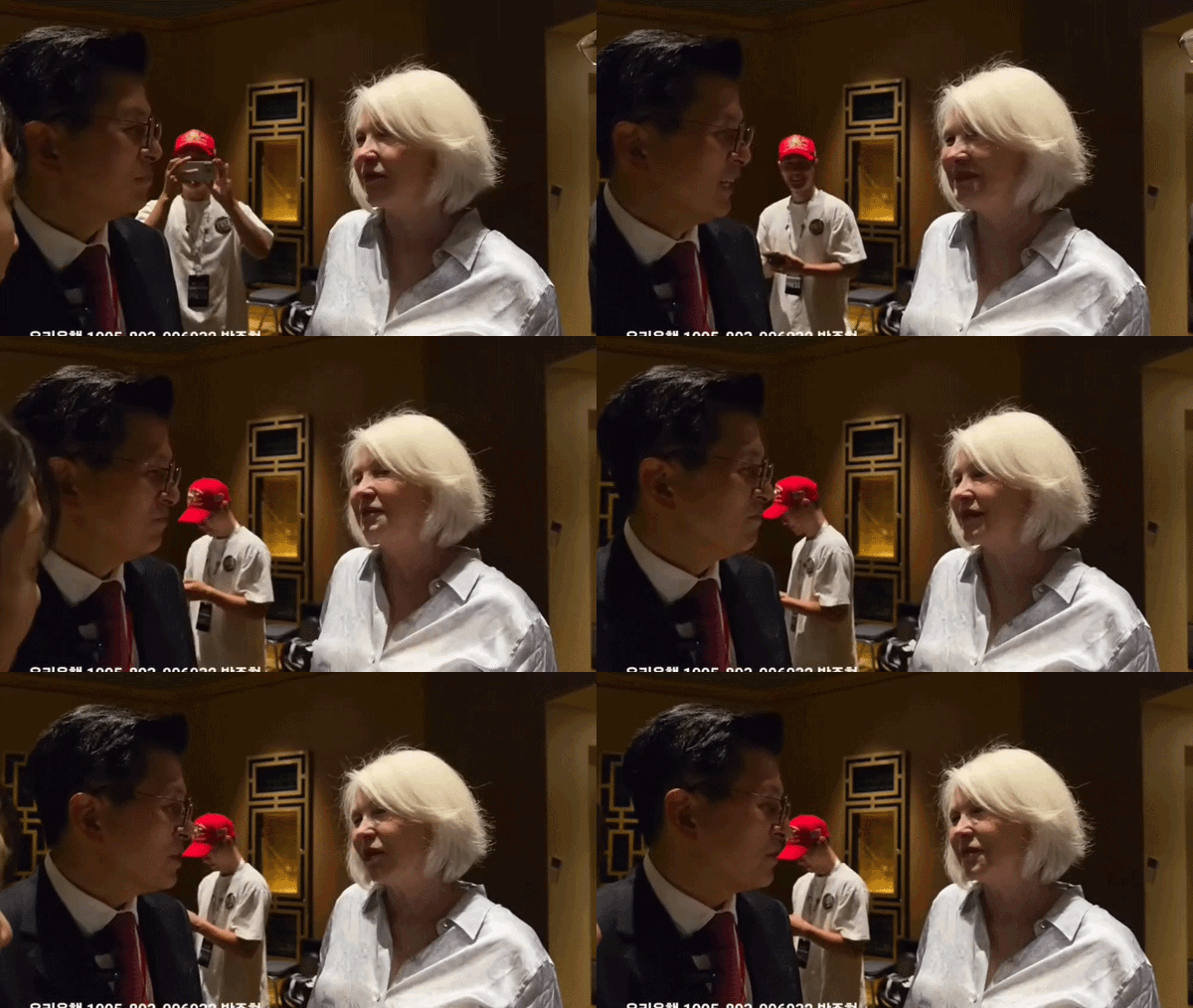 Hwang Kyo-ahn, Representative, Meets with US "Election Fraud Warrior" and Says, "Korea is in Crisis, Please Intervene, Mr. Trump"
Hwang Kyo-ahn, leader of the Freedom and Innovation Party (left), speaks with Tina Peters, a former Mesa County Clerk in Colorado and a "fraud election warrior" who has fought against election fraud,
Hwang Kyo-ahn, Representative, Meets with US "Election Fraud Warrior" and Says, "Korea is in Crisis, Please Intervene, Mr. Trump"
Hwang Kyo-ahn, leader of the Freedom and Innovation Party (left), speaks with Tina Peters, a former Mesa County Clerk in Colorado and a "fraud election warrior" who has fought against election fraud,
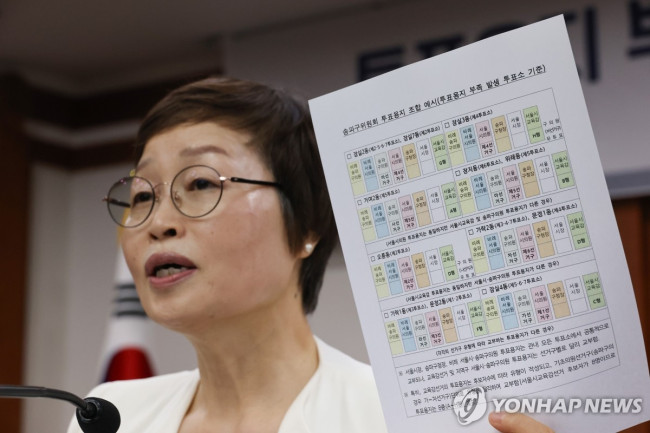 Fact-Finding Committee: "Total mismanagement of election administration... Recommend referral for investigation of Noh Tae-hak and others."
On the 19th, Cho Hyun-wook, chairman of the 'Investigation Committee for the Ballot Paper Shortage Incident', briefs the final investigation results at the National Election Commission in Gwacheon, Gy
Fact-Finding Committee: "Total mismanagement of election administration... Recommend referral for investigation of Noh Tae-hak and others."
On the 19th, Cho Hyun-wook, chairman of the 'Investigation Committee for the Ballot Paper Shortage Incident', briefs the final investigation results at the National Election Commission in Gwacheon, Gy
 Prosecution Demands 2 Years Imprisonment and Fine for Lee Hwa-young for Perjury and Splitting Donations
Former Gyeonggi Province Vice Governor Lee Hwa-young, who appeared as a witness at a hearing related to the Ssangbangul North Korea remittance case held by the parliamentary special committee for the
Prosecution Demands 2 Years Imprisonment and Fine for Lee Hwa-young for Perjury and Splitting Donations
Former Gyeonggi Province Vice Governor Lee Hwa-young, who appeared as a witness at a hearing related to the Ssangbangul North Korea remittance case held by the parliamentary special committee for the
 Is the JoongAng Ilbo's dominance crumbling? With no money, JoongAng Ilbo finally files for workout program.
There is intense interest in whether a major seismic shift will occur in the South Korean newspaper industry, potentially toppling the long-standing dominance of the JoongAng, Chosun, and Dong-A Ilbo
Is the JoongAng Ilbo's dominance crumbling? With no money, JoongAng Ilbo finally files for workout program.
There is intense interest in whether a major seismic shift will occur in the South Korean newspaper industry, potentially toppling the long-standing dominance of the JoongAng, Chosun, and Dong-A Ilbo
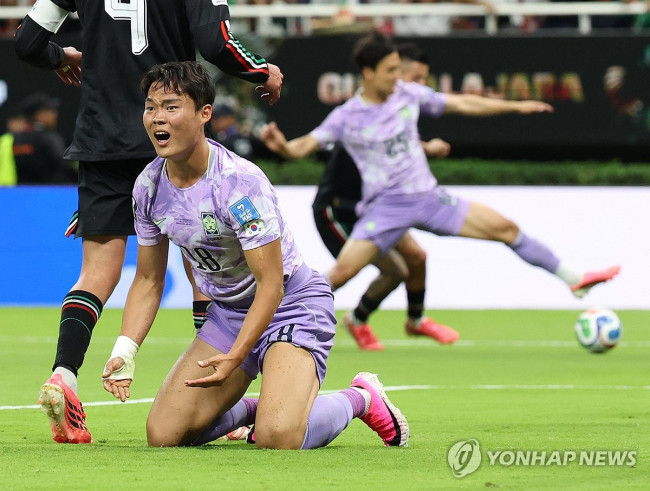 Hong Myung-bo's team loses 0-1 to host nation Mexico
The 2026 North, Central America and Caribbean World Cup Group A second round match between South Korea and Mexico held at the Guadalajara Stadium in Zapopan, Mexico, on the 18th (local time). National
Hong Myung-bo's team loses 0-1 to host nation Mexico
The 2026 North, Central America and Caribbean World Cup Group A second round match between South Korea and Mexico held at the Guadalajara Stadium in Zapopan, Mexico, on the 18th (local time). National
 [Photo] Current status of Chairman Hwang Kyo-ahn and lawyer Park Joo-hyun attending the US election fraud fighter summit
Lawyer Park Joo-hyun with lawyer Peter Ticktin, who was pardoned by U.S. President Donald Trump. [Facebook]Hwang Kyo-ahn, leader of the Liberty and Innovation Party (second from left), informing about
[Photo] Current status of Chairman Hwang Kyo-ahn and lawyer Park Joo-hyun attending the US election fraud fighter summit
Lawyer Park Joo-hyun with lawyer Peter Ticktin, who was pardoned by U.S. President Donald Trump. [Facebook]Hwang Kyo-ahn, leader of the Liberty and Innovation Party (second from left), informing about
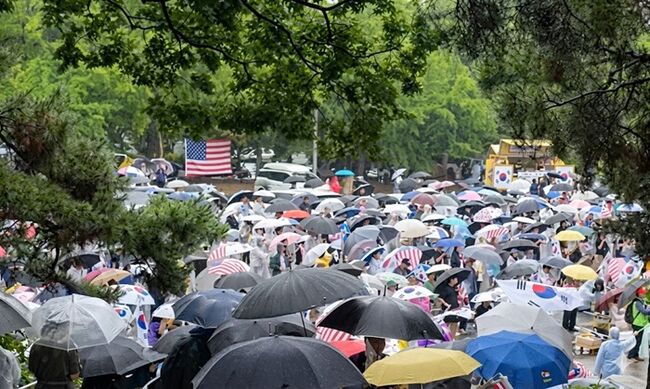 [Cho Yang-kun Column] The reason for the ever-increasing heat at Olympic Park
At noon on the 20th, citizens chanted "Re-election for fraudulent elections, same-day voting and manual counting!" at Olympic Park in Seoul, even amidst heavy rain. ⒸHanmi Ilbo The fervor of th
[Cho Yang-kun Column] The reason for the ever-increasing heat at Olympic Park
At noon on the 20th, citizens chanted "Re-election for fraudulent elections, same-day voting and manual counting!" at Olympic Park in Seoul, even amidst heavy rain. ⒸHanmi Ilbo The fervor of th
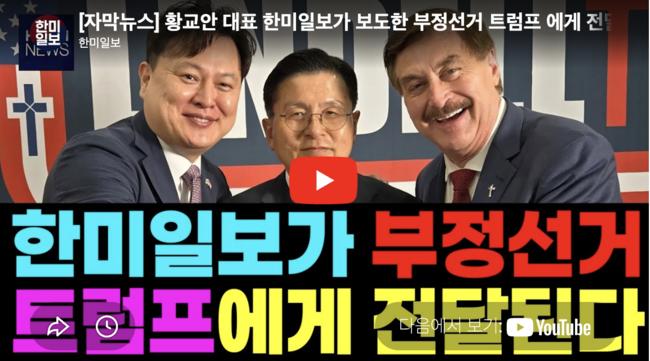 [Video] 'Trump's close friend' Lindell "I will inform Trump about South Korea's fraudulent election"
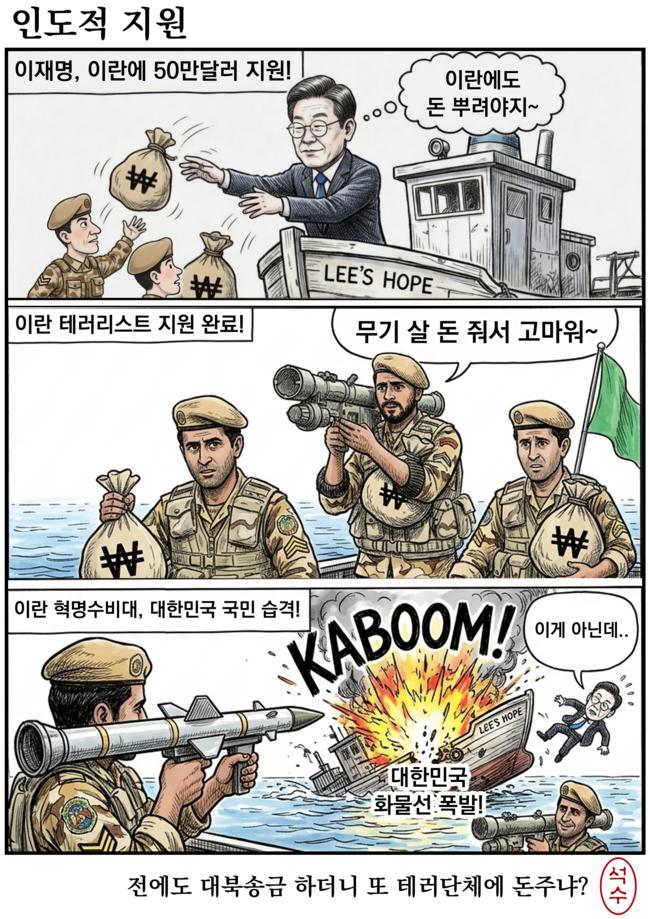 [Editorial Cartoon] Humanitarian Aid

 List
List