Author Kim Gyu-na Freedom of expression is one of the core liberties of any liberal democratic system. Article 21 of the Constitution of the Republic of Korea guarantees the freedom of speech, press, assembly, and association. In a democratic society, citizens must have the freedom to criticize the government, scholars must have the freedom to publish their research findings, and writers must have the freedom to express their views. These rights do not belong only to the majority; they also protect minority opinions, dissenting views, and even unpopular arguments.
Recently in South Korea, there has been increasing debate surrounding the scope and limits of freedom of expression. At the heart of this controversy lies the issue of criminal charges and punishment resulting from historical interpretations and political speech. The case of the writer Kim Gyu-na has emerged as one of the clearest examples of this problem.
The incident began in October 2024, when Ms. Kim posted a critique of author Han Kang’s work on social media and challenged the conventional interpretation of the May 18 Democratization Movement. In response, civic groups filed a complaint against her. On August 13, 2025, the prosecution indicted Ms. Kim for violating the Special Act on the May 18 Democratization Movement and demanded a fine of 1 million won. Ms. Kim rejected this and requested a formal trial. The first-instance trial was held in April 2026 but was subsequently postponed and is now scheduled for sentencing in mid-August 2026.
What is noteworthy is not the amount of the fine. The more significant issue is the fact that a writer posted social media content containing literary criticism and historical interpretation, which led to protests by civic groups, prosecution by the state, and a full criminal trial. This process sends a clear message to other writers, researchers, YouTubers, and critics who cover the same subject: if you present an opinion that differs from the government-approved interpretation, you may face criminal litigation.
Therefore, the core issue of this case is not whether one agrees with Kim Gyu-na’s arguments. The real issue is whether the interpretation of historical events and the expression of opinions can be treated as criminal offenses. It is also a question of whether the state, through the prosecution and the courts, can determine the extent to which citizens are permitted to speak on politically sensitive history.
The Shrinking of Freedom of Expression Under State Control
When the state begins to punish freedom of expression through criminal law, public debate becomes much more difficult. The same applies to historical analysis or raising contrary questions. Before speaking on sensitive historical issues, citizens will calculate the possibility of being reported, investigated, or brought to court. This is not merely a matter of legal procedure; it is a question of whether the state can control the rights of citizens to think, speak, write, and document.
In a democratic society, historical debates should be handled through academic research, public discussion, and journalistic commentary. Every citizen has the right to present different views on historical events. The testimony of those who directly experienced events cannot be forced to fit into a single official narrative. Even those who witnessed the same event may have different memories and descriptions depending on where they were, what they experienced, and the fear, harm, or pressure they endured.
However, if the state defines a single interpretation of a specific event as the official truth and treats testimonies or analyses that differ from that legal standard as punishable rather than protected expression, citizens will no longer be able to speak or pursue historical inquiry without fear. Freedom of expression is thus suppressed in the name of the law. This is not just a problem for one writer; it is a question of how freely South Korean citizens and intellectuals can speak.
The Exceptions and Contradictions of the May 18 Special Act
Article 8 of the Special Act on the May 18 Democratization Movement stipulates that anyone who spreads false information regarding the movement may be subject to imprisonment of up to five years or a fine of up to 50 million won. This provision lists a wide range of dissemination methods, including newspapers, magazines, broadcasts, publications, information networks, exhibitions, performances, debates, meetings, press conferences, rallies, and street speeches. The purpose of this law is to prevent the spread of false information about the May 18 Democratization Movement and to protect the honor of the victims and their families.
However, Article 8, Paragraph 2 of the same act contains an exception clause. It states that expressions for the purpose of art, academics, research, academic theory, current affairs reporting, reporting on historical processes, or similar purposes shall not be punished. On the surface, this clause appears to protect writers, researchers, journalists, and civic commentators.
But this is precisely where the contradiction of the law is revealed. While the statute explicitly protects artistic, academic, research-based, theoretical, and journalistic expression, in actual practice, writers, researchers, YouTubers, and civic commentators who present alternative interpretations of history remain targets for complaints, investigations, and prosecution. The mere existence of an exception clause does not guarantee that freedom of expression is protected. What matters is whether that exception clause actually protects citizens in real-world cases.
The Kim Gyu-na case illustrates this problem well. If a writer’s literary criticism and historical interpretation can lead from protests by civic groups to prosecution by the state and a full trial, it is difficult to argue that the legal exception clause has acted as a shield for freedom of expression. Instead, it places the burden on citizens already standing in court, as the defendant must retroactively prove that their expression constitutes research, criticism, reporting, or legitimate commentary.
Critics argue that this is the point at which the law conflicts with the fundamental principles of liberal democracy. Even if the superficial purpose is to protect the honor of victims and their families, a law that drags differing interpretations and public policy issues into complaints and trial procedures does not serve as a shield for freedom of expression, but rather acts as a mechanism to restrict it.
Historical research advances through new evidence, testimony, and diverse interpretations. When the state uses the law to protect a specific historical perspective and treats alternative arguments or analyses as potential criminal acts, it is effectively setting boundaries for what is considered an acceptable historical interpretation. This result reveals a serious contradiction: a law enacted in the name of protecting the victims’ honor can lead to the restriction of citizens' freedom to speak, investigate, and discuss. In a liberal democratic society, the law should protect the citizens' freedom of expression. It should not be a tool for selectively punishing citizens who make remarks that deviate from the state-sanctioned interpretation.
The Judicialization of Historical Debate and the Attitude of the Lee Jae-myung Government
The Kim Gyu-na case is just one example. In recent years, there has been a continuous stream of cases in which scholars, writers, critics, and YouTubers have faced criminal complaints over issues such as the May 18 Democratization Movement, the Jeju 4·3 Incident, the wartime "comfort women" issue, forced labor during the Japanese colonial period, and controversies over pro-Japanese collaboration. In such cases, historical and political debates are increasingly resolved through complaints, investigations, and litigation rather than through public discussion and refutation.
This trend has become more sensitive since the launch of the Lee Jae-myung government. Because the Kim Gyu-na incident occurred before the current administration took office, it cannot be concluded that the current government was directly involved. However, rather than expressing a clear defense of freedom of expression through this case, the government is moving in a direction that allows for in-depth surveillance and punishment of citizens' speech under the pretexts of responding to "fake news," preventing "historical distortion," and regulating online content.
The problem lies in who defines what constitutes "fake news." If reports that are uncomfortable for the government and the ruling party, YouTube broadcasts that criticize the president, or writings that challenge existing historical interpretations are all branded as "fake news" or "historical distortion," the system is not acting to uphold democracy but is instead becoming a shield for those in power. The Chinese Communist Party also punishes anti-government speech under names such as "spreading false information" or "disturbing social order." A liberal democratic country should not suppress the voices of its citizens in this manner.
The current attitude of the Lee Jae-myung administration is dangerous. Even if the government was not directly involved in the Kim Gyu-na case, a normal liberal democratic government should clearly state that writers, journalists, and citizens have the right to speak freely on political power and historical issues, and should protect those who exercise that right. Instead, the current government avoids clarifying these principles and is narrowing the scope of freedom of expression under the guise of responding to fake news and preventing historical distortion. This is not the attitude of a liberal democratic government; rather, it is the attitude of a government seeking to control speech that those in power find uncomfortable.
Expansion of Online Freedom of Expression Regulations and Issues with U.S. Platforms
The removal of internet posts and the online content blocking system of the Korea Communications Standards Commission (KCSC) have been a subject of constant controversy. While the government and the commission explain that this system is a tool for responding to illegal content and fake news, concerns remain that it could lead to excessive intervention in the freedom of political expression.
As political and current affairs content posted on global digital platforms operated by U.S. companies like YouTube and Facebook become subject to review and regulatory discussion, this issue is no longer merely a domestic administrative matter. The extent to which the South Korean government can classify online political speech as fake news, and the criteria it uses to demand deletion or blocking, are issues directly connected to freedom of expression.
Repeated censorship of political YouTube channels and current affairs content is not merely an administrative issue. Today, many South Korean citizens encounter political issues not covered by terrestrial broadcasters or major newspapers through YouTube and online media.
If the government begins to exert pressure on these spaces in the name of blocking fake news, content critical of the government will be the first to shrink. Those in power are always tempted to dismiss unfavorable reports as false. For this reason, a liberal democratic society must be wary of any structure where the government makes the final judgment on the truth of an expression.
International Concern and Impact on the ROK-U.S. Alliance
The international community has long monitored South Korea’s system of freedom of expression. While South Korea is generally classified as a free country, defamation laws, the National Security Act, laws related to the punishment of past historical crimes, and internet censorship systems remain matters of concern for international human rights organizations. In particular, the defamation law has been repeatedly urged for reform by international human rights groups and the United Nations.
When laws punishing the distortion of historical facts are combined with fake news regulations, South Korea’s freedom of expression issue no longer remains a domestic political debate. If a writer criticizing historical facts ends up in court, a YouTuber criticizing the government becomes a target of censorship, and citizens have to worry about protests after posting political opinions online, South Korea is weakening the standards expected of a liberal democratic nation.
This is exactly why the U.S. Congress should pay attention. South Korea is a treaty ally of the United States, hosts U.S. troops, and is a key pillar of the Indo-Pacific security strategy. However, if the ally's government exerts pressure on the political expression and historical interpretations of writers, journalists, researchers, and YouTubers through criminal litigation and online censorship, Washington cannot view South Korea merely as a military ally. Alliances are not maintained by weapons and bases alone. If the common foundation of liberal democracy is weakened, the political legitimacy of the ROK-U.S. alliance will also be weakened.
Members of the U.S. Senate and House of Representatives must ask the South Korean government clear questions. Will the Republic of Korea continue to target historical issues and political expression for criminal punishment? Will it continue to pressure reports critical of the government and conservative content by labeling them as "fake news"? Will it allow writers and researchers to speak out if they deviate from state-sanctioned historical interpretations? These questions are not limited to South Korea’s domestic politics; they are directly connected to alliance management, human rights diplomacy, and the Indo-Pacific strategy.
Revision of the Information and Communications Network Act and the Overseas Expansion of Regulation
The Lee Jae-myung administration is currently pushing to strengthen fake news regulations and enact historical punishment laws. Specifically, Article 2 of the revised Act on Promotion of Information and Communications Network Utilization and Information Protection, which is scheduled to take effect on July 7, 2026, strengthens regulations on online freedom of expression to counter fake or manipulated information.
According to government announcements, this law includes the mandatory handling of civil complaints for large-scale information and communications service providers, as well as the imposition of damages up to five times the actual loss and administrative fines of up to 1 billion won for information repeated more than twice that has been deemed illegal or false by courts or other agencies.
The problem is that this regulatory pressure is spreading beyond South Korean users to overseas. Online expression regulations by South Korean government agencies are now affecting Korean broadcasters, online current affairs content providers, and civic commentators residing in the United States.
There have been cases where Facebook posts or political opinions written by U.S. citizens in the United States have become targets of sanctions by South Korean agencies, and instances where high administrative fines have been imposed on Korean-language journalists residing in the United States. This demonstrates that South Korea’s fake news regulations and online review systems are no longer confined to South Korea but are now influencing political expression and journalistic activities within the Korean-American community.
If the South Korean government regulates political and current affairs remarks by Korean broadcasters in the United States, as well as content posted on global platforms such as YouTube and Facebook under the guise of fake news or historical distortion, this is not merely a domestic administrative issue. It means that the speech of U.S. citizens, online political commentary in the U.S., Korean-language journalistic activities based in the U.S., and expressive activities on digital platforms operated by U.S. companies can all become targets of pressure from the South Korean government.
The Crisis of Freedom of Expression and Our Task
If these trends become more firmly established in law and policy, South Korea will drift further away from the name of a liberal democratic ally. This cannot be dismissed merely as a domestic culture war within South Korea. The United States must carefully examine whether freedom of expression is truly retreating in South Korea, one of its key allies, and whether the South Korean government remains willing to adhere to the fundamental principles of liberal democracy.
The Kim Gyu-na case shows that in South Korea, a writer’s essays, research papers, and even a citizen’s social media posts can become subjects of political condemnation and criminal punishment. If the Lee Jae-myung government fails to stop this trend, freedom of expression in South Korea may remain only as a clause specified in the Constitution while failing to function properly in reality.
The U.S. Congress and the international community must closely monitor this situation. If the freedom to criticize the government and the freedom of historical interpretation become subject to criminal punishment and are regulated online, it is not simply a domestic issue for South Korea. It will serve as a test of whether the ROK-U.S. alliance is still based on the same values of liberal democracy.

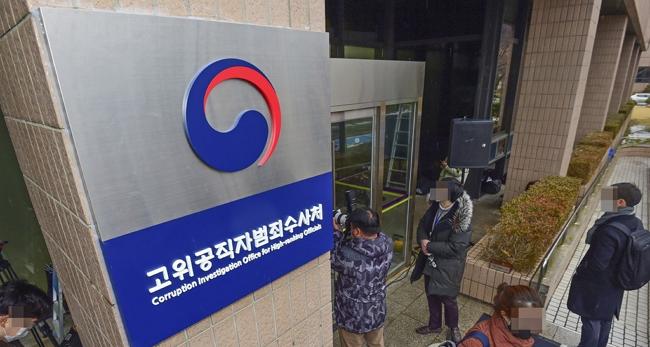 [Issue Commentary] “Who Checks the CIO?”… The Paradox of Prohibiting Direct Supplementary Investigations by the Investigative Agency
The signboard of the Corruption Investigation Office for High-ranking Officials (CIO) at the Government Complex Gwacheon [Yonhap News file photo] Ahead of the abolition of the Prosecutors' Office and
[Issue Commentary] “Who Checks the CIO?”… The Paradox of Prohibiting Direct Supplementary Investigations by the Investigative Agency
The signboard of the Corruption Investigation Office for High-ranking Officials (CIO) at the Government Complex Gwacheon [Yonhap News file photo] Ahead of the abolition of the Prosecutors' Office and
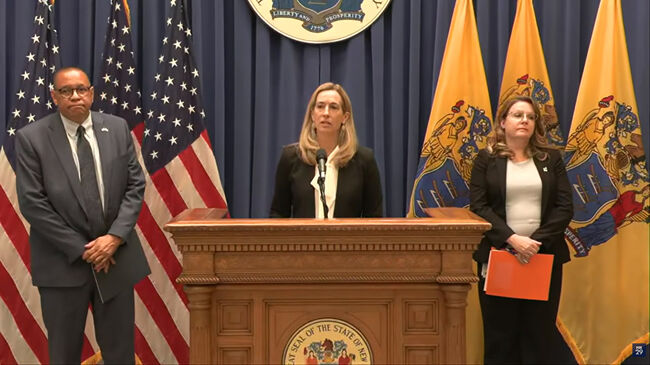 6,600 Non-Citizens Registered to Vote Through New Jersey Motor Vehicle System
New Jersey Governor Mikie Sherrill (Democrat) announced that 6,660 non-citizens were mistakenly registered as voters due to a software glitch in the state's motor vehicle registration system. Governor
6,600 Non-Citizens Registered to Vote Through New Jersey Motor Vehicle System
New Jersey Governor Mikie Sherrill (Democrat) announced that 6,660 non-citizens were mistakenly registered as voters due to a software glitch in the state's motor vehicle registration system. Governor
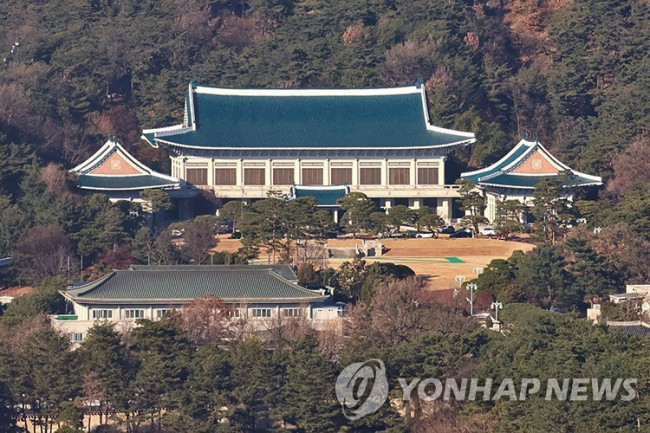 Blue House: "We will respect any conclusion on the right to request supplementary investigations... A prompt decision is needed to minimize confusion."
The Blue House [Photo by Lee Jung-hoon] 2025.12.8Regarding the issue of the prosecution's supplementary investigative authority, the Blue House stated on the 21st, "The decision on whether to abolish
Blue House: "We will respect any conclusion on the right to request supplementary investigations... A prompt decision is needed to minimize confusion."
The Blue House [Photo by Lee Jung-hoon] 2025.12.8Regarding the issue of the prosecution's supplementary investigative authority, the Blue House stated on the 21st, "The decision on whether to abolish
 Heavy rainfall overnight triggers flood of damage reports in Asan and Cheonan… 8 rescued
Road flooded by heavy rain [Yonhap News file photo]As of the early hours of the 22nd, heavy rainfall has caused consecutive damage in the Asan and Cheonan areas of South Chungcheong Province, includin
Heavy rainfall overnight triggers flood of damage reports in Asan and Cheonan… 8 rescued
Road flooded by heavy rain [Yonhap News file photo]As of the early hours of the 22nd, heavy rainfall has caused consecutive damage in the Asan and Cheonan areas of South Chungcheong Province, includin
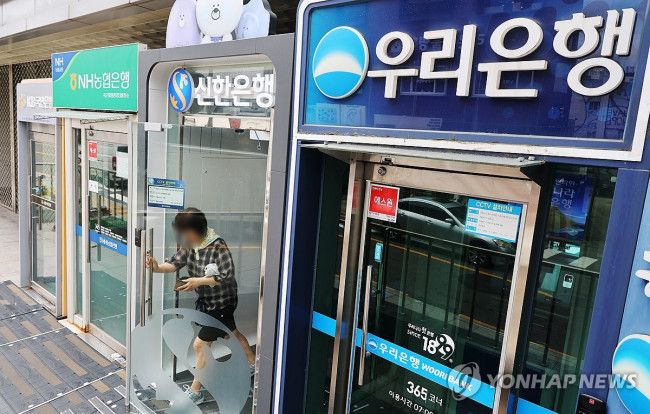 Due to 'Debt-to-Invest' Trend, Major 5 Banks Exceed Other Loan Targets by 2.4 Trillion Won… Tightening Mortgage Loans
An automated teller machine (ATM) at a commercial bank in Seoul on the 19th. [Yonhap News] It has been found that "other loans" at the five major commercial banks (KB Kookmin, Shinhan, Hana, Woor
Due to 'Debt-to-Invest' Trend, Major 5 Banks Exceed Other Loan Targets by 2.4 Trillion Won… Tightening Mortgage Loans
An automated teller machine (ATM) at a commercial bank in Seoul on the 19th. [Yonhap News] It has been found that "other loans" at the five major commercial banks (KB Kookmin, Shinhan, Hana, Woor
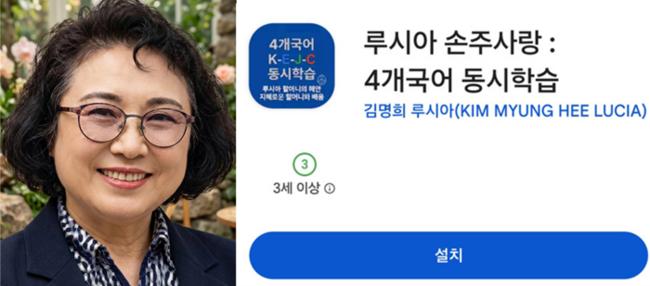 Jeong-Ik Academy Board Chair Kim Myung-hee Launches ‘Lucia’s Love for Grandchildren: Quadrilingual Simultaneous Learning’ App
Kim Myung-hee, Chairperson of Jeong-ik Hakdang, has developed 'Lucia’s Love for Grandchildren: 4-Language Simultaneous Learning' with the help of AI and officially released it on the Google Play Sto
Jeong-Ik Academy Board Chair Kim Myung-hee Launches ‘Lucia’s Love for Grandchildren: Quadrilingual Simultaneous Learning’ App
Kim Myung-hee, Chairperson of Jeong-ik Hakdang, has developed 'Lucia’s Love for Grandchildren: 4-Language Simultaneous Learning' with the help of AI and officially released it on the Google Play Sto
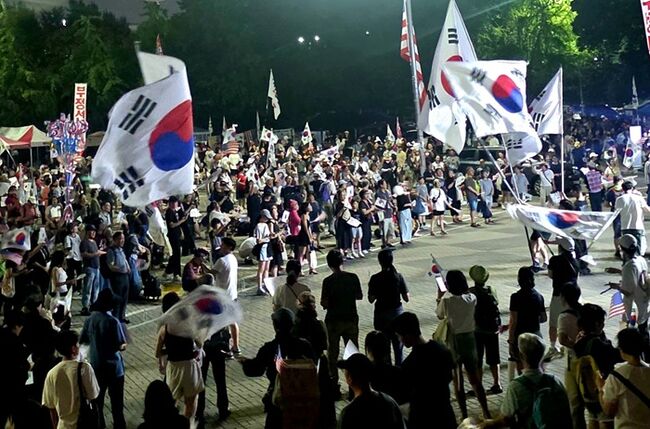 [Special Contribution: Songsan] The Difference Between Anti-Communist Right-Wingers in Their 60s and the New Generation Right-Wingers in Their 20s and 30s
2030 right-wing youth calling for a "rerun of the fraudulent election" at Olympic Park, even at night. ⒸHanmi IlboMost conservatives over the age of 60 tend to view the 2030 right-wing generation as
[Special Contribution: Songsan] The Difference Between Anti-Communist Right-Wingers in Their 60s and the New Generation Right-Wingers in Their 20s and 30s
2030 right-wing youth calling for a "rerun of the fraudulent election" at Olympic Park, even at night. ⒸHanmi IlboMost conservatives over the age of 60 tend to view the 2030 right-wing generation as
 [Photo] Evidence of Election Fraud Flooding U.S. Media… Trump Had 2.7 Million Votes Stolen
 [Video] U.S. Semiquincentennial Air Show... 'Art in the Sky' streaks across New York
 [Editorial Cartoon] A Draconian Law That Undermines Freedom of Expression

 List
List