In recent years, there have been calls in various countries to replace terms like "mom" and "dad" with "Parent 1," "Parent 2," or "Guardian 1/2" on school forms and official documents.
A notable example is the French National Assembly passing a bill in 2019 to change the terminology used in school paperwork. This movement, which followed the legalization of same-sex marriage, is more than a matter of simple convenience; it is a symbol of the clash between different views on the nature of the family and social order.
From a traditional perspective, "mom" and "dad" are natural realities and titles that have been used throughout long-standing cultural history. Humans are born from the union of a man and a woman, and these two individuals raise the child together. The term "mom" naturally embodies the concrete experiences of pregnancy, childbirth, and nurturing, while "dad" carries the image of protection and responsibility.
Such titles strengthen the identity of family members and their emotional bonds. Replacing them with neutral, functional terms appears to be an attempt to shift the family from a "natural and cultural reality" to a "social construct."
This line of thinking is deeply connected to a leftist worldview, which views family as a flexible relationship that individuals can freely choose based on progressive, modern ideas. In this view, biological sex is interpreted as social gender, and traditional family structures are criticized as products of "patriarchy" or "binary oppression."
Consequently, the argument arises that language must shed its sexual and natural distinctions to equally validate all family forms (same-sex couples, single parents, surrogacy households, etc.). "Guardian 1/2" serves as a tool for this very "inclusivity."
This approach aligns well with several aspects of leftist values.
First, it prioritizes radical individualism and freedom. It places the individual's right to define gender roles and family forms above all else, viewing traditional norms as mere constraints.
Second, it expands the role of the state and collective institutions. When traditional families are strong, individuals rely on them; however, when the family’s function is weakened, welfare, education, and administrative agencies gain greater power. Some radical perspectives even view the family itself as a tool that sustains capitalism, suggesting communal child-rearing or increased state intervention as alternatives.
Third, it emphasizes formal equality. The leftist perspective has a strong tendency to view natural and cultural differences as "discrimination." While they raise concerns that the distinction between mom and dad might cause alienation for minority families, this creates a paradox by sacrificing the reality familiar to the vast majority.
The recent attempt in New York State to change "mother" to "gestational parent" and "father" to "non-gestational parent" follows the same logic.
Of course, proponents argue that we should "ensure children from non-traditional families do not feel alienated by documentation." It is true that family structures have become more diverse, but what matters is the direction and the extent.
Most children are still born to and raised by their biological mothers and fathers. It is necessary to seriously debate whether changing these titles to bureaucratic and neutral language is truly inclusive, or if it constitutes a form of linguistic manipulation that erases the natural sentiments of the majority.
Critics point out that this change weakens the bonds of the family, making relationships cold and impersonal. Replacing the warm emotions conveyed by specific titles with abstract functional terms may diminish the bond between parents and children.
Furthermore, this could lead to a "slippery slope" involving the dissolution of gender distinctions, mandatory gender education from a young age, and the reduction of parental authority. Indeed, some in the progressive camp already view parental involvement in education as an "obstruction."
Ultimately, this debate is a clash of worldviews regarding "what it means to be human" and "what a family is." One side views the family as a flexible social construct that should be reconfigured by the state and individual freedom. The other believes the family is built upon natural order and long-standing cultural foundations, and therefore should not be recklessly dismantled.
Language is never neutral. Changing "mom and dad" to "Guardian 1/2" alters how we perceive the world itself. While respecting diversity is important, too easily erasing the natural reality shared by the majority could undermine the stability of society as a whole.
True inclusion does not lie in denying reality, but in living together harmoniously within it. I hope this discussion serves as an opportunity to rethink the true essence of the family.
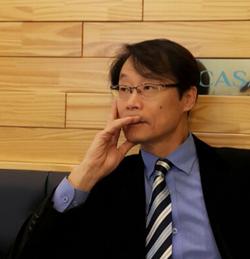
◆ Song-san (松山) Jung Kwang-je
A poet and researcher of history and philosophy. Former board member of the Syngman Rhee Institute. Currently serves as a research advisor for the Korea Modern and Contemporary History Research Association and representative of the philosophy forum "Lyceum." He has published four volumes of poetry, co-translated "Heroes of Hook Ridge," and authored humanities books including "Joseon Turned into Myth," "Humanities on the Tatami," and "A Liberal Reading Gramsci."

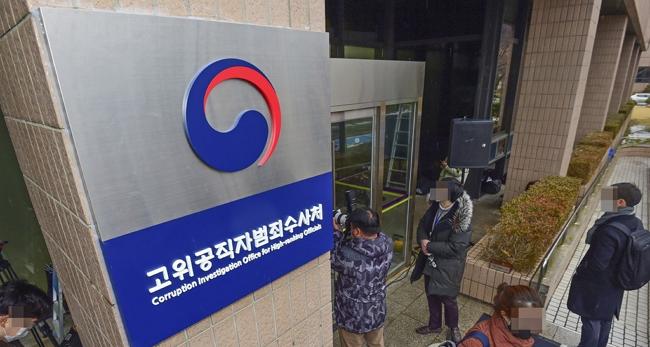 [Issue Commentary] “Who Checks the CIO?”… The Paradox of Prohibiting Direct Supplementary Investigations by the Public Prosecutor’s Office
The signboard of the Corruption Investigation Office for High-ranking Officials (CIO) at the Government Complex Gwacheon [Yonhap News file photo] Ahead of the abolition of the Prosecutors' Office and
[Issue Commentary] “Who Checks the CIO?”… The Paradox of Prohibiting Direct Supplementary Investigations by the Public Prosecutor’s Office
The signboard of the Corruption Investigation Office for High-ranking Officials (CIO) at the Government Complex Gwacheon [Yonhap News file photo] Ahead of the abolition of the Prosecutors' Office and
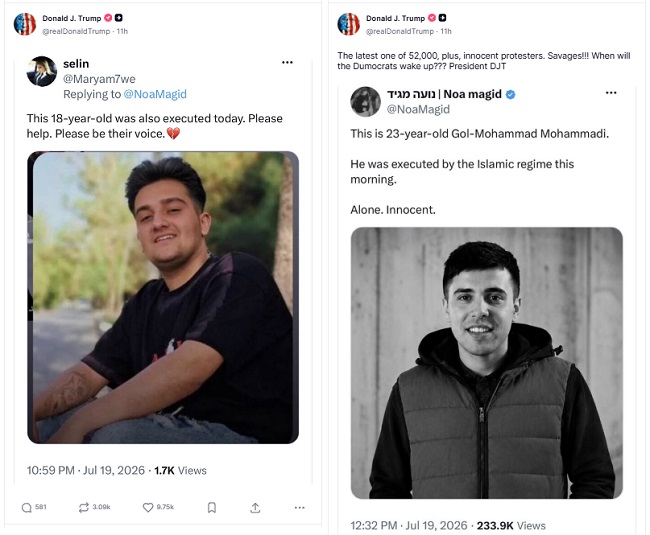 Trump’s bombshell tweet: “Iranian regime has slaughtered 52,000 protesters”
U.S. President Donald Trump shared a post regarding Iranian youths massacred by the Iranian dictatorship, stating that the number of innocent victims has reached 52,000. [Captured from President Trump
Trump’s bombshell tweet: “Iranian regime has slaughtered 52,000 protesters”
U.S. President Donald Trump shared a post regarding Iranian youths massacred by the Iranian dictatorship, stating that the number of innocent victims has reached 52,000. [Captured from President Trump
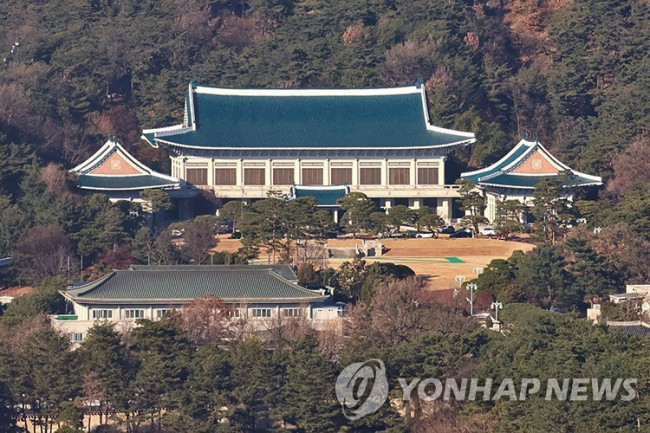 Blue House: "We will respect any conclusion on the right to request supplementary investigations... A prompt decision is needed to minimize confusion."
The Blue House [Photo by Lee Jung-hoon] 2025.12.8Regarding the issue of the prosecution's supplementary investigative authority, the Blue House stated on the 21st, "The decision on whether to abolish
Blue House: "We will respect any conclusion on the right to request supplementary investigations... A prompt decision is needed to minimize confusion."
The Blue House [Photo by Lee Jung-hoon] 2025.12.8Regarding the issue of the prosecution's supplementary investigative authority, the Blue House stated on the 21st, "The decision on whether to abolish
 Heavy rainfall overnight triggers flood of damage reports in Asan and Cheonan… 8 rescued
Road flooded by heavy rain [Yonhap News file photo]As of the early hours of the 22nd, heavy rainfall has caused consecutive damage in the Asan and Cheonan areas of South Chungcheong Province, includin
Heavy rainfall overnight triggers flood of damage reports in Asan and Cheonan… 8 rescued
Road flooded by heavy rain [Yonhap News file photo]As of the early hours of the 22nd, heavy rainfall has caused consecutive damage in the Asan and Cheonan areas of South Chungcheong Province, includin
 Due to 'Debt-to-Invest' Trend, Major 5 Banks Exceed Other Loan Targets by 2.4 Trillion Won… Tightening Mortgage Loans
An automated teller machine (ATM) at a commercial bank in Seoul on the 19th. [Yonhap News] It has been found that "other loans" at the five major commercial banks (KB Kookmin, Shinhan, Hana, Woor
Due to 'Debt-to-Invest' Trend, Major 5 Banks Exceed Other Loan Targets by 2.4 Trillion Won… Tightening Mortgage Loans
An automated teller machine (ATM) at a commercial bank in Seoul on the 19th. [Yonhap News] It has been found that "other loans" at the five major commercial banks (KB Kookmin, Shinhan, Hana, Woor
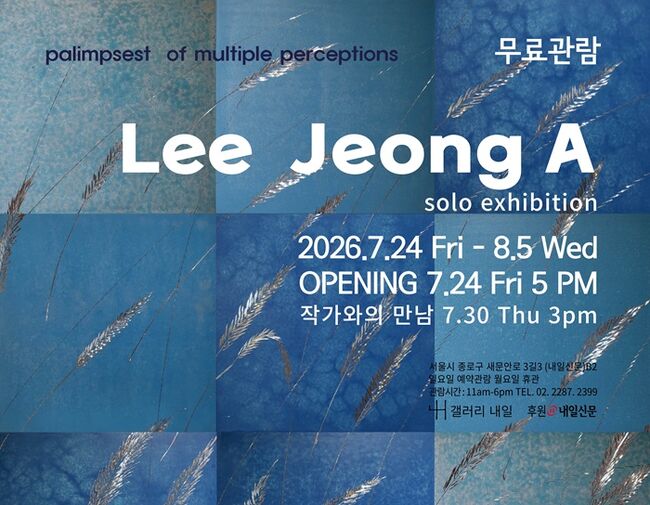 [Exhibition] Lee Jung-a Solo Exhibition ‘Palimpsest of Multiple Perceptions’ Held at Gallery Naeil
Gallery Naeil in Jongno-gu, Seoul, will host artist Lee Jung-ah's solo exhibition, "Palimpsest of Multiple Perceptions," from the 24th of this month to August 5th. Artist Lee Jung-ah has co
[Exhibition] Lee Jung-a Solo Exhibition ‘Palimpsest of Multiple Perceptions’ Held at Gallery Naeil
Gallery Naeil in Jongno-gu, Seoul, will host artist Lee Jung-ah's solo exhibition, "Palimpsest of Multiple Perceptions," from the 24th of this month to August 5th. Artist Lee Jung-ah has co
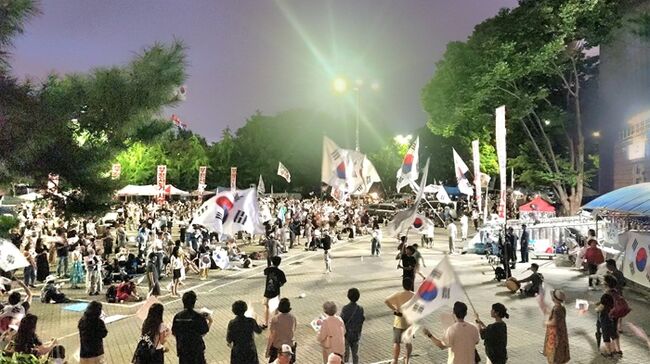 [Kim Jae-soo Column] "What is the ruling party so afraid of?"... The reason why the opposition-recommended special counsel must be implemented
"Members of the National Assembly, can you not hear the calls for 'reruns of fraudulent elections and manual counting of same-day ballots' that have been echoing at Olympic Park for nearly two months?
[Kim Jae-soo Column] "What is the ruling party so afraid of?"... The reason why the opposition-recommended special counsel must be implemented
"Members of the National Assembly, can you not hear the calls for 'reruns of fraudulent elections and manual counting of same-day ballots' that have been echoing at Olympic Park for nearly two months?
 [Photo] Evidence of Election Fraud Flooding U.S. Media… Trump Had 2.7 Million Votes Stolen
 [Video] U.S. Semiquincentennial Air Show... 'Art in the Sky' streaks across New York
 [Editorial Cartoon] A Draconian Law That Undermines Freedom of Expression

 List
List