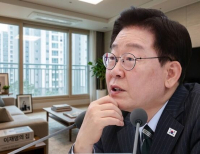
News reports indicate that the government is considering a plan to implement time-of-use (TOU) electricity pricing for households. [Photo: Yonhap News]
There is news that the government is planning to expand the time-of-use electricity pricing system for households. The strategy is to charge less during the day when there is a surplus of electricity and more during the evening when demand peaks, in an attempt to shift consumption patterns.
While this may appear to be reasonable demand management on the surface, in reality, it is more of a superficial fix intended to mask a costly and unstable power supply structure.
What the public wants is not a complex pricing table. They want stable electricity at an affordable price, whenever they need it. However, the government seems more interested in forcing consumers to change their usage habits than in lowering the actual cost of electricity production. Instead of providing a sufficient supply of inexpensive power, they are effectively asking the public to adjust their daily lives to match the times when solar power generation is highest.
This is akin to forcing the body to fit the clothes, rather than tailoring the clothes to fit the body.
Energy exists to serve human convenience. It is normal to turn on the air conditioner when it is hot, to cook and run the washing machine after returning from work, and to use lighting and appliances in the evening when the family gathers.
The power system exists to reliably support this way of life. Yet, a time-of-use pricing system inversely demands that citizens alter their life patterns to accommodate solar generation hours.
During the day, when solar power is abundant, most homes are empty. There is almost no domestic demand to shift, other than refrigerators and some standby power. Conversely, in the evening, families return home and use electricity all at once: cooking, washing, cleaning, and running heating or cooling systems.
This is not waste; it is life. Raising electricity prices during those hours does not constitute effective demand management; it is, in effect, a surcharge on dual-income families and ordinary households.
The number of people who can actually shift activities like charging electric vehicles or running laundry to daylight hours is limited. Only those who can stay at home during the day, or those equipped with solar panels, batteries, and automated appliances, would benefit.
On the other hand, households that work all day and return home only in the evening will be forced to use electricity during the most expensive hours. It is effectively penalizing a lifestyle that people cannot choose to change.
An even greater problem is the massive cost associated with implementing this pricing system. To measure consumption by time, AMI meters must be installed. It is estimated that approximately 2 trillion won is required just to provide these meters to the 11 million households currently without them. This is in addition to costs for communication networks, servers, security, billing systems, and maintenance.
In other words, the government is launching a 2 trillion won metering project under the pretext of lowering electricity bills for the public. That money will ultimately be borne by the public through taxes or electricity bills. If the costs of building the metering system exceed the savings gained from shifting household power usage, it is a clear net loss for the nation. The only sure winners will be the meter manufacturers, telecommunications companies, and installation contractors.
The reason this policy is essentially a "trick" (using the idiom of "three chestnuts in the morning and four at night") is also clear. If the daytime rate is lowered slightly while evening rates are hiked, the total electricity bill for the public is highly likely to increase. Given the daily routines of average households, the burden is even more likely to grow.
The argument that this allows people to use cheaper electricity when solar power is abundant is not a fundamental solution either. During the day in spring and autumn, when electricity is surplus, there is little demand for heating or cooling. Conversely, on summer evenings when power demand surges, there is almost no solar generation. Ultimately, gas power plants, energy storage, and transmission grids must fill the gap. The intermittency of solar power and its associated system costs do not disappear.
Sound energy policy must prioritize the cheap and stable supply of electricity necessary for daily life. The government should focus on securing sufficient low-cost baseload power and transparently disclose generation costs, transmission/distribution fees, subsidies, and system integration costs. Vulnerable groups should be supported through direct assistance, not through complex pricing schemes.
A time-of-use pricing system itself has some merit for consumers like factories or large buildings that can plan and adjust their power loads. However, before applying this on a large scale to households, the costs of meter installation and operation, the actual effectiveness of peak reduction, and the changes in the financial burden on individual households must be thoroughly verified.
The goal of power policy should not be to force the public to move according to solar generation times and endure inconvenience. Expanding a time-of-use pricing system without actually lowering overall electricity costs is not reform—it is a superficial paint job, a deceptive trick that forces the public's life to fit a costly and inefficient power structure.
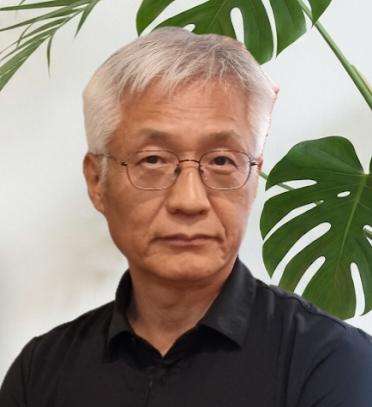
◆ Dr. Chae Soo-jo
Ph.D. in Physics, Seoul National University

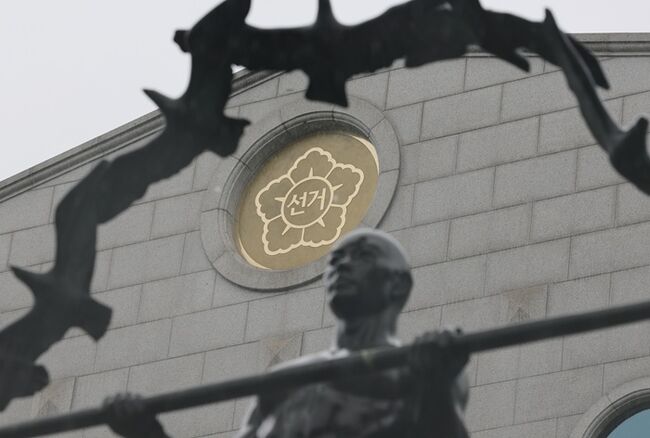 [Statement by the Seo-beokka Korea Military Academy Save-the-Nation Comrades Association] ㉖ Suppressing a Just Struggle for Sovereignty is a Violation of the Constitution and a Grave Crime Equivalent to Insurrection
National Election Commission. [Photo=Yonhap News]The ‘ballot paper shortage’ during the June 3 local elections was an act of constitutional destruction that shook the foundations of South Korean d
[Statement by the Seo-beokka Korea Military Academy Save-the-Nation Comrades Association] ㉖ Suppressing a Just Struggle for Sovereignty is a Violation of the Constitution and a Grave Crime Equivalent to Insurrection
National Election Commission. [Photo=Yonhap News]The ‘ballot paper shortage’ during the June 3 local elections was an act of constitutional destruction that shook the foundations of South Korean d
 Japan's Ministry of Defense: "China and Russia conduct live-fire naval exercises in Japan's EEZ... China also fires machine guns"
Japan’s Ministry of Defense announced on the 21st that Chinese and Russian naval forces conducted live-fire exercises within Japan's Exclusive Economic Zone (EEZ) on the 19th, including machine gun
Japan's Ministry of Defense: "China and Russia conduct live-fire naval exercises in Japan's EEZ... China also fires machine guns"
Japan’s Ministry of Defense announced on the 21st that Chinese and Russian naval forces conducted live-fire exercises within Japan's Exclusive Economic Zone (EEZ) on the 19th, including machine gun
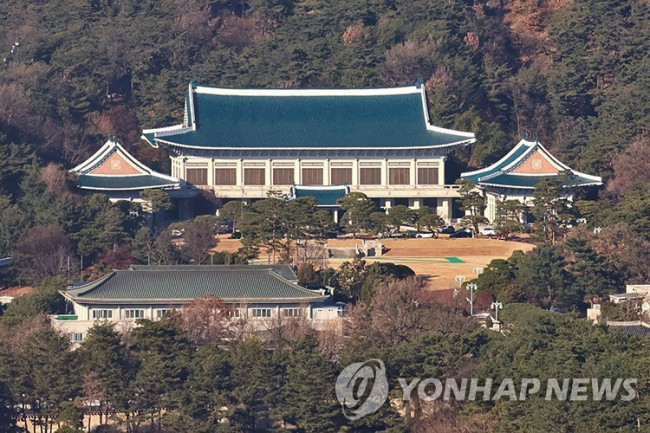 Blue House: "We will respect any conclusion on the right to request supplementary investigations... A prompt decision is needed to minimize confusion."
The Blue House [Photo by Lee Jung-hoon] 2025.12.8Regarding the issue of the prosecution's supplementary investigative authority, the Blue House stated on the 21st, "The decision on whether to abolish
Blue House: "We will respect any conclusion on the right to request supplementary investigations... A prompt decision is needed to minimize confusion."
The Blue House [Photo by Lee Jung-hoon] 2025.12.8Regarding the issue of the prosecution's supplementary investigative authority, the Blue House stated on the 21st, "The decision on whether to abolish
 'Oldarc' who blocked access to Jamsil counting station faces arrest warrant hearing… 4 Olympic Park protesters also under review
A woman in her 30s, accused of obstructing business by blocking sports organization staff from entering the indoor office at the Olympic Park Handball Gymnasium—which served as a vote counting
'Oldarc' who blocked access to Jamsil counting station faces arrest warrant hearing… 4 Olympic Park protesters also under review
A woman in her 30s, accused of obstructing business by blocking sports organization staff from entering the indoor office at the Olympic Park Handball Gymnasium—which served as a vote counting
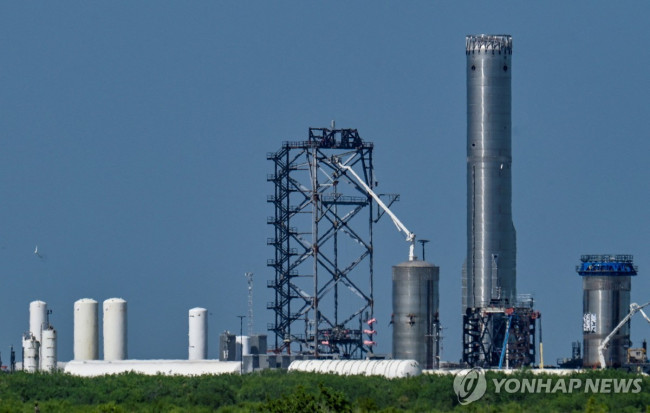 SpaceX overtakes Meta, pushing it down to 8th place in U.S. market capitalization
SpaceX Starship launch delayed [Reuters=Yonhap News]SpaceX has seen its market capitalization evaporate by over $1 trillion (1,489 trillion won) since peaking about a month ago, causing it to fall to
SpaceX overtakes Meta, pushing it down to 8th place in U.S. market capitalization
SpaceX Starship launch delayed [Reuters=Yonhap News]SpaceX has seen its market capitalization evaporate by over $1 trillion (1,489 trillion won) since peaking about a month ago, causing it to fall to
 The Summer of 2026 in Jeju, documented by me… Kirin Villa Resort, August Summer Event
Kylin Villa Resort is launching its collaborative summer event, the "Kylin Summer Passport," which will run for one month starting August 1st.Kylin Villa Resort is launching its collaborative summer e
The Summer of 2026 in Jeju, documented by me… Kirin Villa Resort, August Summer Event
Kylin Villa Resort is launching its collaborative summer event, the "Kylin Summer Passport," which will run for one month starting August 1st.Kylin Villa Resort is launching its collaborative summer e
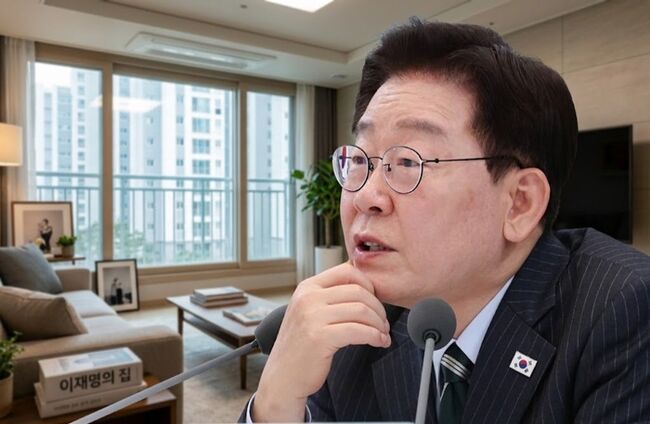 [Column by Park Joo-hyun] Shouldn't we put a price tag on the rise of my home value...?
[This image was created with the help of AI]Since you managed to sell your house well while defending your asking price, there is a point I have been wanting to make that I must address now. A sp
[Column by Park Joo-hyun] Shouldn't we put a price tag on the rise of my home value...?
[This image was created with the help of AI]Since you managed to sell your house well while defending your asking price, there is a point I have been wanting to make that I must address now. A sp
 [Photo] Evidence of Election Fraud Flooding U.S. Media… Trump Had 2.7 Million Votes Stolen
 [Video] U.S. Semiquincentennial Air Show... 'Art in the Sky' streaks across New York
 [Editorial Cartoon] A Draconian Law That Undermines Freedom of Expression

 List
List