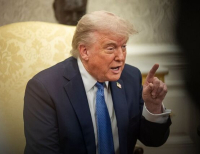
The United States and China plan to hold talks on artificial intelligence (AI) in September, Reuters reported on Tuesday (the 21st), citing five sources who requested anonymity. This is part of discussions between the two superpowers on how to regulate the risks posed by increasingly powerful, cutting-edge competitive technology models.
The AI talks, one of the key outcomes of the Trump-Xi summit last May, will likely be held before President Xi Jinping’s visit to the U.S. on September 24, though a date has not yet been set, the sources said.
According to four sources, U.S. Treasury Secretary Scott Bessent is expected to lead the talks for the U.S. side. Three of them noted that other participants, the agenda, and the venue for the U.S.-China talks are still under discussion, and that preparations are in the early stages.
Media outlets report that the current relationship between the U.S. and Chinese AI industries has shifted from a past structure where the U.S. held a monopoly and China played catch-up; now, the two countries are engaged in an all-out battle, dividing the global AI market with different strategic orientations.
Recently, Chinese startups such as Moonshot AI’s 'Kimi K3' and DeepSeek have released AI models capable of performing high-level tasks at a significantly lower cost than those of U.S. big tech companies. There have also been reports that China has already begun to outpace the U.S. in terms of quantitative research achievements, such as the number of papers published and patent applications filed.
However, while the U.S. and China may appear similar in their pursuit of AI hegemony, it is difficult to compare the two as their goals and orientations differ.
The U.S. is focusing on the development of Artificial General Intelligence (AGI) or super-intelligent models that surpass the human brain, led by private big tech companies such as OpenAI, Google, and Anthropic. This structure relies on massive capital and power investment to drive innovation in foundational technology.
Meanwhile, amid U.S. semiconductor regulations, China is realistically going all-in on profitability and practicality rather than AGI. The assessment is that China is concentrating on quickly integrating AI infrastructure into traditional industrial sites—such as manufacturing plants, smart cities, ports, and finance—and expanding into the field of physical AI (robotics, etc.).
Furthermore, the U.S. government views AI technology as a core pillar of national security and is mobilizing all available resources to block China's growth.
Consequently, the prevailing analysis is that U.S.-China AI relations have entered a "decoupling" phase, fully severing mutual technological dependence. The view is that both countries are engaged in an uncompromising, all-out war: the U.S. to protect its lead in foundational technology and infrastructure, and China to secure independent cost-efficiency and a massive market for industrial application.
The problem is that South Korea's AI and tech industries are caught in a massive "sandwich" crisis. Domestic tech companies like Naver, Kakao, and KT warn that becoming dependent on the AI ecosystems of the U.S. (OpenAI, Google) or China would lead to the loss of national data sovereignty and cultural identity.
Chinese companies, led by DeepSeek, offer high-performance AI APIs at one-hundredth the cost of U.S. alternatives, posing a major threat in terms of price competitiveness. At the same time, as the U.S. further intensifies restrictions on the export of advanced AI semiconductors (such as HBM) to China, companies like Samsung Electronics and SK Hynix are under pressure to abandon the vast Chinese market.
As South Korean semiconductor firms must be integrated into the next-generation AI memory supply chain championed by the U.S., some suggest that building "customized AI infrastructure" for countries seeking a "third alternative"—such as those in the Middle East (Saudi Arabia, UAE), Southeast Asia, and Europe, which find it burdensome to use technology from both the U.S. and China due to the tech Cold War—should become a new export engine.
NNP USA = Representative Reporter Hong Sung-gu / NNP Exclusive, info@newsandpost.com

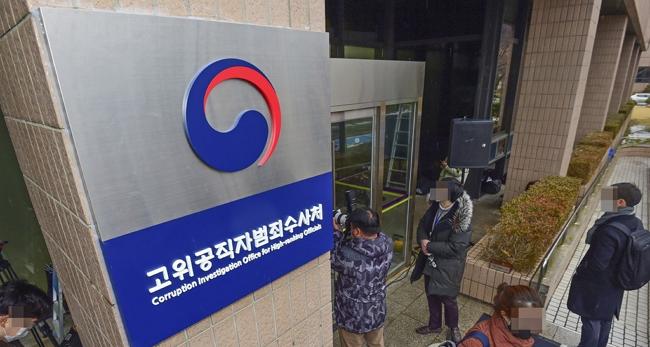 [Issue Commentary] “Who Checks the CIO?”… The Paradox of Prohibiting Direct Supplementary Investigations by the Public Prosecutor’s Office
The signboard of the Corruption Investigation Office for High-ranking Officials (CIO) at the Government Complex Gwacheon [Yonhap News file photo] Ahead of the abolition of the Prosecutors' Office and
[Issue Commentary] “Who Checks the CIO?”… The Paradox of Prohibiting Direct Supplementary Investigations by the Public Prosecutor’s Office
The signboard of the Corruption Investigation Office for High-ranking Officials (CIO) at the Government Complex Gwacheon [Yonhap News file photo] Ahead of the abolition of the Prosecutors' Office and
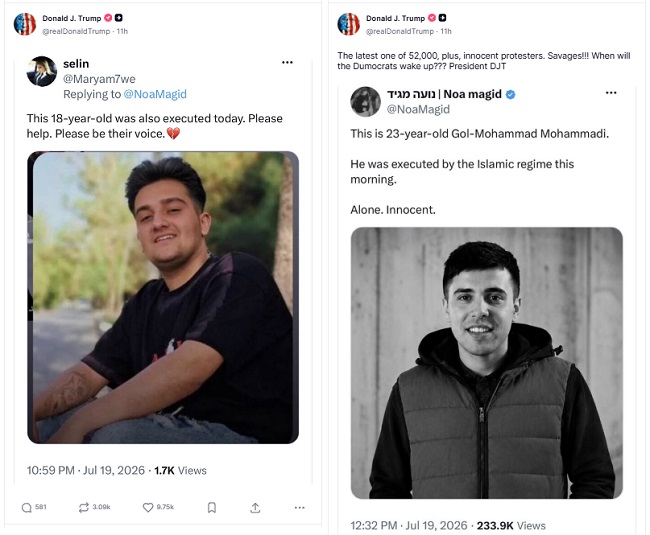 Trump’s bombshell tweet: “Iranian regime has slaughtered 52,000 protesters”
U.S. President Donald Trump shared a post regarding Iranian youths massacred by the Iranian dictatorship, stating that the number of innocent victims has reached 52,000. [Captured from President Trump
Trump’s bombshell tweet: “Iranian regime has slaughtered 52,000 protesters”
U.S. President Donald Trump shared a post regarding Iranian youths massacred by the Iranian dictatorship, stating that the number of innocent victims has reached 52,000. [Captured from President Trump
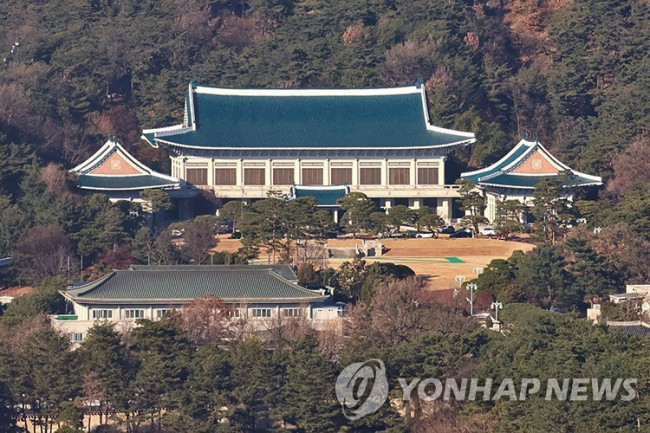 Blue House: "We will respect any conclusion on the right to request supplementary investigations... A prompt decision is needed to minimize confusion."
The Blue House [Photo by Lee Jung-hoon] 2025.12.8Regarding the issue of the prosecution's supplementary investigative authority, the Blue House stated on the 21st, "The decision on whether to abolish
Blue House: "We will respect any conclusion on the right to request supplementary investigations... A prompt decision is needed to minimize confusion."
The Blue House [Photo by Lee Jung-hoon] 2025.12.8Regarding the issue of the prosecution's supplementary investigative authority, the Blue House stated on the 21st, "The decision on whether to abolish
 Heavy rainfall overnight triggers flood of damage reports in Asan and Cheonan… 8 rescued
Road flooded by heavy rain [Yonhap News file photo]As of the early hours of the 22nd, heavy rainfall has caused consecutive damage in the Asan and Cheonan areas of South Chungcheong Province, includin
Heavy rainfall overnight triggers flood of damage reports in Asan and Cheonan… 8 rescued
Road flooded by heavy rain [Yonhap News file photo]As of the early hours of the 22nd, heavy rainfall has caused consecutive damage in the Asan and Cheonan areas of South Chungcheong Province, includin
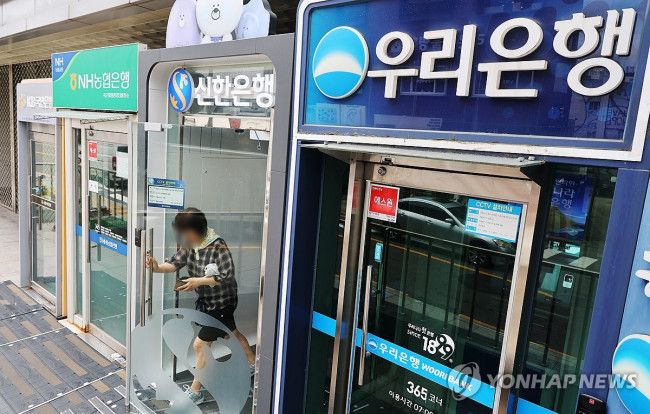 Due to 'Debt-to-Invest' Trend, Major 5 Banks Exceed Other Loan Targets by 2.4 Trillion Won… Tightening Mortgage Loans
An automated teller machine (ATM) at a commercial bank in Seoul on the 19th. [Yonhap News] It has been found that "other loans" at the five major commercial banks (KB Kookmin, Shinhan, Hana, Woor
Due to 'Debt-to-Invest' Trend, Major 5 Banks Exceed Other Loan Targets by 2.4 Trillion Won… Tightening Mortgage Loans
An automated teller machine (ATM) at a commercial bank in Seoul on the 19th. [Yonhap News] It has been found that "other loans" at the five major commercial banks (KB Kookmin, Shinhan, Hana, Woor
 [Exhibition] Lee Jung-a Solo Exhibition ‘Palimpsest of Multiple Perceptions’ Held at Gallery Naeil
Gallery Naeil in Jongno-gu, Seoul, will host artist Lee Jung-ah's solo exhibition, "Palimpsest of Multiple Perceptions," from the 24th of this month to August 5th. Artist Lee Jung-ah has co
[Exhibition] Lee Jung-a Solo Exhibition ‘Palimpsest of Multiple Perceptions’ Held at Gallery Naeil
Gallery Naeil in Jongno-gu, Seoul, will host artist Lee Jung-ah's solo exhibition, "Palimpsest of Multiple Perceptions," from the 24th of this month to August 5th. Artist Lee Jung-ah has co
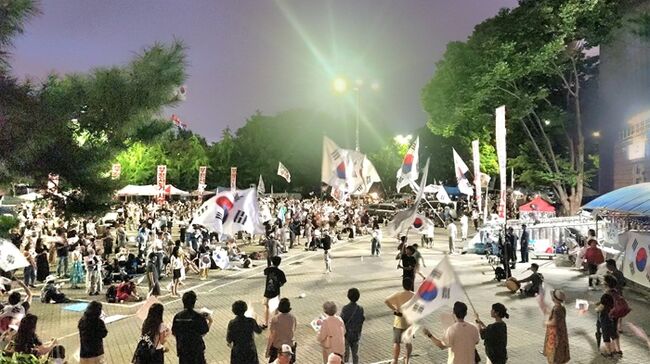 [Kim Jae-soo Column] "What is the ruling party so afraid of?"... The reason why the opposition-recommended special counsel must be implemented
"Members of the National Assembly, can you not hear the calls for 'reruns of fraudulent elections and manual counting of same-day ballots' that have been echoing at Olympic Park for nearly two months?
[Kim Jae-soo Column] "What is the ruling party so afraid of?"... The reason why the opposition-recommended special counsel must be implemented
"Members of the National Assembly, can you not hear the calls for 'reruns of fraudulent elections and manual counting of same-day ballots' that have been echoing at Olympic Park for nearly two months?
 [Photo] Evidence of Election Fraud Flooding U.S. Media… Trump Had 2.7 Million Votes Stolen
 [Video] U.S. Semiquincentennial Air Show... 'Art in the Sky' streaks across New York
 [Editorial Cartoon] A Draconian Law That Undermines Freedom of Expression

 List
List