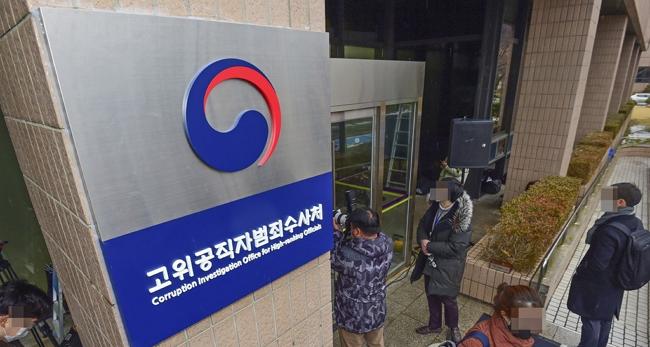
 The signboard of the Corruption Investigation Office for High-ranking Officials (CIO) at the Government Complex Gwacheon [Yonhap News file photo]
Ahead of the abolition of the Prosecutors' Office and the launch of the Public Prosecution Service and the Major Crime Investigation Agency, the proposal to abolish the direct supplementary investigation powers of public prosecutors has sparked significant controversy.
The stated justification for this criminal justice system reform is to reduce the power of the prosecution by separating investigation and indictment. However, the Corruption Investigation Office for High-ranking Officials (CIO) retains the authority to identify and investigate crimes by high-ranking officials itself, and it holds the power to indict in certain cases.
We have summarized the key issues through a Q&A format: Is it consistent to strip public prosecutors of the power to conduct direct supplementary investigations on cases handed over by investigative agencies while allowing the CIO to retain both investigative initiation powers and limited indictment powers? And if the CIO were to transform into a tool for political power, who would keep it in check?
Q. Are direct investigation powers and direct supplementary investigation powers the same?
No.
Direct investigation power is the authority for a prosecutor to identify criminal charges on their own, open a case, and conduct the investigation from the very beginning. Direct supplementary investigation power is the authority for a prosecutor to personally investigate areas where evidence is missing or statements are contradictory in a case transferred by the police or other investigative agencies.
Suppose the police transfer a fraud case and the prosecutor discovers that bank account records are missing or that a witness statement is inconsistent.
If the prosecutor uncovers separate criminal charges and starts a new case, that is a "direct investigation." If the prosecutor personally examines a witness from the transferred case or secures missing documents, that is "direct supplementary investigation." If they require the police to perform a bank account trace or re-interview a witness, that is a "request for supplementary investigation."
The current debate is not about whether to restore the former wide-ranging direct investigation powers of the prosecution to the new Public Prosecution Service. The core issue is whether, while investigative initiation powers are abolished, a prosecutor should be allowed to personally verify missing elements in a transferred case.
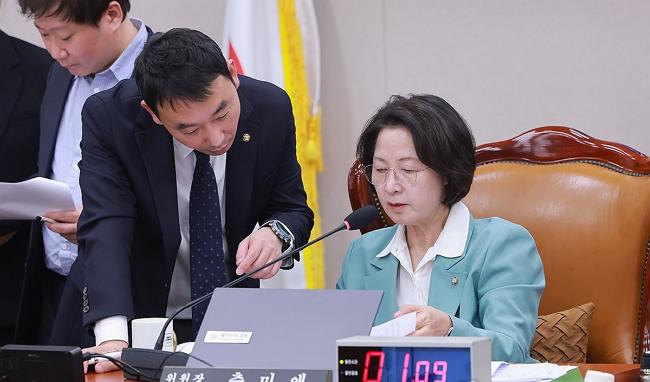 Ruling party lawmakers talk ahead of the deliberation on the bills to establish the Major Crime Investigation Agency and the Public Prosecution Service at the National Assembly's Legislation and Judiciary Committee. The proposal to prohibit prosecutors from conducting direct supplementary investigations, leaving only the power to request supplementary investigations from investigative agencies, is causing controversy. [Photo=Yonhap News]Q. Does the bill pushed by the Democratic Party aim to eliminate supplementary investigation altogether?
That is not the case.
The amendment—which functions as the de facto party platform of the Democratic Party’s Prosecution Reform Task Force—prohibits direct supplementary investigations by Public Prosecution Service prosecutors but retains the power to request additional investigations from investigative agencies such as the police and the CIO.
Public prosecutors can provide a written explanation of the targets and reasons for why a supplementary investigation is needed. In principle, the investigative agency must investigate the requested items and inform the Public Prosecution Service of the results.
Therefore, it is difficult to conclude that the Public Prosecution Service would merely be an agency that passively accepts police records to decide whether to indict.
The controversy lies in the fact that even if a prosecutor finds decisive evidence missing or contradictions in statements, they cannot personally examine a witness or secure documents, but must instead delegate the supplementary work back to the original investigative agency.
The concern is whether returning a case—especially one where investigative negligence or collusion is suspected—back to the same agency can serve as an effective check and balance.
Q. Is the People Power Party demanding the restoration of the prosecution's direct investigation power?
In the current debate, what the People Power Party is mainly demanding is not the restoration of the former broad investigative initiation powers, but the preservation of "direct supplementary investigation powers" for transferred cases.
Their argument is that if there is missing evidence or contradictory testimony in records investigated by the police or the Major Crime Investigation Agency, the prosecutor responsible for the indictment must be able to verify the necessary parts personally.
In particular, they argue that it is difficult to properly keep investigative agencies in check if cases involving suspected collusion or minimized investigations by the police are simply sent back to the same police team.
Some within the Democratic Party are offering a compromise: prohibiting direct supplementary investigations in principle, while allowing them exceptionally in cases targeting the socially vulnerable, public livelihood crimes, or cases where collusion between investigative agencies is suspected.
The political clash is not about whether to give the prosecution the power to initiate investigations again, but rather about whether a public prosecutor can personally supplement a transferred case.
Q. Do foreign prosecutors only handle indictments without getting involved in investigations?
The system differs by country.
Prosecutors in Japan and Germany have the power of direct investigation by law. If a prosecutor deems it necessary, they can investigate a crime themselves or conduct the investigation through the police.
In the United States, specialized investigative agencies such as the FBI handle the majority of field investigations. However, federal prosecutors participate from the early stages to consult on the direction of the investigation and are deeply involved in the process of evidence collection through grand juries, subpoenas, and warrant procedures.
In countries like the UK, Canada, and Australia, where prosecutors do not conduct general field investigations personally, prosecutors still request additional evidence from investigative agencies, provide legal advice necessary for indictment, and require the correction of defects in investigative records.
While systems where prosecutors do not conduct direct supplementary investigations do exist, it is difficult to say that blocking the channel for supplementation and cooperation between investigative and prosecuting agencies is a standard model in major nations.
Q. Unlike the Public Prosecution Service, what powers does the CIO retain?
The CIO can identify criminal charges against high-ranking officials on its own and initiate investigations. It can personally examine suspects and witnesses and request warrants for seizure, search, arrest, and detention.
The scope of its investigative subjects includes the President, members of the National Assembly, the Prime Minister and ministers/vice-ministers, the Chief Justice and Justices of the Supreme Court, Constitutional Court Justices, the Prosecutor General, judges and prosecutors, police officers above the rank of superintendent, general-rank military officers, and heads of metropolitan local governments.
Essentially, key personnel from the legislative, executive, and judicial branches and constitutional institutions are all included.
Among these, the CIO can directly indict and prosecute crimes committed by the Chief Justice and Justices of the Supreme Court, the Prosecutor General, judges, prosecutors, and police officers above the rank of superintendent as defined by the CIO Act.
For the President, National Assembly members, and cabinet ministers, the CIO can investigate but cannot indict them directly. After completing the investigation, it must request the Public Prosecution Service to initiate an indictment.
The CIO does not directly indict every high-ranking official's case. However, for certain occupational groups and crimes, the initiation of the investigation, coercive investigation, indictment decision, and prosecution maintenance are all concentrated within a single agency.
 Prosecutor General Kim Joon-gyu convened an emergency meeting of senior officials amid signs of conflict between political circles and the prosecution over the National Assembly's agreement to abolish the investigative function of the Central Investigation Department. Pictured is the entrance to the Central Investigation Department at the Supreme Prosecutors' Office in Seocho-dong, Seoul, on the afternoon of the 6th. 2011.6.6 [Photo=Yonhap News]
Q. Is the CIO the same type of agency as the former Central Investigation Department of the Supreme Prosecutors' Office?
It is not exactly the same.
The former Central Investigation Department of the Supreme Prosecutors' Office conducted wide-ranging investigations and indictments not only into corruption by high-ranking officials and politicians but also into large-scale economic crimes by major corporations and financial institutions.
The jurisdiction of the CIO is limited to crimes related to the official duties of high-ranking officials and crimes related thereto. It cannot independently investigate embezzlement or breach of trust by ordinary business people or stock price manipulation without a connection to a high-ranking official.
Their organizational status also differs. The Central Investigation Department was an internal organization of the Supreme Prosecutors' Office under the command of the Prosecutor General, whereas the CIO is a separate agency independent of the prosecution.
However, if both direct investigation and direct supplementary investigation by public prosecutors are prohibited, the CIO will remain the only permanent agency in the high-ranking official domain that possesses investigative initiation, coercive investigative, and certain direct indictment powers combined.
This is why some argue that while the scope of jurisdiction and organizational status differ, the CIO could potentially take on the characteristics of an "independent Central Investigation Department" when viewed solely in terms of its power-related investigation functions.
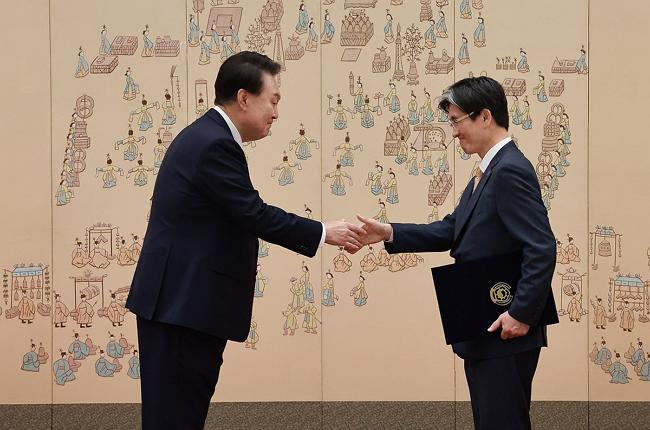 President Yoon Suk Yeol (then President-elect) takes a commemorative photo after presenting a letter of appointment to Oh Dong-woon, the head of the CIO, on May 22, 2024. Although the President has the final power to appoint the head of the CIO, the President and the Presidential Office are prohibited by law from instructing or interfering in specific cases during the term. [Photo=Yonhap News]Q. Is the head of the CIO under the President's command?
By law, the President cannot interfere in specific cases of the CIO.
The President and public officials of the Presidential Office must not request work reports or document submissions from the CIO, nor can they provide instructions, consult, or express opinions regarding specific cases.
The term of the CIO head is three years, non-renewable. The President cannot dismiss the head simply because they are displeased with the direction of an investigation. Independence of status and duties after taking office is relatively well-guaranteed.
However, the appointment process is not completely separated from political circles.
After a candidate recommendation committee recommends two candidates, the President nominates one of them, who is then appointed following a confirmation hearing at the National Assembly. Parliamentary consent for the appointment is not required.
A candidate can be recommended if five out of the seven recommendation committee members agree. Even if both members recommended by the opposition party oppose, a recommendation can still be made through the consensus of the remaining members.
The President's power to appoint does not directly mean the power to direct cases. The issue is how to verify the structural bias that may arise in the process of assigning, initiating, delaying, or closing cases, rather than through official instructions.
If the CIO head personally considers the political interests of the regime and quickly initiates cases against the opposition party or judiciary while delaying or minimizing cases involving the core of power, it is difficult to prevent this solely with a clause prohibiting the President's interference.
Q. Who stops the CIO if it transforms into a pro-regime investigation agency?
The courts, the National Assembly, the system of judicial appeals (fiscal appeal/objection), and external investigative agencies exist as control mechanisms.
If the CIO wants to conduct a search and seizure, arrest, or detention, it must obtain a warrant from a court. For cases directly indicted by the CIO, the court determines guilt or innocence. For cases where the CIO decides not to indict, an application for a judicial review (fiscal appeal) can be filed with the Seoul High Court in certain instances.
The National Assembly conducts confirmation hearings for the CIO head and performs parliamentary audits and budget reviews. Impeachment of the CIO head is possible if there is serious illegal conduct. If members of the CIO commit crimes such as abuse of power or fabrication of evidence, they can become subjects of investigation by external investigative agencies.
However, most of these devices are "ex-post controls" that function only after a case has been initiated or disposed of.
While courts can review the requirements for submitted warrants and the facts of the indictment, it is difficult to constantly monitor why the CIO initiated a specific case immediately while leaving others unprocessed for a long time.
Parliamentary control can also become ineffective if the same political party as the President holds a majority of seats. There is also the possibility that the CIO could limit the submission of specific materials or responses on the grounds that an investigation is underway.
What is most difficult to control regarding the abuse of power by the CIO is not merely unreasonable indictments, but "selective investigation"—deciding who to investigate and who not to, and which cases to process quickly and which to bury.
Q. Can a public prosecutor rectify the situation if a CIO investigation is subpar?
According to the Democratic Party's bill, a public prosecutor can request a supplementary investigation from the CIO. However, the public prosecutor cannot personally secure evidence or examine witnesses.
If the CIO investigates a case involving the President, a National Assembly member, or a minister and requests an indictment, but the records are insufficient, the Public Prosecution Service must request supplementation from the CIO again.
If the CIO, which conducted the investigation, judges that it has investigated enough, while the Public Prosecution Service, which is responsible for the indictment, judges that evidence is lacking, the responsibilities and powers of the two agencies can clash.
This issue was actually revealed in the case involving 1.58 billion won in bribery charges against a high-ranking official at the Board of Audit and Inspection.
The CIO investigated the case and requested an indictment from the prosecution, but the prosecution judged that additional evidence was necessary. After a dispute over the legal basis and procedures for supplementary investigation, the prosecution indicted only the 290 million won portion for which it deemed evidence relatively clear, and did not indict the remaining 1.29 billion won portion.
Regardless of which agency’s judgment was correct, this case demonstrates that if the supplementary procedure between an investigative agency and a prosecuting agency is unclear, the scope of indictment can change according to power struggles rather than the substance of the crime.
Even if the Public Prosecution Service determines that the CIO did not sufficiently carry out a supplementary request, if it cannot conduct the supplementation itself, the problem remains: either entrust the same CIO with the supplementation again or decide whether to indict based on incomplete records.
Q. Who verifies the cases the CIO indicts directly?
The CIO can directly investigate and directly indict cases involving judges, prosecutors, and police officers above the rank of superintendent.
In this case, there is no procedure for the Public Prosecution Service to separately review the CIO's investigative records to determine the appropriateness of the indictment. The investigation and indictment decision take place within the CIO, and after the indictment, the court hears the case to determine guilt or innocence.
Unreasonable indictments can be corrected by the court through an acquittal. However, since the initiation of an investigation, search and seizure, summons, and indictment itself can have a significant impact on the target's political and social standing, there remains debate over whether trial alone provides sufficient control.
Conversely, if the CIO decides not to indict or delays handling a case involving the core of power, there is no clear external agency that can force it in real-time.
This is why it is pointed out that if the prosecution's powers are to be separated on the grounds that the combination of investigation and indictment increases the risk of abuse of power, the same standard should be applied to the combined powers of the CIO.
Q. What is needed to ensure both the independence and the accountability of the CIO?
Making the CIO independent from the President is not enough. It must also be possible to check the arbitrary case selection and disposition by the CIO head and the investigative leadership.
One could consider a plan to have decisions not to indict or the termination of investigations involving the President and Presidential Office officials subject to mandatory re-examination by an independent external body.
Contacts related to cases between the CIO and the Presidential Office should be recorded and preserved so that the National Assembly or an independent oversight body can verify them ex-post facto.
There is also a need to discuss a plan to have cases involving judges, prosecutors, and high-ranking police officers that the CIO directly indicts undergo review by an external committee or an independent prosecuting agency prior to indictment.
A procedure is also needed to allow complainants or accusers to request a court's judgment if a case is not initiated or processed for a long time.
Regarding the recommendation of CIO head candidates, one could consider introducing a bipartisan agreement or a strengthened supermajority system to ensure that no single political force can force their candidate through.
Q. What is the essence of this debate?
Reducing the prosecution's power does not mean that investigations into power will disappear. The functions previously exercised by the prosecution are being reorganized among the police, the Major Crime Investigation Agency, the Public Prosecution Service, and the CIO.
If we prohibit direct supplementary investigations by public prosecutors while leaving the CIO with investigative initiation, coercive investigative, and partial direct indictment powers against high-ranking officials in the legislative, judicial, and executive branches, we must ask: Is the separation of investigation and indictment a universal criminal justice principle, or is it a principle applied selectively only to the prosecution?
If the CIO is a necessary agency for investigating corruption among high-ranking officials, external check-and-balance mechanisms commensurate with its power must also be designed.
If we strip away the Public Prosecution Service's investigative functions while leaving the CIO's combination of investigation and limited indictment intact, the question after prosecution reform can no longer remain solely on how to reduce the prosecution's power.
The question we must now ask is: ‘Who will control the double-edged sword held by the CIO?’

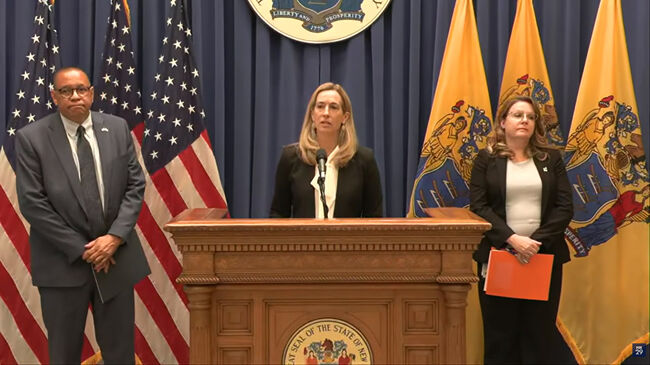 6,600 Non-Citizens Registered to Vote Through New Jersey Motor Vehicle System
New Jersey Governor Mikie Sherrill (Democrat) announced that 6,660 non-citizens were mistakenly registered as voters due to a software glitch in the state's motor vehicle registration system. Governor
6,600 Non-Citizens Registered to Vote Through New Jersey Motor Vehicle System
New Jersey Governor Mikie Sherrill (Democrat) announced that 6,660 non-citizens were mistakenly registered as voters due to a software glitch in the state's motor vehicle registration system. Governor
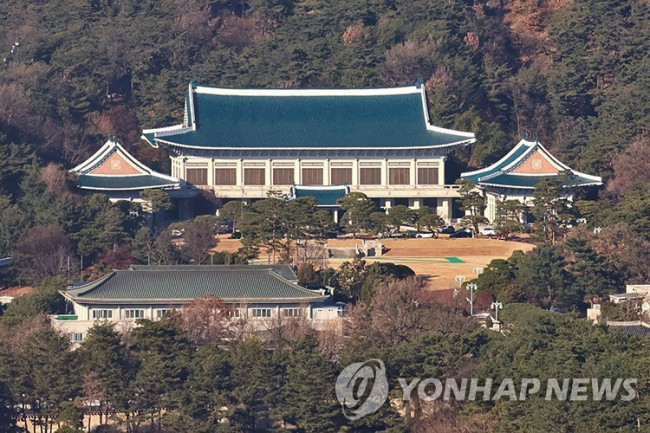 Blue House: "We will respect any conclusion on the right to request supplementary investigations... A prompt decision is needed to minimize confusion."
The Blue House [Photo by Lee Jung-hoon] 2025.12.8Regarding the issue of the prosecution's supplementary investigative authority, the Blue House stated on the 21st, "The decision on whether to abolish
Blue House: "We will respect any conclusion on the right to request supplementary investigations... A prompt decision is needed to minimize confusion."
The Blue House [Photo by Lee Jung-hoon] 2025.12.8Regarding the issue of the prosecution's supplementary investigative authority, the Blue House stated on the 21st, "The decision on whether to abolish
 Heavy rainfall overnight triggers flood of damage reports in Asan and Cheonan… 8 rescued
Road flooded by heavy rain [Yonhap News file photo]As of the early hours of the 22nd, heavy rainfall has caused consecutive damage in the Asan and Cheonan areas of South Chungcheong Province, includin
Heavy rainfall overnight triggers flood of damage reports in Asan and Cheonan… 8 rescued
Road flooded by heavy rain [Yonhap News file photo]As of the early hours of the 22nd, heavy rainfall has caused consecutive damage in the Asan and Cheonan areas of South Chungcheong Province, includin
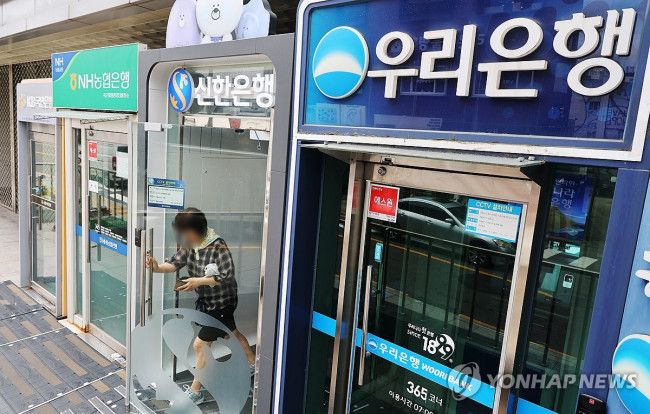 Due to 'Debt-to-Invest' Trend, Major 5 Banks Exceed Other Loan Targets by 2.4 Trillion Won… Tightening Mortgage Loans
An automated teller machine (ATM) at a commercial bank in Seoul on the 19th. [Yonhap News] It has been found that "other loans" at the five major commercial banks (KB Kookmin, Shinhan, Hana, Woor
Due to 'Debt-to-Invest' Trend, Major 5 Banks Exceed Other Loan Targets by 2.4 Trillion Won… Tightening Mortgage Loans
An automated teller machine (ATM) at a commercial bank in Seoul on the 19th. [Yonhap News] It has been found that "other loans" at the five major commercial banks (KB Kookmin, Shinhan, Hana, Woor
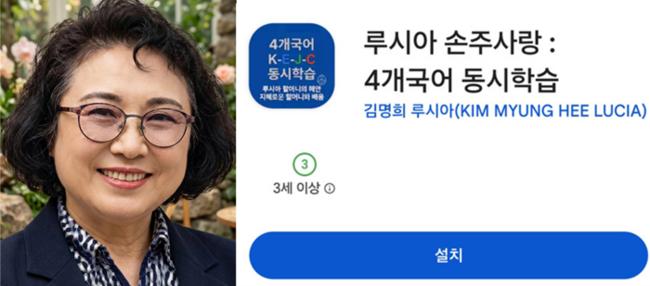 Jeong-Ik Academy Board Chair Kim Myung-hee Launches ‘Lucia’s Love for Grandchildren: Quadrilingual Simultaneous Learning’ App
Kim Myung-hee, Chairperson of Jeong-ik Hakdang, has developed 'Lucia’s Love for Grandchildren: 4-Language Simultaneous Learning' with the help of AI and officially released it on the Google Play Sto
Jeong-Ik Academy Board Chair Kim Myung-hee Launches ‘Lucia’s Love for Grandchildren: Quadrilingual Simultaneous Learning’ App
Kim Myung-hee, Chairperson of Jeong-ik Hakdang, has developed 'Lucia’s Love for Grandchildren: 4-Language Simultaneous Learning' with the help of AI and officially released it on the Google Play Sto
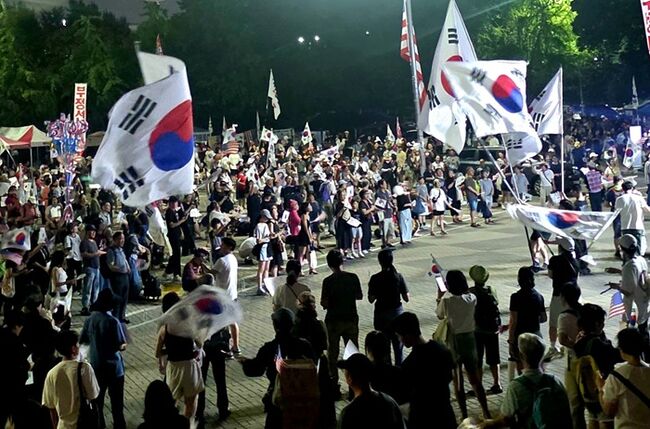 [Special Contribution: Songsan] The Difference Between Anti-Communist Right-Wingers in Their 60s and the New Generation Right-Wingers in Their 20s and 30s
2030 right-wing youth calling for a "rerun of the fraudulent election" at Olympic Park, even at night. ⒸHanmi IlboMost conservatives over the age of 60 tend to view the 2030 right-wing generation as
[Special Contribution: Songsan] The Difference Between Anti-Communist Right-Wingers in Their 60s and the New Generation Right-Wingers in Their 20s and 30s
2030 right-wing youth calling for a "rerun of the fraudulent election" at Olympic Park, even at night. ⒸHanmi IlboMost conservatives over the age of 60 tend to view the 2030 right-wing generation as
 [Photo] Evidence of Election Fraud Flooding U.S. Media… Trump Had 2.7 Million Votes Stolen
 [Video] U.S. Semiquincentennial Air Show... 'Art in the Sky' streaks across New York
 [Editorial Cartoon] A Draconian Law That Undermines Freedom of Expression

 List
List