In the 19th century, financial power stemmed from the direct ownership and linkage of gold and bonds. Today, indices and algorithms design the paths through which the capital of countless investors flows. [Graphic = Hanmi Ilbo]
From the Rothschilds to the Index Empire… “Who Designs the World’s Money?”
At one time, financial power was measured by the size of one’s vault. The standard of influence was determined by who held more gold and bonds, and who had the capacity to lend money to royal families and governments.
The Rothschild family in the 19th century serves as the symbol of this era. Mayer Amschel Rothschild’s five sons used Frankfurt as their starting point to establish financial strongholds in London, Paris, Vienna, and Naples; these family banks, scattered across different nations, connected information, credit, and capital, effectively weaving Europe into a single financial network.
The power of the Rothschilds did not stem merely from having a great deal of money. It came from their ability to decide which governments to fund, which bonds to underwrite, and which industries to connect with capital.
However, the way the world’s money moves has changed today. Rather than a single family or bank owning capital directly and issuing orders, the money of countless investors moves automatically according to set rules. At the center of those rules lies the “index.”
An index is not a mirror of the market
People often think of the S&P 500 or the MSCI Index as a thermometer that reflects the market.
But an index is not a set of numbers that simply replicates the existing market. It is the product of decisions regarding which companies to include or exclude, how much weight to give each company, and how to classify nations into developed, emerging, or frontier markets. Beyond market capitalization, conditions such as liquidity, free-float ratios, tradability, and foreign accessibility determine the “access pass” for capital.
MSCI uses an official methodology to classify countries and companies, while S&P Dow Jones Indices operates the S&P 500 as a benchmark covering approximately 80% of the U.S. large-cap market.
In this moment, an index transforms from a simple statistic into a map of capital.
Companies included in an index become targets for purchase by Exchange Traded Funds (ETFs) and passive funds that track it, and as their weighting increases, index-linked funds move their capital in proportion. Conversely, if a company is delisted or its weighting is reduced, those funds adjust their holdings accordingly.
Even if an index company does not buy a company’s shares directly, global capital moves according to the rules created by that index company.
The capital map drawn by New York and London
Currently, at the heart of the global index industry are New York-based S&P Dow Jones Indices and MSCI, as well as London-based FTSE Russell.
As of the end of 2025, approximately $21 trillion in assets were benchmarked to MSCI indices, and FTSE Russell has stated that roughly $20 trillion in assets would be using their indices as a benchmark by 2026.
This does not mean these firms own that money directly. It means that when tens of trillions of dollars in assets are compared for performance or investment weighting decisions, the classification tables and methodologies they created are the points of reference.
This is the core of today’s financial power. While financiers of the past moved their own money, today’s index companies create the standards by which other people’s money moves.
The assets following a company’s rules can be far greater than the assets the company itself owns. New York is the hub where indices, financial products, and asset management converge, while London is the base where exchanges, benchmarks, and financial data interconnect. While the two cities compete, they simultaneously produce the common language through which global capital moves.
Companies that draw the map vs. companies that move the money
Here, one must distinguish between an index company and an asset manager. If the index company draws the map, the asset manager moves the money across that map.
BlackRock, Vanguard, and State Street manage index-tracking funds and ETFs using client money.
BlackRock’s assets under management (AUM) reached approximately $14 trillion by the end of 2025. These firms are not so much rulers who own the indices as they are operators who execute massive amounts of capital according to the rules created by those indices.
However, when the scale of capital grows, execution itself becomes power. Asset managers become major shareholders in countless companies, voting on board appointments and management agendas on behalf of their clients. While BlackRock and Vanguard have recently expanded the ability for investors to choose how their voting rights are exercised, the debate over the influence of massive passive capital on corporate governance continues.
This structure can be called “passive governance.”
Investors think they are passively buying the entire market, but before that, someone had to define the scope of the market, classify the companies, and calculate the weightings. While an investor’s choice may be passive, the process by which those choices are created is anything but passive.
From the age of ownership to the age of design
Power in the Rothschild era was visible. Bankers negotiated with governments, underwrote bonds, and supplied capital directly. In contrast, the power of the index empire is hidden within technical documents—indices inclusion criteria, country classifications, industry categorizations, and rebalancing schedules.
Index companies do not issue direct orders to corporations. Instead, they design the conditions under which capital evaluates and accesses those corporations.
This does not mean that index companies rule the world in secret. Their methodologies and proposed changes are largely public, and they collect feedback from the market.
However, the fact that the rules are public is different from the question of who gets to make them. When a set of private, public rules dictates the flow of trillions of dollars, it becomes more than just a calculation—it becomes a market institution.
The question of past financial power was, “Who owns the money?” The question of today has changed: “Who designs the paths the money can travel?”
The Rothschilds were the symbol of an era where capital was directly owned and connected. The index empire is the symbol of an era where money with fragmented ownership is moved by a single rule.
Power has not disappeared. It has merely changed its form—from the vault to the methodology, from the banker’s orders to the design of indices and algorithms.
However, the inquiry is not yet over.
Index companies do not create rules out of thin air. There are broader norms behind these indices concerning which values are considered risks, which companies are recognized as high-quality, and how environmental and social responsibilities are translated into investment criteria. In the next issue (Part ②), we will delve into that reality.
How did the UN’s sustainability norms evolve into the financial language of Environmental, Social, and Governance (ESG) criteria? Why did Kofi Annan bring global financial institutions onto the UN stage, and how did these institutions—once the subjects of regulation—become co-designers of global rules?
※This article was published in “Weekly Hanmi Ilbo No. 18.”

 [Issue Commentary] “Who Checks the CIO?”… The Paradox of Prohibiting Direct Supplementary Investigations by the Investigative Agency
The signboard of the Corruption Investigation Office for High-ranking Officials (CIO) at the Government Complex Gwacheon [Yonhap News file photo] Ahead of the abolition of the Prosecutors' Office and
[Issue Commentary] “Who Checks the CIO?”… The Paradox of Prohibiting Direct Supplementary Investigations by the Investigative Agency
The signboard of the Corruption Investigation Office for High-ranking Officials (CIO) at the Government Complex Gwacheon [Yonhap News file photo] Ahead of the abolition of the Prosecutors' Office and
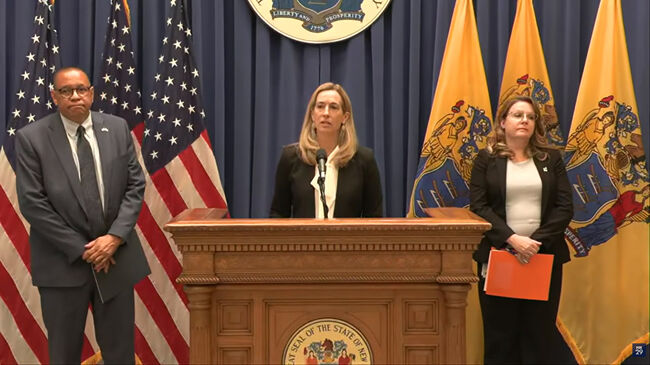 6,600 Non-Citizens Registered to Vote Through New Jersey Motor Vehicle System
New Jersey Governor Mikie Sherrill (Democrat) announced that 6,660 non-citizens were mistakenly registered as voters due to a software glitch in the state's motor vehicle registration system. Governor
6,600 Non-Citizens Registered to Vote Through New Jersey Motor Vehicle System
New Jersey Governor Mikie Sherrill (Democrat) announced that 6,660 non-citizens were mistakenly registered as voters due to a software glitch in the state's motor vehicle registration system. Governor
 Blue House: "We will respect any conclusion on the right to request supplementary investigations... A prompt decision is needed to minimize confusion."
The Blue House [Photo by Lee Jung-hoon] 2025.12.8Regarding the issue of the prosecution's supplementary investigative authority, the Blue House stated on the 21st, "The decision on whether to abolish
Blue House: "We will respect any conclusion on the right to request supplementary investigations... A prompt decision is needed to minimize confusion."
The Blue House [Photo by Lee Jung-hoon] 2025.12.8Regarding the issue of the prosecution's supplementary investigative authority, the Blue House stated on the 21st, "The decision on whether to abolish
 Heavy rainfall overnight triggers flood of damage reports in Asan and Cheonan… 8 rescued
Road flooded by heavy rain [Yonhap News file photo]As of the early hours of the 22nd, heavy rainfall has caused consecutive damage in the Asan and Cheonan areas of South Chungcheong Province, includin
Heavy rainfall overnight triggers flood of damage reports in Asan and Cheonan… 8 rescued
Road flooded by heavy rain [Yonhap News file photo]As of the early hours of the 22nd, heavy rainfall has caused consecutive damage in the Asan and Cheonan areas of South Chungcheong Province, includin
 Due to 'Debt-to-Invest' Trend, Major 5 Banks Exceed Other Loan Targets by 2.4 Trillion Won… Tightening Mortgage Loans
An automated teller machine (ATM) at a commercial bank in Seoul on the 19th. [Yonhap News] It has been found that "other loans" at the five major commercial banks (KB Kookmin, Shinhan, Hana, Woor
Due to 'Debt-to-Invest' Trend, Major 5 Banks Exceed Other Loan Targets by 2.4 Trillion Won… Tightening Mortgage Loans
An automated teller machine (ATM) at a commercial bank in Seoul on the 19th. [Yonhap News] It has been found that "other loans" at the five major commercial banks (KB Kookmin, Shinhan, Hana, Woor
 Jeong-Ik Academy Board Chair Kim Myung-hee Launches ‘Lucia’s Love for Grandchildren: Quadrilingual Simultaneous Learning’ App
Kim Myung-hee, Chairperson of Jeong-ik Hakdang, has developed 'Lucia’s Love for Grandchildren: 4-Language Simultaneous Learning' with the help of AI and officially released it on the Google Play Sto
Jeong-Ik Academy Board Chair Kim Myung-hee Launches ‘Lucia’s Love for Grandchildren: Quadrilingual Simultaneous Learning’ App
Kim Myung-hee, Chairperson of Jeong-ik Hakdang, has developed 'Lucia’s Love for Grandchildren: 4-Language Simultaneous Learning' with the help of AI and officially released it on the Google Play Sto
 [Special Contribution: Songsan] The Difference Between Anti-Communist Right-Wingers in Their 60s and the New Generation Right-Wingers in Their 20s and 30s
2030 right-wing youth calling for a "rerun of the fraudulent election" at Olympic Park, even at night. ⒸHanmi IlboMost conservatives over the age of 60 tend to view the 2030 right-wing generation as
[Special Contribution: Songsan] The Difference Between Anti-Communist Right-Wingers in Their 60s and the New Generation Right-Wingers in Their 20s and 30s
2030 right-wing youth calling for a "rerun of the fraudulent election" at Olympic Park, even at night. ⒸHanmi IlboMost conservatives over the age of 60 tend to view the 2030 right-wing generation as
 [Photo] Evidence of Election Fraud Flooding U.S. Media… Trump Had 2.7 Million Votes Stolen
 [Video] U.S. Semiquincentennial Air Show... 'Art in the Sky' streaks across New York
 [Editorial Cartoon] A Draconian Law That Undermines Freedom of Expression

 List
List