“In today’s world, living alongside AI, science and technology offer affordable and reliable methods to distinguish between authentic and counterfeit ballots.” [Graphic=Hanmi Ilbo]
During the June 3rd nationwide local elections, the sovereignty and suffrage of the citizens of the Republic of Korea were ruthlessly trampled upon.
Outraged by this, young students and citizens in their 20s and 30s voluntarily gathered at the plaza in front of the Olympic Park Handball Stadium—a counting center in Songpa-gu, Seoul—to preserve as evidence 2.47 million ballots stored within the stadium.
From that moment until this very day, sovereign citizens, undeterred by heavy rain or scorching heat, have continued their "sovereign cry" for "reruns of fraudulent elections and manual vote counting on election day."
Following the outcry at the "Olympic Park," a joint investigation team (consisting of police and prosecutors) and a National Assembly special committee for a parliamentary inspection were formed. Prosecutors and opposition lawmakers on these committees have uncovered evidence and truths indicating that the National Election Commission's management of the election directly violated the Public Official Election Act, and they are strongly urging that the full truth behind the election fraud allegations be exposed.
As members of the "Professors' Association for Social Justice" (Jeonggyomo), dedicated to upholding the Republic of Korea’s Constitution, freedom, truth, and justice, we are a group of scholars who have long delved into academic inquiry using scientific thought and methods. We affirm that as long as suspicions surrounding "election fraud"—including the June 3rd disaster—remain unresolved, the very survival of the Republic of Korea cannot be guaranteed. Therefore, we propose the following measures to address public concerns regarding election irregularities:
1. Until now, state institutions responsible for uncovering election fraud, such as the National Election Commission and the courts, have merely conducted "recounts"—a process of re-tallying votes to verify candidate scores—to determine whether fraud occurred.
Before verifying the vote count, the procedure for determining whether ballots are authentic or counterfeit has consistently relied on the unilateral judgment of election commission staff or judges. We declare this to be an archaic, 19th-century practice that must be abandoned immediately.
2. In today’s world, living alongside AI, science and technology provide affordable ways to distinguish between authentic and counterfeit ballots.
Engineering tools such as microscopes with 30x to 200x magnification and flatbed scanners capable of displaying shapes at resolutions over 100x can objectively and scientifically verify the authenticity of ballots. These tools can reveal whether the printing on the ballots is genuine or fake, and can immediately identify whether the markings on the ballots are real or forged.
Furthermore, serial number readers can instantly reveal inconsistencies such as missing or duplicate numbers on ballots and ballot stubs.
These scientific results can be vividly broadcasted via large monitors so that every citizen can directly verify them.
Jeonggyomo declares that such fair, objective, and scientific-academic verification methods are the most accurate ways to completely resolve public suspicion regarding election fraud.
3. The specific methods and effects of scientific verification are as follows:
First, the consistency of early voting ballots and ballot papers must be scientifically verified.
The procurement standard for early voting paper is 180,300 rolls × 150m or more = a minimum of 27,045km. The ballots actually used versus those remaining can be numerically calculated and verified.
Second, whether a ballot is counterfeit or authentic can be simply verified through paper quality testing.
While weight (basis weight) can be checked easily, using a flatbed scanner (e.g., Epson Perfection V850 Pro, costing 1.3–1.6 million KRW, 6400dpi) to image transmitted light allows for the capture of "formation" (how evenly pulp fibers are bonded and distributed within the paper tissue). By comparing these images (quantitative index calculation is easily done via free software), one can scientifically and objectively verify authentic versus fake paper.
Third, whether printing and markings are genuine can also be verified simply through the aforementioned flatbed scanner imaging.
By magnifying and photographing the printing screen dots and droplet structures, the scanner can clearly, objectively, and scientifically distinguish between forged and authentic prints/markings.
Fourth, fake and authentic ballots identified by these methods can be magnified using a USB digital microscope (200~500x, 1080p or higher, stand-integrated, adjustable brightness, 80,000~200,000 KRW) and displayed in real-time via large monitors or projectors, allowing all citizens, anywhere, to immediately verify the status and results of the election fraud investigation.
The day of the June 3rd local election disaster was the day Pandora's box of "election fraud" was opened. Now, by suppressing that disaster through "scientific verification," all citizens must overcome the ruinous exhaustion caused by divisions—between ruling and opposition, progressives and conservatives, generations, and regions. We must forcefully open a new future of national innovation and civilizational prosperity along with the restoration of sovereignty.
As we mark the 78th anniversary of the founding of the Republic of Korea, our association, Jeonggyomo, earnestly hopes to eradicate election contamination through "scientific verification" rather than wasteful political strife, and to rebuild the Republic of Korea into a free, just, and proud advanced civilization.
Long live liberal democracy!
Long live the Republic of Korea!
August 14, 2026
Professors' Association for Social Justice (Jeonggyomo)

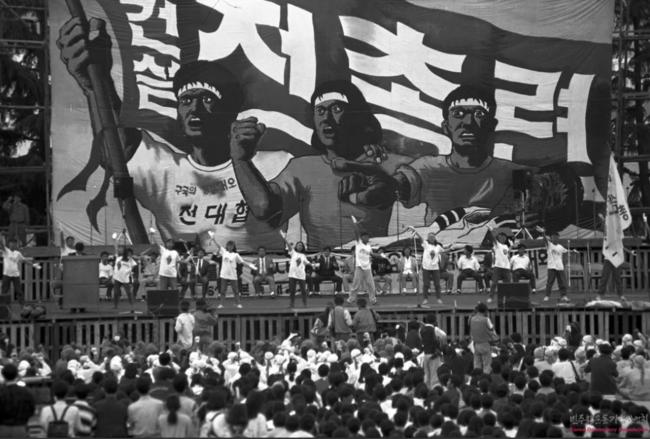 [Songsan Column | An 80-Year History of the Pro-North Left] ㉞ The Persistence of the Juche-Faction in 1990s Universities
Inauguration Ceremony of the 5th Jeondaehyop in 1991 By the 1990s, the university campus was no longer a place where massive protests erupted daily and the streets were filled with shouts, as was
[Songsan Column | An 80-Year History of the Pro-North Left] ㉞ The Persistence of the Juche-Faction in 1990s Universities
Inauguration Ceremony of the 5th Jeondaehyop in 1991 By the 1990s, the university campus was no longer a place where massive protests erupted daily and the streets were filled with shouts, as was
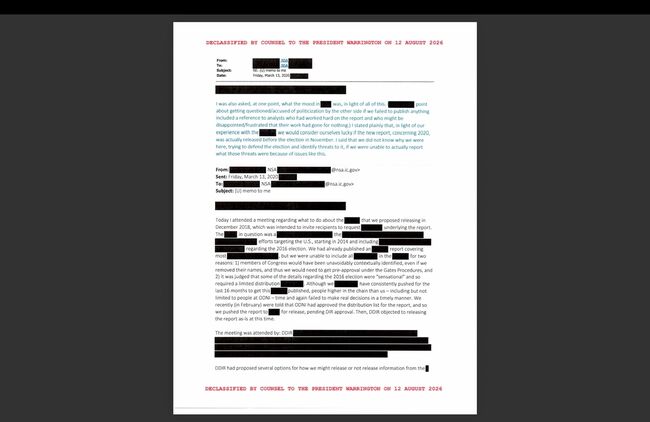 “'China’s Interference in U.S. Presidential Election': 16 Months of Reports to Trump Ignored”
Declassified documents from the U.S. National Security Agency (NSA) released by the White House Government Transparency Task Force on the 18th (local time). They contain emails among intelligence agen
“'China’s Interference in U.S. Presidential Election': 16 Months of Reports to Trump Ignored”
Declassified documents from the U.S. National Security Agency (NSA) released by the White House Government Transparency Task Force on the 18th (local time). They contain emails among intelligence agen
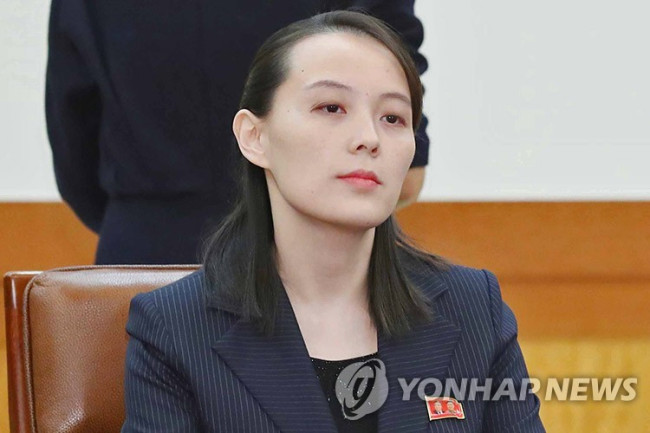 [Comprehensive] Kim Yo-jong: "Seoul’s Pitiful Situation, Unable to Play War Games"… Ridicule and Harsh Language
Kim Yo-jong, Vice Department Director of the Workers' Party of North Korea [Yonhap News] Kim Yo-jong, Vice Department Director of the Workers' Party and sister of North Korean leader Kim Jong-un,
[Comprehensive] Kim Yo-jong: "Seoul’s Pitiful Situation, Unable to Play War Games"… Ridicule and Harsh Language
Kim Yo-jong, Vice Department Director of the Workers' Party of North Korea [Yonhap News] Kim Yo-jong, Vice Department Director of the Workers' Party and sister of North Korean leader Kim Jong-un,
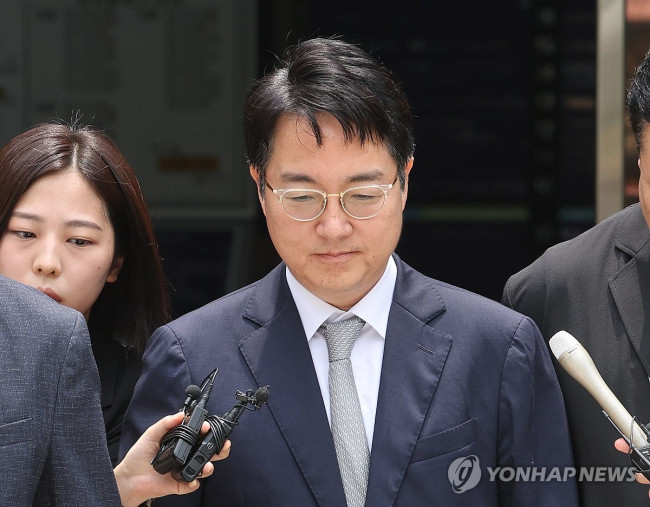 Shim Woo-jung indicted without detention for 'insurrection involvement'... Shim protests, claiming "disregard for evidence and legal principles"
Former Prosecutor General Shim Woo-jung [Yonhap News file photo]Former Prosecutor General Shim Woo-jung has been indicted on charges of participating in the December 3rd martial law insurrection and a
Shim Woo-jung indicted without detention for 'insurrection involvement'... Shim protests, claiming "disregard for evidence and legal principles"
Former Prosecutor General Shim Woo-jung [Yonhap News file photo]Former Prosecutor General Shim Woo-jung has been indicted on charges of participating in the December 3rd martial law insurrection and a
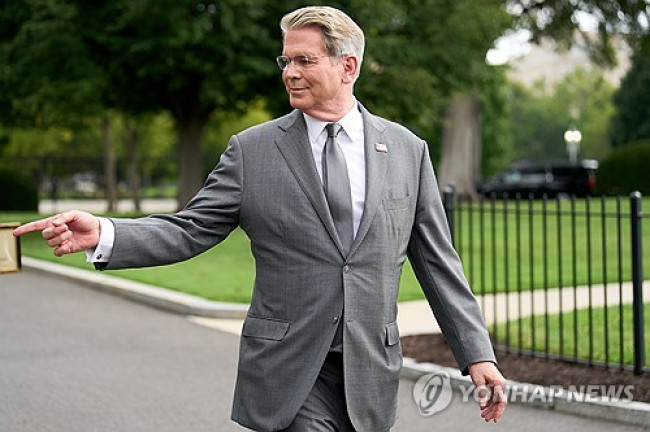 US Treasury Secretary: "Treasury Buybacks Could Exceed $4 Billion Per Operation… We Have Many Policy Tools"
U.S. Treasury Secretary Scott Bessent [AP=Yonhap News]U.S. Treasury Secretary Scott Bessent stated on the 20th (local time) that the volume of Treasury buybacks could exceed $4 billion (5.58 trillion
US Treasury Secretary: "Treasury Buybacks Could Exceed $4 Billion Per Operation… We Have Many Policy Tools"
U.S. Treasury Secretary Scott Bessent [AP=Yonhap News]U.S. Treasury Secretary Scott Bessent stated on the 20th (local time) that the volume of Treasury buybacks could exceed $4 billion (5.58 trillion
 [Park Myung-mi's Kyushu Travel] ② Kaiseki Cuisine, Eating a Garden in a Bowl
When you first encounter kaiseki cuisine, it can feel like playing house. The dishes are small, yet there are so many of them. When I first came to Japan, the food that truly moved me was a cours
[Park Myung-mi's Kyushu Travel] ② Kaiseki Cuisine, Eating a Garden in a Bowl
When you first encounter kaiseki cuisine, it can feel like playing house. The dishes are small, yet there are so many of them. When I first came to Japan, the food that truly moved me was a cours
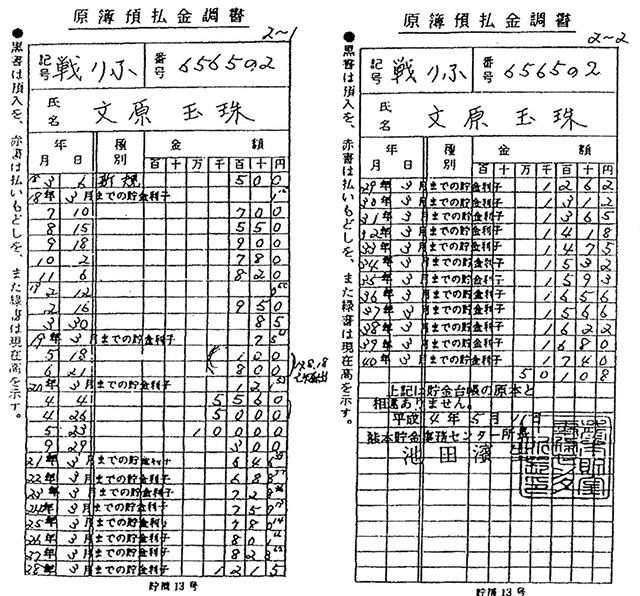 [Special Contribution: Songsan] How much was the 26,000 yen of "comfort woman" Moon Ok-ju worth?
Postal Savings Ledger of Moon Ok-juRecords of approximately 26,000 yen in military postal savings remain for Moon Ok-ju, who served as a "comfort woman" in Burma (present-day Myanmar). Looking at the
[Special Contribution: Songsan] How much was the 26,000 yen of "comfort woman" Moon Ok-ju worth?
Postal Savings Ledger of Moon Ok-juRecords of approximately 26,000 yen in military postal savings remain for Moon Ok-ju, who served as a "comfort woman" in Burma (present-day Myanmar). Looking at the
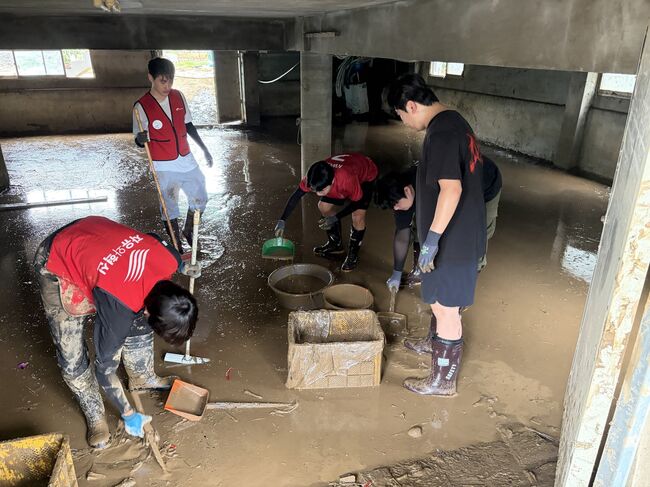 [Photo] Liberty and Innovation Geoje Flood Recovery Support
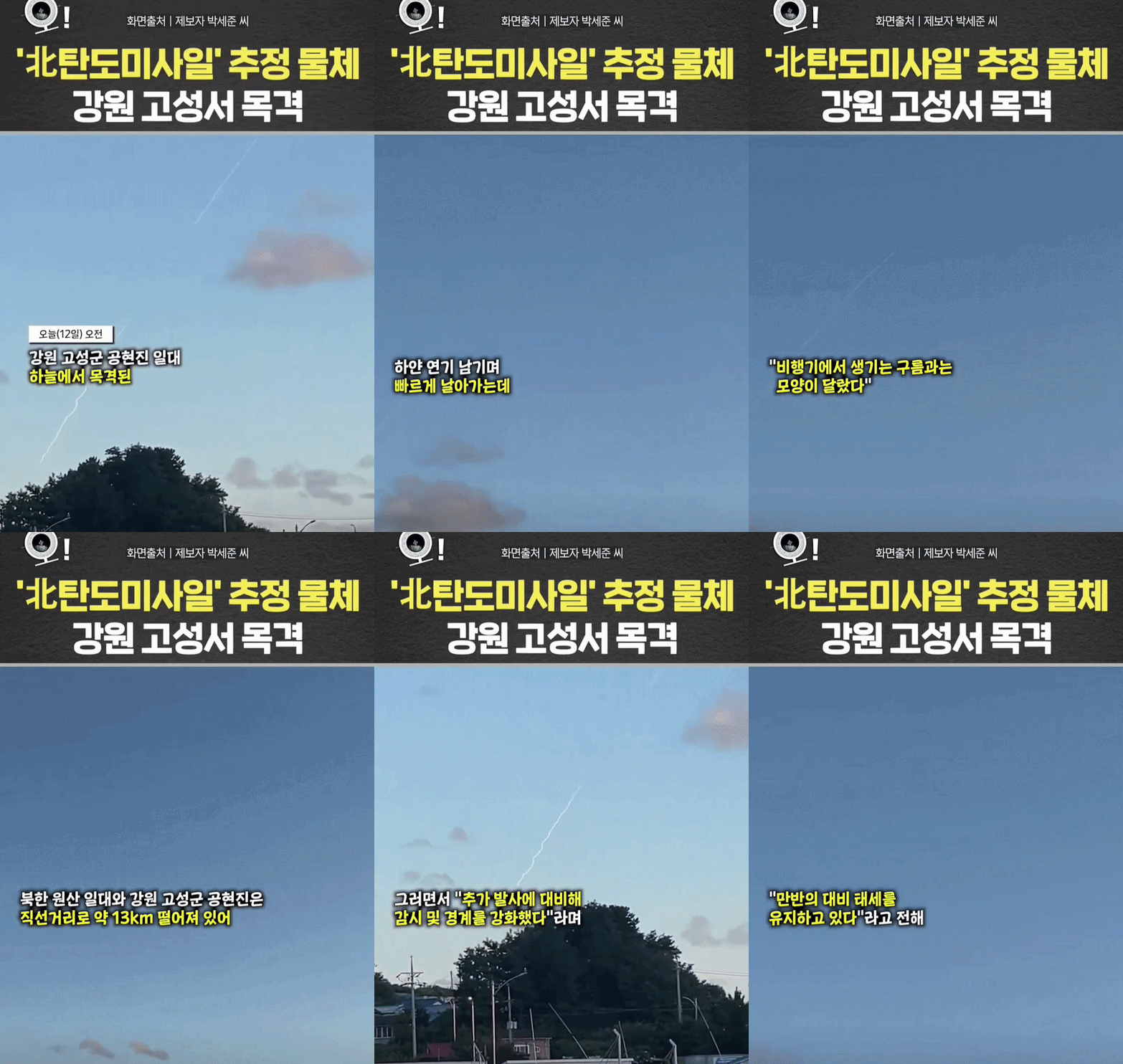 [Video] North Korean ballistic missile filmed by a civilian in Goseong, Gangwon-do
 [Editorial Cartoon] A Draconian Law That Undermines Freedom of Expression

 List
List