A composite image contrasting the "Korea Confederation" proposal put forward by Democratic Party representative Kim Min-seok in 2007 with Kim Jong-un’s "hostile two-state" theory. The Korea Confederation is a concept that envisions an inter-Korean confederation as the first stage of unification, proceeding through long-term peaceful coexistence toward full unification in the form of a federation or a single government. [Photo=Hanmi Ilbo Graphic]
Kim Min-seok's "Korea Confederation" contains a pathway toward unification. However, when applied to the current reality of the Korean Peninsula, three critical elements are missing.
“How will you bring Kim Jong-un back to the table for unification?
Who will guarantee the peace, and how will the Republic of Korea maintain its deterrence?
And what will be the system of the final unified state?”
Kim Dae-jung, whom Kim Min-seok has long regarded as his political mentor, at least answered the final question: it was democracy and a market economy. In Kim Min-seok’s Korea Confederation, that answer is not clear.
The 'Korea Confederation' of 2007... Peaceful Coexistence as a Process Toward Unification
In 2007, Kim Min-seok proposed the "Korea Confederation" as a unification policy for the next administration. The vision was for the two Koreas to form a confederation while maintaining their respective current systems, constitutions, and sovereignty, designating this as the "first stage of unification."
The design was quite specific.
It called for creating a joint inter-Korean body with an equal number of members from each side while respecting their independent sovereignty. This state would be maintained for 10 to 20 years—or even decades, if necessary—to facilitate social and economic integration before transitioning to full unification through a federal system or a single government.
Kim Min-seok viewed this not as mere management of division, but as "unification-oriented long-term peaceful coexistence." It was a plan to create an active peace regime aimed at unification, rather than a status-quo-oriented peace.
Up to this point, it is clear.
For Kim Min-seok, inter-Korean peaceful coexistence is not an alternative to unification. It is a process leading to it.
However, the Korean Peninsula of 2026 is different from that of 2007.
The First Blank… How to Revive Unification That Kim Jong-un Has Abandoned
The first blank is "North Korea’s intent."
At the end of 2023, Kim Jong-un redefined inter-Korean relations no longer as those between fellow countrymen pursuing unification, but as "two hostile states." Since then, North Korea has reorganized its unification-related agencies and terminology, shifting its policy toward treating South Korea as a separate, hostile nation.
Kim Min-seok’s Korea Confederation starts from exactly the opposite premise: that even if the two Koreas coexist as two systems for a long period, they must ultimately move toward one nation.
Therefore, before asking how to form a confederation, one must ask:
“How will you bring Kim Jong-un back to the table for unification?”
In a situation where North Korea rejects unification itself, the unification process does not begin simply because the South talks about a confederation and full unification. Without the means to change the other party’s intent, the confederation can hardly even reach the starting line.
This is why Kim Min-seok’s opposition to the "two-state theory" proposed by former Presidential Chief of Staff Im Jong-seok in 2024 becomes significant again.
Kim Min-seok argued that there is no reason to change the existing historical consensus—that the two Koreas should peacefully coexist for a long time and leave unification to future generations—into a two-state theory. He also opposed Kim Jong-un’s hostile two-state theory.
Kim Min-seok has not given up on unification. If so, he must answer how he intends to revive the unification that Kim Jong-un has abandoned.
The Second Blank… Peace in the Era of North Korean Nuclear Weapons: Who Guarantees It and With What?
The second blank is "guaranteeing peace and the Republic of Korea’s deterrence."
The Korea Confederation presupposes long-term peaceful coexistence. However, peace is not a state created simply by declaring it.
North Korea possesses nuclear weapons, and the two Koreas are in a military standoff. Therefore, it must be explained how North Korea’s nuclear program will be handled, how inter-Korean military forces will be managed, and in what way the armistice regime will be changed.
There is an even more fundamental question.
“If North Korea violates an agreement, who will hold them accountable?
Who will verify the implementation of the agreement?
Who will guarantee the peace?
The United States? China? The two Koreas as parties involved? The international community?”
And it is precisely at this point that issues such as the ROK-U.S. alliance, U.S. Forces in Korea (USFK), and the wartime operational control (OPCON) come into play.
If a confederation lasts for 10, 20, or more years, how will the ROK’s security be defended during that period? Will the ROK-U.S. alliance be maintained? In what form will OPCON be exercised? Will USFK remain? Are we talking about reducing only the South’s military role while leaving North Korean nuclear weapons as they are?
To talk about peace, one must also talk about the "methods to defend that peace." The belief that the other side will not attack is not a mechanism for ensuring peace.
This question is also linked to current defense and security policies being pursued or reviewed.
The transition of wartime OPCON, the reorganization of military command and education systems, or the adjustment of the stance on North Korean provocations are not, in themselves, illegal or acts of insurrection. If pursued within the procedures prescribed by the Constitution and laws, they are fundamentally matters of policy and political judgment.
However, the nature of the issue changes if evidence emerges that these measures are intended to intentionally weaken the Republic of Korea’s defensive capabilities and create a military environment unilaterally favorable to North Korea under the pretext of fostering a long-term environment for unification.
From that point on, it is no longer a simple debate over North Korea policy.
It becomes a question of how far the Republic of Korea’s constitutional order and national security can be compromised under the banner of unification.
Peace is not a state where deterrence is unnecessary. Rather, peace can be sustained when the consequences of a breach by the other party are clear. This is especially true given that North Korea has not abandoned its nuclear weapons and has even declared a hostile two-state theory.
The Third Blank… Is the One Korea a Liberal Democratic State?
The third blank is the most fundamental: the "system."
At the confederation stage, the two systems of the South and North can be maintained. The Republic of Korea maintains liberal democracy and a market economy, while North Korea maintains the Workers' Party’s one-party rule and a socialist system. Kim Min-seok also based his 2007 plan on this premise.
However, the moment it transitions to a federation or a single nation, the issue of the system cannot be avoided.
Two supreme constitutional orders cannot coexist in a single nation.
One cannot simultaneously adopt free elections and one-party rule as the fundamental principles of the state. It is impossible to incorporate an order based on private property and a market economy alongside a socialist ownership order into a single constitution without making a choice.
Ultimately, at the end of unification, a choice must be made.
The Constitution of the Republic of Korea is not silent on this.
Article 4 of the Constitution stipulates that the Republic of Korea shall "formulate and promote a policy of peaceful unification based on the principles of liberal democracy."
What the ROK Constitution commands is not just unification; it is peaceful unification based on liberal democracy.
That said, I do not believe that Kim Min-seok has abandoned liberal democracy. There is insufficient evidence to conclude as much from his political activities and public statements thus far.
In my view, it is more likely that he finds it difficult to explicitly state the final system of liberal democracy at this moment.
The moment one clearly declares, “The final unified state must be a liberal democracy and a market economy,” North Korea is highly likely to recoil, calling it a theory of "unification by absorption."
It could also clash with some factions within the self-reliance and unification movement. The negotiations themselves, predicated on a confederation and inter-Korean cooperation, could become difficult.
However, the difficulty of saying it does not eliminate the question regarding the system.
Kim Dae-jung Answered… Democracy and a Market Economy
Moreover, Kim Dae-jung, the political mentor of Kim Min-seok, did not avoid this question.
Kim Dae-jung’s three-stage unification theory did not merely present the procedures for moving from an inter-Korean confederation to a federation and then to full unification. It provided a direction: for the transition to a federal stage to take place, democracy and a market economy must also be established to a significant degree in North Korea.
It meant that a multi-party system and free elections must be possible, and a market economy must function.
The final unified state also aimed for democracy and a market economy.
This distinction is crucial.
For Kim Dae-jung, phased unification was not a detour to abandon liberal democracy. There was a clear direction to converge the systems of the two Koreas toward democracy and a market economy through long-term exchange and change, rather than immediately collapsing and absorbing the North Korean system.
If so, Kim Min-seok, who claims to inherit Kim Dae-jung’s unification theory, must also answer:
“Should a multi-party system and free elections be implemented in North Korea as well?
Should the Workers' Party’s one-party rule end before final unification?
Must North Korea accept private property and a market economy?”
And above all,
“Is the 'One Korea' that Kim Min-seok speaks of a liberal democratic state?”
For a Unification Theory to Become a National Strategy, It Must Answer Three Questions
Unification is not achieved by will alone.
It requires the consent of the other party. It requires the strength and institutions to defend peace. And in the end, it requires the people to decide under what system they will live.
Unification is about merging constitutions before it is about merging territories.
It is about making the military one, and deciding how power will be elected. It is about deciding how to guarantee the people’s private property, freedom of expression, and freedom of religion.
Kim Dae-jung at least answered regarding the system.
It was democracy and a market economy.
Now, Kim Min-seok must answer:
“How will you bring Kim Jong-un back to the table for unification?
Who will guarantee the peace, and how will the ROK’s deterrence be maintained?
And is the state to be built at the end a liberal democratic state?”
These three questions are not side issues of the Korea Confederation. They are three blanks that must be filled for it to become a realistic national strategy.
If Kim Min-seok cannot answer these questions, it is difficult to call the "Korea Confederation" a complete national unification theory.
Ultimately, it will be hard to avoid political criticism that it is merely "unification profiteering" or "peace profiteering."

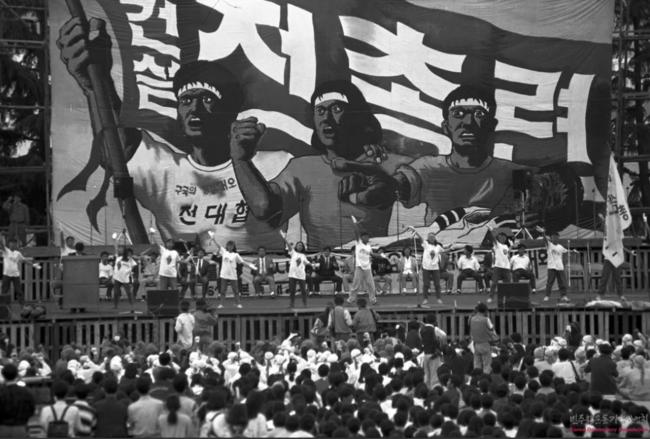 [Songsan Column | An 80-Year History of the Pro-North Left] ㉞ The Persistence of the Juche-Faction in 1990s Universities
Inauguration Ceremony of the 5th Jeondaehyop in 1991 By the 1990s, the university campus was no longer a place where massive protests erupted daily and the streets were filled with shouts, as was
[Songsan Column | An 80-Year History of the Pro-North Left] ㉞ The Persistence of the Juche-Faction in 1990s Universities
Inauguration Ceremony of the 5th Jeondaehyop in 1991 By the 1990s, the university campus was no longer a place where massive protests erupted daily and the streets were filled with shouts, as was
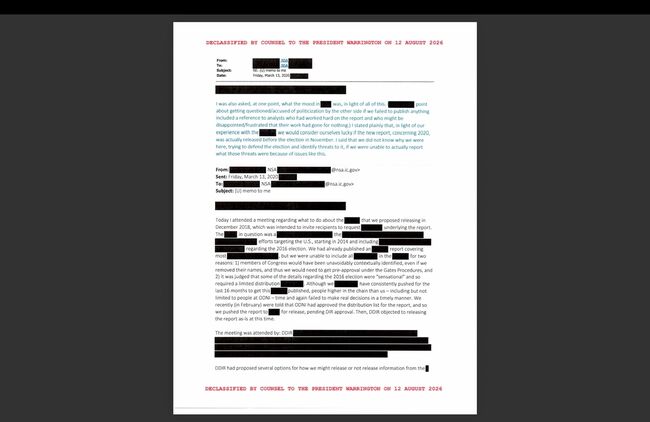 “'China’s Interference in U.S. Presidential Election': 16 Months of Reports to Trump Ignored”
Declassified documents from the U.S. National Security Agency (NSA) released by the White House Government Transparency Task Force on the 18th (local time). They contain emails among intelligence agen
“'China’s Interference in U.S. Presidential Election': 16 Months of Reports to Trump Ignored”
Declassified documents from the U.S. National Security Agency (NSA) released by the White House Government Transparency Task Force on the 18th (local time). They contain emails among intelligence agen
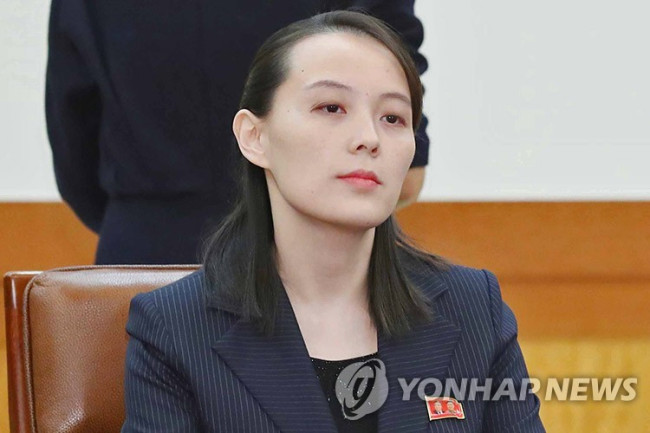 [Comprehensive] Kim Yo-jong: "Seoul’s Pitiful Plight Now That It Cannot Play War Games"… Mockery and Vitriol
Kim Yo-jong, Vice Department Director of the Workers' Party of Korea [Yonhap News] Kim Yo-jong, Vice Department Director of the Workers' Party of Korea and sister of North Korean leader Kim Jong-
[Comprehensive] Kim Yo-jong: "Seoul’s Pitiful Plight Now That It Cannot Play War Games"… Mockery and Vitriol
Kim Yo-jong, Vice Department Director of the Workers' Party of Korea [Yonhap News] Kim Yo-jong, Vice Department Director of the Workers' Party of Korea and sister of North Korean leader Kim Jong-
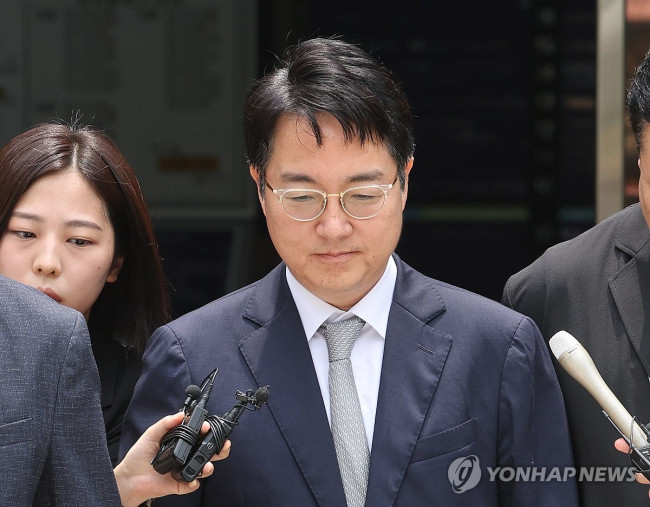 Shim Woo-jung indicted without detention for 'insurrection involvement'... Shim protests, claiming "disregard for evidence and legal principles"
Former Prosecutor General Sim Woo-jung [Yonhap News file photo]Former Prosecutor General Sim Woo-jung has been indicted on charges of participating in the December 3rd martial law insurrection and abu
Shim Woo-jung indicted without detention for 'insurrection involvement'... Shim protests, claiming "disregard for evidence and legal principles"
Former Prosecutor General Sim Woo-jung [Yonhap News file photo]Former Prosecutor General Sim Woo-jung has been indicted on charges of participating in the December 3rd martial law insurrection and abu
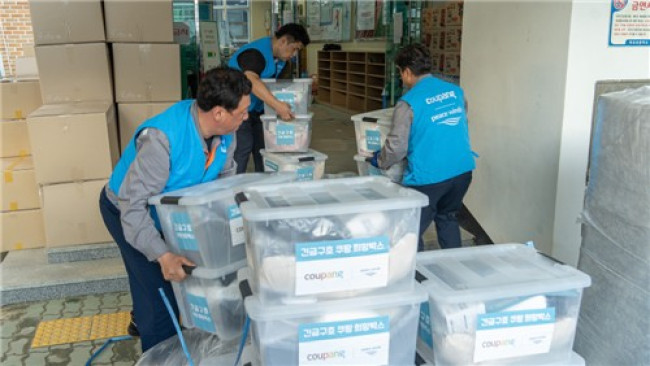 Coupang Donates 200 'Hope Boxes' to Flood Victims in Geoje
Support of 200 'Hope Boxes' [Courtesy of Coupang]Coupang announced on the 20th that it has provided 200 sets of 'Emergency Relief Coupang Hope Boxes' to Geoje, Gyeongsangnam-do.The previous day, Coupa
Coupang Donates 200 'Hope Boxes' to Flood Victims in Geoje
Support of 200 'Hope Boxes' [Courtesy of Coupang]Coupang announced on the 20th that it has provided 200 sets of 'Emergency Relief Coupang Hope Boxes' to Geoje, Gyeongsangnam-do.The previous day, Coupa
 [Park Myung-mi's Kyushu Travel] ② Kaiseki Cuisine, Eating a Garden in a Bowl
When you first encounter kaiseki cuisine, it can feel like playing house. The dishes are small, yet there are so many of them. When I first came to Japan, the food that truly moved me was a cours
[Park Myung-mi's Kyushu Travel] ② Kaiseki Cuisine, Eating a Garden in a Bowl
When you first encounter kaiseki cuisine, it can feel like playing house. The dishes are small, yet there are so many of them. When I first came to Japan, the food that truly moved me was a cours
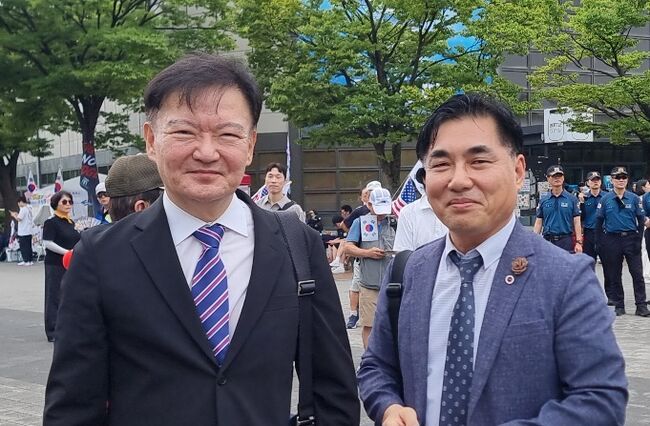 [Photo] Rep. Min Kyung-wook visits Olympic Park... "Restoring my honor after 6 years of being called a nutjob"
Min Kyung-wook, the person who ignited the movement to investigate election fraud. The sacrifice and courage of former National Assembly member Min Kyung-wook were instrumental in the creation of toda
[Photo] Rep. Min Kyung-wook visits Olympic Park... "Restoring my honor after 6 years of being called a nutjob"
Min Kyung-wook, the person who ignited the movement to investigate election fraud. The sacrifice and courage of former National Assembly member Min Kyung-wook were instrumental in the creation of toda
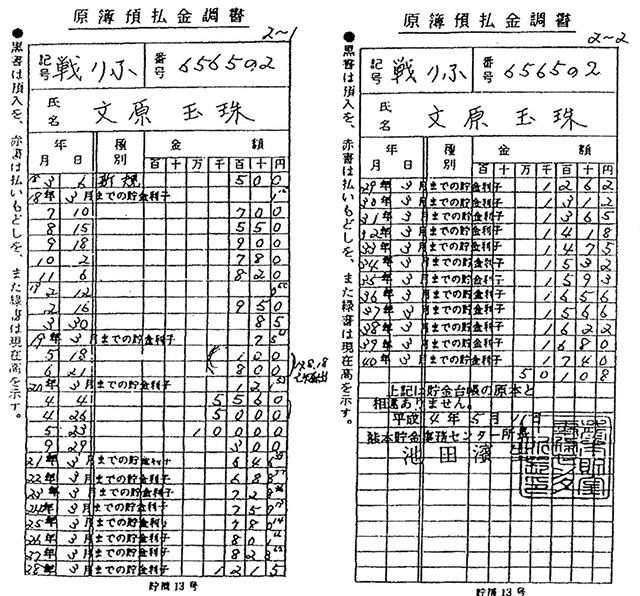 [Special Contribution: Songsan] How much was the 26,000 yen of "comfort woman" Moon Ok-ju worth?
Postal Savings Ledger of Moon Ok-juRecords of approximately 26,000 yen in military postal savings remain for Moon Ok-ju, who served as a "comfort woman" in Burma (present-day Myanmar). Looking at the
[Special Contribution: Songsan] How much was the 26,000 yen of "comfort woman" Moon Ok-ju worth?
Postal Savings Ledger of Moon Ok-juRecords of approximately 26,000 yen in military postal savings remain for Moon Ok-ju, who served as a "comfort woman" in Burma (present-day Myanmar). Looking at the
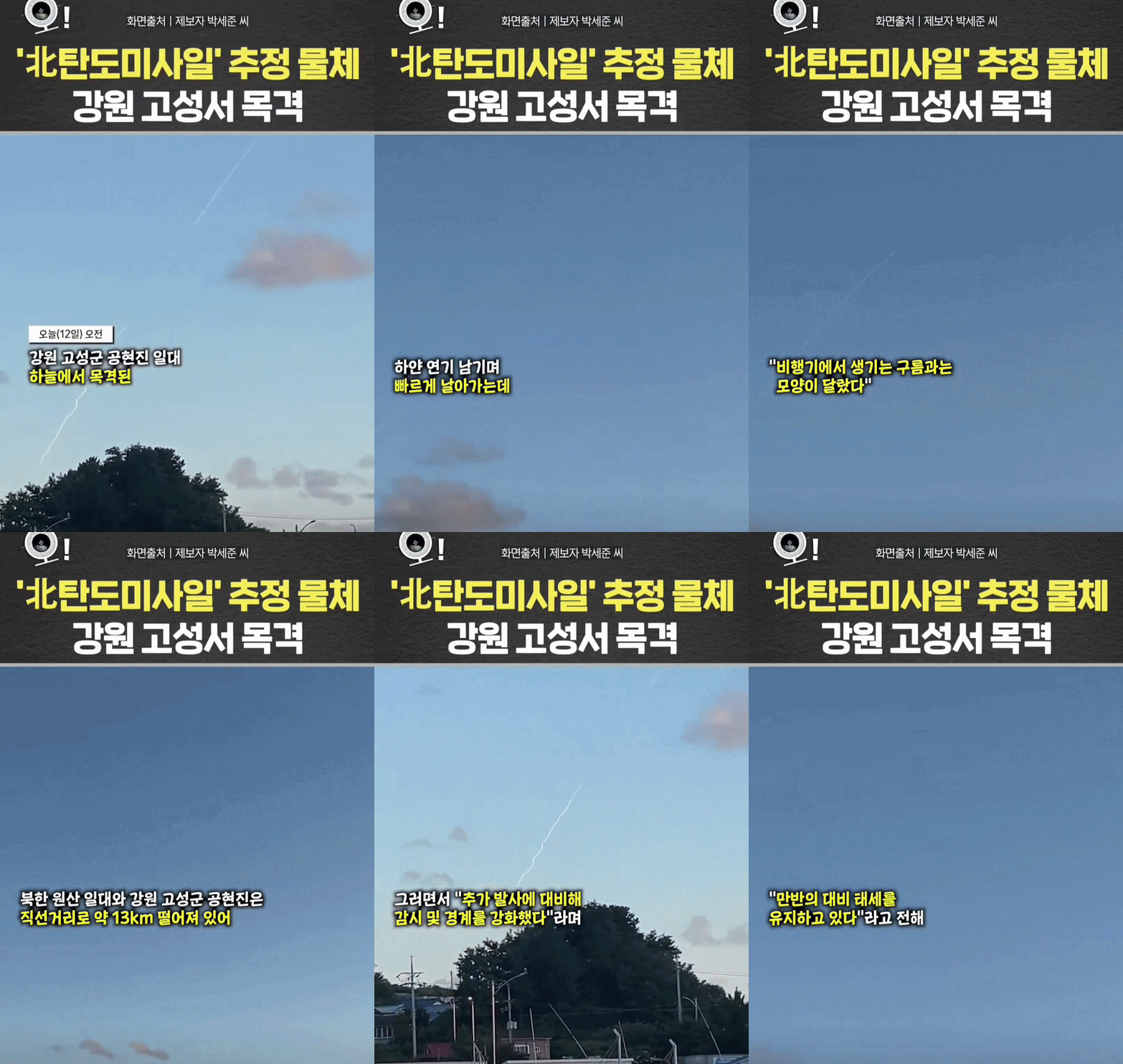 [Video] North Korean ballistic missile filmed by a civilian in Goseong, Gangwon-do
 [Editorial Cartoon] A Draconian Law That Undermines Freedom of Expression

 List
List