U.S. President Donald Trump and Kim Jong-un meeting in Panmunjom in June 2019. [AP=Yonhap News]U.S.-North Korea talks are becoming a reality.
This is the political price paid for complacency in security posture, the wreckage of our national defense, misalignment with our ally, and the neglect of close coordination—a diplomatic disaster with unpredictable consequences.
The current government, unable to break free from its pro-China leanings, has narrowed its own diplomatic space and invited this self-inflicted crisis.
The price for this security failure, characterized by a policy of "peace and autonomy" that lacks effectiveness or concrete alternatives, is now the inescapable condemnation of being an administration incompetent in security matters.
The bold yet naive attitude of relying solely on the goodwill of our ally without building a robust defense line of our own has, under the Constitution, effectively trapped the Korean Peninsula in a dead-end maze. The Minister of National Defense, among others, cannot escape responsibility.
1. The End of Denuclearization and the Shadow of Nuclear Arms Control
U.S. President Donald Trump’s public assertion that North Korea possesses 57 highly powerful nuclear weapons, accompanied by his suggestion of pursuing a U.S.-North Korea summit within the year, is sending shockwaves through the security landscape of the Korean Peninsula.
This statement, which aligns with estimates from the Stockholm International Peace Research Institute (SIPRI) and others, is read as a strategic signal: Washington is not only demonstrating its precise awareness of the reality of North Korea's nuclear capabilities but also acknowledging them as a fixed, irreversible constant.
It reveals an intention to shift the trajectory of policy toward North Korea away from the long-standing principle of "complete denuclearization" and toward "nuclear arms control and freeze" negotiations.
2. The Double-Edged Sword of Dialogue
This momentum for direct U.S.-North Korea dialogue casts both light and shadow on South Korea's security landscape.
On the positive side, if communication channels between the U.S. and North Korea are restored and dialogue between leaders resumes, it could temporarily reduce the risk of accidental military clashes in border areas or large-scale armed provocations.
Furthermore, there remains an expectation of better management in the sense that even a small diplomatic space could be secured to restrain North Korea's additional production of nuclear materials.
3. The Risk of Being Left Behind
However, if Washington uses the number of North Korean nuclear weapons as a bargaining chip, abandoning the goal of denuclearization to settle for a "freeze," South Korea will be trapped in a permanent security shackle, living under the shadow of over 50 nuclear warheads.
The greater fear arises when matters of life-and-death importance for the Korean Peninsula are handled through direct deals between Washington and Pyongyang, bypassing Seoul. If the parties directly involved are excluded and the ally's defense commitments are relegated to expendable items in a political trade, the reality we will face is the deterioration of national survival conditions and absolute diplomatic isolation.
4. Independent Leverage and a Sober Perception of Reality
In the framework Washington is currently drawing, South Korea must move beyond emotional instability or vague expectations to avoid being swayed by the calculations of neighboring powers. The government and military authorities must wake up, tighten the ties of ROK-U.S. coordination, and build independent diplomatic leverage while ensuring, through sober and proactive efforts, the effectiveness of extended deterrence so that the U.S.'s strategy toward North Korea does not in the slightest damage our security interests.
The moment we hide behind the shadow of an ally, isolation becomes a reality. Now, more than ever, we need a sharp perception of reality and strategic initiative.
5. Proposals for Effective Alternatives
To break through the current total security crisis and prevent the Republic of Korea from becoming subordinate to the calculations of neighboring countries, the following measures must be implemented urgently.
*Complete overhaul of the security line.
We must take responsibility for the diplomatic and security failure, completely reform the incompetent security team, and establish a new, strategic leadership.
*Full cessation of security-destroying policies.
We must immediately scrap ineffective "peace-at-any-cost" policies and submissive diplomatic stances to restore the essence of the ROK-U.S. alliance.
We must review and halt the unreasonable push for the transfer of wartime operational control (OPCON), which chases the illusion of autonomous defense, as well as harmful policies regarding the integration of military academies that undermine the military's identity and discipline, and instead establish a steadfast military readiness posture.
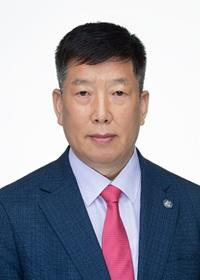
◆ Commissioner Park Pil-gyu
Editorial Writer, Korea-U.S. Ilbo
Korea Military Academy, 40th Class

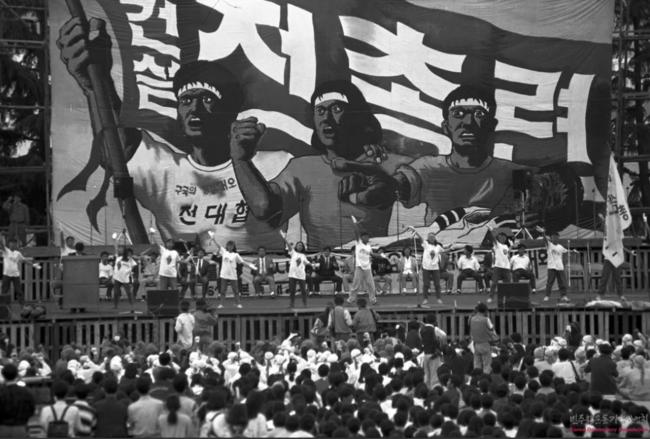 [Songsan Column | An 80-Year History of the Pro-North Left] ㉞ The Persistence of the Juche-Faction in 1990s Universities
Inauguration Ceremony of the 5th Jeondaehyop in 1991 By the 1990s, the university campus was no longer a place where massive protests erupted daily and the streets were filled with shouts, as was
[Songsan Column | An 80-Year History of the Pro-North Left] ㉞ The Persistence of the Juche-Faction in 1990s Universities
Inauguration Ceremony of the 5th Jeondaehyop in 1991 By the 1990s, the university campus was no longer a place where massive protests erupted daily and the streets were filled with shouts, as was
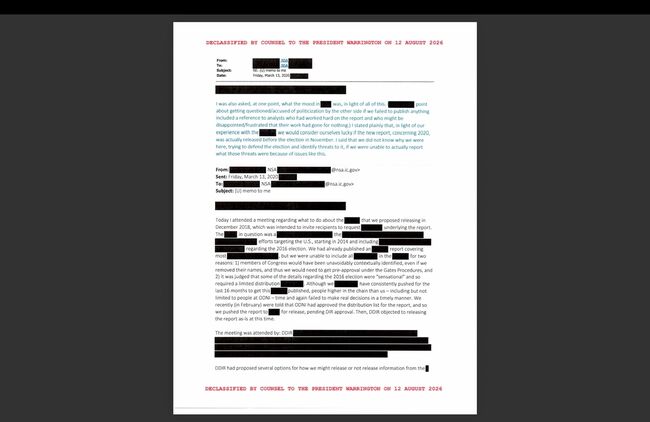 “'China’s Interference in U.S. Presidential Election': 16 Months of Reports to Trump Ignored”
Declassified documents from the U.S. National Security Agency (NSA) released by the White House Government Transparency Task Force on the 18th (local time). They contain emails among intelligence agen
“'China’s Interference in U.S. Presidential Election': 16 Months of Reports to Trump Ignored”
Declassified documents from the U.S. National Security Agency (NSA) released by the White House Government Transparency Task Force on the 18th (local time). They contain emails among intelligence agen
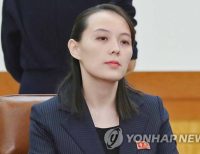
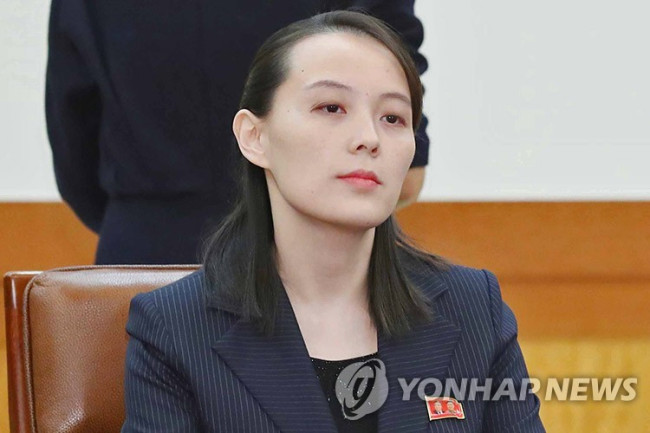 [Comprehensive] Kim Yo-jong: "Seoul’s Pitiful Plight Now That It Cannot Play War Games"… Mockery and Vitriol
Kim Yo-jong, Vice Department Director of the Workers' Party of Korea [Yonhap News] Kim Yo-jong, Vice Department Director of the Workers' Party of Korea and sister of North Korean leader Kim Jong-
[Comprehensive] Kim Yo-jong: "Seoul’s Pitiful Plight Now That It Cannot Play War Games"… Mockery and Vitriol
Kim Yo-jong, Vice Department Director of the Workers' Party of Korea [Yonhap News] Kim Yo-jong, Vice Department Director of the Workers' Party of Korea and sister of North Korean leader Kim Jong-
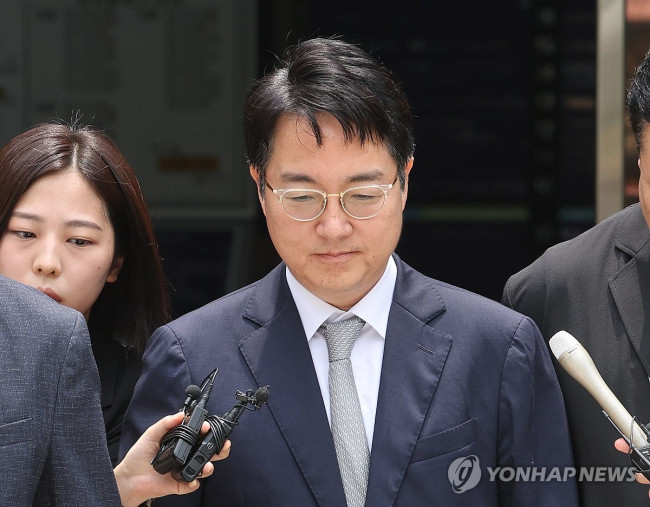 Shim Woo-jung indicted without detention for 'insurrection involvement'... Shim protests, claiming "disregard for evidence and legal principles"
Former Prosecutor General Sim Woo-jung [Yonhap News file photo]Former Prosecutor General Sim Woo-jung has been indicted on charges of participating in the December 3rd martial law insurrection and abu
Shim Woo-jung indicted without detention for 'insurrection involvement'... Shim protests, claiming "disregard for evidence and legal principles"
Former Prosecutor General Sim Woo-jung [Yonhap News file photo]Former Prosecutor General Sim Woo-jung has been indicted on charges of participating in the December 3rd martial law insurrection and abu
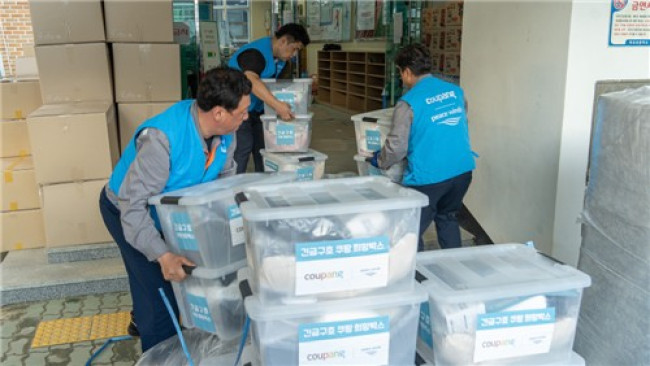 Coupang Donates 200 'Hope Boxes' to Flood Victims in Geoje
Support of 200 'Hope Boxes' [Courtesy of Coupang]Coupang announced on the 20th that it has provided 200 sets of 'Emergency Relief Coupang Hope Boxes' to Geoje, Gyeongsangnam-do.The previous day, Coupa
Coupang Donates 200 'Hope Boxes' to Flood Victims in Geoje
Support of 200 'Hope Boxes' [Courtesy of Coupang]Coupang announced on the 20th that it has provided 200 sets of 'Emergency Relief Coupang Hope Boxes' to Geoje, Gyeongsangnam-do.The previous day, Coupa
 [Park Myung-mi's Kyushu Travel] ② Kaiseki Cuisine, Eating a Garden in a Bowl
When you first encounter kaiseki cuisine, it can feel like playing house. The dishes are small, yet there are so many of them. When I first came to Japan, the food that truly moved me was a cours
[Park Myung-mi's Kyushu Travel] ② Kaiseki Cuisine, Eating a Garden in a Bowl
When you first encounter kaiseki cuisine, it can feel like playing house. The dishes are small, yet there are so many of them. When I first came to Japan, the food that truly moved me was a cours
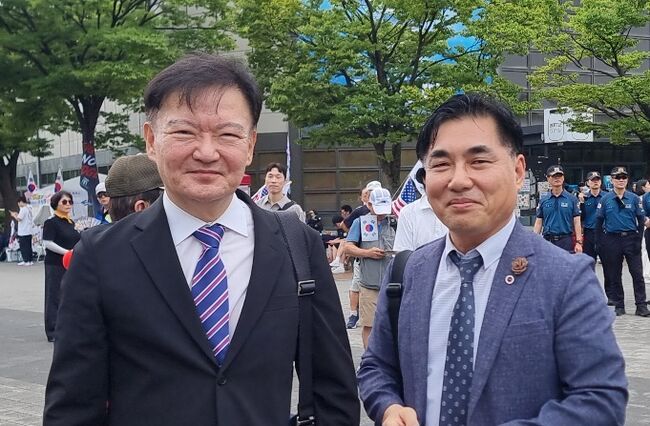 [Photo] Rep. Min Kyung-wook visits Olympic Park... "Restoring my honor after 6 years of being called a nutjob"
Min Kyung-wook, the person who ignited the movement to investigate election fraud. The sacrifice and courage of former National Assembly member Min Kyung-wook were instrumental in the creation of toda
[Photo] Rep. Min Kyung-wook visits Olympic Park... "Restoring my honor after 6 years of being called a nutjob"
Min Kyung-wook, the person who ignited the movement to investigate election fraud. The sacrifice and courage of former National Assembly member Min Kyung-wook were instrumental in the creation of toda
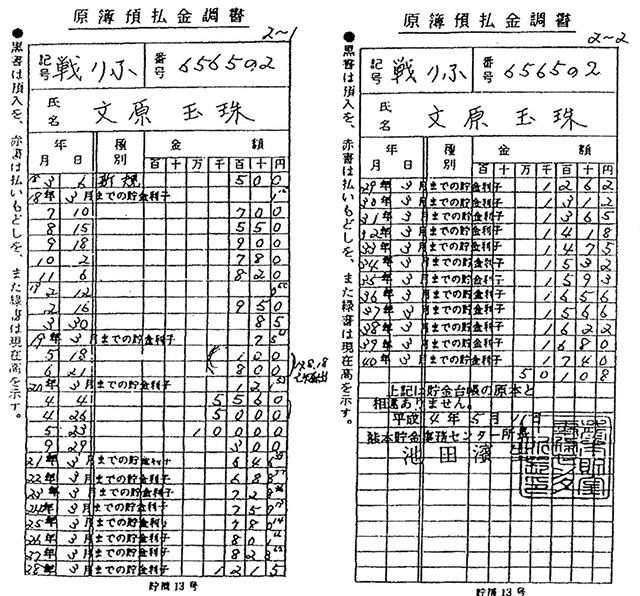 [Special Contribution: Songsan] How much was the 26,000 yen of "comfort woman" Moon Ok-ju worth?
Postal Savings Ledger of Moon Ok-juRecords of approximately 26,000 yen in military postal savings remain for Moon Ok-ju, who served as a "comfort woman" in Burma (present-day Myanmar). Looking at the
[Special Contribution: Songsan] How much was the 26,000 yen of "comfort woman" Moon Ok-ju worth?
Postal Savings Ledger of Moon Ok-juRecords of approximately 26,000 yen in military postal savings remain for Moon Ok-ju, who served as a "comfort woman" in Burma (present-day Myanmar). Looking at the
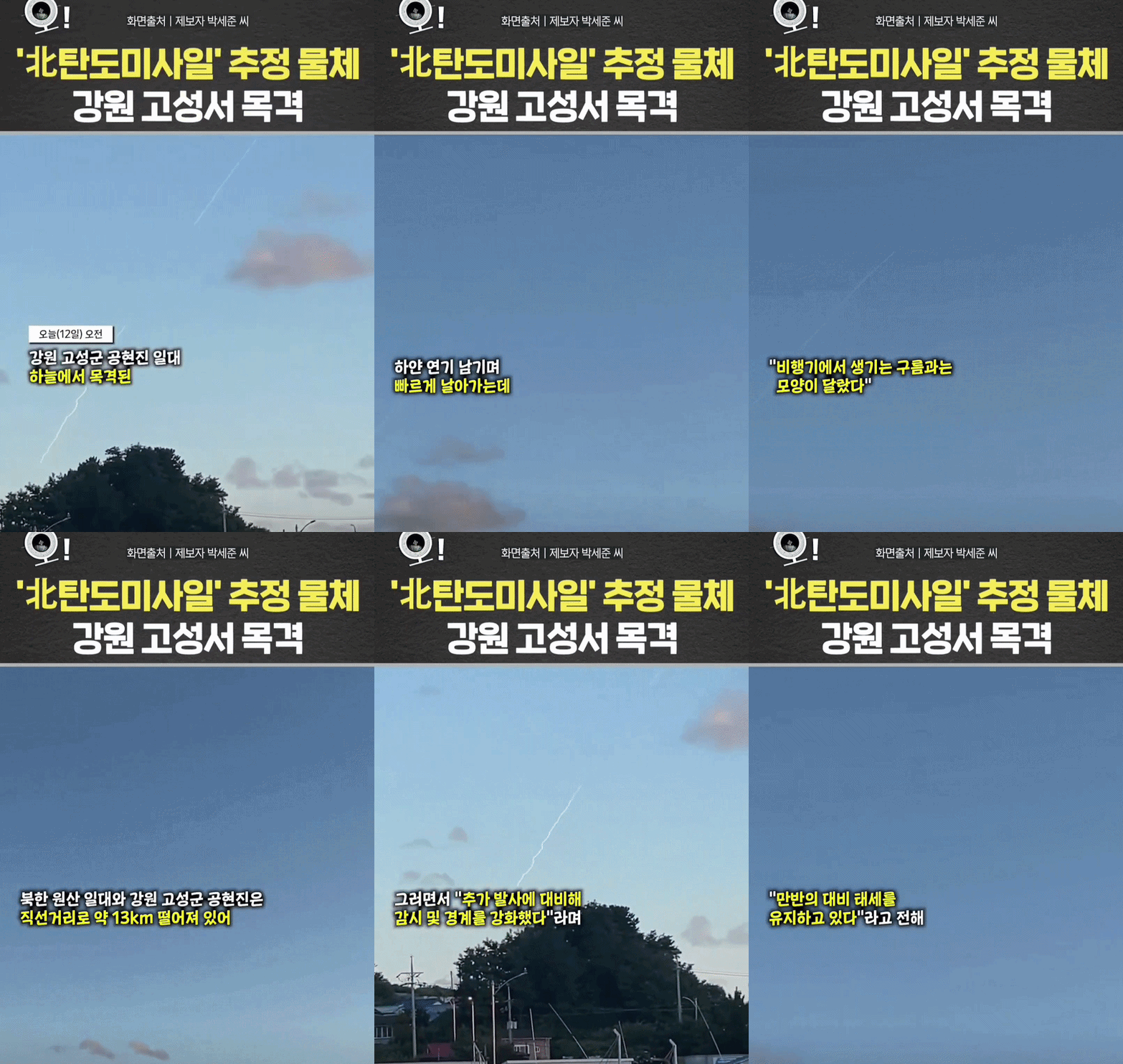 [Video] North Korean ballistic missile filmed by a civilian in Goseong, Gangwon-do
 [Editorial Cartoon] A Draconian Law That Undermines Freedom of Expression

 List
List