Actress Ha Young facing controversy regarding her great-grandfather [Photo=Yonhap News]I laughed when I read a comment on a historian's Facebook page suggesting that the reason actress Ha Young's great-grandfather hasn't been labeled a "pro-Japanese collaborator" is simply because "not enough research has been done." Well, if you keep digging until someone eventually becomes a pro-Japanese collaborator, I suppose you will eventually succeed.
That is the methodology of a gangster, not a historian. Labeling someone a pro-Japanese collaborator is not scholarship; it is proof of a political trial.
Isn't the humanities about reflecting on the past and moving toward the future by examining the choices humans made in complex historical situations? What kind of justice is it to judge the past by the standards of the present?
The recently revealed life of Ahn Sang-ho is impressive. He lost all eight of his siblings, his father at the age of four, and his mother at age ten. After moving to Seoul, his proficiency in Japanese caught people's attention and paved the way for his success, but he wanted to become a doctor, influenced by the deaths of his family members.
While working his way through school in Japan, he achieved excellent grades and passed the Japanese Ministry of Home Affairs' medical examination in 1903. Years later, he returned to Korea and became a royal physician due to his connection to treating Prince Imperial Yeongchin.
Lu Xun, a Chinese student studying abroad, attended Sendai Medical College around the same time. He, too, had lost his father to illness. However, believing that the spirit of the Chinese people needed to change rather than their bodies, he abandoned medicine to pursue literature.
When Ahn Sang-ho returned to Joseon in 1907, the outlook must have been bleak. Setting aside King Gojong, the state of Emperor Sunjong was dismal. It is widely rumored that Sunjong became mentally incapacitated after drinking poisoned tea, but there is no medical evidence for this. One cannot become like Sunjong just by drinking tea containing a lethal amount of opium.
Sunjong suffered from various disabilities. If you look at his symptoms one by one, they closely resemble autism spectrum disorder. Since he was constantly fed all sorts of herbal medicines from a young age to "cure" them, it is highly likely he suffered from heavy metal poisoning due to inappropriate prescriptions.
By 1907, when he met Ahn Sang-ho, Sunjong had lost all his teeth, lost his reproductive function, could not walk, and suffered from chronic digestive disorders. These symptoms are similar to mercury poisoning. What must have gone through Ahn Sang-ho's mind after he finished school at the Charity Medical College in Japan, which was centered on the British medical tradition, and returned to Joseon to examine Sunjong? Wasn't he looking into the future of the nation? It must have been suffocating.
We seem unable to face the reality of what the nation looked like when it was on the verge of collapse. We only look at it through the lens of the righteous armies fighting the Japanese to the end, or the images of people waving the Taegeukgi and shouting for independence. We try to find comfort in a fairy tale where indomitable Koreans never yielded to Japan.
Aren't you curious about why the people who lived in that era made the choices they did? Between the pro-Japanese anti-nationalists and the independence fighters, tens of millions of Koreans made their own different choices; how long must we view history only in black and white?
Ahn Sang-ho’s life resembles the universal life of a self-made Korean. It is a life where he achieved his dreams through sheer tenacity, refusing to yield to poverty. If he had been burning with the desire for wealth and vanity, plastering his name everywhere, it would have been easy to label him a pro-Japanese collaborator, but because he didn't do that, this confusing situation has arisen. It is a life that cannot be carelessly labeled as right or wrong. Do we truly have the right to judge Ahn Sang-ho? We should simply look at the life of a Joseon individual who lived intensely as it was.
◆ Author Kim Sung-min
Digital creator, coastal resident, dawn cyclist
What do you think of this article?

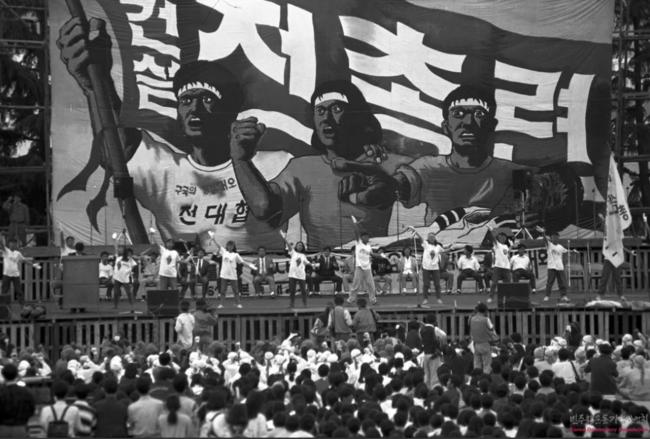 [Songsan Column | An 80-Year History of the Pro-North Left] ㉞ The Persistence of the Juche-Faction in 1990s Universities
Inauguration Ceremony of the 5th Jeondaehyop in 1991 By the 1990s, the university campus was no longer a place where massive protests erupted daily and the streets were filled with shouts, as was
[Songsan Column | An 80-Year History of the Pro-North Left] ㉞ The Persistence of the Juche-Faction in 1990s Universities
Inauguration Ceremony of the 5th Jeondaehyop in 1991 By the 1990s, the university campus was no longer a place where massive protests erupted daily and the streets were filled with shouts, as was
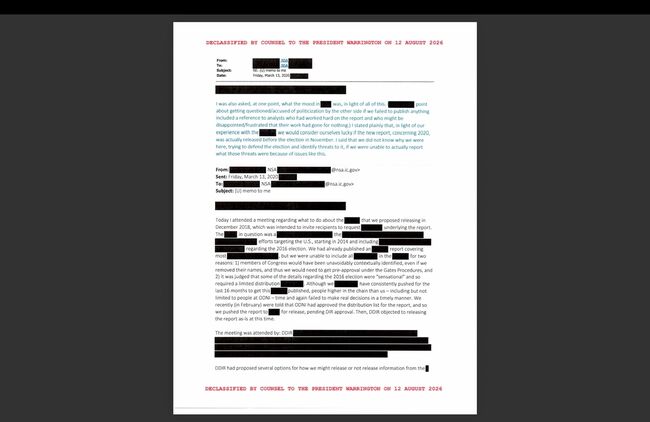 “'China’s Interference in U.S. Presidential Election': 16 Months of Reports to Trump Ignored”
Declassified documents from the U.S. National Security Agency (NSA) released by the White House Government Transparency Task Force on the 18th (local time). They contain emails among intelligence agen
“'China’s Interference in U.S. Presidential Election': 16 Months of Reports to Trump Ignored”
Declassified documents from the U.S. National Security Agency (NSA) released by the White House Government Transparency Task Force on the 18th (local time). They contain emails among intelligence agen
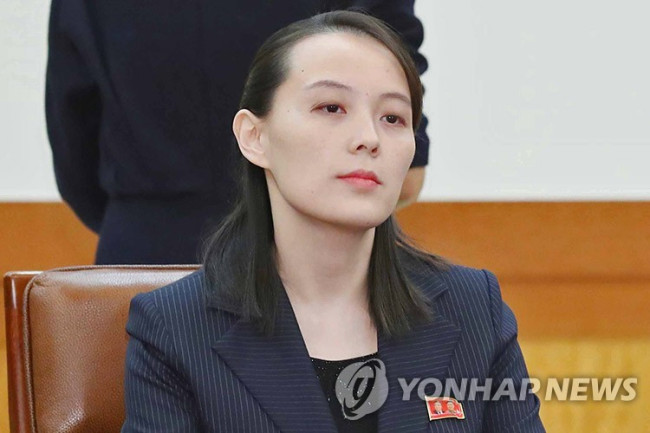 [Comprehensive] Kim Yo-jong: "Seoul’s Pitiful Situation, Unable to Play War Games"… Ridicule and Harsh Language
Kim Yo-jong, Vice Department Director of the Workers' Party of North Korea [Yonhap News] Kim Yo-jong, Vice Department Director of the Workers' Party and sister of North Korean leader Kim Jong-un,
[Comprehensive] Kim Yo-jong: "Seoul’s Pitiful Situation, Unable to Play War Games"… Ridicule and Harsh Language
Kim Yo-jong, Vice Department Director of the Workers' Party of North Korea [Yonhap News] Kim Yo-jong, Vice Department Director of the Workers' Party and sister of North Korean leader Kim Jong-un,
 Shim Woo-jung indicted without detention for 'insurrection involvement'... Shim protests, claiming "disregard for evidence and legal principles"
Former Prosecutor General Shim Woo-jung [Yonhap News file photo]Former Prosecutor General Shim Woo-jung has been indicted on charges of participating in the December 3rd martial law insurrection and a
Shim Woo-jung indicted without detention for 'insurrection involvement'... Shim protests, claiming "disregard for evidence and legal principles"
Former Prosecutor General Shim Woo-jung [Yonhap News file photo]Former Prosecutor General Shim Woo-jung has been indicted on charges of participating in the December 3rd martial law insurrection and a
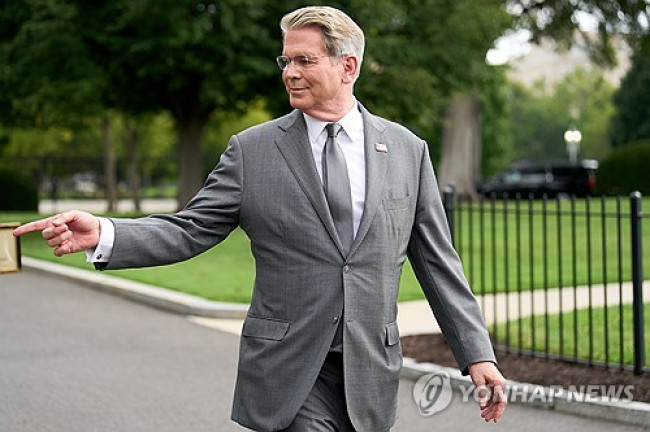 US Treasury Secretary: "Treasury Buybacks Could Exceed $4 Billion Per Operation… We Have Many Policy Tools"
U.S. Treasury Secretary Scott Bessent [AP=Yonhap News]U.S. Treasury Secretary Scott Bessent stated on the 20th (local time) that the volume of Treasury buybacks could exceed $4 billion (5.58 trillion
US Treasury Secretary: "Treasury Buybacks Could Exceed $4 Billion Per Operation… We Have Many Policy Tools"
U.S. Treasury Secretary Scott Bessent [AP=Yonhap News]U.S. Treasury Secretary Scott Bessent stated on the 20th (local time) that the volume of Treasury buybacks could exceed $4 billion (5.58 trillion
 [Park Myung-mi's Kyushu Travel] ② Kaiseki Cuisine, Eating a Garden in a Bowl
When you first encounter kaiseki cuisine, it can feel like playing house. The dishes are small, yet there are so many of them. When I first came to Japan, the food that truly moved me was a cours
[Park Myung-mi's Kyushu Travel] ② Kaiseki Cuisine, Eating a Garden in a Bowl
When you first encounter kaiseki cuisine, it can feel like playing house. The dishes are small, yet there are so many of them. When I first came to Japan, the food that truly moved me was a cours
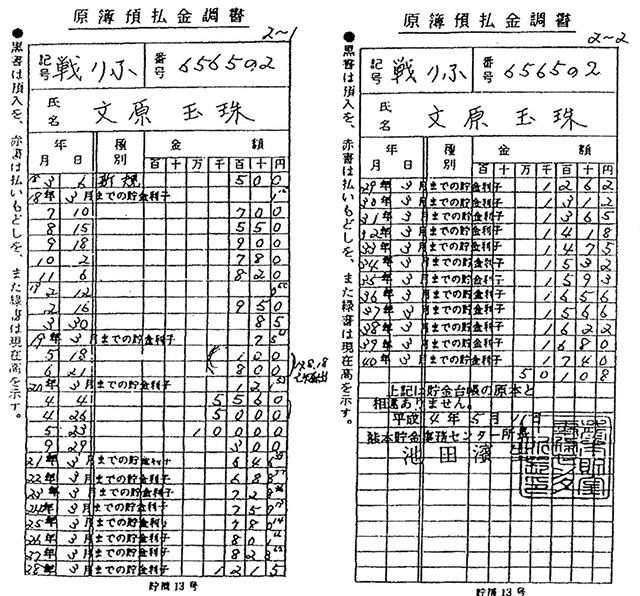 [Special Contribution: Songsan] How much was the 26,000 yen of "comfort woman" Moon Ok-ju worth?
Postal Savings Ledger of Moon Ok-juRecords of approximately 26,000 yen in military postal savings remain for Moon Ok-ju, who served as a "comfort woman" in Burma (present-day Myanmar). Looking at the
[Special Contribution: Songsan] How much was the 26,000 yen of "comfort woman" Moon Ok-ju worth?
Postal Savings Ledger of Moon Ok-juRecords of approximately 26,000 yen in military postal savings remain for Moon Ok-ju, who served as a "comfort woman" in Burma (present-day Myanmar). Looking at the
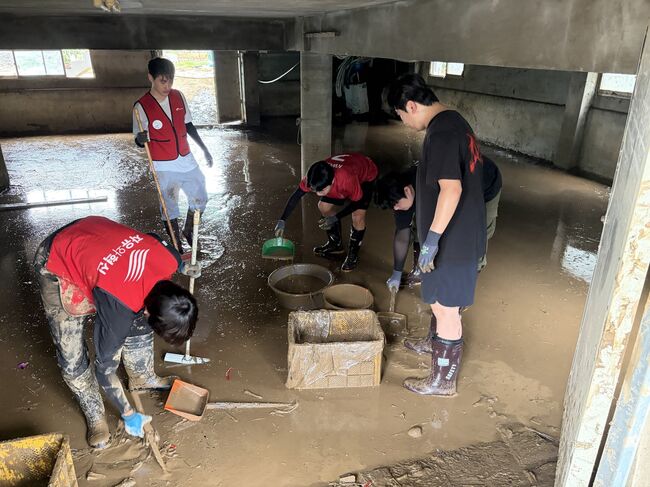 [Photo] Liberty and Innovation Geoje Flood Recovery Support
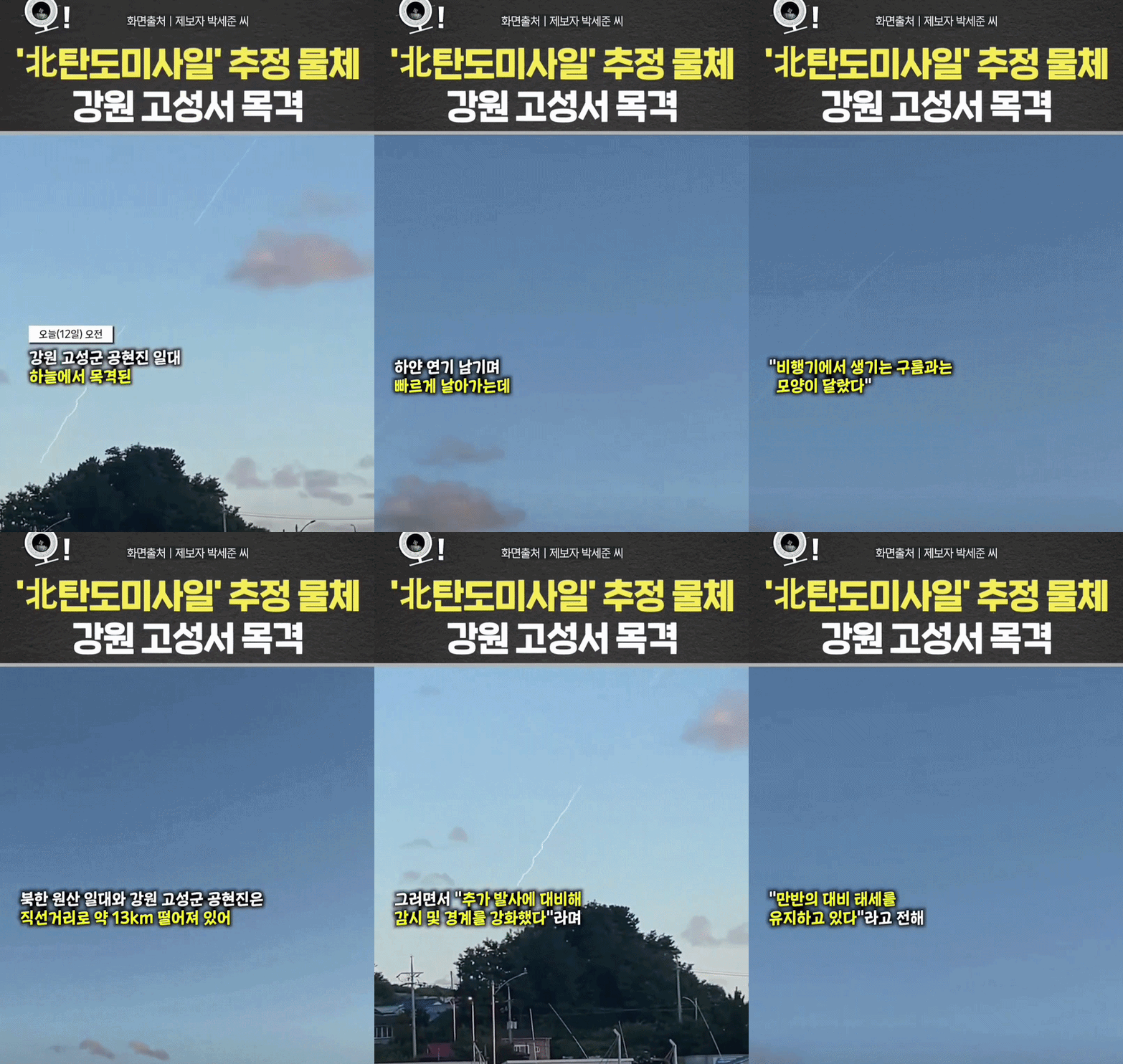 [Video] North Korean ballistic missile filmed by a civilian in Goseong, Gangwon-do
 [Editorial Cartoon] A Draconian Law That Undermines Freedom of Expression

 List
List