The Hyundai Motor Company labor union (Hyundai Motor branch of the Korean Metal Workers' Union) launched a full-scale strike on the 21st due to difficulties in this year's wage negotiations.
This marks the first time in 10 years, since the 2016 collective bargaining agreement, that the Hyundai Motor union has held an eight-hour full-scale strike.
◇ All Hyundai Motor production lines suspended for 16 hours today
Following the union’s full-scale strike guidelines, members of the morning shift for technical (production) roles, who usually start work at 6:45 AM, did not report to work at all. The afternoon shift, which starts at 3:30 PM, is also not reporting to work.
As a result, all production lines at the Ulsan, Jeonju, and Asan plants are completely halted for the day.
Because both the morning and afternoon shifts are striking for eight hours each, the production lines will effectively be suspended for 16 hours today. Including both production and office staff, approximately 39,000 union members are participating in the strike.
Since the initial bargaining session on May 6th, the union has frequently held partial strikes lasting two to six hours to pressure management, but this is the first time an eight-hour strike has been called.
Furthermore, it is the first full-scale strike in 10 years since the one-day full strike held during the 2016 wage negotiations (September 26th).
The union leadership and delegates traveled to the Hyundai Motor Group headquarters in Yangjae-dong, Seoul, to participate in the 'Automotive Industry Joint Strike Rally' hosted by the Metal Workers' Union to exert direct pressure on the company.
◇ 60 hours of cumulative strikes this year... 55,000 units in production losses
With today's full-scale strike, the cumulative strike time for the Hyundai Motor union this year has increased to 60 hours. The total duration of production line shutdowns is double that, at 120 hours.
The automotive industry estimates that given Hyundai Motor produces approximately 460 vehicles per hour, the cumulative production loss has reached 55,200 units, with the resulting loss in sales revenue—based on the average vehicle price—surpassing 2.3 trillion won.
The union has already announced partial strikes of four hours each on the 24th and 25th, so these losses are expected to grow further.
The core issue is the ongoing deadlock in this year's wage negotiations.
Labor and management resumed negotiations on the 18th, roughly 40 days after failing to reach an agreement during the 15th round of talks, but they were once again unable to bridge their differences.
Lee Jong-cheol, the union branch head, stated, "We will only resume negotiations when a progressive proposal is presented," leaving the date for the next meeting between labor and management leadership uncertain.
The year with the highest number of strikes for the Hyundai Motor union in the last decade was 2016, which saw 106 hours of strikes by union standards and 212 hours of production line shutdowns.
◇ Standoff over bonus increases, reinstatement of dismissed workers, and extended retirement age
The three main points of contention this year are a 50% increase in bonuses, the reinstatement of workers dismissed for illegal activities during past union operations, and an extension of the retirement age.
These are demands the union has made separately from wage hikes in this year's negotiations.
The company maintains that these issues are irrelevant to this year's wage negotiations, that there is no justification for reinstating legally dismissed workers, and that it is difficult for labor and management to conclude on retirement age extensions before they are discussed in the political sphere.
However, the union argues that since fixed wages, including base salary, account for only 54.8% of a member's total compensation, they are forced to rely on overtime and special shifts to maintain a living wage, thus necessitating a bonus increase.
The union also maintains that there are past precedents for mutually agreed retirement age extensions and that the reinstatement of dismissed workers is essential for building trust in labor-management relations.
"The company's retained earnings as of last year reached 101.3 trillion won, meaning it is more than capable of covering the costs of bonus increases and retirement age extensions," the union stated.
Conversely, the company maintains its stance that it cannot accept union demands without a legal basis or reasonable criteria.
As such, although working-level staff have maintained communication since official negotiations broke down, no progress has been made.
The union plans to hold a Central Disputes Countermeasure Committee meeting on the 25th to discuss the possibility of further strikes if the company does not present a new proposal.

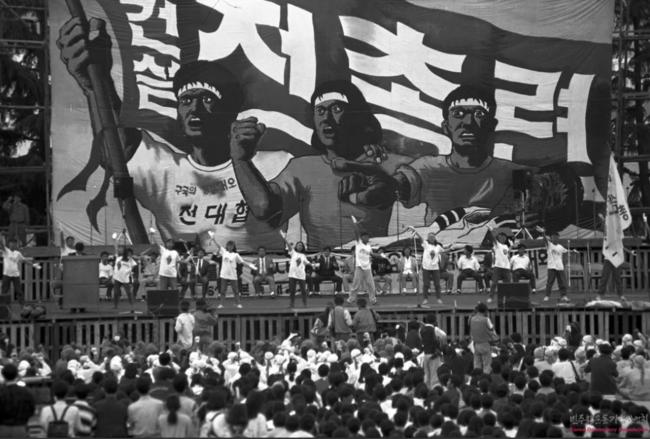 [Songsan Column | An 80-Year History of the Pro-North Left] ㉞ The Persistence of the Juche-Faction in 1990s Universities
Inauguration Ceremony of the 5th Jeondaehyop in 1991 By the 1990s, the university campus was no longer a place where massive protests erupted daily and the streets were filled with shouts, as was
[Songsan Column | An 80-Year History of the Pro-North Left] ㉞ The Persistence of the Juche-Faction in 1990s Universities
Inauguration Ceremony of the 5th Jeondaehyop in 1991 By the 1990s, the university campus was no longer a place where massive protests erupted daily and the streets were filled with shouts, as was
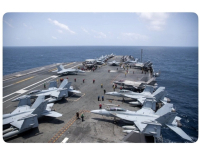
 U.S. Aircraft Carriers 'Rotate' in the Middle East… USS George Washington Begins Operations as USS Abraham Lincoln Departs
The nuclear-powered aircraft carrier USS George Washington arrived in the Middle East on the 20th (local time) and commenced operations, while the USS Abraham Lincoln, which had been deployed to the r
U.S. Aircraft Carriers 'Rotate' in the Middle East… USS George Washington Begins Operations as USS Abraham Lincoln Departs
The nuclear-powered aircraft carrier USS George Washington arrived in the Middle East on the 20th (local time) and commenced operations, while the USS Abraham Lincoln, which had been deployed to the r
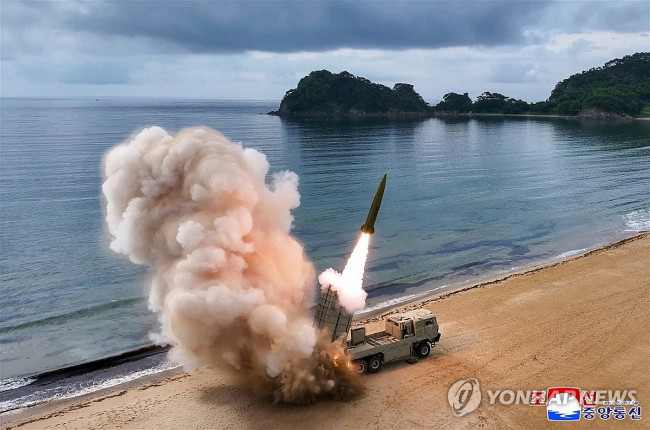 North Korea Remains 'Silent' Again After Firing a Barrage of Missiles… Third Time in Two Weeks
Kim Jong Un observes a weapons test organized by national defense research institutions [Pyongyang=Yonhap News/KCNA]North Korean state media remained silent again on the day after the country launched
North Korea Remains 'Silent' Again After Firing a Barrage of Missiles… Third Time in Two Weeks
Kim Jong Un observes a weapons test organized by national defense research institutions [Pyongyang=Yonhap News/KCNA]North Korean state media remained silent again on the day after the country launched
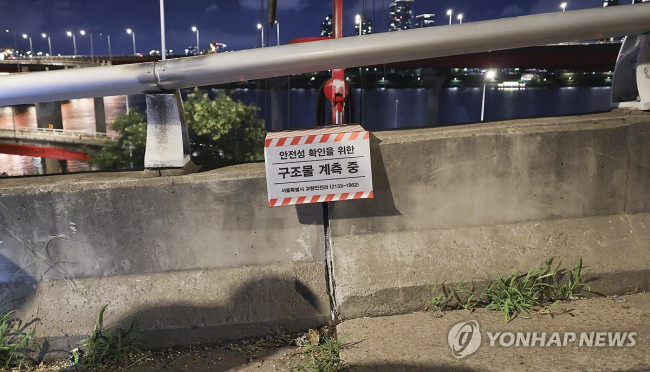 Seoul Metropolitan Government: "Conclusion Reached That Seongsu Bridge Height Difference Poses No Safety Risk... Preemptive Reinforcement Measures to Be Taken"
Monitoring notice board installed on the Seongsu Bridge ramp where a "step difference" occurred. A monitoring-related notice board was installed on the B-ramp at the southern end of Seongsu Bridge in
Seoul Metropolitan Government: "Conclusion Reached That Seongsu Bridge Height Difference Poses No Safety Risk... Preemptive Reinforcement Measures to Be Taken"
Monitoring notice board installed on the Seongsu Bridge ramp where a "step difference" occurred. A monitoring-related notice board was installed on the B-ramp at the southern end of Seongsu Bridge in
 Hyundai Motor Union stages first full-scale strike in 10 years… All plants 'come to a halt'
The Hyundai Motor Company labor union (Hyundai Motor branch of the Korean Metal Workers' Union) launched a full-scale strike on the 21st due to difficulties in this year's wage negotiations.This marks
Hyundai Motor Union stages first full-scale strike in 10 years… All plants 'come to a halt'
The Hyundai Motor Company labor union (Hyundai Motor branch of the Korean Metal Workers' Union) launched a full-scale strike on the 21st due to difficulties in this year's wage negotiations.This marks
 [Park Myung-mi's Kyushu Travel] ② Kaiseki Cuisine, Eating a Garden in a Bowl
When you first encounter kaiseki cuisine, it can feel like playing house. The dishes are small, yet there are so many of them. When I first came to Japan, the food that truly moved me was a cours
[Park Myung-mi's Kyushu Travel] ② Kaiseki Cuisine, Eating a Garden in a Bowl
When you first encounter kaiseki cuisine, it can feel like playing house. The dishes are small, yet there are so many of them. When I first came to Japan, the food that truly moved me was a cours
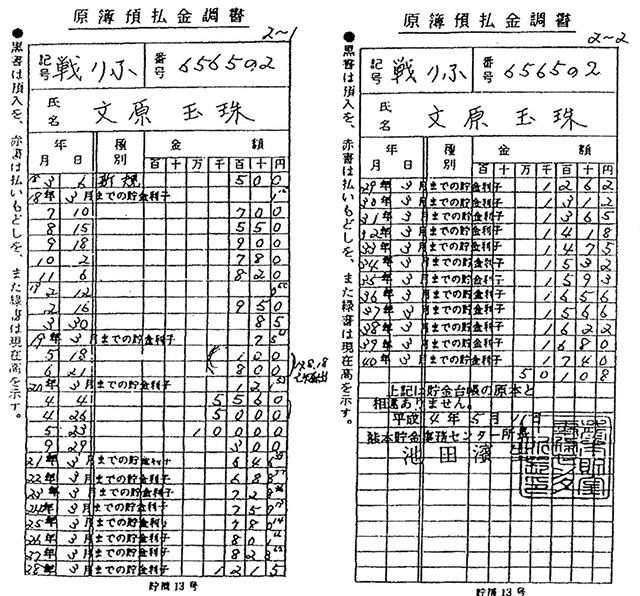 [Special Contribution: Songsan] How much was the 26,000 yen of "comfort woman" Moon Ok-ju worth?
Postal Savings Ledger of Moon Ok-juRecords of approximately 26,000 yen in military postal savings remain for Moon Ok-ju, who served as a "comfort woman" in Burma (present-day Myanmar). Looking at the
[Special Contribution: Songsan] How much was the 26,000 yen of "comfort woman" Moon Ok-ju worth?
Postal Savings Ledger of Moon Ok-juRecords of approximately 26,000 yen in military postal savings remain for Moon Ok-ju, who served as a "comfort woman" in Burma (present-day Myanmar). Looking at the
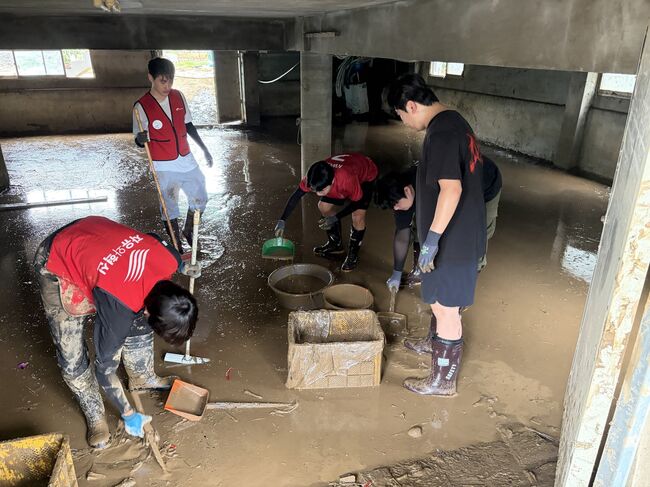 [Photo] Liberty and Innovation Geoje Flood Recovery Support
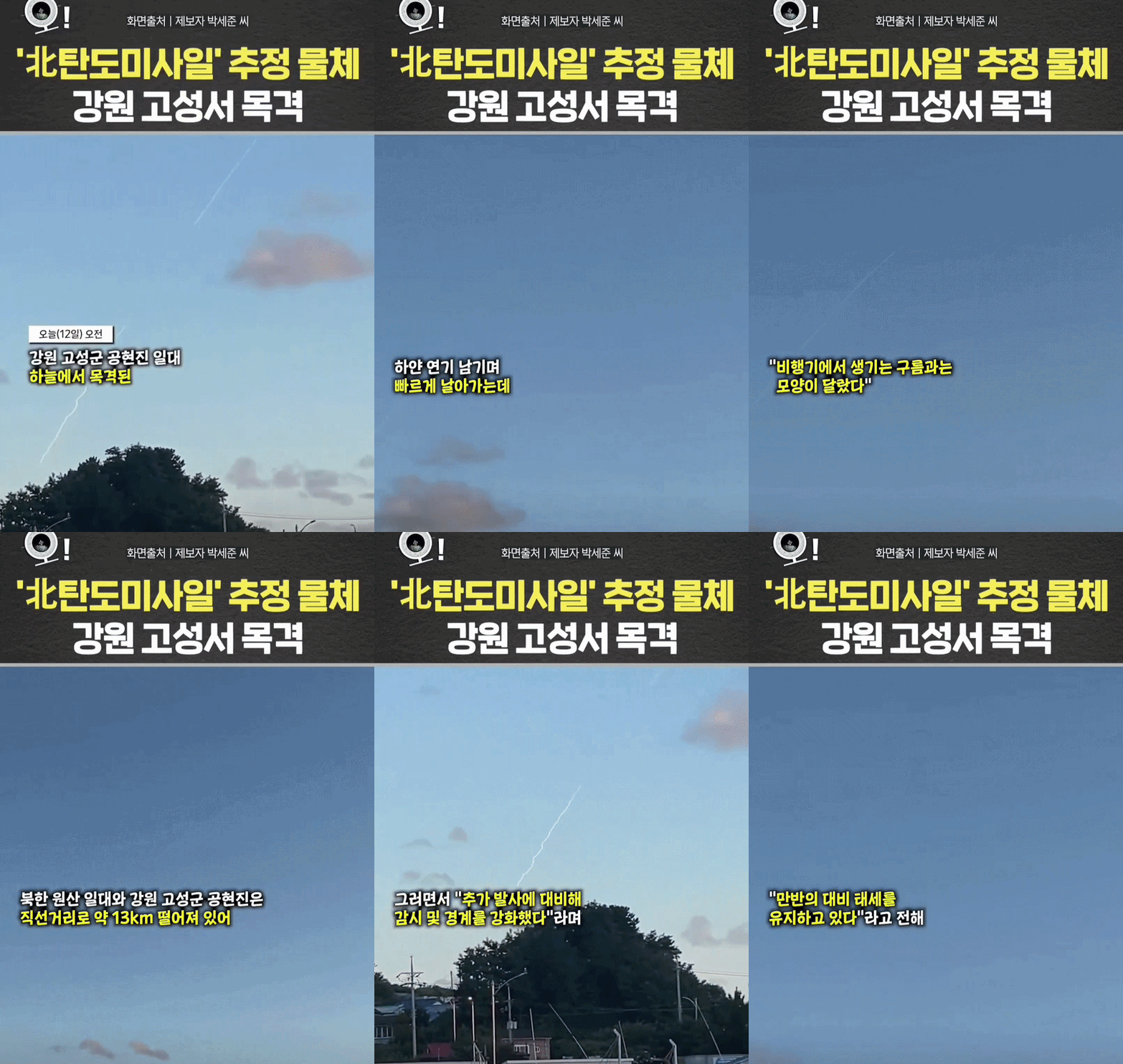 [Video] North Korean ballistic missile filmed by a civilian in Goseong, Gangwon-do
 [Editorial Cartoon] A Draconian Law That Undermines Freedom of Expression

 List
List