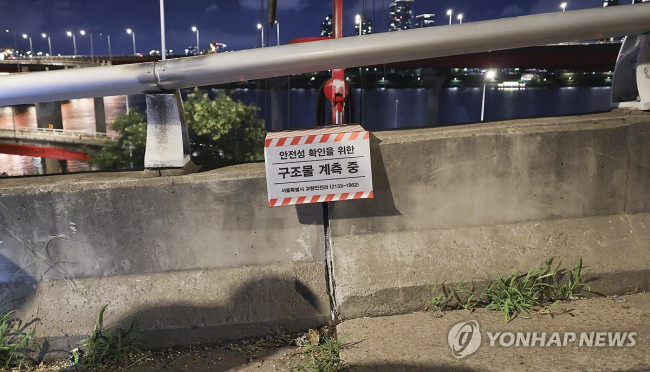
 Monitoring notice board installed on the Seongsu Bridge ramp where a "step difference" occurred. A monitoring-related notice board was installed on the B-ramp at the southern end of Seongsu Bridge in Gangnam-gu, Seoul, where a step difference was identified on the 29th of last month. [Yonhap News file photo]
The Seoul Metropolitan Government announced that an investigation commissioned to outside experts has confirmed that the step difference (height disparity) found at the entry ramp of Seongsu Bridge poses no safety issues.
However, the city has decided to reinforce these sections to alleviate public anxiety and address driving inconveniences.
Furthermore, a comprehensive inspection of bridges revealed similar step differences in 32 entry ramps across 11 bridges, including Seongsu Bridge; however, it was determined that there were no signs of ground subsidence.
On the 21st, the city issued a press release revealing the results of the "Bridge Connection Safety Advisory Group," which was formed on the 29th of last month and consists of 11 experts in the fields of structures, soil, roads, and construction.
The advisory group was formed following reports last month of a step difference on the Seongsu Bridge ramp.
Led by Kim Sang-hyo, a professor emeritus at Yonsei University, the group consists of 11 external experts: three in structures, three in soil mechanics, three in road engineering, and one in construction.
Through four meetings, the advisory group comprehensively reviewed on-site tests at Seongsu Bridge, soil investigation results, historical changes in step differences, environmental impacts, and the results of a comprehensive inspection of all Han River bridges.
In particular, the advisory group conducted a detailed analysis of surface wave testing, dynamic cone penetration testing, drilling surveys, and ground-penetrating radar (GPR) data for the three lanes around the southern B-ramp of Seongsu Bridge, which had raised concerns due to the significant step difference.
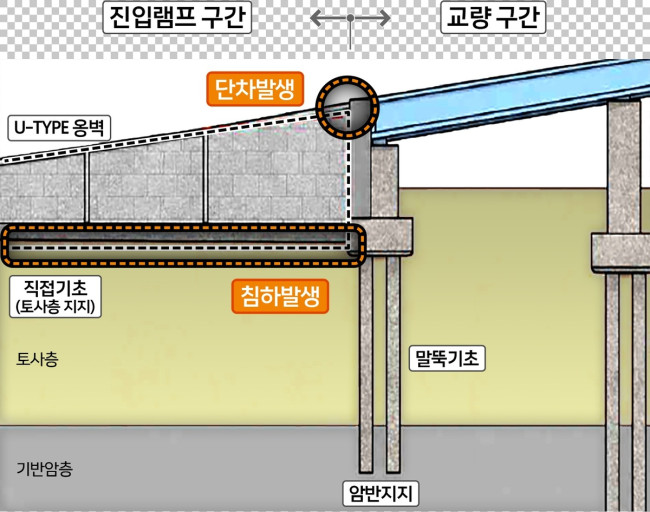 Conceptual diagram of the step difference at the Seongsu Bridge entry ramp [Provided by Seoul Metropolitan Government]
The analysis revealed that the ground beneath the ramp consists mainly of sandy soil fill, and the overall ground condition was rated "average or better."
There were no factors identified that could cause additional subsidence, such as underground voids or soil erosion caused by water flow.
The cause of the step difference was identified as a disparity in settlement due to the different foundation types of the two structures.
Unlike the bridge itself, which is supported by pile foundations on bedrock, the attached ramps are built on shallow foundations atop soil layers such as fill and sediment. It appears that the ramps are susceptible to ground settlement, while the bridge remains relatively stable, resulting in a height difference at the boundary.
The city explained, "This kind of step difference is a phenomenon that can occur in many bridges both domestically and internationally due to the difference in structural characteristics between bridge sections and earthen sections."
The advisory group’s comprehensive review of historical data and current ground conditions indicates that most of the settlement occurred early on during construction, and as 20 years have passed since completion, long-term settlement has stabilized, making the possibility of further subsidence minimal.
Additionally, the group reviewed factors such as the nearby Great Train Express (GTX) A-line construction, underground utilities, and fluctuations in Han River flood levels and groundwater, but found no factors that would influence the step difference.
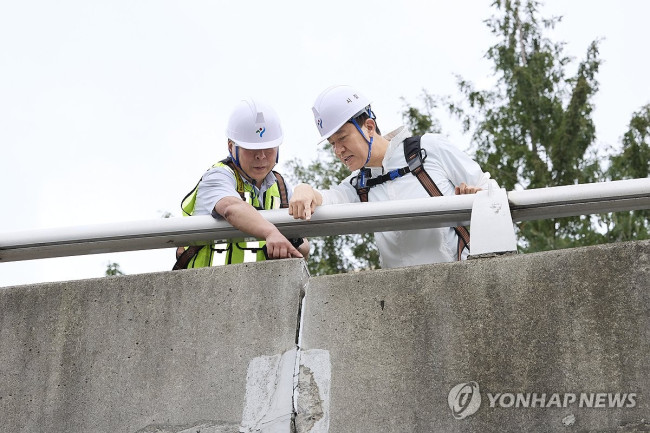 Mayor Oh Se-hoon inspecting the Seongsu Bridge connection ramp step difference. Mayor Oh Se-hoon visited Seongsu Bridge on the 10th of last month to inspect the section where the step difference occurred. [Yonhap News file photo]
To confirm whether similar issues exist on other Han River bridges and to address safety concerns, the city conducted a full inspection of 22 Han River bridges, excluding railroad bridges.
The survey confirmed step differences in 32 entry ramps across 11 bridges, but no underground voids were found during GPR testing. The identified differences were as follows: one location with 15 cm or more, four with 10–15 cm, nine with 5–10 cm, and 18 with less than 5 cm.
The largest step difference was measured at approximately 15 cm on the Olympic Expressway entry ramp.
The Seongsu Bridge ramp, initially reported to have a 9 cm difference, was measured at 11 cm during the investigation.
Additionally, a 10.5 cm difference was found on the Gayang Bridge ramp, and 10 cm differences were found on both the Wonhyo Bridge and Dongjak Bridge ramps.
Following the advisory group’s recommendations, the city conducted additional surface wave tests on bridges with step differences of 5 cm or more, but no signs indicative of ground subsidence, such as voids or soil loosening, were discovered.
"Experts in structures, soil, roads, and construction have comprehensively reviewed the on-site Seongsu Bridge tests, historical step changes, environmental factors, and the full survey of Han River bridges," said Kim Sang-hyo, head of the advisory group.
He added, "The step differences found in these entry ramps, including at Seongsu Bridge, are primarily caused by the disparity in settlement due to different foundation types. No signs of significant, progressive settlement or abnormalities that would affect structural integrity have been identified."
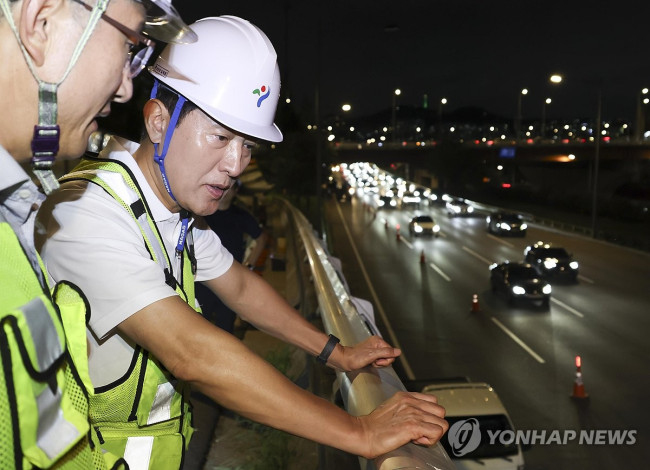 Mayor Oh Se-hoon observing the Seongsu Bridge ramp on-site test. Mayor Oh Se-hoon listens to an official's explanation during the on-site test conducted at the southern B-ramp of Seongsu Bridge in Gangnam-gu, Seoul, on the 29th of last month. [Yonhap News file photo]
Although structural safety has been confirmed, the city has decided to implement preventive reinforcements and enhanced management to alleviate public anxiety and improve safety.
The city emphasized, "This measure is not a repair due to structural defects, but a preemptive safety management step to further enhance ground integrity and reduce public anxiety and driving discomfort."
The city plans to preemptively reinforce the ground at the B-ramps of Seongsu Bridge and Olympic Bridge, where the step differences are relatively large, and will continue to observe the ground and the status of these steps through ongoing monitoring after reinforcement.
"This investigation has confirmed that there are no issues with the structural safety of the entry ramps of Han River bridges, including Seongsu Bridge," said Choi Jin-seok, Head of the Seoul Metropolitan Government's Disaster and Safety Management Office.
"The Seoul Metropolitan Government will not stop at just declaring them safe. We will proactively reinforce sections with large step differences, continue monitoring, and meticulously improve conditions to address citizens' anxiety and driving discomfort, ensuring that they can use these bridges with peace of mind," he added.

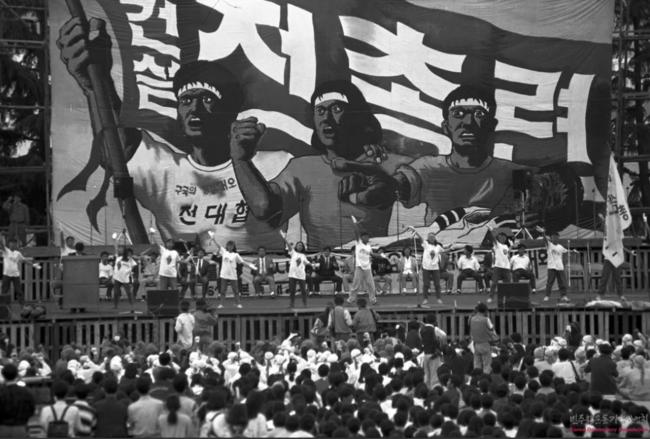 [Songsan Column | An 80-Year History of the Pro-North Left] ㉞ The Persistence of the Juche-Faction in 1990s Universities
Inauguration Ceremony of the 5th Jeondaehyop in 1991 By the 1990s, the university campus was no longer a place where massive protests erupted daily and the streets were filled with shouts, as was
[Songsan Column | An 80-Year History of the Pro-North Left] ㉞ The Persistence of the Juche-Faction in 1990s Universities
Inauguration Ceremony of the 5th Jeondaehyop in 1991 By the 1990s, the university campus was no longer a place where massive protests erupted daily and the streets were filled with shouts, as was
 U.S. Aircraft Carriers 'Rotate' in the Middle East… USS George Washington Begins Operations as USS Abraham Lincoln Departs
The nuclear-powered aircraft carrier USS George Washington arrived in the Middle East on the 20th (local time) and commenced operations, while the USS Abraham Lincoln, which had been deployed to the r
U.S. Aircraft Carriers 'Rotate' in the Middle East… USS George Washington Begins Operations as USS Abraham Lincoln Departs
The nuclear-powered aircraft carrier USS George Washington arrived in the Middle East on the 20th (local time) and commenced operations, while the USS Abraham Lincoln, which had been deployed to the r
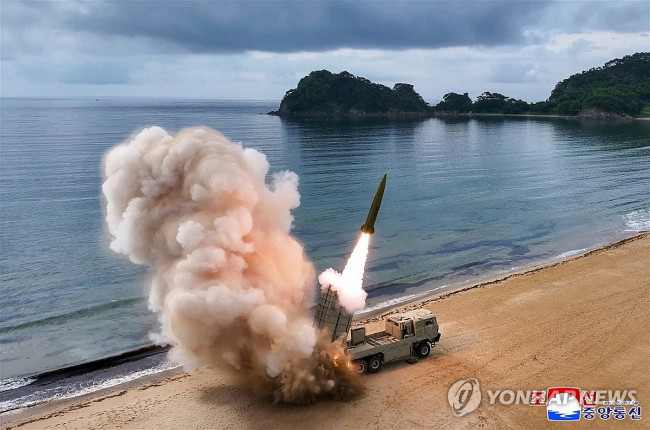 North Korea Remains 'Silent' Again After Firing a Barrage of Missiles… Third Time in Two Weeks
Kim Jong Un observes a weapons test organized by national defense research institutions [Pyongyang=Yonhap News/KCNA]North Korean state media remained silent again on the day after the country launched
North Korea Remains 'Silent' Again After Firing a Barrage of Missiles… Third Time in Two Weeks
Kim Jong Un observes a weapons test organized by national defense research institutions [Pyongyang=Yonhap News/KCNA]North Korean state media remained silent again on the day after the country launched
 Hyundai Motor Union stages first full-scale strike in 10 years… All plants 'come to a halt'
The Hyundai Motor Company labor union (Hyundai Motor branch of the Korean Metal Workers' Union) launched a full-scale strike on the 21st due to difficulties in this year's wage negotiations.This marks
Hyundai Motor Union stages first full-scale strike in 10 years… All plants 'come to a halt'
The Hyundai Motor Company labor union (Hyundai Motor branch of the Korean Metal Workers' Union) launched a full-scale strike on the 21st due to difficulties in this year's wage negotiations.This marks
 [Park Myung-mi's Kyushu Travel] ② Kaiseki Cuisine, Eating a Garden in a Bowl
When you first encounter kaiseki cuisine, it can feel like playing house. The dishes are small, yet there are so many of them. When I first came to Japan, the food that truly moved me was a cours
[Park Myung-mi's Kyushu Travel] ② Kaiseki Cuisine, Eating a Garden in a Bowl
When you first encounter kaiseki cuisine, it can feel like playing house. The dishes are small, yet there are so many of them. When I first came to Japan, the food that truly moved me was a cours
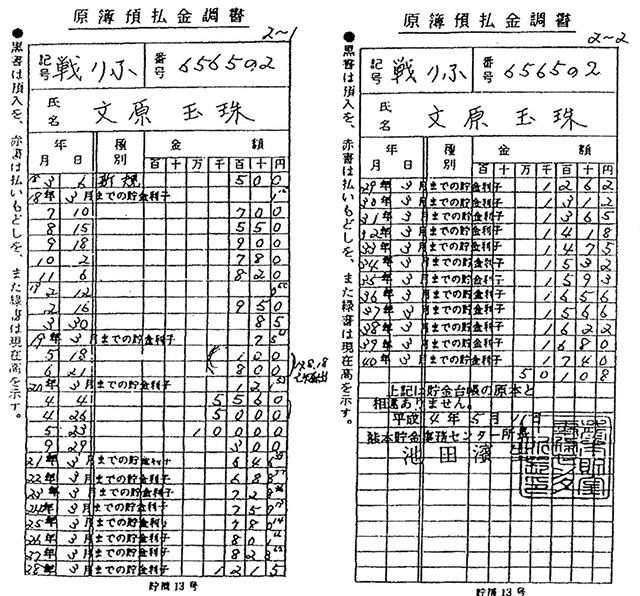 [Special Contribution: Songsan] How much was the 26,000 yen of "comfort woman" Moon Ok-ju worth?
Postal Savings Ledger of Moon Ok-juRecords of approximately 26,000 yen in military postal savings remain for Moon Ok-ju, who served as a "comfort woman" in Burma (present-day Myanmar). Looking at the
[Special Contribution: Songsan] How much was the 26,000 yen of "comfort woman" Moon Ok-ju worth?
Postal Savings Ledger of Moon Ok-juRecords of approximately 26,000 yen in military postal savings remain for Moon Ok-ju, who served as a "comfort woman" in Burma (present-day Myanmar). Looking at the
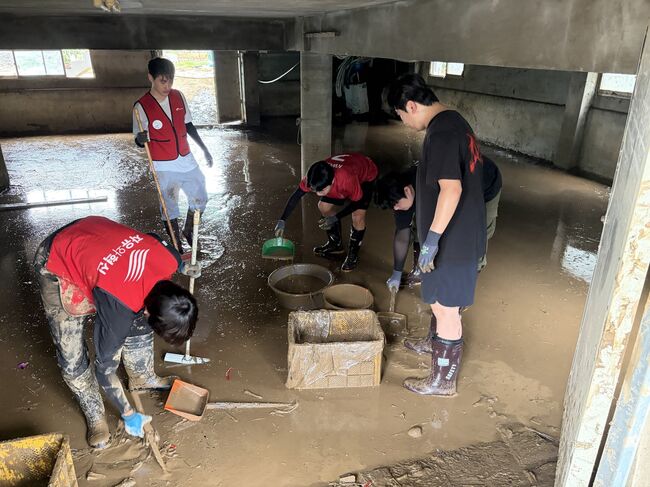 [Photo] Liberty and Innovation Geoje Flood Recovery Support
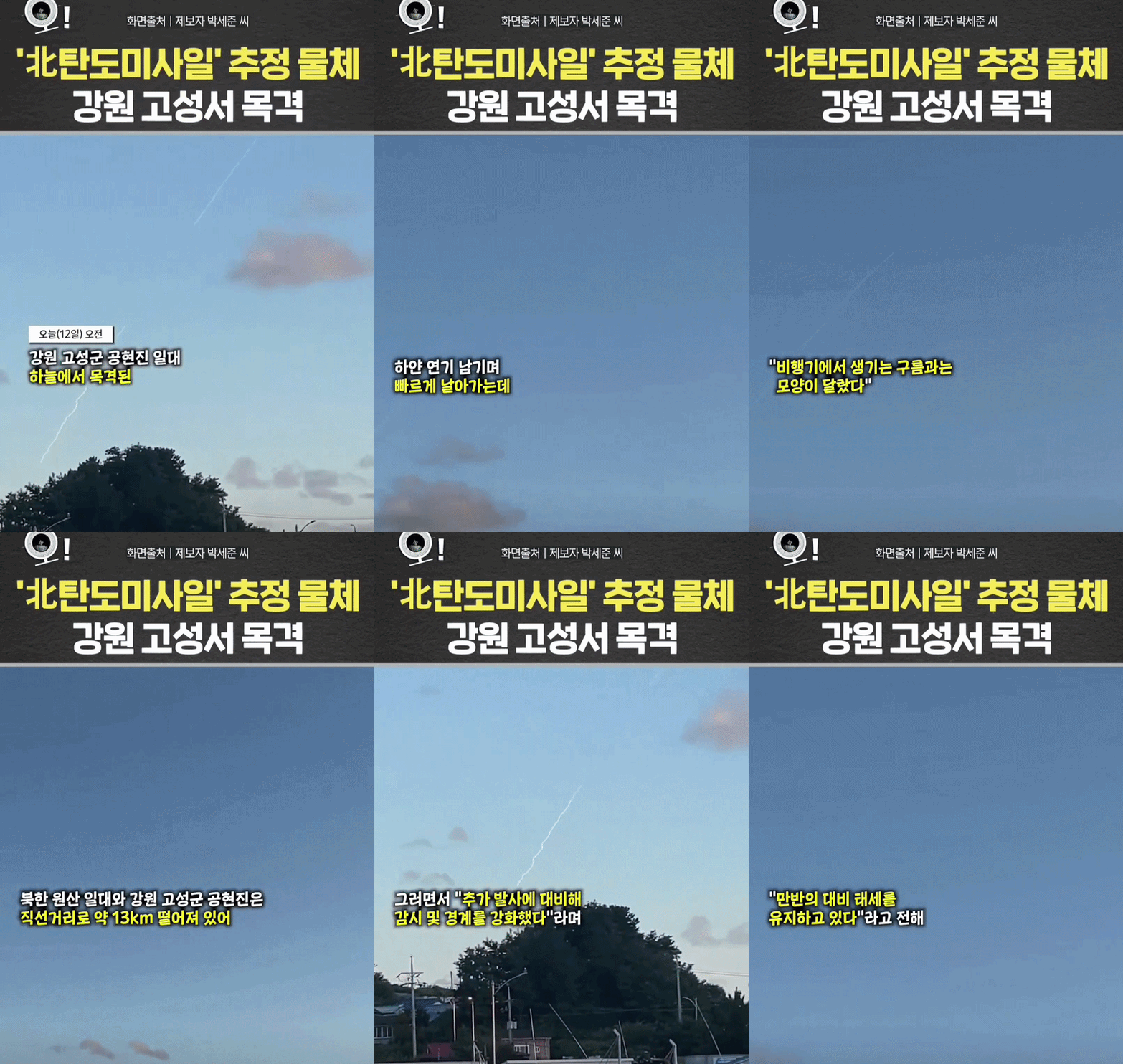 [Video] North Korean ballistic missile filmed by a civilian in Goseong, Gangwon-do
 [Editorial Cartoon] A Draconian Law That Undermines Freedom of Expression

 List
List