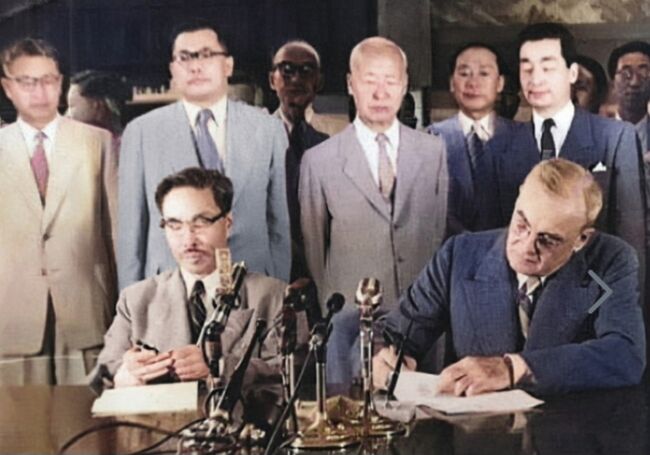
 The 1954 signing ceremony of the Mutual Defense Treaty Between the United States and the Republic of Korea. A moment when President Syngman Rhee’s perseverance bore fruit.
1. The Encounter and Genesis of Korea-U.S. Relations: Enlightenment and Civilization Born Amidst Conflict and Tribulation
The historical point of contact between the Korean Peninsula and the United States began in the mid-19th century, during the expansion of Western powers into East Asia. The General Sherman incident in 1866, when a U.S. merchant ship sailed up the Taedong River demanding trade, and the 1871 Shinmiyangyo (United States expedition to Korea), where Joseon’s resolve to reject foreign influence clashed with American demands for the opening of ports, demonstrate that the early stages of bilateral relations were defined by conflict and vigilance.
At the time, the Joseon court, plagued by intellectual inertia, incompetence, and corruption, lagged behind neighboring countries like Japan in opening up to the world. Its inability to respond flexibly to the shifting global landscape accelerated the nation's path to ruin.
The 1882 Treaty of Peace, Amity, Commerce, and Navigation between Korea and the United States marked a groundbreaking turning point. The United States rejected the "tributary state" clause claimed by the Qing Dynasty, clearly recognizing Joseon as an independent sovereign nation in the treaty text.
Amidst the encroachment of foreign powers, Emperor Gojong placed an excessive degree of hope in the United States as a massive maritime force; however, in the context of the international politics of that era, the U.S. had little interest in direct rule or excessive intervention on the Korean Peninsula.
Nevertheless, those who played a decisive role in delivering modern civilization to the people of Joseon, who were in dire need of enlightenment, were American Protestant missionaries. Beginning with medical missionary H. N. Allen in 1884, figures such as H. G. Appenzeller and H. G. Underwood set foot on Korean soil in 1885. They established churches, schools, and hospitals across the country, transplanting modern education and medical systems alongside the spread of the Gospel.
Over the course of a century, from 1884 to the 1970s, approximately 3,000 missionaries were sent to this land, dedicating themselves to fulfilling their God-given mission despite enduring all sorts of hardships and sacrifices in a strange land they had never visited before. Even today, many missionaries and their succeeding generations rest in the Yanghwajin Foreign Missionary Cemetery, watching over the Republic of Korea.
The spirit and ideals of the United States are well-reflected in the 1620 Mayflower Compact and the 1845 concept of "Manifest Destiny." The former represents the Puritan spirit that served as the foundational ideology of the U.S. founding, planting the seeds of the liberal democratic principles that underpin the Declaration of Independence and the Constitution. The latter is rooted in the intense ideological and moral conviction that, as a guardian of freedom, the expansion of American-style democracy and liberty is both the will of God and a historical mission.
Educational and Cultural Development: Numerous educational institutions were established to foster talent, including Appenzeller’s Pai Chai Hakdang, Underwood’s Yonhi College, and Scranton’s Ewha Hakdang. Missionaries took the lead in eradicating illiteracy through Korean language education by translating the Bible into Hangul, thereby enlightening the consciousness of the public.
Medical, Diplomatic, and Advisory Contributions: As Emperor Gojong’s physician, H. N. Allen founded Gwanghyewon (Jejungwon), laying the foundation for modern medicine, while H. B. Hulbert served as a diplomatic advisor who championed Joseon’s independence and the excellence of the Hangul script to the world, also supporting the independence movement.
Syngman Rhee and the Missionaries: Imprisoned in Hanseong Prison, Syngman Rhee was rescued through the help of missionaries, which enabled him to study in the United States—a turning point that later allowed him to lead the movement for South Korea's independence on the international diplomatic stage.
2. Tribulation, the Independence Movement, and the Establishment of the Republic of Korea
In the early 20th century, major powers vied for control over the Korean Peninsula. In 1905, the United States pursued a realist foreign policy based on national interest through the Taft-Katsura Agreement, tacitly acknowledging Japan’s dominance over the peninsula. Consequently, the Korean Peninsula became a colony of Imperial Japan.
This served as a stern lesson that national independence must be protected by one’s own strength—through national wealth and military power—and that preserving sovereignty through diplomacy alone has clear limitations.
However, overseas Koreans did not abandon the diplomatic struggle for independence.
The First Korean Congress in Philadelphia (April 1919): Held immediately after the March First Independence Movement, this congress proclaimed the vision of building an independent nation based on liberal democratic ideals.
Independence Movement via Diplomacy: Syngman Rhee carried out independence activities in Hawaii and the U.S. mainland, providing funds to the Provisional Government in Shanghai and persuading American political circles of the legitimacy of Korea’s independence. Notably, his 1941 book, Japan Inside Out, published on the eve of the Pacific War, accurately predicted Japan’s invasion of the Pacific and shocked American society.
Cooperation between the Korean Liberation Army and the OSS: The Korean Liberation Army planned operations to advance into the Korean Peninsula in coordination with the U.S. Office of Strategic Services (OSS), seeking practical military cooperation.
Following America’s victory in the Pacific War, liberation was achieved on August 15, 1945, but the peninsula was divided along the 38th parallel. Despite domestic and international chaos surrounding the trusteeship, a general election for the Constitutional Assembly under UN supervision was held on May 10, 1948. Following the enactment of the liberal democratic Constitution on July 17, the establishment of the Republic of Korea was officially proclaimed on August 15.
This was a historical event where, for the first time in the history of the Korean Peninsula, a republican system defined by liberal democracy and a market economy bore fruit.
3. The Korean War and the Mutual Defense Treaty: The Birth of a "Blood Alliance"
Just two years after the founding of the Republic of Korea, the Korean War broke out on June 25, 1950, through the collusion of Soviet, Chinese, and North Korean communist forces. In a crisis where the very survival of the Republic was at stake, the U.S. convened the UN Security Council, led a coalition of 16 nations, and repelled the invaders. Through this war, which cost over 50,000 casualties and defended freedom with blood, the Korea-U.S. relationship was elevated from mere allies to a "blood alliance."
During the negotiations for the 1953 armistice, President Syngman Rhee, fearing a renewed communist invasion after the withdrawal of U.S. forces, persistently pressured and persuaded the United States. As a result, the Mutual Defense Treaty was signed in October 1953. This treaty serves as a legal and military mechanism for the U.S. to guarantee South Korea's security; for the past 70 years, it has functioned as the cornerstone that has deterred war on the peninsula and enabled the Republic’s stable freedom and economic prosperity.
In the postwar period, the U.S. not only provided massive economic aid but also supported the dispatch of numerous students and technicians, helping South Korea cultivate the human resources needed for industrialization and modernization.
Based on this foundation, the economic development plans and strengthening of national defense under President Park Chung-hee, followed by the high economic growth and liberalization under President Chun Doo-hwan, led the Republic of Korea to achieve the "Miracle on the Han River."
4. Tribulations and Security Crises: The Korea-U.S. Alliance Amidst Internal and External Challenges and Anti-American Sentiments
The history of the Korea-U.S. alliance has not always been smooth. There were diplomatic hurdles, such as the attempted withdrawal of U.S. forces from Korea during the Carter administration in the 1970s, and North Korea has constantly violated the armistice agreement, threatening national security.
North Korea has frequently violated the armistice through military provocations, including the capture of the USS Pueblo (1968), the August 18 axe murder incident (1976), the kidnapping and bombing of KAL flights (1969, 1987), the First and Second Battle of Yeonpyeong, the sinking of the ROKS Cheonan, and the shelling of Yeonpyeong Island. Furthermore, their continuous development of nuclear weapons and missiles threatens the peace and stability of the Korean Peninsula.
Even more serious are the ideological and security fissures within the Republic of Korea. Anti-American factions that emerged in earnest since the 1980s have expanded their reach, undermining the security foundation of free Korea by calling for the dissolution of the Korea-U.S. alliance, the withdrawal of U.S. forces, and the signing of a peace treaty.
Recent anti-American activities seem unabated. Regulations on businesses and markets (Coupang, Starbucks, etc.), attacks on freedom of expression (the indictment and travel ban on former U.S. Ambassador Mark Lippert), issues regarding the fulfillment of investments in the U.S., and the weakening of defense and security postures are raising concerns.
However, the U.S. political establishment remains firmly aware of the importance of the Korea-U.S. alliance and continues to take necessary countermeasures. The U.S. Congress has legislated through the National Defense Authorization Act (NDAA) to prevent the arbitrary reduction of U.S. forces in Korea, maintaining its firm stance on the continued presence of American troops.
The United Nations Command (UNC) has recently pushed for organizational restructuring into a "Security and Armistice Implementation Brigade" by integrating the Military Armistice Commission and the JSA Security Battalion. The strengthening of the UNC’s functions and the maintenance of Camp Humphreys in Pyeongtaek—the largest overseas U.S. military base in the world—demonstrate that the U.S. forces in Korea act as a key shield against the expansionism of China and North Korea.
The recently appointed U.S. Ambassador to South Korea, Michelle Steel, has also expressed a firm will to develop the Korea-U.S. alliance into an even stronger, safer, and more prosperous relationship.
5. The Value of the Korea-U.S. Alliance and the Task of Freedom-Based Unification
Historically, the Korean Peninsula has been a geopolitical flashpoint and a battleground where continental powers (communist/totalitarian states like China, Russia, and North Korea) collide with maritime powers (liberal democracies like the U.S. and Japan). Even today, the peninsula remains an unfinished zone where ideology and security are in constant conflict under the armistice system. Recognizing that the Korean Peninsula issue has historically been dominated by international factors (the fall of Joseon, independence from Imperial Japan, the Korean War, etc.), we must maintain a posture of security-focused diplomacy to ensure the survival and prosperity of the Republic of Korea.
The United States, which brought modernization, civilization, and the Gospel to a secluded Joseon that was ignorant of the world, brought independence from Imperial Japan through its victory in the Pacific War, and stood against communist aggression in the Korean War, with countless soldiers shedding their blood to defend our freedom together.
The Korea-U.S. alliance, which has developed for over a century and a half despite constant changes in the international landscape and crises, has evolved into an "Ironclad Alliance" forged in blood. The Republic of Korea’s defense of freedom and its economic prosperity are historical fruits made possible only because of the sturdy fence provided by the Korea-U.S. alliance.
The task for our era, as we mark the 81st Liberation Day, is clear: we must guard against the weakening of our security posture, further consolidate and develop the alliance with the United States—which possesses the world's greatest national power and military strength—and complete "Freedom-Based Unification" that roots the values of liberal democracy, human rights, and a market economy throughout the entire Korean Peninsula. An unwavering Korea-U.S. alliance is the very path to guaranteeing the sustainable future of the Republic of Korea and true peace on the Korean Peninsula.

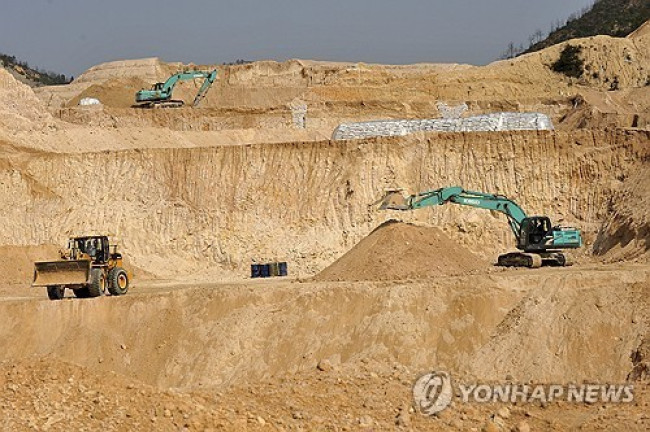 Japanese Government Plans Independent Investment in Rare Earth Mine Development… Accelerating Decoupling from China
A rare earth mine in China [AP=Yonhap News file photo] The Japanese government, which is striving to reduce its dependence on China for critical minerals such as rare earths, plans to allow the g
Japanese Government Plans Independent Investment in Rare Earth Mine Development… Accelerating Decoupling from China
A rare earth mine in China [AP=Yonhap News file photo] The Japanese government, which is striving to reduce its dependence on China for critical minerals such as rare earths, plans to allow the g
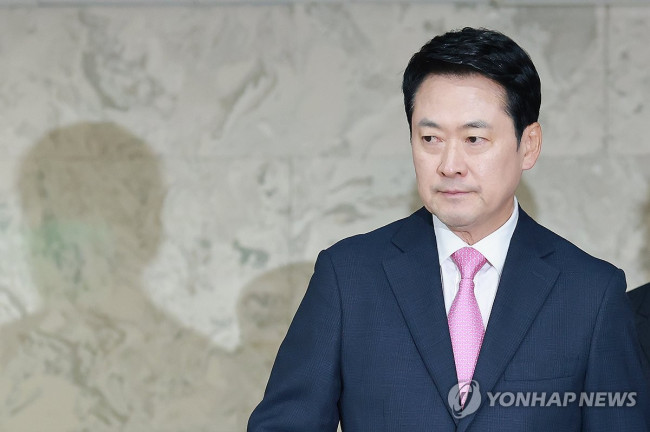 People Power Party slams ruling party's push for "Cho Hee-dae's resignation," calling it "judicial abuse rhetoric and kangaroo court proceedings"
People Power Party Representative Jang Dong-hyeok attending a forum evaluating the second year of the Lee Jae-myung administration [Seoul=Yonhap News]On the 21st, the People Power Party once again cri
People Power Party slams ruling party's push for "Cho Hee-dae's resignation," calling it "judicial abuse rhetoric and kangaroo court proceedings"
People Power Party Representative Jang Dong-hyeok attending a forum evaluating the second year of the Lee Jae-myung administration [Seoul=Yonhap News]On the 21st, the People Power Party once again cri
 '30-something who posted arson threat against Constitutional Court in protest of Yoon's arrest acquitted in appeals court'
A man in his 30s, charged with posting comments online suggesting arson at the Constitutional Court following the issuance of an arrest warrant for former President Yoon Suk Yeol, has been acquitted a
'30-something who posted arson threat against Constitutional Court in protest of Yoon's arrest acquitted in appeals court'
A man in his 30s, charged with posting comments online suggesting arson at the Constitutional Court following the issuance of an arrest warrant for former President Yoon Suk Yeol, has been acquitted a
 Hyundai Motor Union stages first full-scale strike in 10 years… All plants 'come to a halt'
The Hyundai Motor Company labor union (Hyundai Motor branch of the Korean Metal Workers' Union) launched a full-scale strike on the 21st due to difficulties in this year's wage negotiations.This marks
Hyundai Motor Union stages first full-scale strike in 10 years… All plants 'come to a halt'
The Hyundai Motor Company labor union (Hyundai Motor branch of the Korean Metal Workers' Union) launched a full-scale strike on the 21st due to difficulties in this year's wage negotiations.This marks
 [Park Myung-mi's Kyushu Travel] ② Kaiseki Cuisine, Eating a Garden in a Bowl
When you first encounter kaiseki cuisine, it can feel like playing house. The dishes are small, yet there are so many of them. When I first came to Japan, the food that truly moved me was a cours
[Park Myung-mi's Kyushu Travel] ② Kaiseki Cuisine, Eating a Garden in a Bowl
When you first encounter kaiseki cuisine, it can feel like playing house. The dishes are small, yet there are so many of them. When I first came to Japan, the food that truly moved me was a cours
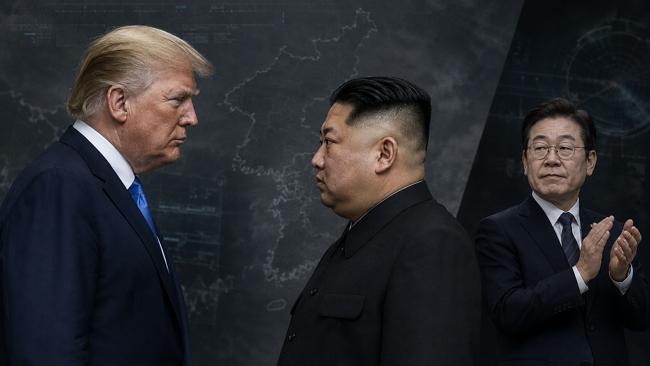 [Outlook] Trump’s Fury Explodes… Fires a Direct Shot at Lee Jae-myung
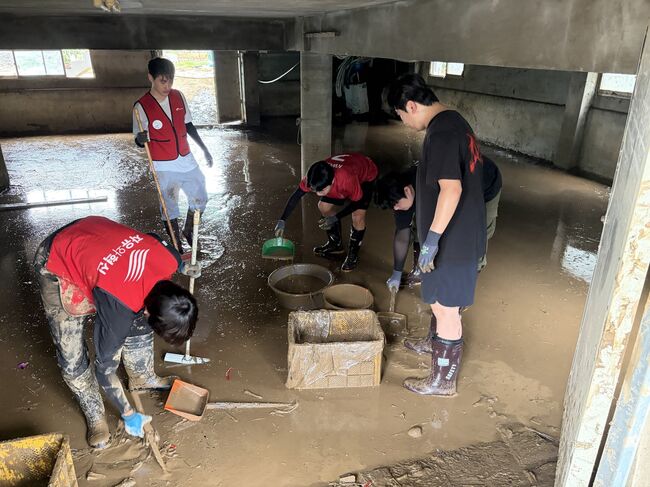 [Photo] Liberty and Innovation Geoje Flood Recovery Support
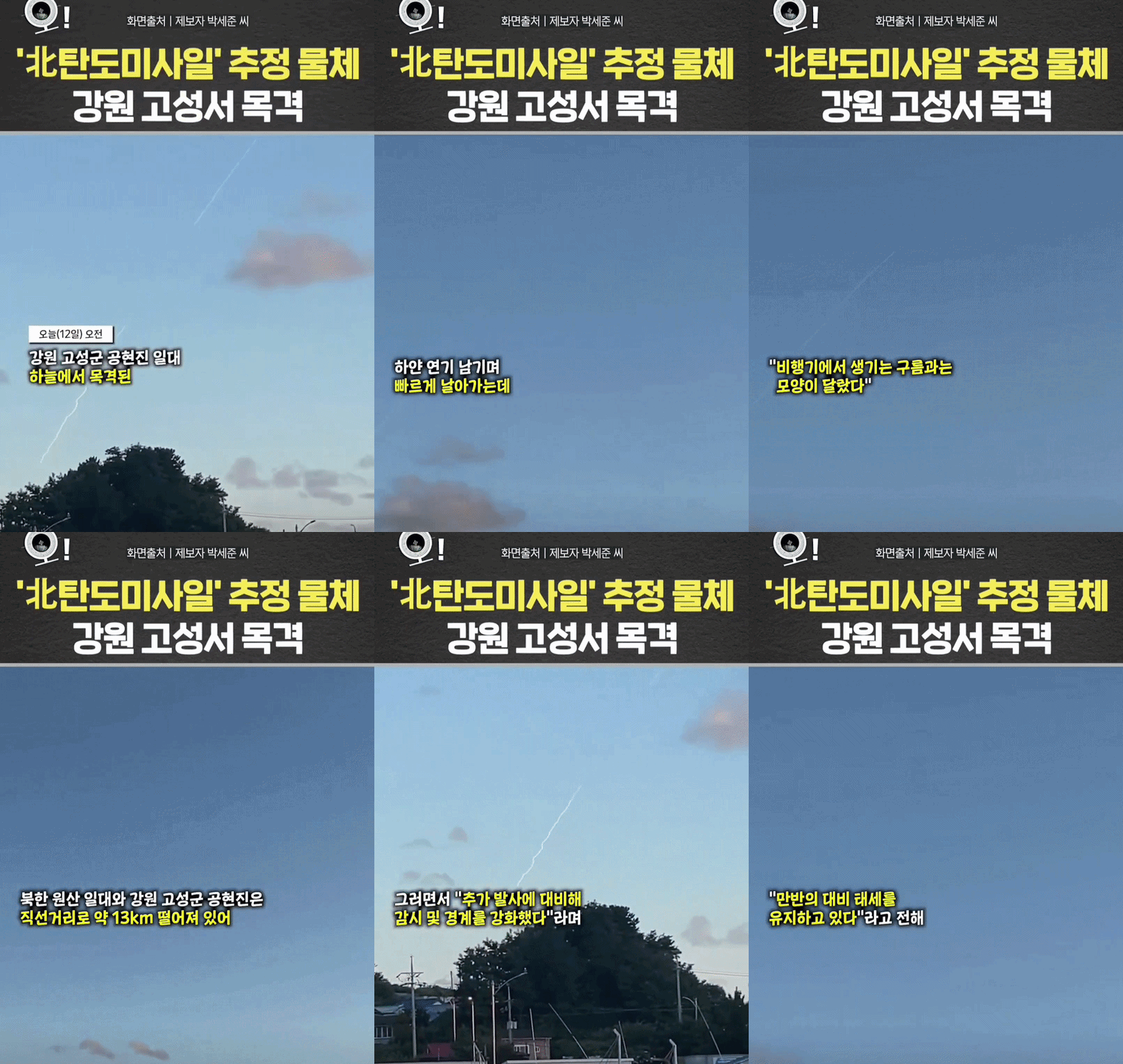 [Video] North Korean ballistic missile filmed by a civilian in Goseong, Gangwon-do
 [Editorial Cartoon] A Draconian Law That Undermines Freedom of Expression

 List
List