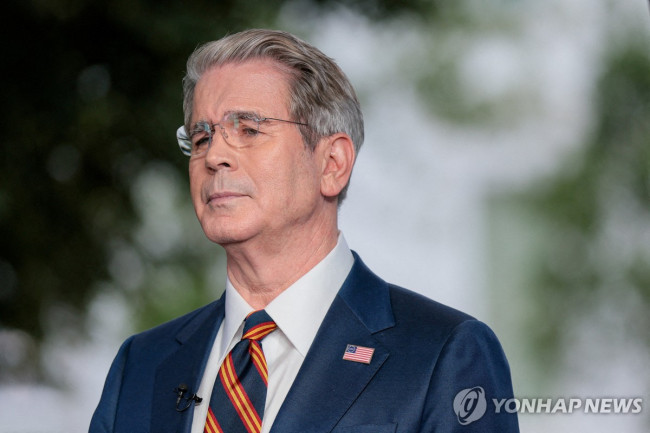
 US Treasury Secretary Scott Bessent [Reuters=Yonhap News]As the Donald Trump administration deploys economic pressure aimed at the collapse of the Iranian regime, observers suggest that major trading partners such as China, Turkey, and Iraq could soon fall within the direct line of fire.
According to the New York Times (NYT) on the 20th (local time), China is Iran’s largest trading partner and a primary purchaser of its oil.
It is reported that China has continued to engage in trade with Iran despite Western sanctions, purchasing up to 90% of Iranian oil exports.
Last year, the trade volume between China and Iran, excluding petroleum products, was estimated at approximately $10 billion (about 13.9 trillion KRW). Analysts suggest that the actual trade volume, including oil, is likely far higher.
However, experts believe that disruptions in trade with Iran would not deal a fatal blow to the Chinese economy.
They explain that Iranian oil accounts for a negligible portion of China's total energy imports, and that even if supplies were cut off, China could easily secure alternative sources.
William Figueroa, an expert on China-Iran relations at the University of Groningen in the Netherlands, told the NYT, "Even if China's ability to import Iranian oil is disrupted, it will not lead to a catastrophe for the Chinese economy."
Some analysts suggest that China maintains its relationship with Iran as a way to keep the regime as a "thorn in the side" of the United States.
The argument is that China intends to leverage its influence over Iran as a strategic tool to keep the U.S. in check.
Regarding the U.S. economic pressure measures against Iran, Chinese Foreign Ministry spokesperson Lin Jian stated that "sanctions and pressure cannot solve problems," and urged all parties to resolve differences through diplomatic means.
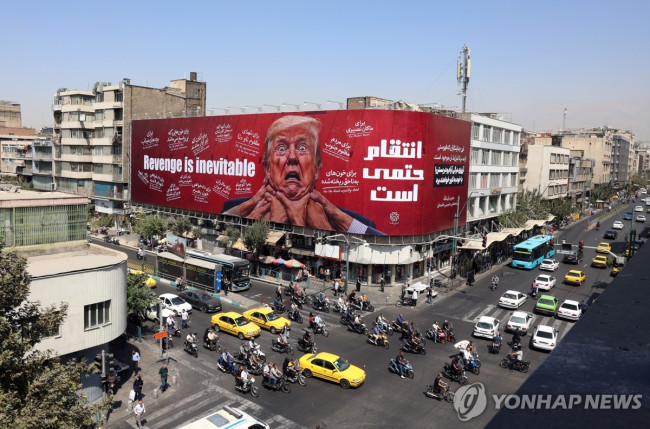 A view of downtown Tehran, Iran [EPA=Yonhap News]
Countries bordering Iran, such as Pakistan, Turkey, and Iraq, as well as the United Arab Emirates (UAE), which faces Iran across the sea, may also face U.S. pressure to sever ties with Tehran.
In the case of the UAE, the country preemptively announced on the 18th, following consultations with the U.S., that it would fully suspend all trade, commercial exchanges, and financial transactions with Iran.
The UAE has served as a key corridor for Iran to secure foreign currency and access global trade networks, to the point of being dubbed "Iran's lungs."
However, experts predict that U.S. pressure may not be as easily effective on Pakistan and Turkey.
Turkey is a significant trading partner for Iran, having exported $11 billion (about 15.2 trillion KRW) worth of goods to the country in 2022 alone.
Esfandyar Batmanghelidj, CEO of the London-based Bourse & Bazaar Foundation, said, "Pakistan and Turkey are in a position where they must maintain good relations with Iran for political and geopolitical reasons," adding, "I believe the Trump administration will face difficulties in this regard."
There is also a view that it will be difficult for the U.S. to implement separate mechanisms to force third countries to stop trading with Iran.
Burcu Ozcelik, a senior fellow at the Royal United Services Institute (RUSI) in London, projected that "imposing broad sanctions on Iran's trading partners will likely be a much more complex task [than previous sanctions] and will not be easy to monitor."
Some analysts also point out that as sanctions against Iran have persisted over a long period, the actual trade volume between neighboring countries and Iran has already significantly declined.
For instance, India once imported most of its energy from Iran, but fully halted purchases of Iranian oil in 2019 due to U.S. sanctions during the first Trump administration.
The United States continues to declare an unprecedented economic war against Iran.
In a media interview on the same day, U.S. Treasury Secretary Scott Bessent stated that he would proceed with economic pressure measures aimed at the collapse of the Iranian regime, declaring, "This will be the most powerfully coordinated economic isolation [campaign] in world history."

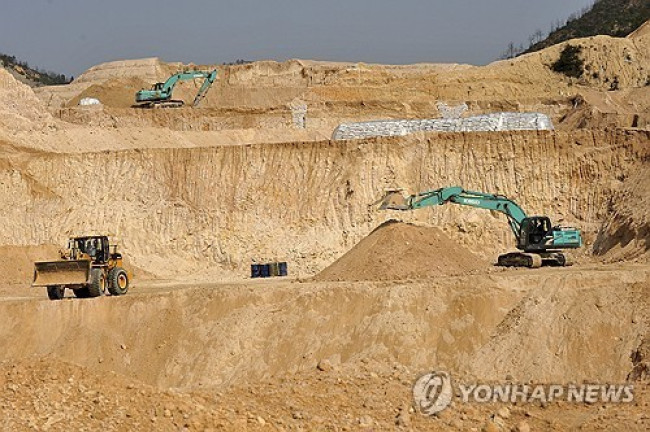 Japanese Government Plans Independent Investment in Rare Earth Mine Development… Accelerating Decoupling from China
A rare earth mine in China [AP=Yonhap News file photo] The Japanese government, which is striving to reduce its dependence on China for critical minerals such as rare earths, plans to allow the g
Japanese Government Plans Independent Investment in Rare Earth Mine Development… Accelerating Decoupling from China
A rare earth mine in China [AP=Yonhap News file photo] The Japanese government, which is striving to reduce its dependence on China for critical minerals such as rare earths, plans to allow the g
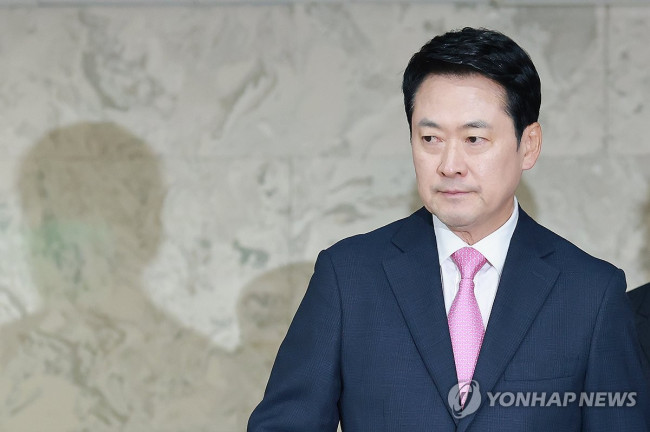 People Power Party slams ruling party's push for "Cho Hee-dae's resignation," calling it "judicial abuse rhetoric and kangaroo court proceedings"
People Power Party Representative Jang Dong-hyeok attending a forum evaluating the second year of the Lee Jae-myung administration [Seoul=Yonhap News]On the 21st, the People Power Party once again cri
People Power Party slams ruling party's push for "Cho Hee-dae's resignation," calling it "judicial abuse rhetoric and kangaroo court proceedings"
People Power Party Representative Jang Dong-hyeok attending a forum evaluating the second year of the Lee Jae-myung administration [Seoul=Yonhap News]On the 21st, the People Power Party once again cri
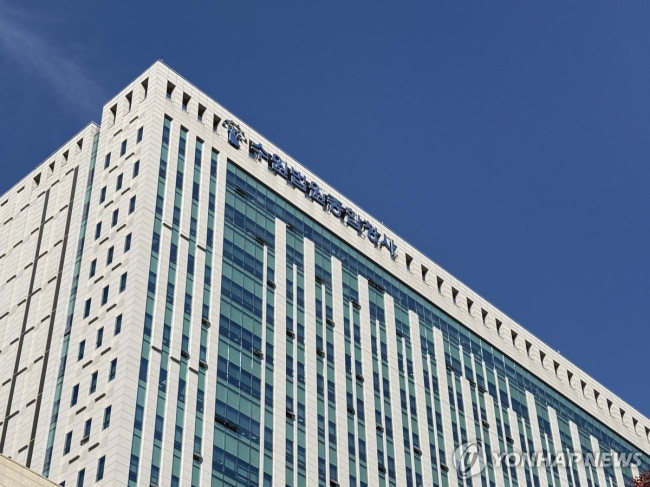 '30-something who posted arson threat against Constitutional Court in protest of Yoon's arrest acquitted in appeals court'
A man in his 30s, charged with posting comments online suggesting arson at the Constitutional Court following the issuance of an arrest warrant for former President Yoon Suk Yeol, has been acquitted a
'30-something who posted arson threat against Constitutional Court in protest of Yoon's arrest acquitted in appeals court'
A man in his 30s, charged with posting comments online suggesting arson at the Constitutional Court following the issuance of an arrest warrant for former President Yoon Suk Yeol, has been acquitted a
 Hyundai Motor Union stages first full-scale strike in 10 years… All plants 'come to a halt'
The Hyundai Motor Company labor union (Hyundai Motor branch of the Korean Metal Workers' Union) launched a full-scale strike on the 21st due to difficulties in this year's wage negotiations.This marks
Hyundai Motor Union stages first full-scale strike in 10 years… All plants 'come to a halt'
The Hyundai Motor Company labor union (Hyundai Motor branch of the Korean Metal Workers' Union) launched a full-scale strike on the 21st due to difficulties in this year's wage negotiations.This marks
 [Park Myung-mi's Kyushu Travel] ② Kaiseki Cuisine, Eating a Garden in a Bowl
When you first encounter kaiseki cuisine, it can feel like playing house. The dishes are small, yet there are so many of them. When I first came to Japan, the food that truly moved me was a cours
[Park Myung-mi's Kyushu Travel] ② Kaiseki Cuisine, Eating a Garden in a Bowl
When you first encounter kaiseki cuisine, it can feel like playing house. The dishes are small, yet there are so many of them. When I first came to Japan, the food that truly moved me was a cours
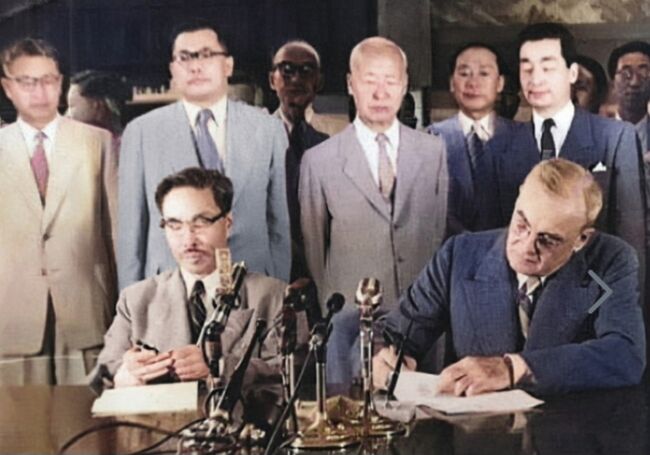 [Shin Dong-chun Column] The History of Korea-U.S. Relations and the ROK-U.S. Alliance
The 1954 signing ceremony of the Mutual Defense Treaty Between the United States and the Republic of Korea. A moment when President Syngman Rhee’s perseverance bore fruit.1. The Encounter and Genesi
[Shin Dong-chun Column] The History of Korea-U.S. Relations and the ROK-U.S. Alliance
The 1954 signing ceremony of the Mutual Defense Treaty Between the United States and the Republic of Korea. A moment when President Syngman Rhee’s perseverance bore fruit.1. The Encounter and Genesi
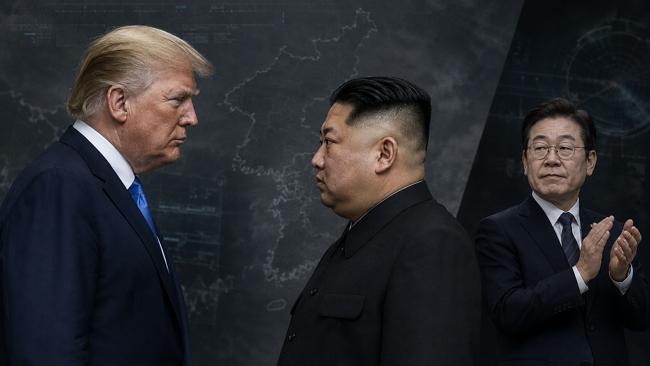 [Outlook] Trump’s Fury Explodes… Fires a Direct Shot at Lee Jae-myung
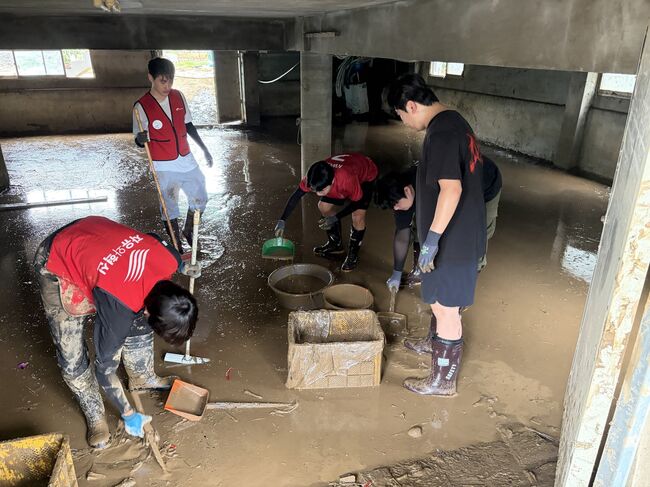 [Photo] Liberty and Innovation Geoje Flood Recovery Support
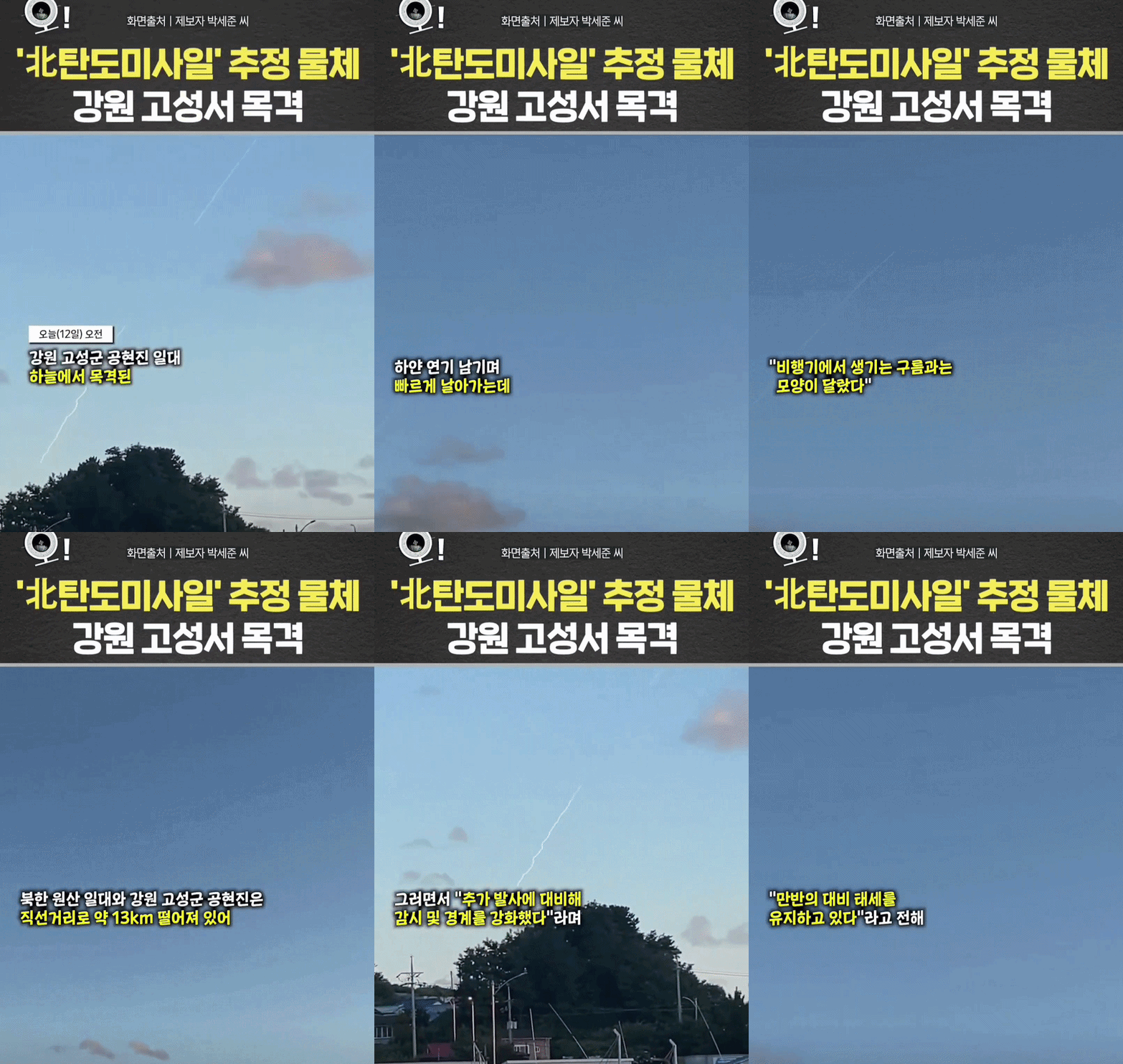 [Video] North Korean ballistic missile filmed by a civilian in Goseong, Gangwon-do
 [Editorial Cartoon] A Draconian Law That Undermines Freedom of Expression

 List
List