통합사관학교 구상은 합동성 강화와 교육 효율화를 명분으로 제시한다. 그러나 이 논의는 군 교육의 문제를 넘어, 군 구조와 문민통제 방식의 근본 변화까지 함께 검토해야 할 사안이다. 군 조직은 국가 권력의 핵심 축이며, 그 구조 변화는 필연적으로 정치적 해석을 동반한다.
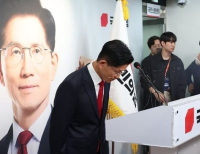
 Minister of National Defense Shin Won-sik delivers an opening address at the "Joint Civilian-Military Special Advisory Committee" comprehensive report session held at the National Defense Convention on the 22nd. The committee's "Cadet School Education Reform Subcommittee" reportedly recommended to the Ministry of National Defense the establishment of a Korea National Defense University and the integration of existing Army, Navy, and Air Force academies under it as colleges. [Photo=Yonhap News, Ministry of National Defense]
Military organizational reform intersects military efficiency with political implications. The recently proposed discussion on an integrated cadet school cannot be seen solely as an adjustment to the military education system and a change in personnel training methods, as it carries significant implications. This is because cadet schools are not merely educational institutions but the starting point for the formation of the officer corps and the internal power structure of the military.
Separation of Army, Navy, and Air Force Branches… A Checks and Balances Structure to Prevent Power Concentration
The concept of an integrated cadet school is presented under the guise of strengthening joint operations and improving educational efficiency. However, this discussion goes beyond military education and must be examined in conjunction with fundamental changes to the military structure and civilian control mechanisms. Military organizations are a core pillar of state power, and changes to their structure inevitably accompany political interpretations.
Democratic nations have maintained separate Army, Navy, and Air Force structures not only for military reasons. The separation of military branches was an institutional choice made with the intention of preventing power concentration, rather than solely for operational efficiency.
When different military branches exist, a natural balance is formed within the military, and civilian control operates on multiple levels rather than through a single point. This serves as a safeguard to prevent military power from concentrating in one axis.
An integrated military system offers advantages such as simplifying the command structure, preparing for constant warfare, reducing budget expenditures, and standardizing education. However, it simultaneously harbors structural risks of power concentration, weakened political neutrality, and increased complexity in civilian control. Therefore, in Western countries as well, discussions on integrated military forces have always expanded beyond military issues to political debates.
Indeed, countries that have adopted an integrated military system share specific historical and political commonalities.
Canada integrated its Army, Navy, and Air Force into a single organization in the 1960s, but later effectively reverted to a branch-specific system amidst evaluations that the identity and professionalism of each service had weakened. Japan operates its Army, Navy, and Air Self-Defense Forces under an integrated command structure within constitutional constraints, but this is based on the specific characteristic of being a defense-only system rather than a major military power. China and Russia have centralized power structures and integrated command structures for the purpose of political control.
Background of the Integrated Military System… Strong Political Power, Centralized Control, and Special Security Environments
The uniform commonality of integrated military systems is clear. This system has operated on the premise of strong political power, centralized control, or special security environments. Conversely, democratic nations have excluded discussions and adoption of integrated military systems due to concerns about weakened civilian control and power concentration. Instead, they have strengthened joint exercises and integrated training, where forces train in their respective domains during peacetime and transition to an integrated military system during wartime.
The nature of modern warfare also lends weight to the arguments against and discussions surrounding an integrated military system. The Russia-Ukraine war demonstrates that victory or defeat in war depends not on the size of an organization or formal integration, but on the rapid combination of specialized capabilities. This is because drones, electronic warfare, information warfare, distributed command, and on-the-spot autonomous decision-making dominate the battlefield. Today's battlefield demands "pinpoint strikes in real-time through specialization in each domain and the ability to combine them" rather than "organizational integration."
From this perspective, an integrated cadet school runs counter to the demands of future battlefields. Jointness is not automatically generated from the same education. Joint operations function when different specializations are maintained and the command structure and training that connect them are in place. Integration that reduces diversity could, in fact, weaken the foundation for military power projection and joint and combined forces.
The cultivation of military spirit and branch identity are core to officer training at cadet schools. The current concept of an integrated cadet school, which places cadets without initial affiliation, carries the risk of weakening professionalism and pride. Furthermore, if the parent body and starting point of the officer corps are unified, the personnel, promotion, and command structures will inevitably change. This can have significant impacts on established military traditions, inter-service balance, and civilian control mechanisms.
Another point of contention is the accountability structure. Currently, each cadet school bears relatively clear responsibility for the quality of education and talent development. However, after integration, the entity responsible may disappear. In military organizations, a diffusion of responsibility leads to weakened development and responsiveness, thus this is not an issue that can be approached solely as an administrative matter.
Integrated Cadet School… Risk of the Military Degrading into a Regime's Army Due to Political Objectives
Ultimately, the debate over an integrated cadet school is not a matter of "for or against." We must examine whether the promotion of an integrated cadet school and military organizational reform will bring tangible benefits to war prevention, military morale, and the nation's democratic control structure.
If organizational reform is driven by political objectives, the military—a core pillar of state power and the embodiment of national sovereignty—could degrade into a regime's army, similar to North Korea and China. We must consider what has been dismantled and undermined in the name of combat effectiveness and peace policies.
Military reform is a matter of direction, not speed, and reflection on structural balance must precede symbolic measures. What is needed now is not a simple choice between integration or not, but a sober assessment of how military organizational reform will affect the military's professionalism, jointness, and civilian control in the long term.
The military must be reborn as an organization that prevents war beforehand and ensures victory if war breaks out, rather than prioritizing uniform control and efficiency. However, if we are unable to conduct training as if war will never occur on the Korean Peninsula and engage in self-destructive acts akin to dismantling core capabilities, this constitutes an act of national destruction.
Public sentiment and military sentiment oppose the integration of cadet schools, which seeks to transition to an integrated military system under the guise of combat effectiveness.
Park Pil-gyu, Editorial Writer

 [Statement by the Seo-beo-kka Korea Military Academy Save-the-Nation Comrades Association] ㉛ Recount the Votes Publicly, as the Previous Recount Concealed Election Fraud
Tongyeong Mayoral Election Recount [Photo=Yonhap News]South Korea's liberal democracy is dying. The National Election Commission (NEC) and the judiciary, which have plummeted into criminal syndicates
[Statement by the Seo-beo-kka Korea Military Academy Save-the-Nation Comrades Association] ㉛ Recount the Votes Publicly, as the Previous Recount Concealed Election Fraud
Tongyeong Mayoral Election Recount [Photo=Yonhap News]South Korea's liberal democracy is dying. The National Election Commission (NEC) and the judiciary, which have plummeted into criminal syndicates
 What is the significance of the "Trump 2028" red hats that keep making a comeback?
It is noteworthy that President Donald Trump is "intentionally" fueling controversy over whether he can actually run in the 2028 presidential election, even though it is "highly likely he is seriously
What is the significance of the "Trump 2028" red hats that keep making a comeback?
It is noteworthy that President Donald Trump is "intentionally" fueling controversy over whether he can actually run in the 2028 presidential election, even though it is "highly likely he is seriously
 Jin Cummings: "North Korea says it will increase the number of spies, so what is the government doing?"
U.S. political columnist Gene Cummings has publicly questioned the South Korean government, asking, "North Korea is announcing plans to increase its number of spies, yet what is the South Korean
Jin Cummings: "North Korea says it will increase the number of spies, so what is the government doing?"
U.S. political columnist Gene Cummings has publicly questioned the South Korean government, asking, "North Korea is announcing plans to increase its number of spies, yet what is the South Korean
 Attorney Do Tae-woo: “Discrepancies in Voter Count and Improper Sealing Confirmed in Tongyeong Mayoral Recount… Official Request for Additional Verification Submitted to Gyeongnam Election Commission”
A bundle of mail-in early voting ballots captured by lawyer Do Tae-woo at the Tongyeong mayoral election recount site. A clear solid line, raising suspicions of election fraud, is visible on the side
Attorney Do Tae-woo: “Discrepancies in Voter Count and Improper Sealing Confirmed in Tongyeong Mayoral Recount… Official Request for Additional Verification Submitted to Gyeongnam Election Commission”
A bundle of mail-in early voting ballots captured by lawyer Do Tae-woo at the Tongyeong mayoral election recount site. A clear solid line, raising suspicions of election fraud, is visible on the side
 Stock Market Crash 'Black Tuesday'… KOSPI down 10.8%, KOSDAQ down 7.7%
The KOSPI fell by more than 5% in early trading on the 28th, triggering a sell-side sidecar.On the 28th, the KOSPI plunged by more than 10%.Due to the sharp decline, a sell-side sidecar—a temporary
Stock Market Crash 'Black Tuesday'… KOSPI down 10.8%, KOSDAQ down 7.7%
The KOSPI fell by more than 5% in early trading on the 28th, triggering a sell-side sidecar.On the 28th, the KOSPI plunged by more than 10%.Due to the sharp decline, a sell-side sidecar—a temporary
 [World Heritage Committee] 25 New World Heritage Sites Inscribed in Busan… South Korea Successfully Expands 'Getbol' Listing
The Chairperson of the World Heritage Committee speaks at the plenary session of the 48th session of the World Heritage Committee, held at BEXCO in Busan on the 20th. [Photo: Yonhap News]A total of 25
[World Heritage Committee] 25 New World Heritage Sites Inscribed in Busan… South Korea Successfully Expands 'Getbol' Listing
The Chairperson of the World Heritage Committee speaks at the plenary session of the 48th session of the World Heritage Committee, held at BEXCO in Busan on the 20th. [Photo: Yonhap News]A total of 25
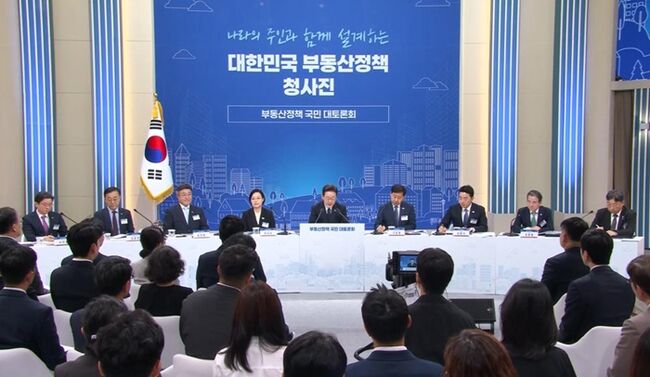 [Liberal Democratic Party Statement] Calling it a Grand Real Estate Debate… It Was Nothing More Than a Private Party Among Themselves
The 'National Grand Debate on Real Estate Policy' held on July 23rd and 27th. [Photo=Yonhap News]The 'National Grand Debate on Real Estate Policy,' hosted by the Lee Jae-myung administration under the
[Liberal Democratic Party Statement] Calling it a Grand Real Estate Debate… It Was Nothing More Than a Private Party Among Themselves
The 'National Grand Debate on Real Estate Policy' held on July 23rd and 27th. [Photo=Yonhap News]The 'National Grand Debate on Real Estate Policy,' hosted by the Lee Jae-myung administration under the
 [Photo] Evidence of Election Fraud Flooding U.S. Media… Trump Had 2.7 Million Votes Stolen
 [Video] U.S. Semiquincentennial Air Show... 'Art in the Sky' streaks across New York
 [Editorial Cartoon] A Draconian Law That Undermines Freedom of Expression

 List
List