2026년 미국의 전략 기조 변화는 동맹국에도 분명한 신호를 보내고 있다. 미국은 모든 지역 분쟁에 자동으로 개입하는 국가가 아니며, 동맹 역시 무조건적 보호 대상이 아니라는 인식이 정책 전반에 반영되고 있다. 동북아시아 안보 환경은 더 이상 안이한 기대와 가설에 기댈 수 없는 험난한 영역에 들어서게 되었다.
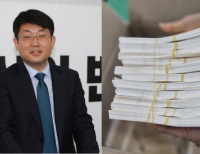
 Elbridge Colby (left), the U.S. Under Secretary of Defense for Policy, visits Japan following his trip to South Korea. On the 28th, he met with Takehiro Funakoshi, Japan's Vice-Minister for Foreign Affairs, to discuss the regional security environment and security and defense cooperation between the U.S. and Japan. [Photo: Yonhap News, Screenshot from Colby's X Account]
The shift in America's strategic posture for 2026 is sending clear signals to its allies. The perception that the U.S. is not a country that automatically intervenes in all regional conflicts and that alliances are not subject to unconditional protection is being reflected across its policies. The Northeast Asian security environment has entered a challenging phase where it can no longer rely on complacent expectations and assumptions.
This change is manifesting in actions rather than declarations, with Japan being the first example. The fact that the possibility of nuclear armament is being openly discussed in Japan indicates that the Northeast Asian order has already moved to a new stage.
Kissinger's and Colby's Contrasting Logics... Concept of Partner vs. Conditional Partner
To understand the nature of this change, it is necessary to compare two American strategists. Henry Kissinger, former U.S. Secretary of State, who shaped the 20th-century international order, based his nuclear strategy on the logic of management to avoid conflict between major powers. For Kissinger, nuclear weapons were not tools to be used but political instruments that needed to be designed to prevent their use. He maintained a certain ambiguity rather than clearly defining defense commitments to allies, making it difficult for adversaries to calculate and using this as deterrence itself. Alliances were pillars of order that had to be maintained, even at a cost; they were partners in the order.
In contrast, the logic of Elbridge Colby, U.S. Under Secretary of Defense for Policy, presents a completely different perspective. Colby designs strategy based on the premise of a multipolar competitive environment where the U.S. homeland is directly exposed to nuclear threats. For him, deterrence is not a matter of will or morality but a problem of choice structure. In a situation where the survival of the U.S. homeland is at stake, defending allies becomes a conditional choice, not an automatic one. From this perspective, alliances are not symbols of trust but conditional partners maintained when they possess the capability to reduce U.S. burdens.
This difference sends a clear message regarding South Korean security as well. In the past, the trust between allies itself was the core of deterrence, but now, the ability of an ally to independently deter attacks is becoming the starting point for deterrence. If this trend is not recognized, security debates will inevitably deviate from reality.
Japan, Capable of Nuclearization, While South Korea is Bogged Down in Pro/Con Nuclear Debate
Japan is already adopting this change as a guideline for action. Japan's discussion of nuclear armament is not an emotional reaction or a sudden choice. Japan is a country with a large stockpile of plutonium, complete nuclear fuel reprocessing technology, and advanced missile and space technology. It has long established and managed a system that allows for rapid nuclear weaponization if a decision is made. The reason why Japan's choice is not perceived as a provocation by the international community is that it has maintained its nuclear-related capabilities as manageable potential rather than concealing them.
This change poses an uncomfortable but unavoidable question for South Korea. The moment Japan achieves nuclear armament or a strategic status equivalent to nuclear power, the balance of power in Northeast Asia will fundamentally shift. If South Korea remains non-nuclear in such a situation, its security will be reduced to a structure dependent on both the U.S. will and Japan's choice. This is difficult to consider as the security design of a sovereign nation.
Despite this, the debate in South Korean society remains confined to a simple dichotomy of pro- and anti-nuclear armament. However, more important than whether to possess nuclear weapons is the extent to which military choices by neighboring countries can be effectively deterred. The reason Japan is considering nuclear weapons is not for attack, but to make the opponent abandon the idea of attacking altogether. South Korea faces the same question.
The Solution Lies Not in Emotion but in Preparation... Must Possess Nuclear Potential
The realistic solution is preparation, not expenditure and emotion. While an immediate declaration of nuclear armament would impose a significant international burden, remaining without even nuclear potential is also dangerous. Technical completion of the nuclear fuel cycle, considering the 'entire lifecycle,' and phased authority over reprocessing and enrichment are minimum safeguards.
Simultaneously, the core of modern deterrence is not the number of nuclear warheads. The ability to disrupt command and control by combining artificial intelligence and cyber technology, and technologies that neutralize an opponent's decision-making before launch, possess deterrence capabilities comparable to nuclear weapons. This is also why Japan is investing heavily in this area.
How to manage international concerns is also crucial. Japan has managed its nuclear potential openly at an institutional level and has maintained its technology within the framework of the International Atomic Energy Agency's safeguards system. Concealed nuclear capabilities breed anxiety, whereas managed potential has demonstrated its function as a deterrent. This is a case in point.
South Korea is now at a time of choice. Japan's nuclear discussion is not an external variable but a factor that requires a direct redesign of South Korea's security structure. The fate of Seoul depends not on Washington's mercy or Tokyo's choice, but on what calculations we make and what preparations we undertake.
Security is not a matter of political belief but a problem of design. It is time to move beyond the dichotomy of nuclear armament and nuclear umbrella in an era where national survival becomes a mandate. We urge the government to adopt a forward-looking stance.
Park Pil-gyu, Editorial Writer

 [Statement by the Seo-beo-kka Korea Military Academy Save-the-Nation Comrades Association] ㉛ Recount the Votes Publicly, as the Previous Recount Concealed Election Fraud
Tongyeong Mayoral Election Recount [Photo=Yonhap News]South Korea's liberal democracy is dying. The National Election Commission (NEC) and the judiciary, which have plummeted into criminal syndicates
[Statement by the Seo-beo-kka Korea Military Academy Save-the-Nation Comrades Association] ㉛ Recount the Votes Publicly, as the Previous Recount Concealed Election Fraud
Tongyeong Mayoral Election Recount [Photo=Yonhap News]South Korea's liberal democracy is dying. The National Election Commission (NEC) and the judiciary, which have plummeted into criminal syndicates
 What is the significance of the "Trump 2028" red hats that keep making a comeback?
It is noteworthy that President Donald Trump is "intentionally" fueling controversy over whether he can actually run in the 2028 presidential election, even though it is "highly likely he is seriously
What is the significance of the "Trump 2028" red hats that keep making a comeback?
It is noteworthy that President Donald Trump is "intentionally" fueling controversy over whether he can actually run in the 2028 presidential election, even though it is "highly likely he is seriously
 Jin Cummings: "North Korea says it will increase the number of spies, so what is the government doing?"
U.S. political columnist Gene Cummings has publicly questioned the South Korean government, asking, "North Korea is announcing plans to increase its number of spies, yet what is the South Korean
Jin Cummings: "North Korea says it will increase the number of spies, so what is the government doing?"
U.S. political columnist Gene Cummings has publicly questioned the South Korean government, asking, "North Korea is announcing plans to increase its number of spies, yet what is the South Korean
 Attorney Do Tae-woo: “Discrepancies in Voter Count and Improper Sealing Confirmed in Tongyeong Mayoral Recount… Official Request for Further Verification Filed with Gyeongnam Election Commission”
A bundle of out-of-district early voting ballots photographed by attorney Do Tae-woo at the Tongyeong mayoral election recount site. A clear, solid line visible on the side of the ballots raises suspi
Attorney Do Tae-woo: “Discrepancies in Voter Count and Improper Sealing Confirmed in Tongyeong Mayoral Recount… Official Request for Further Verification Filed with Gyeongnam Election Commission”
A bundle of out-of-district early voting ballots photographed by attorney Do Tae-woo at the Tongyeong mayoral election recount site. A clear, solid line visible on the side of the ballots raises suspi
 Stock Market Crash 'Black Tuesday'… KOSPI down 10.8%, KOSDAQ down 7.7%
The KOSPI fell by more than 5% in early trading on the 28th, triggering a sell-side sidecar.On the 28th, the KOSPI plunged by more than 10%.Due to the sharp decline, a sell-side sidecar—a temporary
Stock Market Crash 'Black Tuesday'… KOSPI down 10.8%, KOSDAQ down 7.7%
The KOSPI fell by more than 5% in early trading on the 28th, triggering a sell-side sidecar.On the 28th, the KOSPI plunged by more than 10%.Due to the sharp decline, a sell-side sidecar—a temporary
 [World Heritage Committee] 25 New World Heritage Sites Inscribed in Busan… South Korea Successfully Expands 'Getbol' Listing
The Chairperson of the World Heritage Committee speaks at the plenary session of the 48th session of the World Heritage Committee, held at BEXCO in Busan on the 20th. [Photo: Yonhap News]A total of 25
[World Heritage Committee] 25 New World Heritage Sites Inscribed in Busan… South Korea Successfully Expands 'Getbol' Listing
The Chairperson of the World Heritage Committee speaks at the plenary session of the 48th session of the World Heritage Committee, held at BEXCO in Busan on the 20th. [Photo: Yonhap News]A total of 25
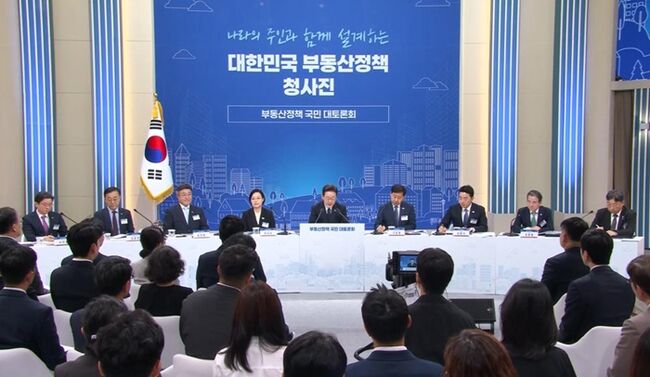 [Liberal Democratic Party Statement] Calling it a Grand Real Estate Debate… It Was Nothing More Than a Private Party Among Themselves
The 'National Grand Debate on Real Estate Policy' held on July 23rd and 27th. [Photo=Yonhap News]The 'National Grand Debate on Real Estate Policy,' hosted by the Lee Jae-myung administration under the
[Liberal Democratic Party Statement] Calling it a Grand Real Estate Debate… It Was Nothing More Than a Private Party Among Themselves
The 'National Grand Debate on Real Estate Policy' held on July 23rd and 27th. [Photo=Yonhap News]The 'National Grand Debate on Real Estate Policy,' hosted by the Lee Jae-myung administration under the
 [Photo] Evidence of Election Fraud Flooding U.S. Media… Trump Had 2.7 Million Votes Stolen
 [Video] U.S. Semiquincentennial Air Show... 'Art in the Sky' streaks across New York
 [Editorial Cartoon] A Draconian Law That Undermines Freedom of Expression

 List
List