'The Little Prince' cover. [Publisher=Munhakdongne]
Reading literature is often considered an intellectual activity.
It is thought of as a mental exertion, involving interpreting sentences, understanding characters' actions, and organizing the meaning by following the flow of the story. The reading methods taught in schools are largely based on this framework.
However, the actual starting point of reading is not intellectual activity. Literature always touches the heart before the mind.
The Starting Point of Literature is the 'Heart,' Not the 'Head.'
Let's recall the moment we open a book and read the first sentence. The story hasn't even truly begun yet. We don't know who the characters are or what will happen. Yet, the reader already reacts. Feelings about whether the writing is bright or dark, comfortable or anxious are immediately conveyed.
This reaction doesn't arise from extensive study. It's how humans inherently receive language. Words create an atmosphere before they convey meaning.
This is clearly demonstrated in 'The Little Prince.' The premise of a pilot crashing in the desert and meeting the Little Prince might seem like a fairy tale.
However, after reading just a few pages, the reader quickly senses that this work is not simply a cute story. Cynicism towards the adult world, a solitary gaze, and a quiet sadness are embedded throughout the sentences. The reader is already immersed in this atmosphere before organizing the meaning.
Thus, literature conveys feeling before explanation. Readers are drawn in or pushed away before they understand the meaning. This is an emotional reaction that precedes comprehension.
The same applies to classic novels. Let's consider 'Crime and Punishment.'
Even before fully grasping Raskolnikov's ideology and logic, the reader feels a sense of oppression. The cramped room, the humid air, the recurring anxious thoughts constrict the heart. The reader experiences a suffocating feeling before organizing his thoughts. The body reacts before the head does.
Examples like this are common in Korean literature as well. Reading 'The Shower' evokes a sense of melancholy simply through the encounter of children and the rainy landscape. Even though illness and death have not yet appeared, a sense of impending separation already lingers.
The reader doesn't become sad by logically understanding the tragedy of the work. They first enter a state of sadness, and then follow the story from that point.
This kind of reaction leads to empathy. Empathy is not an emotion created by calculation. It is naturally formed as a similar feeling is conveyed first. Therefore, readers give their hearts to a character before they even fully understand their circumstances.
This is true for many readers of 'Demian.' Sinclair's anxiety and wavering easily overlap with the emotions of adolescence. As a result, readers almost automatically accept Sinclair's wandering. They linger in his emotional state more than in the consequences of his choices or whether there were other paths. This is because empathy comes first.
Modern novels are no exception. When reading 'Kim Ji-young, Born 1982,' many readers feel the protagonist's frustration and fatigue as their own. This is because the accumulated emotions from work and home are familiar.
As this empathy intensifies, it becomes difficult for the reader to view the work objectively. Criticism of the work sounds like a personal attack on the protagonist. This is because the heart has already made its conclusion.
Excessive Empathy Hinders True Reading
As such, empathy holds immense power in literary reading. However, problems arise when empathy occupies all space. When empathy becomes the standard, the work becomes simplified.
 In literature, the heart always moves first. This is the basic structure of human perception. However, if the heart remains dominant until the end, literature is consumed and disappears.
If one cries a lot, it becomes a good work; if it is uncomfortable, it becomes a bad work. The structure of the sentences, the composition of the story, and the density of the expression are pushed aside. Literature transforms from a tool for broadening thought into a tool for confirming emotions.
This phenomenon is particularly pronounced in tragic works. When reading 'The Dwarf Shot Up a Small Ball,' the reader's heart is first drawn to the plight of the impoverished family. Pity and anger come to the forefront.
The stronger these emotions become, the less visible the complexity of the social structure or the limitations of the characters contained within the work become. The lingering emotions displace the space for thought.
At this point, people often say "thinking stops," but in reality, thinking doesn't disappear. Its role changes. The thought that was examining the work shifts solely to preserving the emotions already felt.
Scenes one doesn't like are skipped, and only scenes one resonates with are held onto. While one feels like they are thinking, they are actually just reinforcing their emotional boundaries.
This reading method doesn't end as a personal issue. When many people feel the same emotion towards the same work, that work easily becomes a subject of protection.
Analysis or criticism of the work is perceived as an attack. Dialogue surrounding literature diminishes, leaving only the sharing of emotions. The work becomes not an occasion for sharing thoughts, but a symbol of confirming solidarity.
Balancing Sensation and Thought is Necessary
Similar scenes repeat in literary education. When asked to speak about their feelings after reading a work, students stop at organizing their emotions. Of course, this process itself has meaning. However, if it ends there, reading doesn't accumulate. Each reading leaves only similar emotions, and these emotions quickly fade.
The power of literature lies in stirring emotions. At the same time, its danger lies there as well. Emotions can initiate reading, but they should not be allowed to substitute for it until the end. If only emotions remain, reading ends as an experience. Experiences can be intense, but they become shallower with repetition. Each time it starts anew, and each time it ends in the same place.
Therefore, intentional slowness is necessary for literary reading. It is an attitude of slowing down at the point where the heart is most moved. It is about reflecting on which words and scenes created such a reaction.
It is only when this process begins that understanding intervenes. Understanding does not erase emotions but serves to organize the space left behind by emotions.
What this article aims to convey is that in literature, the heart always moves first. This is the basic structure of human perception. However, if the heart remains dominant until the end, literature is consumed and disappears.
Emotions should only play the role of opening the door. Inside that door, it is thought's task to set the direction. When this balance is maintained, literature is not merely read and forgotten, but it remains and expands the reader's world.
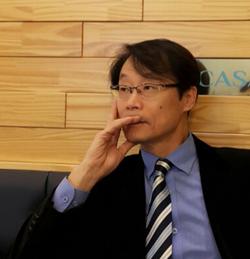
◆ Songsan
A poet and researcher of history and philosophy. Former chairman of the Rhee Syngman Academy. Currently serves as an advisory member of the Korean Modern and Contemporary History Research Society and the representative of the philosophy forum Lyceum. He has published four poetry collections, co-translated 'Heroes of the Hook Islands,' and published the historical psychology commentary 'Joseon That Became a Myth' (2026). He is actively engaged in research and practice for the liberal cultural movement. Songsan is a pen name.

 [Statement by the Seo-beo-kka Korea Military Academy Save-the-Nation Comrades Association] ㉛ Recount the Votes Publicly, as the Previous Recount Concealed Election Fraud
Tongyeong Mayoral Election Recount [Photo=Yonhap News]South Korea's liberal democracy is dying. The National Election Commission (NEC) and the judiciary, which have plummeted into criminal syndicates
[Statement by the Seo-beo-kka Korea Military Academy Save-the-Nation Comrades Association] ㉛ Recount the Votes Publicly, as the Previous Recount Concealed Election Fraud
Tongyeong Mayoral Election Recount [Photo=Yonhap News]South Korea's liberal democracy is dying. The National Election Commission (NEC) and the judiciary, which have plummeted into criminal syndicates
 What is the significance of the "Trump 2028" red hats that keep making a comeback?
It is noteworthy that President Donald Trump is "intentionally" fueling controversy over whether he can actually run in the 2028 presidential election, even though it is "highly likely he is seriously
What is the significance of the "Trump 2028" red hats that keep making a comeback?
It is noteworthy that President Donald Trump is "intentionally" fueling controversy over whether he can actually run in the 2028 presidential election, even though it is "highly likely he is seriously
 Jin Cummings: "North Korea says it will increase the number of spies, so what is the government doing?"
U.S. political columnist Gene Cummings has publicly questioned the South Korean government, asking, "North Korea is announcing plans to increase its number of spies, yet what is the South Korean
Jin Cummings: "North Korea says it will increase the number of spies, so what is the government doing?"
U.S. political columnist Gene Cummings has publicly questioned the South Korean government, asking, "North Korea is announcing plans to increase its number of spies, yet what is the South Korean
 Attorney Do Tae-woo: “Discrepancies in Voter Count and Improper Sealing Confirmed in Tongyeong Mayoral Recount… Official Request for Further Verification Filed with Gyeongnam Election Commission”
A bundle of out-of-district early voting ballots photographed by attorney Do Tae-woo at the Tongyeong mayoral election recount site. A clear, solid line visible on the side of the ballots raises suspi
Attorney Do Tae-woo: “Discrepancies in Voter Count and Improper Sealing Confirmed in Tongyeong Mayoral Recount… Official Request for Further Verification Filed with Gyeongnam Election Commission”
A bundle of out-of-district early voting ballots photographed by attorney Do Tae-woo at the Tongyeong mayoral election recount site. A clear, solid line visible on the side of the ballots raises suspi
 Stock Market Crash 'Black Tuesday'… KOSPI down 10.8%, KOSDAQ down 7.7%
The KOSPI fell by more than 5% in early trading on the 28th, triggering a sell-side sidecar.On the 28th, the KOSPI plunged by more than 10%.Due to the sharp decline, a sell-side sidecar—a temporary
Stock Market Crash 'Black Tuesday'… KOSPI down 10.8%, KOSDAQ down 7.7%
The KOSPI fell by more than 5% in early trading on the 28th, triggering a sell-side sidecar.On the 28th, the KOSPI plunged by more than 10%.Due to the sharp decline, a sell-side sidecar—a temporary
 [World Heritage Committee] 25 New World Heritage Sites Inscribed in Busan… South Korea Successfully Expands 'Getbol' Listing
The Chairperson of the World Heritage Committee speaks at the plenary session of the 48th session of the World Heritage Committee, held at BEXCO in Busan on the 20th. [Photo: Yonhap News]A total of 25
[World Heritage Committee] 25 New World Heritage Sites Inscribed in Busan… South Korea Successfully Expands 'Getbol' Listing
The Chairperson of the World Heritage Committee speaks at the plenary session of the 48th session of the World Heritage Committee, held at BEXCO in Busan on the 20th. [Photo: Yonhap News]A total of 25
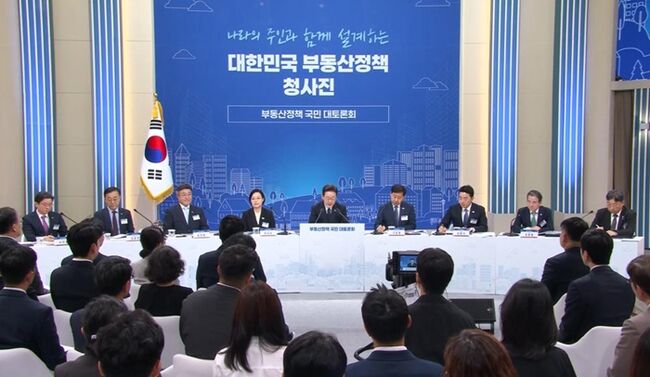 [Liberal Democratic Party Statement] Calling it a Grand Real Estate Debate… It Was Nothing More Than a Private Party Among Themselves
The 'National Grand Debate on Real Estate Policy' held on July 23rd and 27th. [Photo=Yonhap News]The 'National Grand Debate on Real Estate Policy,' hosted by the Lee Jae-myung administration under the
[Liberal Democratic Party Statement] Calling it a Grand Real Estate Debate… It Was Nothing More Than a Private Party Among Themselves
The 'National Grand Debate on Real Estate Policy' held on July 23rd and 27th. [Photo=Yonhap News]The 'National Grand Debate on Real Estate Policy,' hosted by the Lee Jae-myung administration under the
 [Photo] Evidence of Election Fraud Flooding U.S. Media… Trump Had 2.7 Million Votes Stolen
 [Video] U.S. Semiquincentennial Air Show... 'Art in the Sky' streaks across New York
 [Editorial Cartoon] A Draconian Law That Undermines Freedom of Expression

 List
List