The Munich Security Conference is the world's largest annual security conference, often referred to as the 'Davos Forum for Security.' [Photo=Yonhap News]
The Munich Security Conference (MSC) is the world's largest annual security conference, often referred to as the 'Davos Forum for Security.'
As of 2026, the 62nd conference was held from February 13-15, marking a critical juncture amid vast cracks in the international order.
More than 1,000 participants from 115 countries, including over 60 heads of state, attended the conference.
While the Munich Security Conference's primary objective during the Cold War was to solidify unity among Western allies (NATO), it has since evolved into a platform for multilateral security dialogue, drawing leaders and foreign and defense ministers from approximately 100 countries worldwide.
Its influence is considerable; the shifts in global security paradigms discussed at this year's conference are creating significant waves of 'normalization of uncertainty' and 'reorganization of alliance structures' for the Korean Peninsula and Northeast Asia.
Key Achievements of the Munich Security Conference and Rubio's Rhetoric
The most significant achievement of this conference was the partial easing of heightened tensions across the Atlantic. This was evident in the message conveyed through U.S. Secretary of State Marco Rubio's speech, indicating that the U.S. seeks a 'reorganization' rather than a 'disconnection' with Europe.
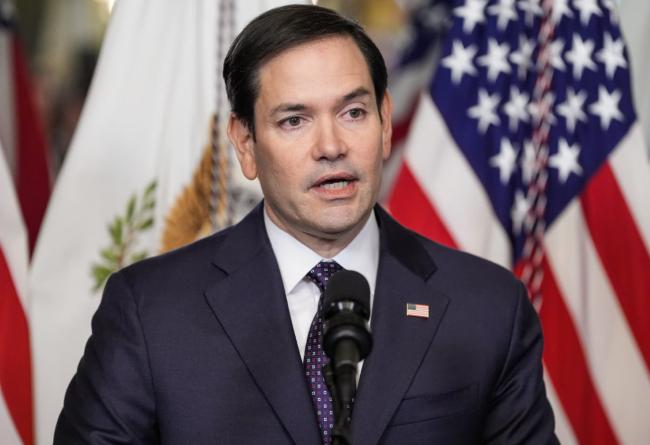 U.S. Secretary of State Marco Rubio. [UPI=Yonhap News]
The U.S. is strongly urging NATO members to increase defense spending to a maximum of 5% of their GDP, exceeding the previous target of 2% (agreed upon at the 2025 NATO Summit).
Furthermore, the U.S. views carbon neutrality regulations as eroding its manufacturing competitiveness and is advocating for an expansion of fossil fuel production.
Criticizing Europe's open border and immigration policies, stating "Europe is broken," the U.S. also proposed purchasing Greenland and demanded its security management, citing the rapidly increasing security value of Greenland.
△ NATO Defense Spending Ratios (2024-25, as % of GDP): United States 3.4% (NATO total 64%), Poland 4.1%, United Kingdom 3.3%, Germany 2.1%, France 2.1%
△ Defense Spending Comparison: United States $1 trillion, NATO total $500 billion
△ Comparison of Economic Power between the U.S. and the EU (Estimated 2025): United States $30.5 trillion (GDP per capita $85,000-$90,000), EU $19.9 trillion (GDP per capita $35,000)
Secretary Rubio referred to the U.S. as a "Child of Europe," strongly reminding attendees of the shared Christian values, familial ties, and common roots of Western civilization, emphasizing historical and cultural unity.
This rhetoric underscored that America First is not about abandoning Europe, but a choice for collective survival as a "family."
While emphasizing the intertwined destinies of the U.S. and Europe, he made it clear that the past "broken status quo" can no longer be sustained, clarifying a stance of "conditional solidarity."
The statement, "We are prepared to go it alone if necessary, but we prefer to do it with you," served as a strong pressure tactic, urging Europe to align with the U.S. approach (increased defense spending, immigration control, and energy policy changes).
Compared to Vice President JD Vance's aggressive stance last year, Rubio's speech was considered much more conciliatory and garnered a standing ovation from the European delegation. This is seen as an achievement that instilled a sense of relief, indicating that the U.S. still keeps the door open for dialogue.
Chinese Foreign Minister Wang Yi's Speech: Red Line Warnings and European Outreach
Chinese Foreign Minister Wang Yi launched a direct offensive against the United States.
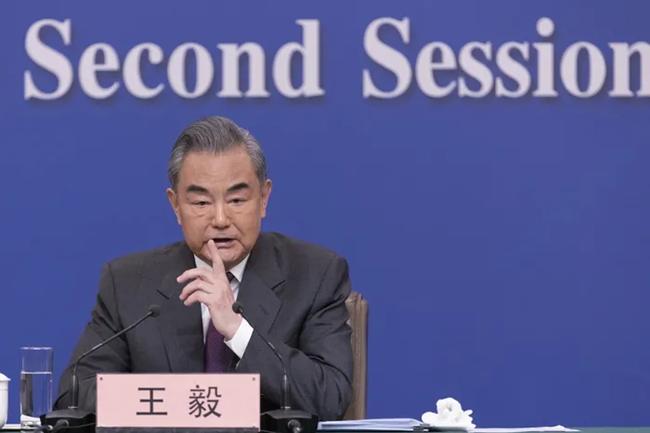 Director of the Office of the Central Foreign Affairs Commission of the Communist Party of China and Foreign Minister Wang Yi. [EPA=Yonhap News]
He strongly warned of a head-on confrontation if the U.S. crossed the "red line" on Taiwan, calling it the "core of core interests." Simultaneously, he employed a "divide America and Europe" tactic, proposing economic cooperation with European countries like Germany to exploit the fissures between the U.S. and Europe.
Official Reactions from Major European Countries: Cautious Relief and the Rise of Self-Reliance
Germany reacted relatively positively to Secretary Rubio's framing of "America First" using the softer language of "shared Western civilization."
The German government is using Rubio's pressure as a policy justification to increase defense spending to around 3% of GDP, overcoming domestic opposition.
In essence, Germany has maintained a pragmatic stance, accepting the U.S. demands while leveraging them to enhance its own military influence within Europe.
France, however, critically pointed out that regardless of the eloquence of Rubio's rhetoric, the underlying objective was "burden-sharing for the U.S." The conference reaffirmed that "Europe's strategic autonomy" is no longer an option but a matter of survival.
This implies the need to build Europe's own defense capabilities and industrial ecosystem, moving away from a security structure dependent on the U.S.
Eastern European countries bordering Russia (Poland and the Baltic states) expressed relief at Rubio's assertion of commitment through references to "family" and "shared destiny," but remained vigilant about the caveat of "conditional solidarity."
These nations are actively working to fill potential security gaps by securing their position as the "most cooperative allies to the U.S." through large-scale purchases of U.S. weaponry, preparing for a potential reduction in U.S. support.
The European Commission views Rubio's speech as having presented a "New Normal" for transatlantic relations.
The era of the U.S. being an unconditional protector is over, and there is a prevailing sentiment that Europe must now prove its economic and military strength to be treated as an equal partner.
In summary, thanks to Rubio's sophisticated diplomatic rhetoric, major European countries have somewhat eased their fears of a "second Trump term." However, it served as a stark reminder that "the U.S. will no longer foot Europe's bills," and consequently, future U.S.-Europe relations are likely to rapidly realign into a "transactional relationship based strictly on mutual interests."
China's tough stance created an atmosphere of tension, and European countries, particularly those being forced to choose between the U.S. and China, appeared to be in a state of deep deliberation.
Future U.S.-Europe Relations: From Value Alliance to Interest and Survival Alliance
Future U.S.-Europe relations are expected to remain a fragile partnership, contingent on Europe's willingness to align with the "rebuilding of U.S.-led order."
The U.S. will advocate for a "stronger Europe" capable of self-defense and demand a significantly expanded role for Europe within NATO.
Specifically, regarding support for Ukraine, structural changes are anticipated where the U.S. will focus on backstop roles such as intelligence and command and control, while guiding Europe to take the lead in tangible material support and ground security responsibilities.
Given Secretary Rubio's criticism of carbon reduction policies as being driven by "climate fanatics" and his emphasis on border control as a core aspect of sovereignty, conflicts are likely to arise between the two sides on environmental regulations, trade, and immigration policies.
Secretary Rubio declared that the U.S. will no longer be bound by abstract norms of free trade or international organizations (like the UN) and will pursue policies prioritizing its tangible national interests and the survival of Western civilization.
European nations (especially France and Germany), recognizing that the U.S. message is akin to a directive to "follow our path," appear to be feeling a sense of crisis that the U.S. security umbrella could become conditional at any moment.
Consequently, efforts to secure "strategic autonomy" by enhancing Europe's own geopolitical power are expected to accelerate.
Impact on the Korean Peninsula and Northeast Asia: From Protection to Transaction and Role Sharing
The emergence of a second Trump administration and the "America First (MAGA)" sentiment emphasized at the MSC portend significant changes for the ROK-U.S. alliance.
Similar to its demands on Europe, the U.S. is also requesting increased defense spending from South Korea (above 3% of GDP) and a larger military role in the Indo-Pacific region (e.g., Taiwan Strait, South China Sea).
Northeast Asia is a hub for supply chains of cutting-edge technologies such as semiconductors, AI, and batteries. The U.S. is strongly urging South Korea and Japan to participate in its technological containment network against China, which is expected to intensify South Korea's "economic security dilemma," forcing a choice between economic benefits and security justifications.
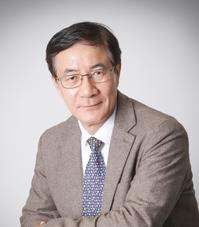
◆ Dr. Shin Dong-choon
Ph.D. in Public Administration, Representative of the National Union for Freedom and Unification. After passing the 21st Higher Civil Service Examination, he served in public office, followed by a career as a CEO, university professor, media contributor, author, and Chairman of the Global Aerospace Industry Association, among other active roles.

 Trump pressures for rate cut again ahead of FOMC... "Should be the lowest in the world"
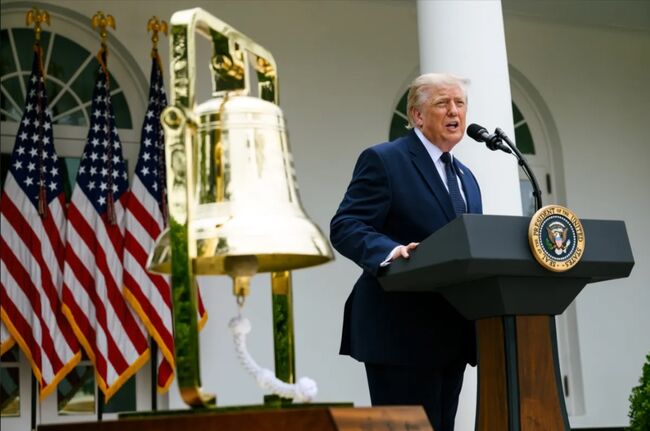
U.S. President Donald Trump. [Photo = The White House] U.S. President Donald Trump once again pressured the Federal Reserve, the U.S. central bank, to lower interest rates on the 27th (local time
Trump pressures for rate cut again ahead of FOMC... "Should be the lowest in the world"
U.S. President Donald Trump. [Photo = The White House] U.S. President Donald Trump once again pressured the Federal Reserve, the U.S. central bank, to lower interest rates on the 27th (local time
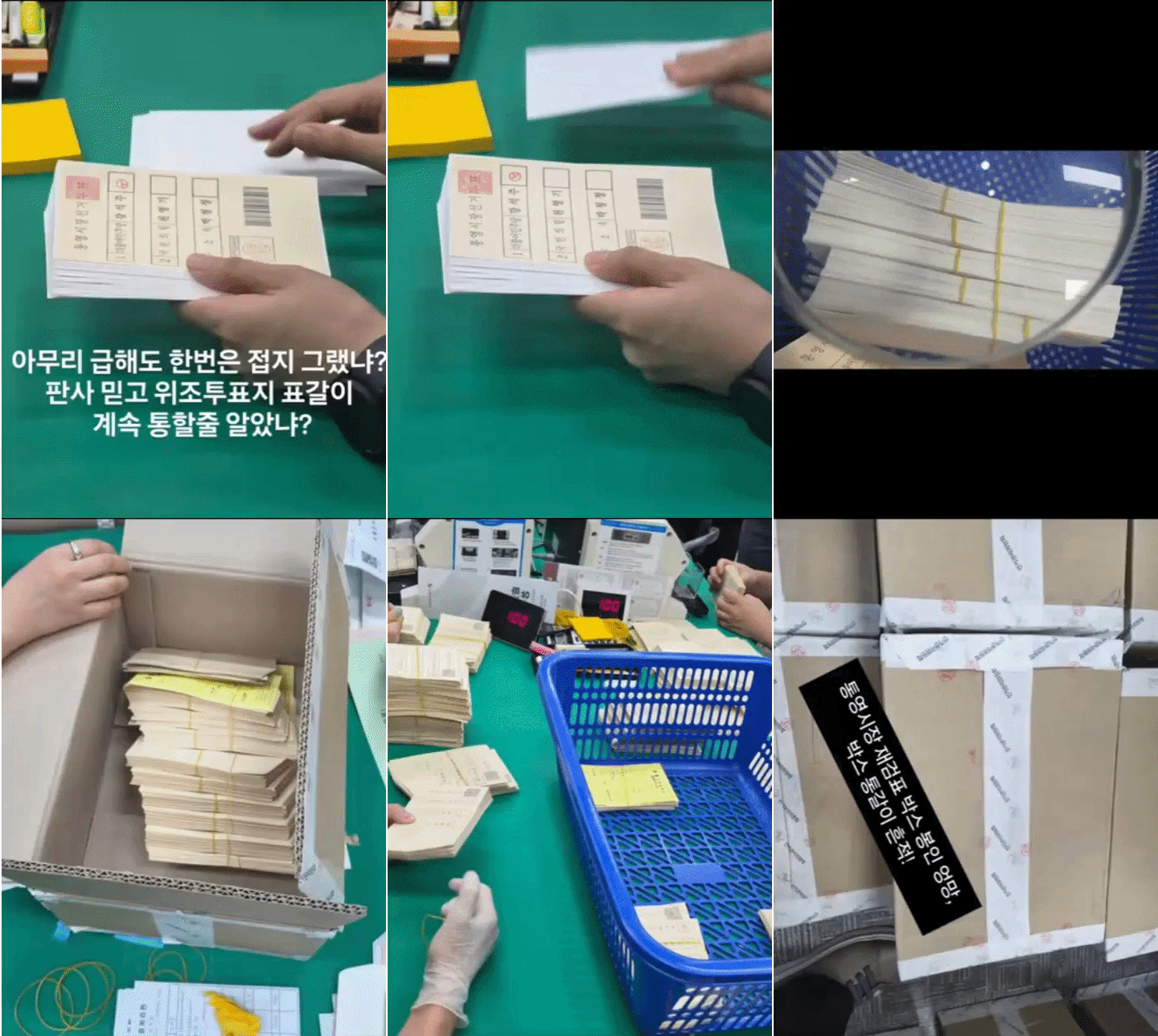 “Ignoring crisp ballots and damaged seals”… Tongyeong mayoral recount concludes with ‘no change in outcome,’ leaving suspicions and public outrage behind
Suspected counterfeit ballots discovered in Tongyeong [GIF from social media of Representative Hwang Kyo-ahn / Attorney Park Joo-hyun]During a recount of the Tongyeong mayoral election in South Gyeong
“Ignoring crisp ballots and damaged seals”… Tongyeong mayoral recount concludes with ‘no change in outcome,’ leaving suspicions and public outrage behind
Suspected counterfeit ballots discovered in Tongyeong [GIF from social media of Representative Hwang Kyo-ahn / Attorney Park Joo-hyun]During a recount of the Tongyeong mayoral election in South Gyeong
 President Yoon, regarding the first-instance ruling on the Public Official Election Act: “An excessive political verdict that distorts the facts… We will appeal immediately.”
The first-instance sentencing hearing for President Yoon Suk Yeol regarding violations of the Public Official Election Act is being broadcast live at Seoul Station on the 27th. [Photo=Yonhap News]Pres
President Yoon, regarding the first-instance ruling on the Public Official Election Act: “An excessive political verdict that distorts the facts… We will appeal immediately.”
The first-instance sentencing hearing for President Yoon Suk Yeol regarding violations of the Public Official Election Act is being broadcast live at Seoul Station on the 27th. [Photo=Yonhap News]Pres
 WSJ: "SK Hynix ADR Premium Is a Sign of AI Trading Overheat"
Advertisement for SK Hynix ADR listing in New York's Times Square [Reuters=Yonhap News file photo]The Wall Street Journal (WSJ) has pointed out that the price of SK Hynix’s American Depositary Recei
WSJ: "SK Hynix ADR Premium Is a Sign of AI Trading Overheat"
Advertisement for SK Hynix ADR listing in New York's Times Square [Reuters=Yonhap News file photo]The Wall Street Journal (WSJ) has pointed out that the price of SK Hynix’s American Depositary Recei
 'Godfather of Japanese Mystery Novels' Keigo Higashino Passes Away After Battle with Cancer at 68
Famous Japanese mystery novelist Keigo Higashino [AFP=Yonhap News]It has been belatedly reported that Keigo Higashino, the "godfather of Japanese mystery novels" and author of bestsellers such as "The
'Godfather of Japanese Mystery Novels' Keigo Higashino Passes Away After Battle with Cancer at 68
Famous Japanese mystery novelist Keigo Higashino [AFP=Yonhap News]It has been belatedly reported that Keigo Higashino, the "godfather of Japanese mystery novels" and author of bestsellers such as "The
 [Park Pil-kyu Security Column] To the Ignorant Trying to Clothe a Beast in Sheep's Clothing
Rep. Kim Byung-joo of the Democratic Party of Korea [Photo=Yonhap News]“The Air Force Academy doesn't teach you how to fly a plane!” “The Army, Navy, and Air Force academies are exactly the
[Park Pil-kyu Security Column] To the Ignorant Trying to Clothe a Beast in Sheep's Clothing
Rep. Kim Byung-joo of the Democratic Party of Korea [Photo=Yonhap News]“The Air Force Academy doesn't teach you how to fly a plane!” “The Army, Navy, and Air Force academies are exactly the
 [Issue Diagnosis] Two Effects of the Election Petition Review
 [Photo] Evidence of Election Fraud Flooding U.S. Media… Trump Had 2.7 Million Votes Stolen
 [Video] U.S. Semiquincentennial Air Show... 'Art in the Sky' streaks across New York
 [Editorial Cartoon] A Draconian Law That Undermines Freedom of Expression

 List
List