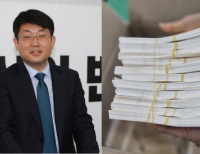
Hyundai Motor CEO Jose Munoz delivers a message to employees at Hyundai Motor Town Hall Meeting '2025 Leaders Talk' held at the company's headquarters in Gangnam-gu, Seoul on November 5. 2025.11.6 [Photo=Yonhap News]
Trump's 10% Tariff: The Math Adds Up, But the Trade Structure is More Complex
There are interpretations suggesting that "Korea is at an advantage compared to Japan and the European Union (EU) due to the Korea-US Free Trade Agreement (FTA)" regarding the 10% global tariff imposed by US President Donald Trump.
The calculation is that if 10% is added to existing tariffs, Korea, with a base tariff of 0%, would face a relatively lower final tax rate.
The numbers themselves are not incorrect. However, the story is not that simple when examining the entire structure of trade pressure.
This measure is a temporary tariff based on Section 122 of the US Trade Act.
This is a provision that allows the President to impose broad tariffs of up to 15% for 150 days due to balance of payments or foreign exchange imbalances.
Since 10% is uniformly added to all imports, the final tariff is calculated as 'existing tariff rate + 10%'.
Under the Korea-US FTA, a significant portion of Korea's exports to the US have a base tariff of 0%. In contrast, Japan and the EU still have most-favored-nation (MFN) tariffs averaging 2-3% under the World Trade Organization framework.
Arithmetically, this translates to 10% for Korea and 12-13% for Japan. The effect of the FTA is clearly present.
The problem is that this calculation is limited to the 'entry-level stage' of trade pressure.
A more powerful tool in US trade policy is Section 232 of the Trade Expansion Act.
This provision allows for the imposition of high tariffs on specific industries for national security reasons.
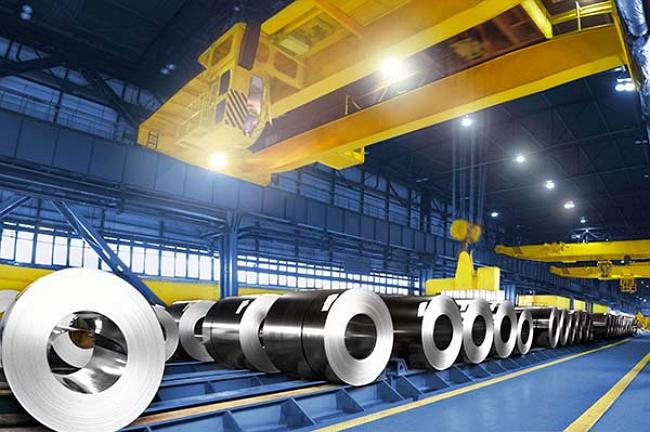
Steel and aluminum are already under this framework, and the possibility of its reactivation for automobiles is frequently mentioned.
The current 10% global tariff does not apply cumulatively to items covered under Section 232.
In other words, key Korean export industries like steel and automobiles are not included in the '0% vs. 3%' comparative structure from the outset.
The arithmetic advantage from the FTA is limited to general consumer goods and some industrial products.
There is another axis to this. Section 301 of the US Trade Act.
This provision allows for retaliatory tariffs to be imposed on foreign policies or regulations deemed unfair to US companies.
Large-scale, high tariffs against China were enacted under this provision. It is a means to directly target specific countries regardless of whether an FTA is in place.
Ultimately, US trade pressure has a multi-layered structure, starting with the broad, temporary measures of Section 122, moving to the industry-specific security card of Section 232, and culminating in country-specific sanctions under Section 301.
It is unlikely that the arithmetic differences observed at the Section 122 stage will be maintained at the Section 232 or Section 301 stages.
To summarize:
The calculation of 'existing tariff + 10%' is indeed true.
It is also true that an relative advantage arises for some items due to the FTA.
However, strategic industries such as steel and automobiles are already bound by separate security frameworks, and direct sanction tools like Section 301 exist in case of policy conflicts.
The assessment that "Korea is at an advantage due to the FTA" holds true in part, but it is limited in its significance when considering the overall structure of trade pressure.
The numbers are simple, but the structure is far more complex.

 [Statement by the Seo-beo-kka Korea Military Academy Save-the-Nation Comrades Association] ㉛ Recount the Votes Publicly, as the Previous Recount Concealed Election Fraud
Tongyeong Mayoral Election Recount [Photo=Yonhap News]South Korea's liberal democracy is dying. The National Election Commission (NEC) and the judiciary, which have plummeted into criminal syndicates
[Statement by the Seo-beo-kka Korea Military Academy Save-the-Nation Comrades Association] ㉛ Recount the Votes Publicly, as the Previous Recount Concealed Election Fraud
Tongyeong Mayoral Election Recount [Photo=Yonhap News]South Korea's liberal democracy is dying. The National Election Commission (NEC) and the judiciary, which have plummeted into criminal syndicates
 What is the significance of the "Trump 2028" red hats that keep making a comeback?
It is noteworthy that President Donald Trump is "intentionally" fueling controversy over whether he can actually run in the 2028 presidential election, even though it is "highly likely he is seriously
What is the significance of the "Trump 2028" red hats that keep making a comeback?
It is noteworthy that President Donald Trump is "intentionally" fueling controversy over whether he can actually run in the 2028 presidential election, even though it is "highly likely he is seriously
 Jin Cummings: "North Korea says it will increase the number of spies, so what is the government doing?"
U.S. political columnist Gene Cummings has publicly questioned the South Korean government, asking, "North Korea is announcing plans to increase its number of spies, yet what is the South Korean
Jin Cummings: "North Korea says it will increase the number of spies, so what is the government doing?"
U.S. political columnist Gene Cummings has publicly questioned the South Korean government, asking, "North Korea is announcing plans to increase its number of spies, yet what is the South Korean
 Attorney Do Tae-woo: “Discrepancies in Voter Count and Improper Sealing Confirmed in Tongyeong Mayoral Recount… Official Request for Further Verification Filed with Gyeongnam Election Commission”
A bundle of out-of-district early voting ballots photographed by attorney Do Tae-woo at the Tongyeong mayoral election recount site. A clear, solid line visible on the side of the ballots raises suspi
Attorney Do Tae-woo: “Discrepancies in Voter Count and Improper Sealing Confirmed in Tongyeong Mayoral Recount… Official Request for Further Verification Filed with Gyeongnam Election Commission”
A bundle of out-of-district early voting ballots photographed by attorney Do Tae-woo at the Tongyeong mayoral election recount site. A clear, solid line visible on the side of the ballots raises suspi
 Stock Market Crash 'Black Tuesday'… KOSPI down 10.8%, KOSDAQ down 7.7%
The KOSPI fell by more than 5% in early trading on the 28th, triggering a sell-side sidecar.On the 28th, the KOSPI plunged by more than 10%.Due to the sharp decline, a sell-side sidecar—a temporary
Stock Market Crash 'Black Tuesday'… KOSPI down 10.8%, KOSDAQ down 7.7%
The KOSPI fell by more than 5% in early trading on the 28th, triggering a sell-side sidecar.On the 28th, the KOSPI plunged by more than 10%.Due to the sharp decline, a sell-side sidecar—a temporary
 [World Heritage Committee] 25 New World Heritage Sites Inscribed in Busan… South Korea Successfully Expands 'Getbol' Listing
The Chairperson of the World Heritage Committee speaks at the plenary session of the 48th session of the World Heritage Committee, held at BEXCO in Busan on the 20th. [Photo: Yonhap News]A total of 25
[World Heritage Committee] 25 New World Heritage Sites Inscribed in Busan… South Korea Successfully Expands 'Getbol' Listing
The Chairperson of the World Heritage Committee speaks at the plenary session of the 48th session of the World Heritage Committee, held at BEXCO in Busan on the 20th. [Photo: Yonhap News]A total of 25
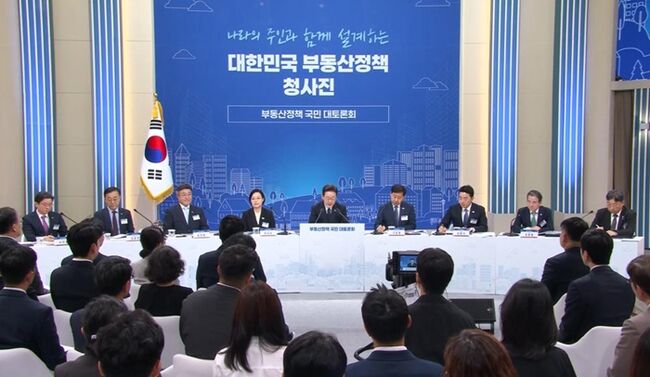 [Liberal Democratic Party Statement] Calling it a Grand Real Estate Debate… It Was Nothing More Than a Private Party Among Themselves
The 'National Grand Debate on Real Estate Policy' held on July 23rd and 27th. [Photo=Yonhap News]The 'National Grand Debate on Real Estate Policy,' hosted by the Lee Jae-myung administration under the
[Liberal Democratic Party Statement] Calling it a Grand Real Estate Debate… It Was Nothing More Than a Private Party Among Themselves
The 'National Grand Debate on Real Estate Policy' held on July 23rd and 27th. [Photo=Yonhap News]The 'National Grand Debate on Real Estate Policy,' hosted by the Lee Jae-myung administration under the
 [Photo] Evidence of Election Fraud Flooding U.S. Media… Trump Had 2.7 Million Votes Stolen
 [Video] U.S. Semiquincentennial Air Show... 'Art in the Sky' streaks across New York
 [Editorial Cartoon] A Draconian Law That Undermines Freedom of Expression

 List
List