On February 28th, the United States and Israel simultaneously struck Iran's central nuclear facilities and military command centers over a 48-hour period. In the process, approximately 49 key national leaders, including Supreme Leader Khamenei, were killed. It is unprecedented for an entire tier of leadership – encompassing the Supreme Leader's residence, Joint Chiefs of Staff, Revolutionary Guard Corps, and intelligence agencies – to be neutralized in a single operation.
While Iran bore the direct impact, China was more deeply shocked. Iran had acquired high-value fourth-generation air defense assets like China's YLC-8B radar and HQ-9B missiles to counter US stealth capabilities. However, these proved to be mere scrap metal, rendered useless by the new warfare method employed by the US, which combined AI-based target identification, satellite surveillance, cyber disruption, and precision strikes. The fact that US military power is far more sophisticated than anticipated was revealed, and China, witnessing the events in Iran, will likely retreat, recognizing its own limitations and the future landscape of warfare.
China's shock extends beyond mere military concerns. Its strategic space is undeniably shrinking amidst technological hegemony competition, the restructuring of energy and critical mineral supply chains, and shifts in global alliance structures. Economic growth rates have declined from past double digits to discussions of 4-5% targets, and the real estate sector is mired in a prolonged slump. Falling housing prices in major cities, defaults by large developers, and unfinished apartments reveal a structural crisis. Youth unemployment has become such a sensitive issue that official statistics cannot be released. The government's increased social control and continued regulations and crackdowns on private enterprises are showing signs of potential internal dissent.
The consecutive events in Venezuela and Iran have delivered different kinds of shocks to China. In Venezuela, the US quickly toppled the Maduro regime and arrested its leader, yet China was powerless to exert any influence even as its key partner, in which it had invested over $60 billion, collapsed. This starkly exposed the limitations of China's overseas projection capabilities and global influence.
Conversely, China likely witnessed in Iran how the US and Israel eliminated the supreme leadership through AI reconnaissance, cyber disruption, and precision strikes, demonstrating that modern warfare has transitioned into a "war of precision, not scale." The events in Iran and Venezuela exposed China's limitations in influence. Coupled with the strengthening of its technology and security alliances and an economic slowdown, China's strategic space is continuously contracting, and its decline will accelerate through a simultaneous accumulation of weakened external influence and internal vulnerabilities.
Signs of China's decline have a direct impact on South Korea as well. The US-China strategic competition is culminating in US victory, yet Korean politics has failed to keep pace with this change. Security demands consistency and speed, but the current administration remains trapped in a pro-China framework. The security environment is expanding into information warfare, cognitive warfare, and cyber warfare, while political debates are confined to internal conflicts and power struggles. Nations that are slow to make decisions inevitably face crises.
Within this structure, South Korea's choice must be clear. South Korea must become an active coordinator, not a passive ally of the US. It needs to strengthen its role in the Indo-Pacific strategy, protect key industries amidst supply chain restructuring, and establish a proactive strategy for North Korea that balances deterrence and dialogue. However, the foundation for all these strategies ultimately lies in the restoration and strengthening of the ROK-US alliance.
The ROK-US alliance is not a product of friendship but a blood pact forged in shared sacrifice. Over 36,000 US soldiers died in the Korean War, with more than 140,000 wounded. It is on the foundation of these sacrifices that South Korea rose to its present status. The Mutual Defense Treaty signed in 1953 created the bedrock of the alliance, operating on legal obligations and strategic structures. An alliance is maintained only when parties understand the same words with the same meaning. Promises and interpretations vary depending on the context of the statement, and it is possible that a rift has already been created by the act of protesting US military flight training out of consideration for China.
Today's international security environment is a multi-crisis structure where Europe, the Middle East, and the Indo-Pacific are all simultaneously unstable. The Russia-Ukraine war in Europe is prolonged, instability in the Middle East is deepening due to the situation in Iran, and competition over maritime order is escalating in the Indo-Pacific. Within these complex crises, the US strategy is not a linear approach targeting a single nation.
In the long term, it will pressure China through the Indo-Pacific and supply chain restructuring. In the medium term, it will keep Russia and North Korea as "manageable risks," and in the short term, it will eliminate immediate threats while avoiding full-scale war. The core of this multi-layered strategy is to maintain the US-centric order while minimizing direct conflict.
In this environment, the ROK-US alliance faces new questions. What are our preparedness capabilities when US Forces Korea moves key equipment and personnel to crises in other regions? Are there institutional mechanisms to adjust when strategic priorities diverge? Have we pre-agreed on what actions we will take in various crisis situations? If South Korea does not have clear answers to these questions, the alliance may exist but fall into a state of non-functionality.
The international order of power is already moving rapidly. The question is whether the current government will understand and follow this change, or adhere to its pro-China stance as its true nature has revealed itself. The former is the path of life, and the latter is the path of death.
Amidst China's shock and signs of decline, the US's strategic pivot, and the alliance structure in an era of multiple crises, the path South Korea must choose is clear: restore the ROK-US alliance, overhaul strategies that have crumbled in the name of peace, and face international realities squarely. The military and security apparatus should seek a path for national survival without being swayed by political power.
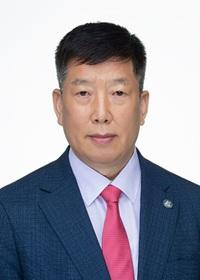
◆ Park Pil-gyu
Editor, Hankook Ilbo
ROK Army Officer Candidate School, Class of 40

 [Statement by the Seo-beo-kka Korea Military Academy Save-the-Nation Comrades Association] ㉛ Recount the Votes Publicly, as the Previous Recount Concealed Election Fraud
Tongyeong Mayoral Election Recount [Photo=Yonhap News]South Korea's liberal democracy is dying. The National Election Commission (NEC) and the judiciary, which have plummeted into criminal syndicates
[Statement by the Seo-beo-kka Korea Military Academy Save-the-Nation Comrades Association] ㉛ Recount the Votes Publicly, as the Previous Recount Concealed Election Fraud
Tongyeong Mayoral Election Recount [Photo=Yonhap News]South Korea's liberal democracy is dying. The National Election Commission (NEC) and the judiciary, which have plummeted into criminal syndicates
 What is the significance of the "Trump 2028" red hats that keep making a comeback?
It is noteworthy that President Donald Trump is "intentionally" fueling controversy over whether he can actually run in the 2028 presidential election, even though it is "highly likely he is seriously
What is the significance of the "Trump 2028" red hats that keep making a comeback?
It is noteworthy that President Donald Trump is "intentionally" fueling controversy over whether he can actually run in the 2028 presidential election, even though it is "highly likely he is seriously
 Jin Cummings: "North Korea says it will increase the number of spies, so what is the government doing?"
U.S. political columnist Gene Cummings has publicly questioned the South Korean government, asking, "North Korea is announcing plans to increase its number of spies, yet what is the South Korean
Jin Cummings: "North Korea says it will increase the number of spies, so what is the government doing?"
U.S. political columnist Gene Cummings has publicly questioned the South Korean government, asking, "North Korea is announcing plans to increase its number of spies, yet what is the South Korean
 Attorney Do Tae-woo: “Discrepancies in Voter Count and Improper Sealing Confirmed in Tongyeong Mayoral Recount… Official Request for Additional Verification Submitted to Gyeongnam Election Commission”
A bundle of mail-in early voting ballots captured by lawyer Do Tae-woo at the Tongyeong mayoral election recount site. A clear solid line, raising suspicions of election fraud, is visible on the side
Attorney Do Tae-woo: “Discrepancies in Voter Count and Improper Sealing Confirmed in Tongyeong Mayoral Recount… Official Request for Additional Verification Submitted to Gyeongnam Election Commission”
A bundle of mail-in early voting ballots captured by lawyer Do Tae-woo at the Tongyeong mayoral election recount site. A clear solid line, raising suspicions of election fraud, is visible on the side
 Stock Market Crash 'Black Tuesday'… KOSPI down 10.8%, KOSDAQ down 7.7%
The KOSPI fell by more than 5% in early trading on the 28th, triggering a sell-side sidecar.On the 28th, the KOSPI plunged by more than 10%.Due to the sharp decline, a sell-side sidecar—a temporary
Stock Market Crash 'Black Tuesday'… KOSPI down 10.8%, KOSDAQ down 7.7%
The KOSPI fell by more than 5% in early trading on the 28th, triggering a sell-side sidecar.On the 28th, the KOSPI plunged by more than 10%.Due to the sharp decline, a sell-side sidecar—a temporary
 [World Heritage Committee] 25 New World Heritage Sites Inscribed in Busan… South Korea Successfully Expands 'Getbol' Listing
The Chairperson of the World Heritage Committee speaks at the plenary session of the 48th session of the World Heritage Committee, held at BEXCO in Busan on the 20th. [Photo: Yonhap News]A total of 25
[World Heritage Committee] 25 New World Heritage Sites Inscribed in Busan… South Korea Successfully Expands 'Getbol' Listing
The Chairperson of the World Heritage Committee speaks at the plenary session of the 48th session of the World Heritage Committee, held at BEXCO in Busan on the 20th. [Photo: Yonhap News]A total of 25
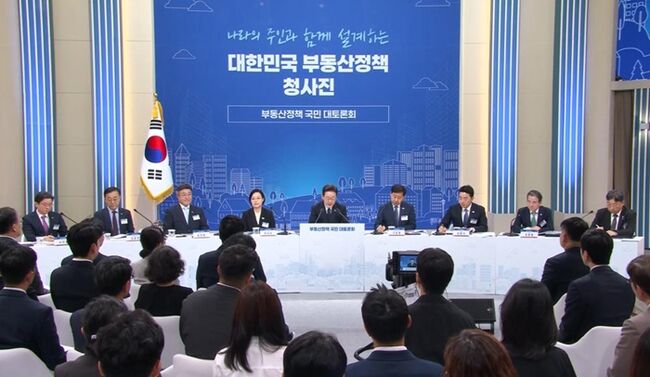 [Liberal Democratic Party Statement] Calling it a Grand Real Estate Debate… It Was Nothing More Than a Private Party Among Themselves
The 'National Grand Debate on Real Estate Policy' held on July 23rd and 27th. [Photo=Yonhap News]The 'National Grand Debate on Real Estate Policy,' hosted by the Lee Jae-myung administration under the
[Liberal Democratic Party Statement] Calling it a Grand Real Estate Debate… It Was Nothing More Than a Private Party Among Themselves
The 'National Grand Debate on Real Estate Policy' held on July 23rd and 27th. [Photo=Yonhap News]The 'National Grand Debate on Real Estate Policy,' hosted by the Lee Jae-myung administration under the
 [Photo] Evidence of Election Fraud Flooding U.S. Media… Trump Had 2.7 Million Votes Stolen
 [Video] U.S. Semiquincentennial Air Show... 'Art in the Sky' streaks across New York
 [Editorial Cartoon] A Draconian Law That Undermines Freedom of Expression

 List
List