- By Kim Mi-young and Roy Kim, Sage, 20,000 won

Several unprecedented and peculiar scenes were captured during this June 3rd election.
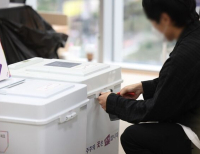
First, there was the scene where Lee Jae-myung brought his ballot outside the polling booth, claiming his stamp was only half-pressed, and protested to the election official. No president has ever acted this way before.
Moon Jae-in, defying the instruction to fold the ballot in half, deliberately placed it unfolded into the ballot box.
At the Jamsil polling station, voters were turned away due to a shortage of ballots. Nationally, 140 polling stations experienced ballot shortages.
In a situation where he was isolated by protestors, a general civil servant, not an election committee member, stepped forward and suggested electronic voting as a solution, saying, "I can't do this anymore."
What do these situations signify? The recently co-published book, 'The Dandong Project,' by professors Roy Kim and Mi-young Kim, offers clues.
According to the authors, the peculiar events at the June 3rd local elections are not coincidental. The book emphasizes, "A roadmap for the introduction of a blockchain online voting system was already prepared during the Moon Jae-in administration in 2018. The series of events unfolding now should be seen as building the justification to implement that roadmap."
Dandong is a border city in Liaoning Province, China, on the banks of the Yalu River. Across the river lies Sinuiju, North Korea. In 2001, the 'Hana Program Center' was established in this city. This is where the entire story of the book begins.
The name 'The Dandong Project' naturally brings to mind the Manhattan Project. According to the authors, the Manhattan Project was to protect the free world, whereas The Dandong Project is to dismantle liberal democracy. While the names are similar, the directions are completely opposite. However, the book argues that their structures are surprisingly similar.
According to the book, one of the most powerful weapons in hybrid warfare is election interference. It involves undermining a rival nation's democratic processes from within. Without using military force, it can lead to the replacement of that country's leader from the outside. It can steer national operations in a desired direction, sow discord among allies, withdraw military bases, and change national strategies.
And all of this is done under the guise of 'democratic choice.' Because it appears to be the result of the people's own choosing, it is extremely difficult to find or prove any traces of external interference. The book dissects the specific mechanisms of this bloodless war of elections.
By Lim Yo-hee, Reporter
What do you think of this article?

 [Focus] Why did the dedicated communication network, checked three times, stop?... Three questions about the "Wi-Fi connection" for early voting
In the broadcast of Lee Young-don TV on the 16th, a current National Election Commission official exposes the reality of the 6.3 local elections based on direct experience. [Photo=Screenshot fr
[Focus] Why did the dedicated communication network, checked three times, stop?... Three questions about the "Wi-Fi connection" for early voting
In the broadcast of Lee Young-don TV on the 16th, a current National Election Commission official exposes the reality of the 6.3 local elections based on direct experience. [Photo=Screenshot fr
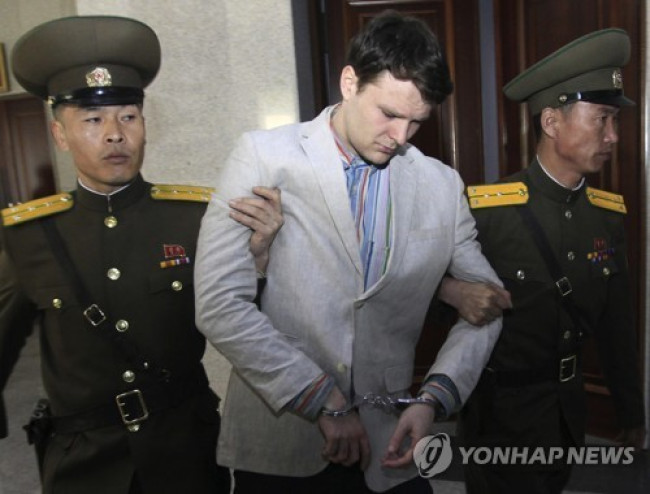 US Court Orders North Korea-Related Frozen Funds of $21 Million to be Paid to Warmbier's Family
Otto Warmbier escorted to a North Korean court in March 2016 [AP Yonhap News Archive]A U.S. court has ruled in favor of the family of Otto Warmbier, the deceased American student who was held in deten
US Court Orders North Korea-Related Frozen Funds of $21 Million to be Paid to Warmbier's Family
Otto Warmbier escorted to a North Korean court in March 2016 [AP Yonhap News Archive]A U.S. court has ruled in favor of the family of Otto Warmbier, the deceased American student who was held in deten
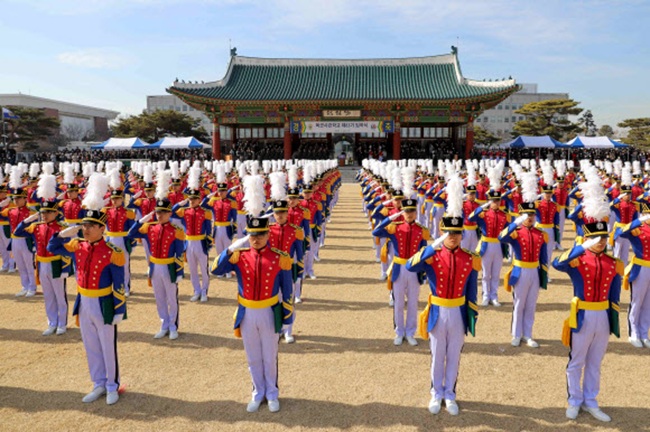 "Prioritizing Prudence Over Speed for ROTC Reorganization and Integration"... Former ROTC Superintendents Issue Public Appeal
The alumni of the Korea Military Academy emphasized that 'Hwarangdae' in Taereung, Seoul, is not merely an educational facility but a historical asset imbued with the legitimacy of the ROK Armed Force
"Prioritizing Prudence Over Speed for ROTC Reorganization and Integration"... Former ROTC Superintendents Issue Public Appeal
The alumni of the Korea Military Academy emphasized that 'Hwarangdae' in Taereung, Seoul, is not merely an educational facility but a historical asset imbued with the legitimacy of the ROK Armed Force
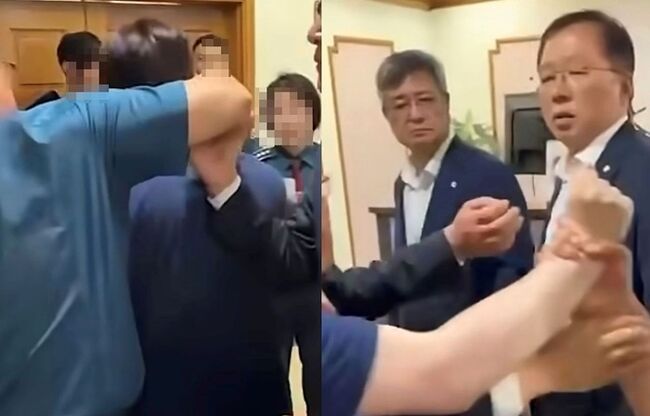 People's Power Party, Seoul Metropolitan Police Agency Commissioner & Security Division Chief involved in 'assaulting aides' controversy, charged with embezzlement and assault
Floor Leader Chung Jin-sik criticized on social media, stating, "During our party's lawmakers' protest visit to the Seoul Metropolitan Police Agency, the head of the SMPA's security division committed
People's Power Party, Seoul Metropolitan Police Agency Commissioner & Security Division Chief involved in 'assaulting aides' controversy, charged with embezzlement and assault
Floor Leader Chung Jin-sik criticized on social media, stating, "During our party's lawmakers' protest visit to the Seoul Metropolitan Police Agency, the head of the SMPA's security division committed
 Central Group Situation Tightens Bond Market... Investors Grimace at 'Halved' Corporate Bonds
Signboard of former JoongAng Ilbo JTBC building [Provided by Yonhap News TV]The bond market is also on edge as five affiliates of the JoongAng Group have filed for corporate rehabilitation proceedings
Central Group Situation Tightens Bond Market... Investors Grimace at 'Halved' Corporate Bonds
Signboard of former JoongAng Ilbo JTBC building [Provided by Yonhap News TV]The bond market is also on edge as five affiliates of the JoongAng Group have filed for corporate rehabilitation proceedings
 Jang Won-young sparks controversy over airport ID check while wearing a mask… Airport Corporation "Strengthening procedural guidance"
Jang Won-young of IVE [Yonhap News] The Korea Airports Corporation will strengthen guidance on identity verification procedures following a recent controversy involving idol group IVE's Jang Won-
Jang Won-young sparks controversy over airport ID check while wearing a mask… Airport Corporation "Strengthening procedural guidance"
Jang Won-young of IVE [Yonhap News] The Korea Airports Corporation will strengthen guidance on identity verification procedures following a recent controversy involving idol group IVE's Jang Won-
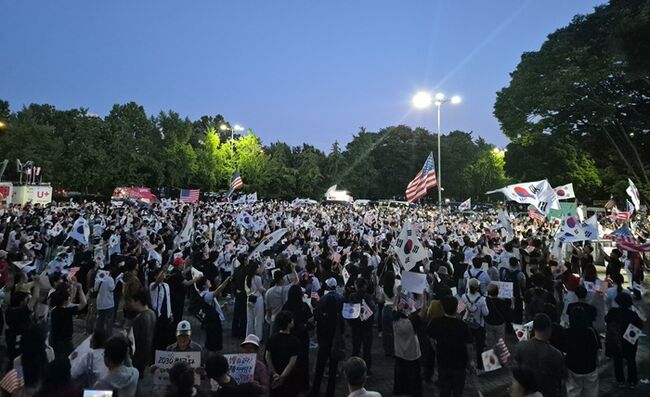 [Kim Jae-soo Column] Has the press, by distorting obvious facts, abandoned its role as the press?
Reporting that a gathering of many young people was dominated by the elderly, as if only about 100 people were present despite a huge crowd, is tantamount to acting as a scoundrel who has abandoned jo
[Kim Jae-soo Column] Has the press, by distorting obvious facts, abandoned its role as the press?
Reporting that a gathering of many young people was dominated by the elderly, as if only about 100 people were present despite a huge crowd, is tantamount to acting as a scoundrel who has abandoned jo
 [Photo] Election Commission staff, deeply absorbed in 'golf swing practice' amidst all this
 [영상] ‘트럼프 절친’ 린델 “한국 부정선거 트럼프에게 알려주겠다”
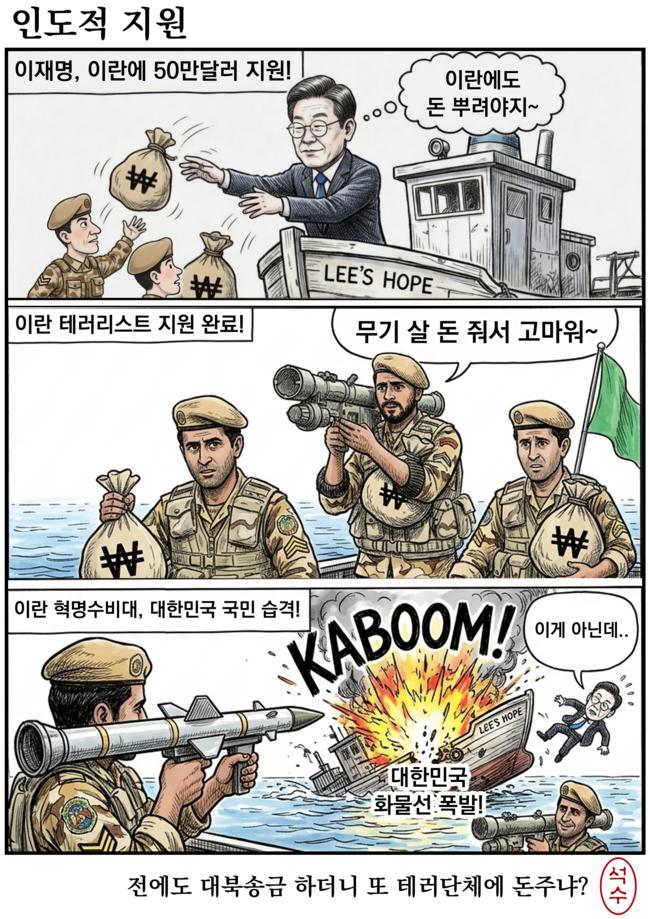 [시사만화] 인도적 지원

 List
List