Dr. Ji Man-won ©Hanmi IlboA new legal debate is igniting within the legal and historical communities surrounding the 1980 Gwangju Democratization Movement (May 18), which has been the most volatile flashpoint in South Korea’s modern history for decades.
Dr. Ji Man-won (CEO of System Club), who served a prison term following his research on the May 18 movement and was released upon completing his sentence last year, has launched a direct counterattack against key figures of the May 18 organizations who previously sued him. His legal counsel is the law firm Chuyang Autumn Sunshine (Managing Partner Ko Young-il), and the charge brought forward is "genocide," a crime to which the statute of limitations does not apply.
According to the criminal complaint obtained by the Hanmi Ilbo, Dr. Ji’s side alleges fatal inconsistencies regarding the movements of individuals identified in photographs from the May 18 period and the timing of their deaths as officially recognized by the courts. Consequently, they have filed a complaint against these individuals with the Uiwang Police Station in Gyeonggi Province. As this is viewed as a precise legal counter-maneuver that challenges the logic behind the judiciary's previous defamation convictions against Dr. Ji, our publication has conducted an in-depth investigation into the situation.
Uncovering the Flaws in the Judiciary’s 'Gwang-su Ruling' After Unjust Imprisonment
Dr. Ji Man-won is regarded as a pioneer in May 18 research, having spent the last 24 years studying the event within an academic framework and authoring 17 historical books. With a unique background—a graduate of the Korea Military Academy, a Vietnam War veteran, and a Ph.D. holder and former professor at the U.S. Naval Postgraduate School—he has delved into the hidden aspects of May 18 with his characteristic tenacity and analytical prowess.
However, the price for seeking the truth was harsh. Dr. Ji identified individuals in photos taken at the Gwangju scene on May 23, 1980, as North Korean figures Hwang Jang-yop ("Gwang-su 71") and O Kuk-ryol ("Gwang-su 73"). He was subsequently sued for defamation by Gwangju citizens Park Nam-sun and Ji Yong, who claimed to be the individuals in those photos. (Gwang-su means Kwangju's unidentified person)
The judiciary ruled against Dr. Ji in all three trials, reaching a final verdict that "the individuals in the photos are indeed Park Nam-sun and Ji Yong." As a result, Dr. Ji was imprisoned for two years, and he was released in January of last year. Coincidentally, the day of his release was the same day President Yoon Suk-yeol appeared before the Corruption Investigation Office for High-ranking Officials (CIO), marking a day where the fates of two patriots who have fought against anti-state forces seemed to cross paths.
Despite the pain of his imprisonment, Dr. Ji had been preparing a counter-card. Paradoxically, the breakthrough he discovered was the very final judicial ruling that had previously constrained him.
The Combination of CIA Reports and Field Photos, and the Truth Revealed
The contradictions in the court's ruling raised by Dr. Ji’s side have emerged as a significant debate due to the convergence of U.S. Central Intelligence Agency (CIA) reports and investigative findings by the media outlet News and Commentary (News-wa-Nondan).
According to the complaint, photographs taken with the South Jeolla Provincial Office as the backdrop during the May 18 movement show men, appearing to be an "armed arrest squad," escorting citizens into the provincial office. The court officially recognized Park Nam-sun (Gwang-su 71) as the leader and Ji Yong (Gwang-su 73) as the deputy leader of this "armed arrest squad" in its ruling.
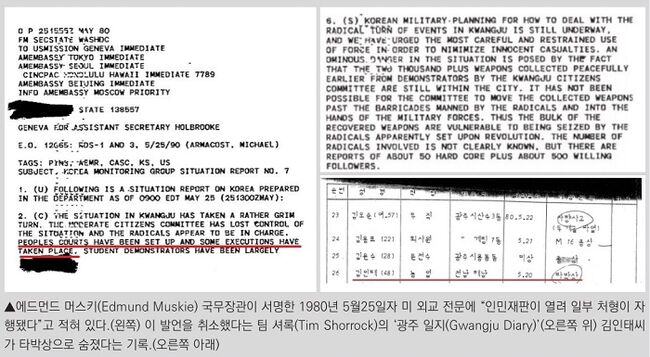
In this regard, Dr. Ji’s side has presented diplomatic cables declassified by the U.S. government as evidence. A CIA document, declassified on May 11, 2020 (local time) and transferred to the South Korean government, contained startling language.
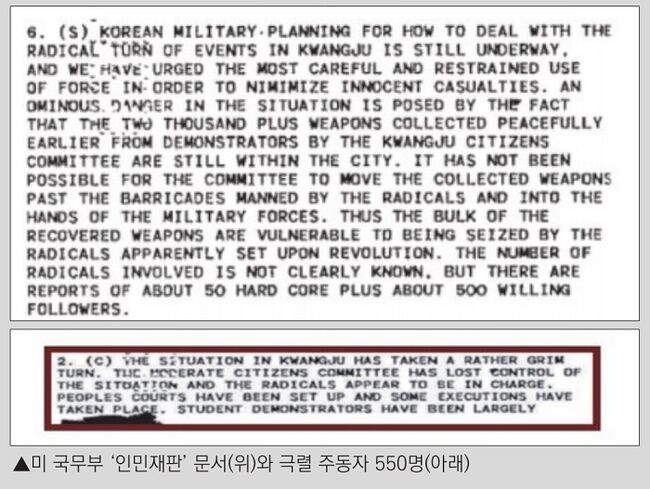
A diplomatic cable dated May 25, reported by the U.S. Embassy in Seoul or U.S. Forces Korea and signed by Secretary of State Edmund Muskie of the Carter administration for Richard Holbrooke, Assistant Secretary of State for East Asian and Pacific Affairs in Geneva, stated: "The situation in Gwangju is worsening. The moderate citizens' committee has lost control of the situation, and it appears radicals are in charge. People's courts have been set up and some executions have taken place."
U.S. Ambassador to South Korea William Gleysteen also reported to Washington in a May 25 cable that there was evidence "EVEN OF PEOPLE'S COURTS AND EXECUTIONS."
There was a significant follow-up reversal regarding this. According to our reporting, left-leaning U.S. investigative journalist Tim Shorrock stated on page 155 of his book, Gwangju Diary, "Muskie had to retract those statements two days later."
According to Shorrock, Muskie requested in a follow-up cable to Holbrooke, "The situation in Gwangju remains quiet but tense," and added, "An earlier report that the insurgents had set up people's courts and had carried out executions had not been fully confirmed and should be treated with caution."
This was based on "KOREAN SITUATION REPORT NO. 8." The report informed Assistant Secretary Holbrooke as of 7:00 AM on the 26th, one day later, that the reports of people's courts had not been sufficiently verified.
"Not Fully Verified"... But "Armed Radicals Discussing Revolution Replaced Students"
However, there were still suspicious points.
The initial diplomatic cable dated the 25th, signed by Secretary Muskie, contained records of "unidentified armed radicals." It also noted, "Student demonstrators have been largely replaced by unidentified armed radicals who are talking of setting up a revolutionary government."
Furthermore, declassified documents released by Dr. Ji stated that "the core extremists who led the Gwangju unrest numbered about 550 (50 in leadership, 500 followers)."
Consequently, in an article titled "The 5.18 Gwangju and the Question of People's Courts (Subtitle: Those Who Did Not Return Due to the Citizen Militia)" on May 12, 2024, News and Commentary reported that Gwangju citizens taken into the provincial office by the armed forces might have been beaten to death by the citizen militia. Additionally, after discovering and analyzing further field photos, Dr. Ji believes that a total of four South Korean citizens, including farmer Kim In-tae from Haenam County and private tutor Kim Joong-sik, were taken into the provincial office and killed.
In particular, News and Commentary raised the possibility that the perpetrators were members of the citizen militia, based on documents recording farmer Kim In-tae (then 48) as dying of "contusions" and the testimony of his bereaved wife, Shim Bok-rye, inscribed on his tombstone. The tombstone reads, "It is unknown whether he died immediately after being taken away or died just before being discarded after suffering from beatings. All that is certain is that severe beatings were the cause of death."
The cause of death for Kim Joong-sik (42) was listed as "unknown."
News and Commentary stated, "The fact that people other than Kim In-tae or Kim Joong-sik were taken by the citizen militia, never returned, and were ultimately declared dead without even being recognized as persons of national merit is enough to infer that people's courts existed."
Testimony of Elderly Women and Conflicting Paths Become a 'Checkmate' for the Ruling
The court has previously deemed the so-called "Gwang-su" claims, which identified figures in the photos as high-ranking North Koreans (Hwang Jang-yop, O Kuk-ryol, etc.), as false, and determined that they were Gwangju citizens such as Park Nam-sun and Ji Yong.
However, Dr. Ji’s side has directly targeted the court, claiming it made an unreasonable ruling without even verifying basic facts. The most fatal contradiction is revealed in the discrepancy between the individuals in the photos and the actual documented paths of the victims' families.
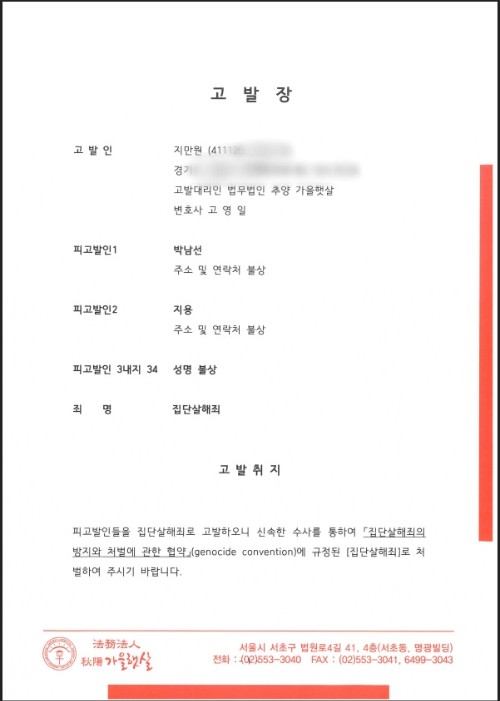 Criminal Complaint. [Law Firm Chuyang Autumn Sunshine] Below is the logical basis for Dr. Ji’s side based on the complaint:
"Regarding 'Gwang-su 139', the court identified the individual in the photo as an 80-year-old woman, Shin Bong-seop. However, in the record of bereaved families' testimony, Shin stated that she only learned of her husband's death on May 30. The photo recognized by the court, however, shows her weeping while holding her husband's coffin at the South Jeolla Provincial Office on May 23, which does not make sense logically."
"Regarding 'Gwang-su 62', the court determined that 90-year-old Kim Jin-sun was the same person in a photo taken in front of the provincial office on May 23, weeping. However, she was notified by the police of her son's death during the prison attack and identified his body on June 30, a full month later."
Dr. Ji also pointed out that based on video analysis and facial recognition expert findings, the individual identified as "Gwang-su 73" clearly has the upturned, "pig-like" nose characteristic of North Korea's O Kuk-ryol, yet the court recognized this person as Gwangju citizen Ji Yong.
Dr. Ji’s side claims that based on these inconsistencies, the judiciary unreasonably matched the individuals in the photos with Gwangju citizens in order to establish defamation charges.
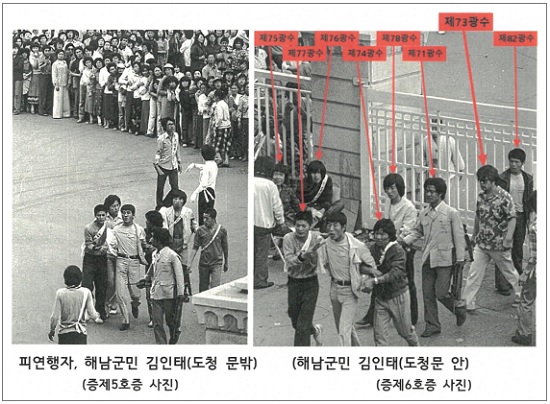 Photo taken in May 1980. [Excerpt from p. 9 of the complaint]
"Gwangju Citizens or External Forces?"... The Checkmate in Legal Logic
Furthermore, through separate research, Dr. Ji has identified that the number of armed militants mobilized to escort these four Gwangju citizens totaled 34. According to the court's ruling, the identified leaders among these 34 are Park Nam-sun and Ji Yong. The identities of the remaining 32 remain veiled.
Consequently, Dr. Ji’s side has demanded a clear answer from the judiciary and the May 18 organizations regarding the identities of these 34 people.
This is precisely where the "checkmate" in legal logic occurs.
First, if the four deceased were indeed Gwangju citizens, then Park Nam-sun and Ji Yong are inevitably complicit in murder, having forcibly taken South Korean citizens and executed them via summary people's court trials.
The logic is that, given the precedent where Bae Yong-ju, who ran over and killed Hampyeong police officers with a bus during the May 18 movement, was sentenced to death, they should also face severe punishment.
Dr. Ji further argues that if Gwangju citizens massacred other Gwangju citizens, the logical basis for calling May 18 a "democratization movement" is shaken to its core.
Second, if they are not punished for murder, it means they are not Gwangju citizens, which leads to the only remaining conclusion: they were external forces—specifically, according to Dr. Ji’s claims, "North Korean soldiers." This is the core argument of the complaint.
Right-wing May 18 researchers interpret the situation as a sharp boomerang: the courtroom testimonies of Park Nam-sun and Ji Yong, who claimed to be "the people in the photos" to punish Dr. Ji, and the subsequent court ruling, have returned to snare them.
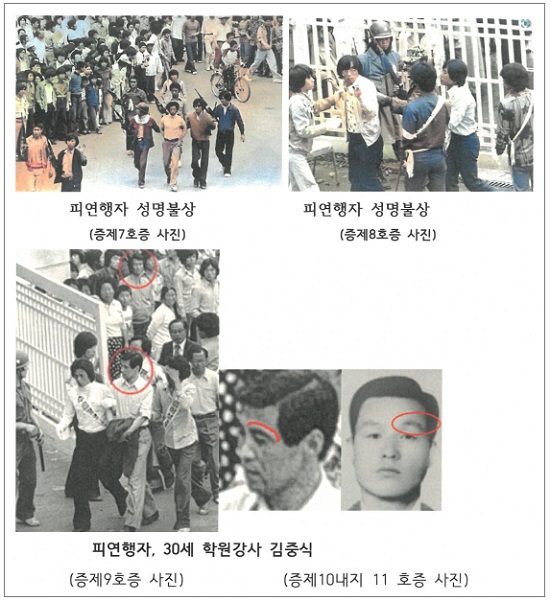 Photo taken in May 1980. [Excerpt from p. 10 of the complaint]
"Urging Severe Punishment for 'Inhumane Genocide' with No Statute of Limitations"
The reason this complaint is unsettling the legal community lies in the charge itself. Under Article 3, Paragraph 2 of the Act on Special Cases concerning the Statute of Limitations for Crimes against the Constitutional Order and Article 6 of the Act on the Punishment of Crimes within the Jurisdiction of the International Criminal Court (ICC), "genocide"—the intent to destroy, in whole or in part, a specific group—is exempt from all statutes of limitations.
Complainant Dr. Ji Man-won remarked in an interview with the Hanmi Ilbo last May, "This is a clear, inhumane crime where extreme factions within the 5.18 protestors murdered innocent citizens who opposed their policies via people's courts." He urged severe punishment, pointing out that "this verdict has become a fatal trap that has ensnared Gwangju and the judiciary themselves."
At a modern history lecture held at an L-business center in Seocho-gu, Seoul, on the 25th of last month—the 76th anniversary of the Korean War—he again pointed out the contradictions between declassified U.S. documents, historically verified photos of the South Jeolla Provincial Office, and the court's conflicting rulings.
"The Judges Must Know"... The 'Law Distortion Crime' Created by the Lee Government Becomes a Weapon for Counterattack
It is Dr. Ji Man-won’s contention, based on cold analysis, that the Gwangju May 18 organizations and the judiciary have not punished these two individuals, have no intention to, and will never be able to in the future.
He added, "The judges themselves must have known of this contradiction inwardly," referring to the law on "distorting the law" created under the Lee Jae-myung political sphere. This is interpreted as meaning that if Park Nam-sun and Ji Yong are not the actual murderers, the individuals in the photos are likely external forces, and the judges who knowingly gave an unreasonable guilty verdict must also face national judgment. Attendees at the lecture appeared to believe that Dr. Ji had exposed the deepest underbelly of the May 18 movement.
In response to this, Park Nam-sun, who served as the situational room chief at the South Jeolla Provincial Office during May 18, told the Hanmi Ilbo by phone, "There were no people's courts." Park dismissed the claim, saying, "The only person detained at the time was one soldier, Sergeant Kim Ki-bum from the Sangmudae detachment, whom we sent back to Sangmudae. There were no other instances of detaining regular citizens or holding people's courts."
He drew a line by stating, "I am a person who exposes fake meritorious persons and tries to inform people of the truth of May 18." When asked about News and Commentary citing the bereaved family's statement that the victim "returned dead," he replied, "That is a matter to be clarified through the bereaved family." When asked if he had previously told editor Hwang Gyu-hak of News and Commentary that he "knew nothing about it," he also denied it.
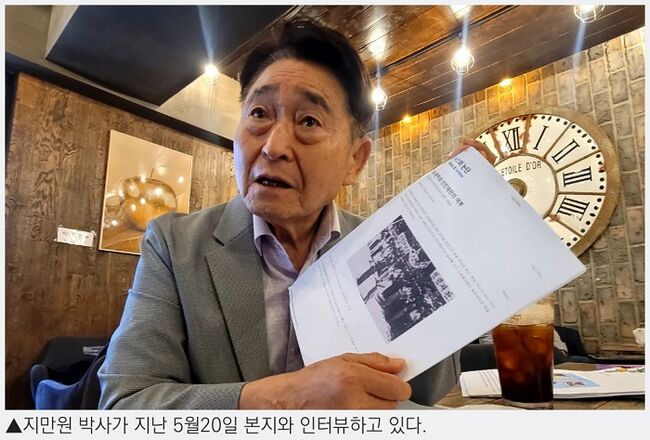
Regarding Ji Yong, Park said, "Ji Yong was outside (the provincial office) at the time" and added that he did not know his current contact information. Regarding the filing of the complaint, he added that it was "the first I've heard of it" and that "since the complaint has been filed, I will undergo questioning (as an accused person)."
Editor Hwang (a pastor) said in a phone call with our paper, "Several years ago, I visited and met with Park Nam-sun." He added, "The wife of the man who was dragged away (Shim Bok-rye) admitted that her husband died, there is a photograph of him being dragged to the provincial office, the CIA document mentioned executions, and the cause of death being recorded as contusions all point to a matter that requires further investigation of the truth."
Whether the judiciary, trapped in the precise snare they set for themselves, will place the "protagonists of Gwangju" in the dock as genocide defendants, or admit to errors in their ruling—and how the police and judiciary will respond to this rigorous legal battle—is drawing significant attention.
Reporter Kyoum Hur
☞Click: Read this article in Korean
[단독 추적] 5·18 ‘광수 판결’의 치명적 부메랑… 지만원 박사가 투척한 ‘집단학살죄’ 폭탄

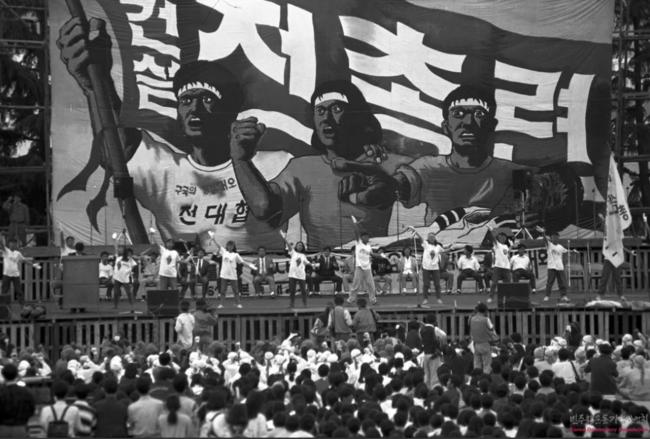 [Songsan Column | An 80-Year History of the Pro-North Left] ㉞ The Persistence of the Juche-Faction in 1990s Universities
Inauguration Ceremony of the 5th Jeondaehyop in 1991 By the 1990s, the university campus was no longer a place where massive protests erupted daily and the streets were filled with shouts, as was
[Songsan Column | An 80-Year History of the Pro-North Left] ㉞ The Persistence of the Juche-Faction in 1990s Universities
Inauguration Ceremony of the 5th Jeondaehyop in 1991 By the 1990s, the university campus was no longer a place where massive protests erupted daily and the streets were filled with shouts, as was
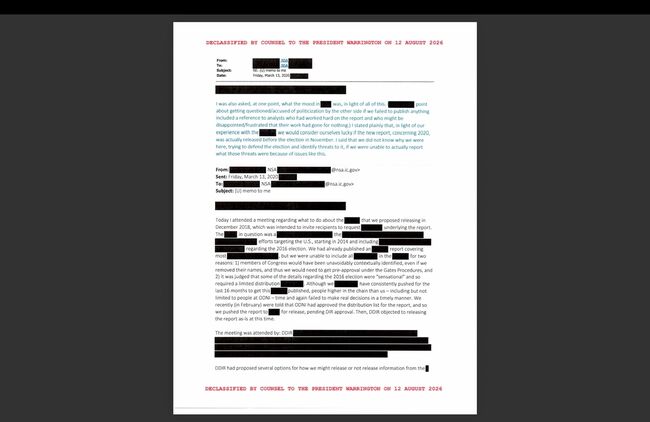 “'China’s Interference in U.S. Presidential Election': 16 Months of Reports to Trump Ignored”
Declassified documents from the U.S. National Security Agency (NSA) released by the White House Government Transparency Task Force on the 18th (local time). They contain emails among intelligence agen
“'China’s Interference in U.S. Presidential Election': 16 Months of Reports to Trump Ignored”
Declassified documents from the U.S. National Security Agency (NSA) released by the White House Government Transparency Task Force on the 18th (local time). They contain emails among intelligence agen
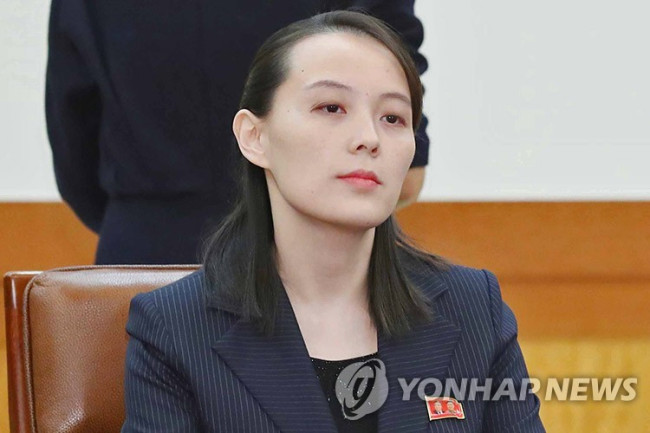 [Comprehensive] Kim Yo-jong: "Seoul’s Pitiful Plight Now That It Cannot Play War Games"… Mockery and Vitriol
Kim Yo-jong, Vice Department Director of the Workers' Party of Korea [Yonhap News] Kim Yo-jong, Vice Department Director of the Workers' Party of Korea and sister of North Korean leader Kim Jong-
[Comprehensive] Kim Yo-jong: "Seoul’s Pitiful Plight Now That It Cannot Play War Games"… Mockery and Vitriol
Kim Yo-jong, Vice Department Director of the Workers' Party of Korea [Yonhap News] Kim Yo-jong, Vice Department Director of the Workers' Party of Korea and sister of North Korean leader Kim Jong-
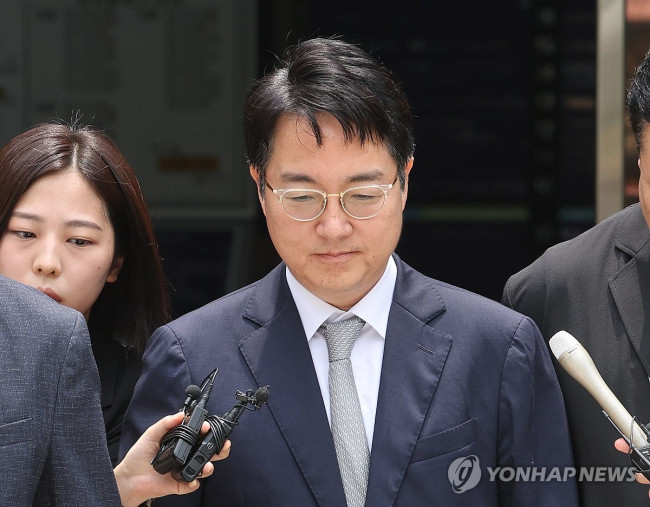 Shim Woo-jung indicted without detention for 'insurrection involvement'... Shim protests, claiming "disregard for evidence and legal principles"
Former Prosecutor General Sim Woo-jung [Yonhap News file photo]Former Prosecutor General Sim Woo-jung has been indicted on charges of participating in the December 3rd martial law insurrection and abu
Shim Woo-jung indicted without detention for 'insurrection involvement'... Shim protests, claiming "disregard for evidence and legal principles"
Former Prosecutor General Sim Woo-jung [Yonhap News file photo]Former Prosecutor General Sim Woo-jung has been indicted on charges of participating in the December 3rd martial law insurrection and abu
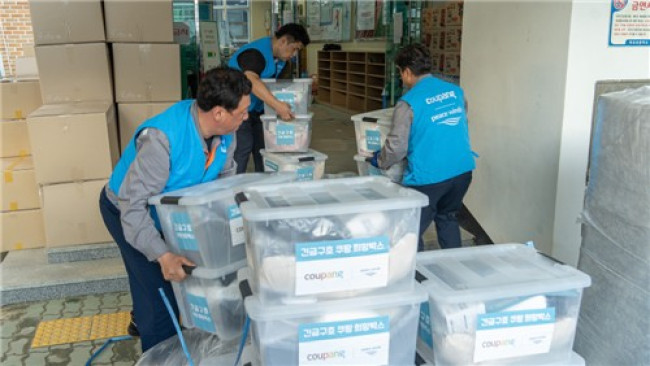 Coupang Donates 200 'Hope Boxes' to Flood Victims in Geoje
Support of 200 'Hope Boxes' [Courtesy of Coupang]Coupang announced on the 20th that it has provided 200 sets of 'Emergency Relief Coupang Hope Boxes' to Geoje, Gyeongsangnam-do.The previous day, Coupa
Coupang Donates 200 'Hope Boxes' to Flood Victims in Geoje
Support of 200 'Hope Boxes' [Courtesy of Coupang]Coupang announced on the 20th that it has provided 200 sets of 'Emergency Relief Coupang Hope Boxes' to Geoje, Gyeongsangnam-do.The previous day, Coupa
 [Park Myung-mi's Kyushu Travel] ② Kaiseki Cuisine, Eating a Garden in a Bowl
When you first encounter kaiseki cuisine, it can feel like playing house. The dishes are small, yet there are so many of them. When I first came to Japan, the food that truly moved me was a cours
[Park Myung-mi's Kyushu Travel] ② Kaiseki Cuisine, Eating a Garden in a Bowl
When you first encounter kaiseki cuisine, it can feel like playing house. The dishes are small, yet there are so many of them. When I first came to Japan, the food that truly moved me was a cours
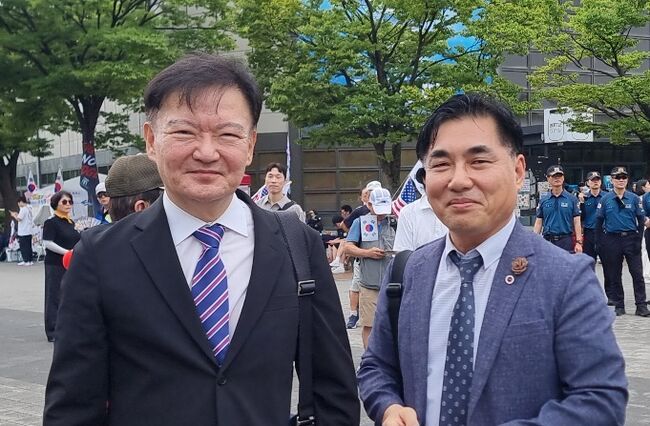 [Photo] Rep. Min Kyung-wook visits Olympic Park... "Restoring my honor after 6 years of being called a nutjob"
Min Kyung-wook, the person who ignited the movement to investigate election fraud. The sacrifice and courage of former National Assembly member Min Kyung-wook were instrumental in the creation of toda
[Photo] Rep. Min Kyung-wook visits Olympic Park... "Restoring my honor after 6 years of being called a nutjob"
Min Kyung-wook, the person who ignited the movement to investigate election fraud. The sacrifice and courage of former National Assembly member Min Kyung-wook were instrumental in the creation of toda
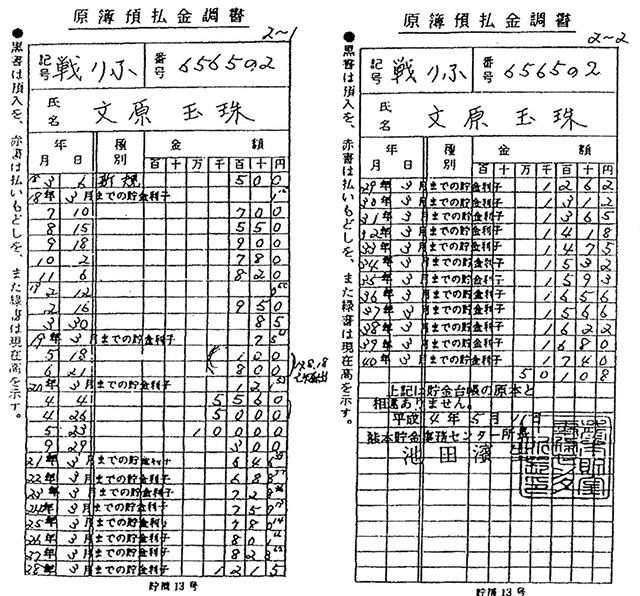 [Special Contribution: Songsan] How much was the 26,000 yen of "comfort woman" Moon Ok-ju worth?
Postal Savings Ledger of Moon Ok-juRecords of approximately 26,000 yen in military postal savings remain for Moon Ok-ju, who served as a "comfort woman" in Burma (present-day Myanmar). Looking at the
[Special Contribution: Songsan] How much was the 26,000 yen of "comfort woman" Moon Ok-ju worth?
Postal Savings Ledger of Moon Ok-juRecords of approximately 26,000 yen in military postal savings remain for Moon Ok-ju, who served as a "comfort woman" in Burma (present-day Myanmar). Looking at the
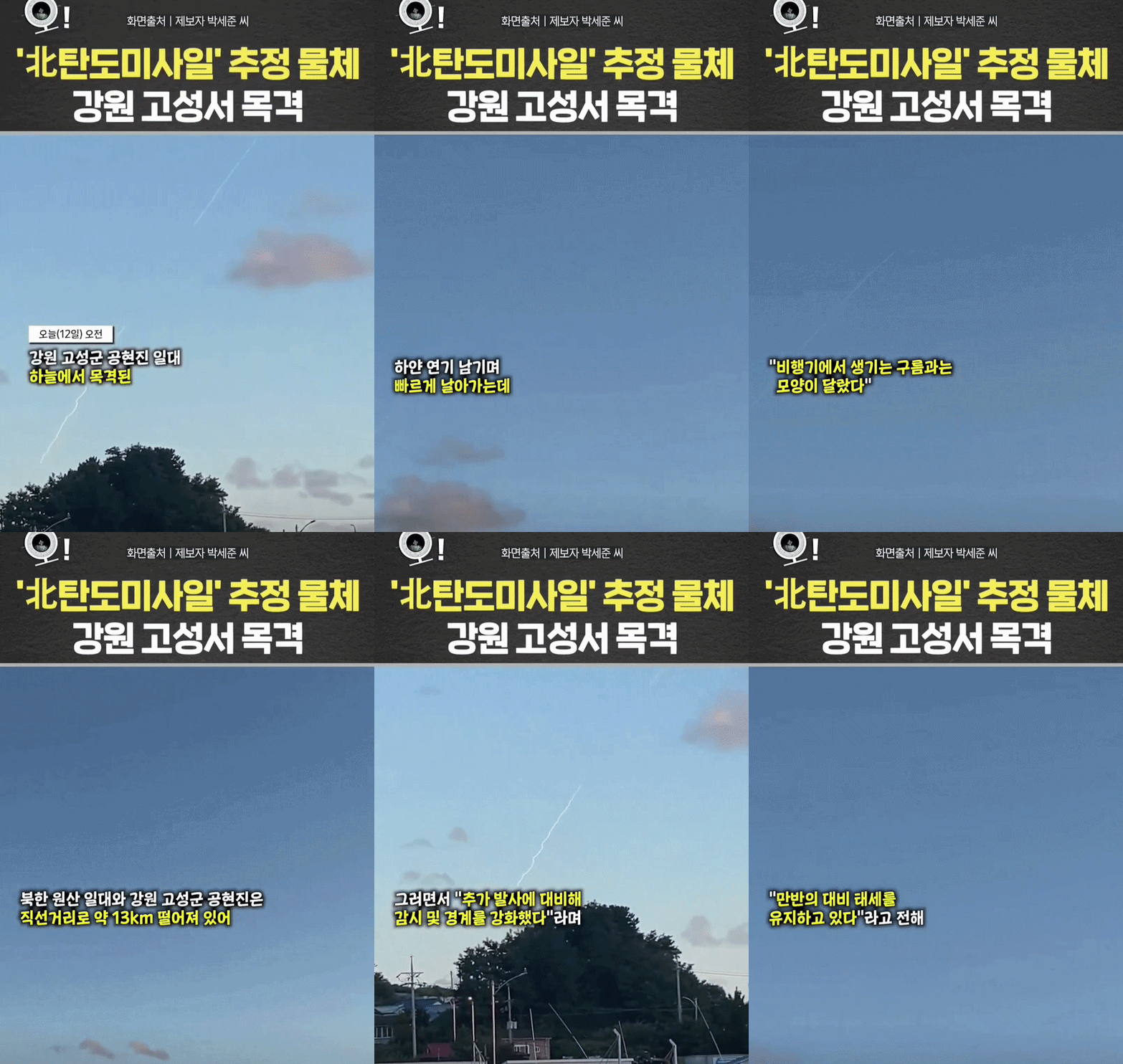 [Video] North Korean ballistic missile filmed by a civilian in Goseong, Gangwon-do
 [Editorial Cartoon] A Draconian Law That Undermines Freedom of Expression

 List
List