Hong Seok-hyun (left) and Kim Dae-jung. [Photo = Yonhap News]
An inside story from the media industry is particularly intriguing. According to multiple sources, Hong Seok-hyun (77), the owner of JoongAng Ilbo-JTBC, visited Lee Jae-myung, who was a presidential candidate last spring. It was a case of a media owner blatantly currying favor with a potential future leader. Persuading him with honeyed words, Hong told the leading presidential contender, "I will compensate for your weaknesses."
As the world is well aware, Lee’s weakness was his vulnerability regarding U.S. relations, and Hong offered to fill that gap by mobilizing his own personal networks and information. He even recommended personnel. The recommended figures include Lee Kyu-yeon, a former JoongAng Ilbo reporter who immediately became the first senior secretary for public relations in the Lee Jae-myung administration, and Wi Sung-lac, a pro-American figure appointed as Chief of the National Security Office. Aside from these two, there was another individual who immediately entered the Lee Jae-myung administration—also on Hong’s recommendation.
What does this anecdote signify? It shows that a prominent media owner was operating in such a clandestine and tactical manner behind the scenes of his newspaper and broadcasting management. That is who Hong Seok-hyun is. For over 30 years, he has been a man driven by the "dream of the presidency." Why, then, did he reach out to someone like Lee Jae-myung? With his age now in his mid-to-late 70s and the dream of the presidency drifting further away, he is struggling to maintain political influence by transforming into a "kingmaker."
Indeed, there are few, if any, precedents in the history of our media where a newspaper and broadcasting owner has behaved so abnormally as Hong Seok-hyun. While some media owners have moved between the media and political circles—such as the former Hankook Ilbo owner Jang Key-young—Hong’s character was entirely different. From the moment he became president of the JoongAng Ilbo, he persistently maneuvered, using his status as a bridgehead for his own presidential ambitions.
The management of his media company was merely a facade. It is no coincidence that the JoongAng Group, including JoongAng Ilbo-JTBC, is currently facing the threat of disintegration amidst the worst mismanagement. By its nature, the media must maintain a relationship of "neither too close nor too far" with power. Maintaining a critical distance from power is the professional duty of both the media owner and the reporter; suffice it to say, that concept never existed in Hong Seok-hyun’s dictionary.
Instead, like a moth to a flame, he rushed toward power first. If you examine it closely, everything deviates far from common sense, which is the true nature of Hong Seok-hyun. It began after his brother-in-law, Samsung Group Chairman Lee Kun-hee, appointed him as president of the JoongAng Ilbo in 1994. When exactly did he start dreaming of becoming president? People say it was shortly after his meeting with Roh Moo-hyun in early 2004.
At the time, Hong visited the Blue House accompanied by a political reporter for an interview marking the first anniversary of Roh's inauguration. Roh, who was then clashing with the Chosun Ilbo, praised him, saying, "Hong Seok-hyun of the JoongAng Ilbo is a man I can talk to." This was the beginning of a strange collusion between a left-wing power and a conservative media owner. Regardless, the narrative since then has been that Hong began fostering the delusional dream that "I am next after Roh Moo-hyun."
However, that assessment is only half right. It is crucially important that he received "tutoring" on reunification from Kim Dae-jung early on. In the fall of 2000, shortly after Hong had finished serving time for his own blemish—a massive tax evasion scandal—the situation unfolded. Seeking to appease him, Kim Dae-jung, along with Lee Hee-ho, invited the newly released Hong to the Blue House for a meal.
The leftist Kim Dae-jung was playing with a young, naive media owner. At the time, Kim even instilled the Sunshine Policy in him, and Hong’s view on North Korea became decidedly "red" around that time. What is certain is that Hong, already harboring the seeds of presidential ambition, was deeply affected then.
Through such processes, his presidential dream clearly took shape after he received the position of Ambassador to the U.S. from Roh Moo-hyun. Originally a man with a "father complex," the ambitious Hong Seok-hyun saw that position as a major chance for his presidential dream. What is this "father complex"? Hong wanted to fly higher than his father, Hong Jin-ki, who had served as Minister of Justice during the Syngman Rhee administration, moving beyond the role of a media owner.
In fact, shortly after receiving the ambassadorship, the dreams of "Icarus Hong Seok-hyun" inflated uncontrollably. He even had a plan to run for UN Secretary-General in 2006 using his position as ambassador as a springboard. It was a brilliant picture: by serving consecutive five-year terms for a total of 10 years, he would secure global fame, and then return home in glory to race toward the presidency.
However, Hong’s downfall began then. Everything fell apart when the Samsung X-file incident broke out in 2005. The scandal of a supposed media owner delivering political slush funds remains his greatest historical disgrace to this day. His reputation plummeted as it was confirmed that he, who appeared as a clean gentleman, was running money errands like a street hoodlum and even caused delivery accidents. Did his presidential dream fade after that?
Hardly. We remember how, in the final days of President Park Geun-hye, he picked up a suspicious tablet PC and shook it to engage in "impeachment blackmail." Surprisingly, it was a move that killed two birds with one stone. In doing so, he even ousted Samsung Group Vice Chairman Lee Jae-yong, seeing it as an opportunity to take over Samsung’s management rights after having already secured the JoongAng Ilbo. That eventually turned into a grudge between the uncle (Hong Seok-hyun) and his nephew (Lee Jae-yong), providing another trigger for the collapse of the JoongAng Group.
Despite these circumstances, those who don't know any better brag that Hong Seok-hyun is an "enlightened monarch of the media world." That is nothing more than sympathy coming mostly from the far-left. However, the public sentiment today is entirely different. Rumors even circulate that the collapse of the JoongAng Group is a "bankruptcy celebrated by the people." The free-market right wing applauds, calling it poetic justice.
What is certain is that Hong Seok-hyun’s management of his media company was nothing more than "30 years of evil deeds." The crisis of the JoongAng Group’s disintegration is a disaster brought upon itself by Hong Seok-hyun, the embodiment of greed. The core issue lies elsewhere: the 790 billion won (estimated by the coalition of individual creditors affected by the JoongAng Group crisis) in corporate bonds that he is suspected of issuing fraudulently while hiding capital impairment. This is significant.
Issuing corporate bonds that should never have been issued is a serious crime, and the father-son duo of Hong Seok-hyun and Hong Jeong-do are currently facing those allegations. The Financial Supervisory Service is also looking into this matter; therefore, the title of the next three columns regarding Hong Seok-hyun and Hong Jeong-do will be: "Public Fraudsters Hong Seok-hyun and Hong Jeong-do: Let’s Go to Prison." I ask for your continued interest.
Cho Woo-seok

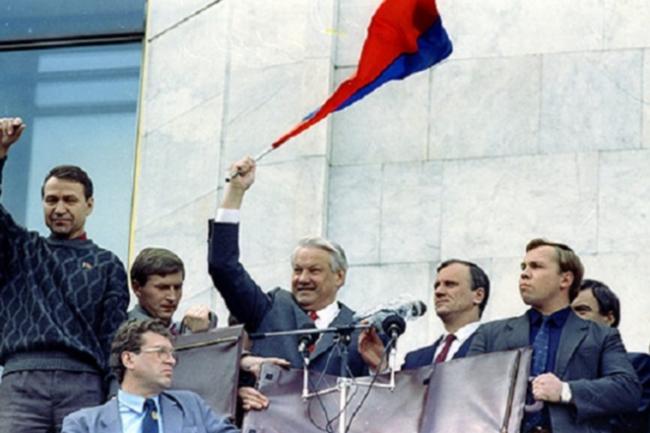 [Songsan Column | 80-Year History of the Pro-North Korean Left] ㉛ 1991: The Dissolution of the Soviet Union
On August 22, 1991, Russian President Boris Yeltsin waves the Russian tricolor flag, calling for resistance against the coup forces. On December 26, 1991, the Soviet Union (USSR), the world’s m
[Songsan Column | 80-Year History of the Pro-North Korean Left] ㉛ 1991: The Dissolution of the Soviet Union
On August 22, 1991, Russian President Boris Yeltsin waves the Russian tricolor flag, calling for resistance against the coup forces. On December 26, 1991, the Soviet Union (USSR), the world’s m
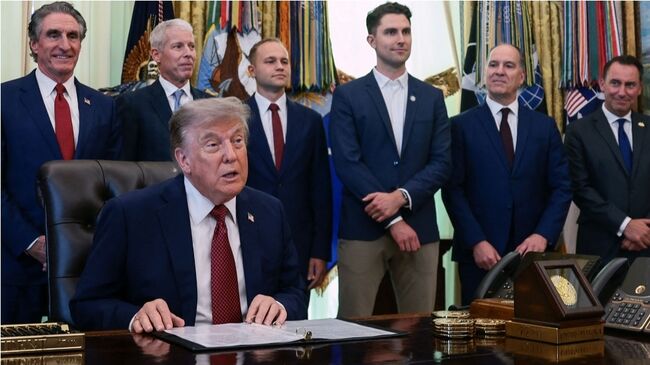 Trump: "Talks with Iran are underway... preparations for airstrikes are also complete"
President Donald Trump delivers remarks on U.S. nuclear innovation in the Oval Office at the White House in Washington, D.C., on July 24, 2026. (Reuters/Evelyn Hockstein)U.S. President Donald Trump st
Trump: "Talks with Iran are underway... preparations for airstrikes are also complete"
President Donald Trump delivers remarks on U.S. nuclear innovation in the Oval Office at the White House in Washington, D.C., on July 24, 2026. (Reuters/Evelyn Hockstein)U.S. President Donald Trump st
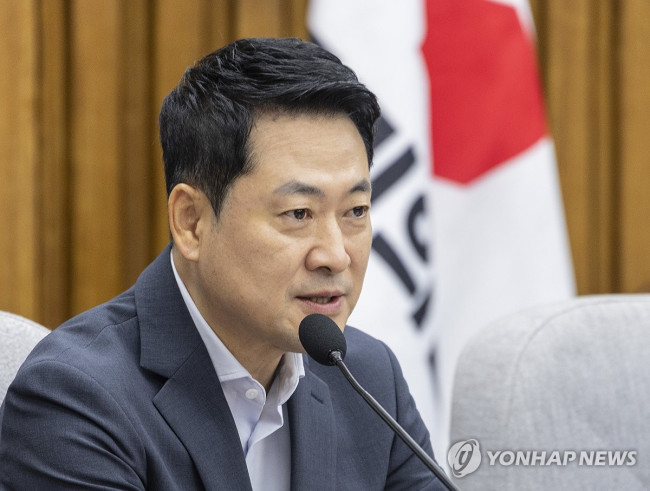 Jang Dong-hyeok to visit Gimhae and Daegu today… to attend a rally condemning the infringement of voting rights
People Power Party leader Jang Dong-hyeok speaks out against government real estate policy at the party's Real Estate Policy Normalization Forum held at the National Assembly on the 24th. [Yonhap News
Jang Dong-hyeok to visit Gimhae and Daegu today… to attend a rally condemning the infringement of voting rights
People Power Party leader Jang Dong-hyeok speaks out against government real estate policy at the party's Real Estate Policy Normalization Forum held at the National Assembly on the 24th. [Yonhap News
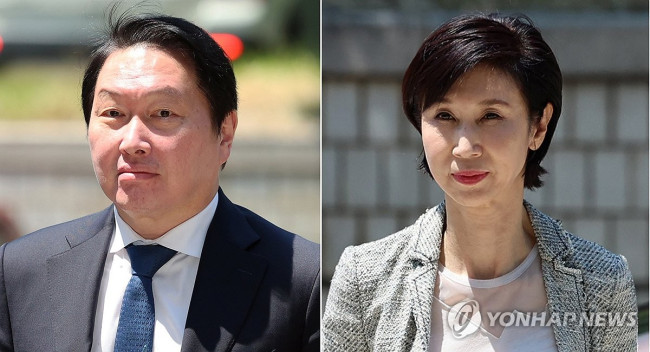 Court Rules: "Chey Tae-won to Pay Roh Soh-yeong 944 Billion Won"... Daily Interest of 130 Million Won
On the 24th, during the remand trial for the property division lawsuit between SK Group Chairman Chey Tae-won and Art Center Nabi Director Roh Soh-yeong held at the Seoul High Court in Seocho-gu, the
Court Rules: "Chey Tae-won to Pay Roh Soh-yeong 944 Billion Won"... Daily Interest of 130 Million Won
On the 24th, during the remand trial for the property division lawsuit between SK Group Chairman Chey Tae-won and Art Center Nabi Director Roh Soh-yeong held at the Seoul High Court in Seocho-gu, the
 FT "South Korean companies flush with cash from 'AI boom' eye U.S. M&A"
Samsung Electronics logo [Reuters=Yonhap News File Photo]South Korean companies, flush with cash from the artificial intelligence (AI) boom, are acquiring U.S. firms to circumvent tariffs expected und
FT "South Korean companies flush with cash from 'AI boom' eye U.S. M&A"
Samsung Electronics logo [Reuters=Yonhap News File Photo]South Korean companies, flush with cash from the artificial intelligence (AI) boom, are acquiring U.S. firms to circumvent tariffs expected und
 [New Book] Approaching the Truth of Gwangju… ‘The Memory of Two Gunshots, the Tears of Two Gwangjus’
Memories of the 5·18 Democratization Movement have long remained scattered, failing to converge into a single, unified meaning. The new book, "Memories of Two Gunshots, Tears of Two Gwangjus," brings
[New Book] Approaching the Truth of Gwangju… ‘The Memory of Two Gunshots, the Tears of Two Gwangjus’
Memories of the 5·18 Democratization Movement have long remained scattered, failing to converge into a single, unified meaning. The new book, "Memories of Two Gunshots, Tears of Two Gwangjus," brings
 [Byun Jong-pil Column] Investigative Authority for Supplementary Inquiries: For Whom Are We Abolishing It?
"Is it truly reasonable from the perspective of the public to abolish prosecutors' supplementary investigation powers based on the simple catchphrase of 'reforming the politically motivated prosecutio
[Byun Jong-pil Column] Investigative Authority for Supplementary Inquiries: For Whom Are We Abolishing It?
"Is it truly reasonable from the perspective of the public to abolish prosecutors' supplementary investigation powers based on the simple catchphrase of 'reforming the politically motivated prosecutio
 [Photo] Evidence of Election Fraud Flooding U.S. Media… Trump Had 2.7 Million Votes Stolen
 [Video] U.S. Semiquincentennial Air Show... 'Art in the Sky' streaks across New York
 [Editorial Cartoon] A Draconian Law That Undermines Freedom of Expression

 List
List