- NYT Reports on U.S. Intelligence Assessment… Experts Warn, "This War is Counterproductive to the Goal of Preventing Nuclear Proliferation"
 Photo of Iran's Supreme Leader Ayatollah Mojtaba Khamenei (left) and Ayatollah Ali Khamenei [EPA=Yonhap News file photo]
The New York Times (NYT) reported on the 24th (local time) that U.S. authorities believe Iran's new Supreme Leader, Ayatollah Seyyed Mojtaba Khamenei, has a greater interest in developing nuclear weapons than his predecessor and father, Ayatollah Seyyed Ali Khamenei.
Citing officials briefed by U.S. intelligence, the newspaper reported that U.S. intelligence agencies believe Mojtaba Khamenei and his hardline administration, which replaced the previous leadership eliminated by U.S. and Israeli strikes, harbor ambitions to develop advanced nuclear weapons.
U.S. officials have long believed that while Iran desired the capability to manufacture nuclear weapons, Ali Khamenei was hesitant, and that this stance was sincere.
Based on intercepted conversations from before the war and public statements, U.S. intelligence has assessed that Mojtaba Khamenei does not share his father's hesitation and is interested in developing advanced nuclear weaponry.
While the Biden administration has previously stated that Iran was seeking to develop early-stage nuclear weapons—providing a deterrent similar to a Hiroshima-class bomb—U.S. authorities estimate that Mojtaba Khamenei supports the development of thermonuclear warheads (hydrogen bombs) that could be miniaturized and mounted on long-range missiles.
U.S. officials told the NYT that while there are no signs Iran has resumed its nuclear program, it has taken certain steps to protect its nuclear assets, such as moving centrifuges to underground facilities in the central Iranian mountains of Kuh-e Korang, during the conflict last December and the recent war.
Regarding the ceasefire memorandum of understanding reached between the U.S. and Iran last month, the NYT interpreted Mojtaba Khamenei's remarks—that he allowed the agreement but did not agree to it "in principle"—as being aimed at the clause stating that "Iran does not pursue nuclear weapons."
The NYT noted that these intelligence assessments could serve as additional justification for the U.S. to escalate recent military actions directed at Iran. U.S. officials told the NYT that those within Iran who have argued that only nuclear weapons can deter U.S. and Israeli attacks believe their position has been significantly strengthened.
Rosemary Kelanic, director of the Middle East program at Defense Priorities, a U.S. think tank skeptical of U.S. military intervention, pointed out on the 23rd that the nuclear cooperation agreement the U.S. signed with Saudi Arabia has also significantly increased the likelihood of Iran pursuing nuclear weapons.
She added, "Iran now has a much greater incentive to weaponize [its nuclear program] to deter future attempts by the U.S. or Israel to collapse the regime or the state," and noted that "this war is counterproductive to the nominal goal of preventing nuclear proliferation in Iran."
What do you think of this article?

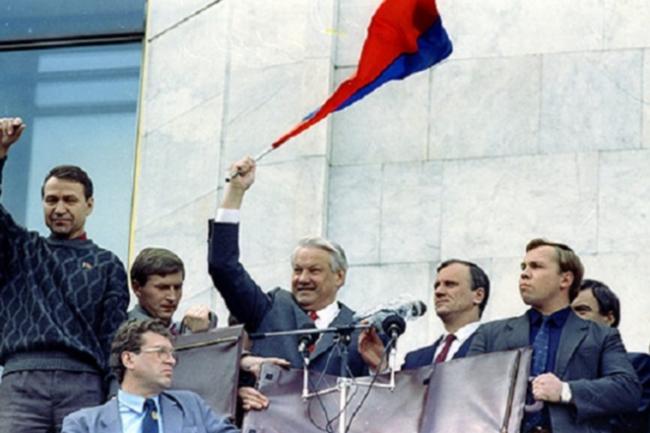 [Songsan Column | 80-Year History of the Pro-North Korean Left] ㉛ 1991: The Dissolution of the Soviet Union
On August 22, 1991, Russian President Boris Yeltsin waves the Russian tricolor flag, calling for resistance against the coup forces. On December 26, 1991, the Soviet Union (USSR), once the world’s m
[Songsan Column | 80-Year History of the Pro-North Korean Left] ㉛ 1991: The Dissolution of the Soviet Union
On August 22, 1991, Russian President Boris Yeltsin waves the Russian tricolor flag, calling for resistance against the coup forces. On December 26, 1991, the Soviet Union (USSR), once the world’s m
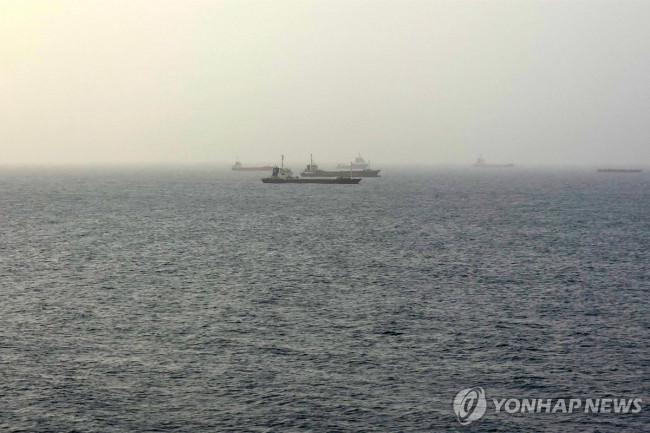 U.S. Military: "Iran maritime blockade remains in effect… 2 vessels neutralized, 12 forced to change course"
Gulf of Oman [AFP=Yonhap News]The U.S. military announced on the 25th (local time) that it is maintaining a full maritime blockade against Iran.U.S. Central Command (CENTCOM), which oversees the Middl
U.S. Military: "Iran maritime blockade remains in effect… 2 vessels neutralized, 12 forced to change course"
Gulf of Oman [AFP=Yonhap News]The U.S. military announced on the 25th (local time) that it is maintaining a full maritime blockade against Iran.U.S. Central Command (CENTCOM), which oversees the Middl
 Jang Dong-hyeok suggests unifying slogans, asking, "Is there anyone left who still denies these were rigged or flawed elections?"
People Power Party Representative Jang Dong-hyeok speaks in Daegu on the 25th. [Maeil Shinmun YouTube Video GIF]As the sweat and tears shed by patriotic citizens on the asphalt over the past decade ha
Jang Dong-hyeok suggests unifying slogans, asking, "Is there anyone left who still denies these were rigged or flawed elections?"
People Power Party Representative Jang Dong-hyeok speaks in Daegu on the 25th. [Maeil Shinmun YouTube Video GIF]As the sweat and tears shed by patriotic citizens on the asphalt over the past decade ha
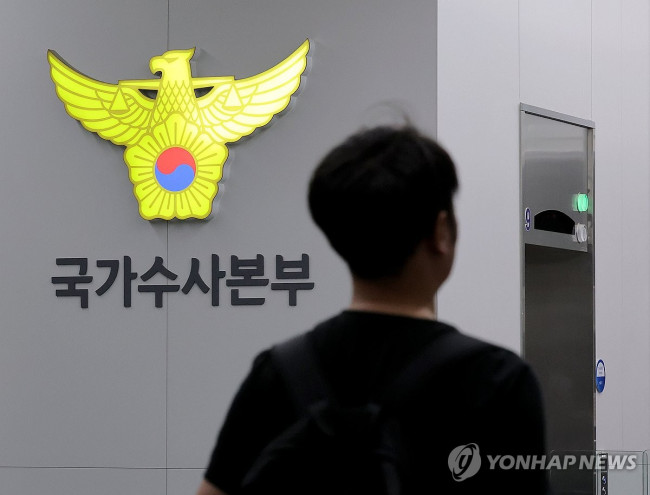 "Cannot Trust Police Investigations": Objections Double in 4 Years… 34,000 Cases in First Half of This Year
Police officials walk past the lobby of the National Office of Investigation (NOI) as the special investigation team looking into the Jang Yoon-gi case conducts a raid at the National Police Agency he
"Cannot Trust Police Investigations": Objections Double in 4 Years… 34,000 Cases in First Half of This Year
Police officials walk past the lobby of the National Office of Investigation (NOI) as the special investigation team looking into the Jang Yoon-gi case conducts a raid at the National Police Agency he
 Starbucks' 'Aero-cano', first launched in Korea, sells 5.5 million cups in 5 months
Starbucks Aerocano [Courtesy of Starbucks Korea. Yonhap News file photo] Starbucks Korea announced that its "Aerocano," which debuted in South Korea—a world first—on February 26, has surpasse
Starbucks' 'Aero-cano', first launched in Korea, sells 5.5 million cups in 5 months
Starbucks Aerocano [Courtesy of Starbucks Korea. Yonhap News file photo] Starbucks Korea announced that its "Aerocano," which debuted in South Korea—a world first—on February 26, has surpasse
 [New Book] Approaching the Truth of Gwangju… ‘The Memory of Two Gunshots, The Tears of Two Gwangjus’
For a long time, the memory of the May 18 Gwangju Democratization Movement has remained fragmented, never converging into a singular meaning. The new book, Memories of Two Gunshots, Tears of Two Gwang
[New Book] Approaching the Truth of Gwangju… ‘The Memory of Two Gunshots, The Tears of Two Gwangjus’
For a long time, the memory of the May 18 Gwangju Democratization Movement has remained fragmented, never converging into a singular meaning. The new book, Memories of Two Gunshots, Tears of Two Gwang
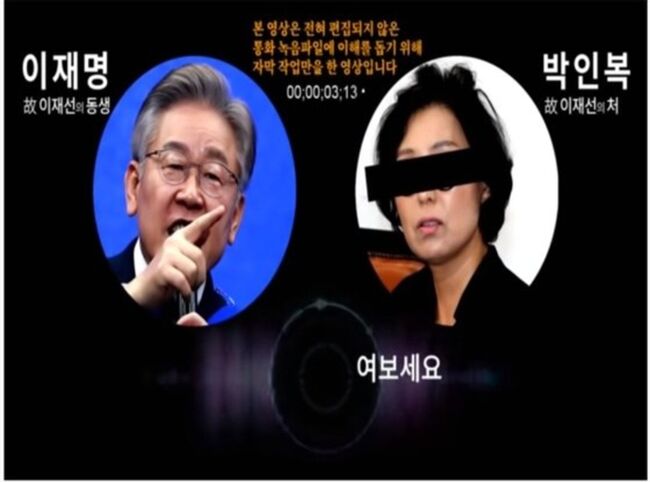 [Writer Park Joo-hyun’s Column] The ‘Controversy Over Recommended Summer Reading Lists’ Caused by Blind Idolatry
The cover of the full audio recording file of the so-called "sister-in-law profanity" call, released in 2021 by the pro-Moon Jae-in group "Awakened Citizens' Solidarity Party." [Source: Awakened Citiz
[Writer Park Joo-hyun’s Column] The ‘Controversy Over Recommended Summer Reading Lists’ Caused by Blind Idolatry
The cover of the full audio recording file of the so-called "sister-in-law profanity" call, released in 2021 by the pro-Moon Jae-in group "Awakened Citizens' Solidarity Party." [Source: Awakened Citiz
 [Photo] Evidence of Election Fraud Flooding U.S. Media… Trump Had 2.7 Million Votes Stolen
 [Video] U.S. Semiquincentennial Air Show... 'Art in the Sky' streaks across New York
 [Editorial Cartoon] A Draconian Law That Undermines Freedom of Expression

 List
List