- Chinese Corporate Acquisitions of U.S. Firms 'Slow Down'… "A Golden Age for South Korean M&A in the U.S."
 Samsung Electronics logo [Reuters=Yonhap News File Photo]
South Korean companies, flush with cash from the artificial intelligence (AI) boom, are acquiring U.S. firms to circumvent tariffs expected under the Donald Trump administration, the Financial Times (FT) reported on the 24th (local time).
According to South Korea's Ministry of Economy and Finance, foreign direct investment (FDI) by Korean firms this year has more than doubled compared to the same period last year, reaching $10.2 billion (approximately 15 trillion won), the highest level in five years.
"AI is fundamentally changing the landscape of M&A deals globally," said Sushil Bhatia, vice president of Goldman Sachs' Asia M&A division. "The U.S. has been the birthplace of innovation, and in Asia, Korea is at the center of it."
This trend is being led by Samsung Electronics and SK Hynix, the biggest beneficiaries of AI infrastructure development. The combined operating profit of these two companies this year is expected to reach an all-time high of approximately $400 billion (about 600 trillion won).
Last month, Samsung Electronics participated in a $100 million (approximately 146 billion won) funding round for ZutaCore, an AI data center cooling technology firm, and last year, it invested in Groq, an AI semiconductor company, as part of a $750 million (approximately 1.1 trillion won) funding round.
In January of this year, SK Hynix announced that it would invest in and collaborate with "innovative U.S. companies" to the tune of $10 billion (approximately 14.6 trillion won). Last year, it also supported a $120 million (approximately 176 billion won) funding round for the U.S. startup Avicena.
Other recent acquisitions by Korean companies include the agreement to acquire healthcare platform Zhil (by Samsung Electronics) and the acquisition of Onexia (by Doosan Robotics) last year.
Financial industry insiders noted that beyond semiconductor companies, firms in the shipbuilding, robotics, biotech, and advanced manufacturing sectors are also striving to secure local capabilities in the U.S. through M&A to mitigate geopolitical risks.
"Just a few years ago, cash-rich Chinese companies were actively paying premiums to acquire Western assets," explained Tae-won Jang, co-head of North Asia M&A at JPMorgan. "However, that path is virtually blocked due to changes in U.S.-China relations."
He added, "Now is the golden age for South Korean companies' M&A in the U.S. Driven by strong cash flow, the need for supply chain reshoring, and the requirement to secure market access, they are pursuing larger and more transformative deals."
What do you think of this article?

 [Songsan Column | 80-Year History of the Pro-North Korean Left] ㉛ 1991: The Dissolution of the Soviet Union
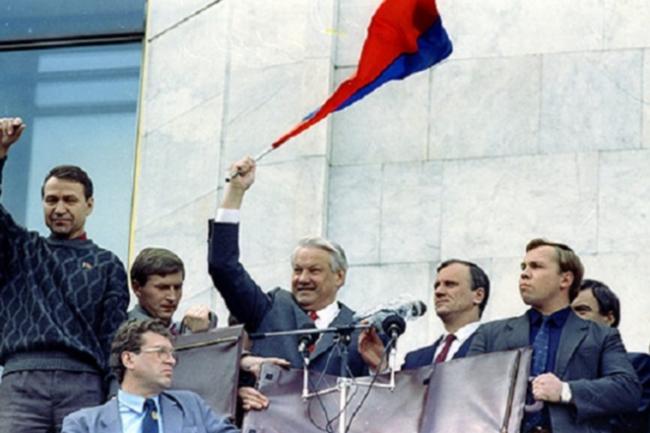
On August 22, 1991, Russian President Boris Yeltsin waves the Russian tricolor flag, calling for resistance against the coup forces. On December 26, 1991, the Soviet Union (USSR), the world’s m
[Songsan Column | 80-Year History of the Pro-North Korean Left] ㉛ 1991: The Dissolution of the Soviet Union
On August 22, 1991, Russian President Boris Yeltsin waves the Russian tricolor flag, calling for resistance against the coup forces. On December 26, 1991, the Soviet Union (USSR), the world’s m
 Trump: "Talks with Iran are underway... preparations for airstrikes are also complete"
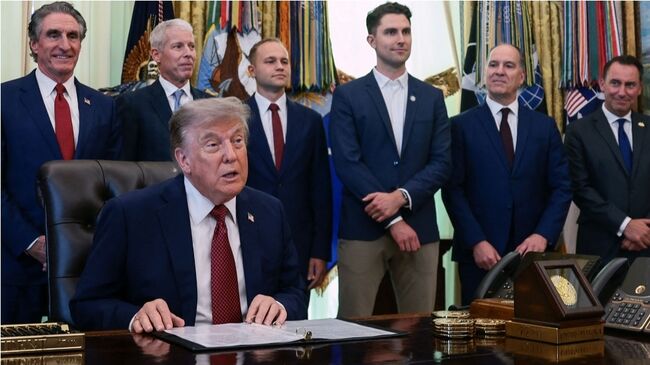
President Donald Trump delivers remarks on U.S. nuclear innovation in the Oval Office at the White House in Washington, D.C., on July 24, 2026. (Reuters/Evelyn Hockstein)U.S. President Donald Trump st
Trump: "Talks with Iran are underway... preparations for airstrikes are also complete"
President Donald Trump delivers remarks on U.S. nuclear innovation in the Oval Office at the White House in Washington, D.C., on July 24, 2026. (Reuters/Evelyn Hockstein)U.S. President Donald Trump st
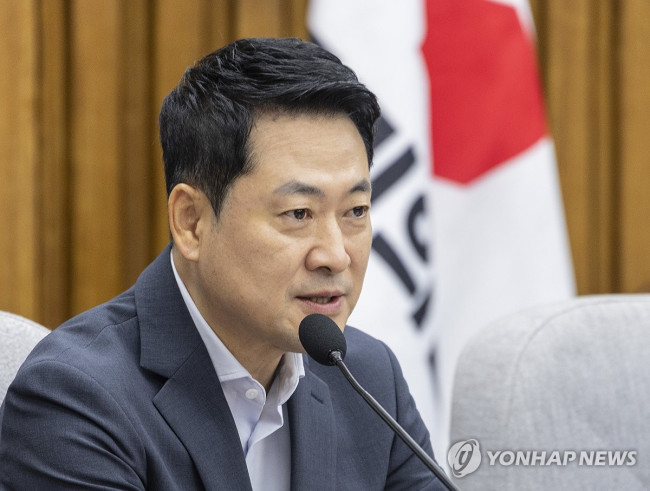 Jang Dong-hyeok to visit Gimhae and Daegu today… to attend a rally condemning the infringement of voting rights
People Power Party leader Jang Dong-hyeok speaks out against government real estate policy at the party's Real Estate Policy Normalization Forum held at the National Assembly on the 24th. [Yonhap News
Jang Dong-hyeok to visit Gimhae and Daegu today… to attend a rally condemning the infringement of voting rights
People Power Party leader Jang Dong-hyeok speaks out against government real estate policy at the party's Real Estate Policy Normalization Forum held at the National Assembly on the 24th. [Yonhap News
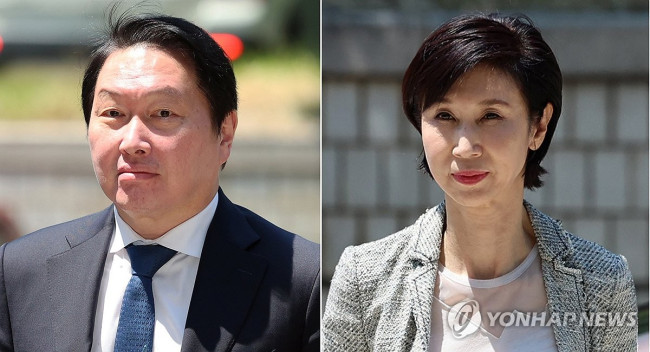 Court Rules: "Chey Tae-won to Pay Roh Soh-yeong 944 Billion Won"... Daily Interest of 130 Million Won
On the 24th, during the remand trial for the property division lawsuit between SK Group Chairman Chey Tae-won and Art Center Nabi Director Roh Soh-yeong held at the Seoul High Court in Seocho-gu, the
Court Rules: "Chey Tae-won to Pay Roh Soh-yeong 944 Billion Won"... Daily Interest of 130 Million Won
On the 24th, during the remand trial for the property division lawsuit between SK Group Chairman Chey Tae-won and Art Center Nabi Director Roh Soh-yeong held at the Seoul High Court in Seocho-gu, the
 [New Book] Approaching the Truth of Gwangju… ‘The Memory of Two Gunshots, the Tears of Two Gwangjus’
Memories of the 5·18 Democratization Movement have long remained scattered, failing to converge into a single, unified meaning. The new book, "Memories of Two Gunshots, Tears of Two Gwangjus," brings
[New Book] Approaching the Truth of Gwangju… ‘The Memory of Two Gunshots, the Tears of Two Gwangjus’
Memories of the 5·18 Democratization Movement have long remained scattered, failing to converge into a single, unified meaning. The new book, "Memories of Two Gunshots, Tears of Two Gwangjus," brings
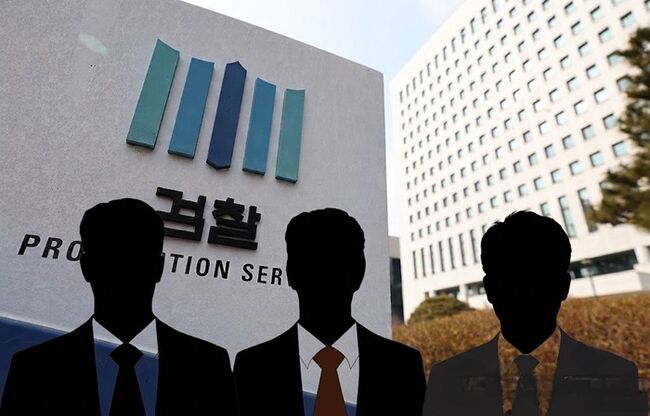 [Byun Jong-pil Column] Investigative Authority for Supplementary Inquiries: For Whom Are We Abolishing It?
"Is it truly reasonable from the perspective of the public to abolish prosecutors' supplementary investigation powers based on the simple catchphrase of 'reforming the politically motivated prosecutio
[Byun Jong-pil Column] Investigative Authority for Supplementary Inquiries: For Whom Are We Abolishing It?
"Is it truly reasonable from the perspective of the public to abolish prosecutors' supplementary investigation powers based on the simple catchphrase of 'reforming the politically motivated prosecutio
 [Photo] Evidence of Election Fraud Flooding U.S. Media… Trump Had 2.7 Million Votes Stolen
 [Video] U.S. Semiquincentennial Air Show... 'Art in the Sky' streaks across New York
 [Editorial Cartoon] A Draconian Law That Undermines Freedom of Expression

 List
List