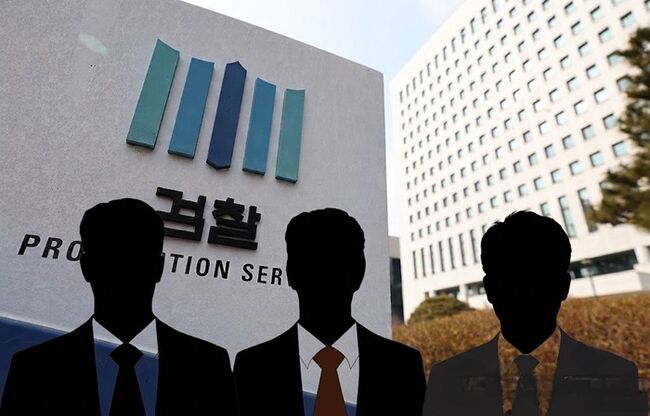
 "Is it truly reasonable from the perspective of the public to abolish prosecutors' supplementary investigation powers based on the simple catchphrase of 'reforming the politically motivated prosecution'?"
There is intense controversy surrounding the potential abolition of prosecutors' supplementary investigation powers. The debate on adjusting investigative powers between the prosecution and the police, which has been ongoing for a considerable time, has culminated in the dissolution of the Prosecution Service, and now a final battle is being fought over whether to strip prosecutors of their remaining supplementary investigation powers.
In the political sphere, the opposition party (People Power Party) has officially declared its opposition. On the other hand, while there appear to be some within the ruling party who are cautious about the abolition, the party leadership is pushing for it, asserting that "prosecutors have no need for supplementary investigation powers."
According to opinion polls, the opposition to the abolition seems to outweigh support by more than double. Why is the ruling bloc pushing for abolition despite majority public opposition? It is difficult to find any rational basis for this move other than political intent.
Setting aside the normative aspect, the separation of investigation and prosecution seems to have become an irreversible reality in practical terms. However, even if we accept this formal separation as a premise, a complete "divorce" between the two is neither possible nor appropriate.
From a teleological perspective, investigation and prosecution are structurally inseparable. An investigation is not an end in itself; its purpose is to initiate and maintain a public prosecution.
Therefore, even if investigation and prosecution are strictly separated into stages, it is logically inevitable—given the purpose of an investigation—that the prosecutor, as the authority responsible for prosecution, must review the appropriateness and completeness of the investigation at the indictment stage.
In this regard, even if the police conduct and complete an investigation independently of the prosecutor, the investigation remains constrained by its ultimate purpose: prosecution (the initiation and maintenance of the indictment).
Consequently, the prosecution authority should be able to intervene and participate in the police investigation to ensure that the purpose of the investigation is achieved. Furthermore, to guarantee that this purpose is properly fulfilled, it is legally and institutionally necessary to keep that path open. This is why the prosecutor's supplementary investigation power must be recognized.
Thus, recognizing supplementary investigation powers does not conflict with the demand to separate investigation and prosecution; rather, it should be viewed as an essential measure to strengthen the authority of the prosecution—to uphold the significance of the investigation and ensure the effective maintenance of the indictment.
The issue of whether to abolish these powers becomes even clearer when one considers the consequences. First, serious concerns arise from the perspective of crime prevention (criminal policy).
Since the adjustment of investigative powers, the police have gained investigative authority over all crimes, yet public confidence that they will exercise such immense power appropriately remains low. While their institutional authority has grown significantly, their corresponding capacity for accountability has not kept pace.
This is well-illustrated in real-world investigative scenarios. For instance, doubts regarding police investigative capability and reliability in cases of property crimes such as embezzlement, breach of trust, and fraud have been raised consistently since the power adjustment, yet there have been no reports of any meaningful changes to date.
Furthermore, the shocking conduct displayed by the police in the recent murder of a high school girl—a case involving a potential cover-up—serves as an empirical example of why supplementary investigation powers are necessary.
Moreover, there is the risk of a weakened response to power-related crimes. Crimes involving political power and those colluding with it are inherently difficult to uncover.
It is highly uncertain whether the police, whose credibility is diminished in various respects, have the investigative capacity and inclination to appropriately respond to the widespread abuse of power and corruption (so-called "great evils") in our society today.
The issue of an appropriate response to crime is not a matter that can end with the concentration of investigative power in one specific agency. It is a critical social issue that forms the foundation for the stability of citizens' lives and the sustainable development of the nation.
Considering the public's current grievances and suspicions regarding the police—such as allegations of political collusion or preferential treatment for certain factions—the risk that such negative aspects will continue to surface appears significant.
Ultimately, the ones who suffer in this tangled mess of issues and side effects are the citizens. Don't those in power always have an escape route prepared? Politicians who outwardly talk about "prosecution reform" while pushing ahead recklessly should put their hands on their hearts and think again.
Is your claim that supplementary investigation powers should be abolished a sincere appeal for the public interest, or is it mere conjecture? The same applies to those who have incessantly expanded the scope of victim protection under the guise of "victim-centeredness." Why do you choose to ignore the fact that the general public could be driven into becoming victims of crime in this specific matter?
In short, the abolition of supplementary investigation powers is a risky measure that currently does much more harm than good. Even without citing opinion polls, it is highly likely to become a disastrous move that weakens the foundations of public expectations and daily life, leading to greater instability.
Yet, if they insist on carrying it out through the "might makes right" approach of the powerful, they will find it difficult to escape criticism that this is a reckless attempt to serve their own partisan interests, completely disregarding the stability and safety of the people’s daily lives.
Currently, the state of our nation is deeply chaotic and confused. To be frank, it is no exaggeration to say that expecting the political sphere to identify every pain point of the public and provide appropriate solutions has become a luxury.
Rational discussion and debate between those in positions of responsibility seem to have long disappeared, not only from the National Assembly but from the public sphere as a whole. While they always speak of "people's livelihoods," any informed citizen knows they have no genuine interest in the sighs, laments, pain, and cries that erupt daily from the depths of ordinary lives.
In such a harsh reality, it is highly doubtful whether it is reasonable from the perspective of the public to abolish the prosecutor's supplementary investigation power based on the simple catchphrase of "reforming the politically motivated prosecution."
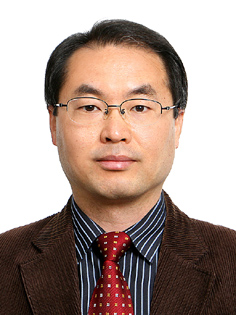
◆ Professor Byun Jong-pil
Professor of Law at Dongguk University, former member of the National Examination Committee, former President of the Korean Association of Comparative Criminal Law, and current Central Executive Committee member of the University Faculty Association.

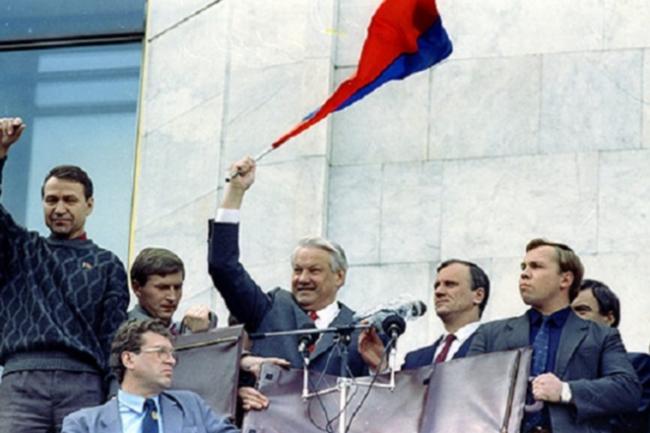 [Songsan Column | 80-Year History of the Pro-North Korean Left] ㉛ 1991: The Dissolution of the Soviet Union
On August 22, 1991, Russian President Boris Yeltsin waves the Russian tricolor flag, calling for resistance against the coup forces. On December 26, 1991, the Soviet Union (USSR), the world’s m
[Songsan Column | 80-Year History of the Pro-North Korean Left] ㉛ 1991: The Dissolution of the Soviet Union
On August 22, 1991, Russian President Boris Yeltsin waves the Russian tricolor flag, calling for resistance against the coup forces. On December 26, 1991, the Soviet Union (USSR), the world’s m
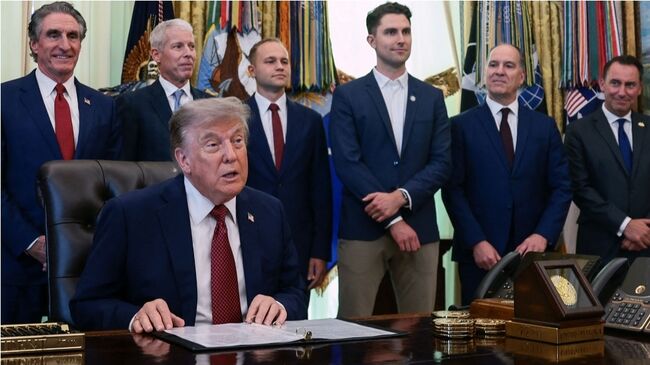 Trump: "Talks with Iran are underway... preparations for airstrikes are also complete"
President Donald Trump delivers remarks on U.S. nuclear innovation in the Oval Office at the White House in Washington, D.C., on July 24, 2026. (Reuters/Evelyn Hockstein)U.S. President Donald Trump st
Trump: "Talks with Iran are underway... preparations for airstrikes are also complete"
President Donald Trump delivers remarks on U.S. nuclear innovation in the Oval Office at the White House in Washington, D.C., on July 24, 2026. (Reuters/Evelyn Hockstein)U.S. President Donald Trump st
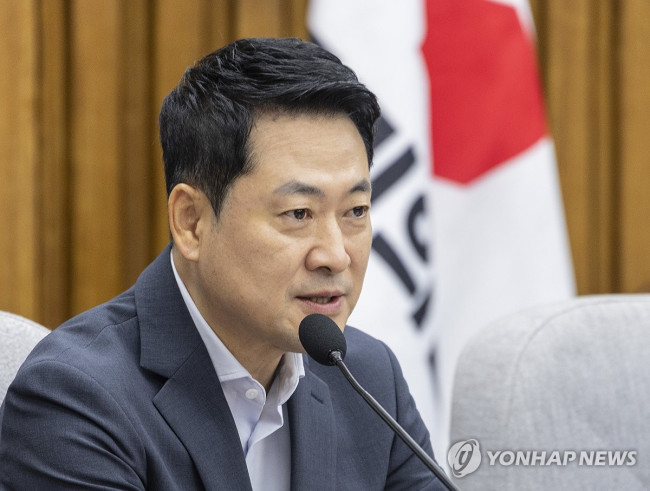 Jang Dong-hyeok to visit Gimhae and Daegu today… to attend a rally condemning the infringement of voting rights
People Power Party leader Jang Dong-hyeok speaks out against government real estate policy at the party's Real Estate Policy Normalization Forum held at the National Assembly on the 24th. [Yonhap News
Jang Dong-hyeok to visit Gimhae and Daegu today… to attend a rally condemning the infringement of voting rights
People Power Party leader Jang Dong-hyeok speaks out against government real estate policy at the party's Real Estate Policy Normalization Forum held at the National Assembly on the 24th. [Yonhap News
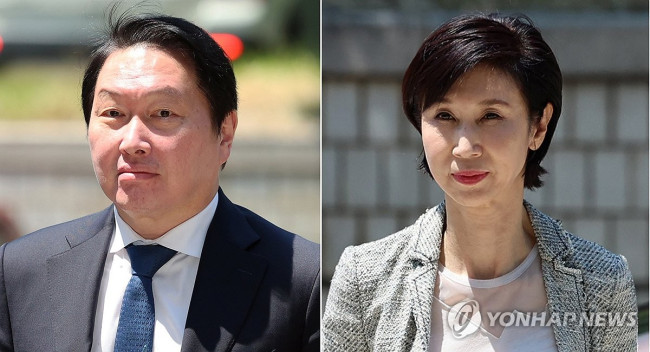 Court Rules: "Chey Tae-won to Pay Roh Soh-yeong 944 Billion Won"... Daily Interest of 130 Million Won
On the 24th, during the remand trial for the property division lawsuit between SK Group Chairman Chey Tae-won and Art Center Nabi Director Roh Soh-yeong held at the Seoul High Court in Seocho-gu, the
Court Rules: "Chey Tae-won to Pay Roh Soh-yeong 944 Billion Won"... Daily Interest of 130 Million Won
On the 24th, during the remand trial for the property division lawsuit between SK Group Chairman Chey Tae-won and Art Center Nabi Director Roh Soh-yeong held at the Seoul High Court in Seocho-gu, the
 FT "South Korean companies flush with cash from 'AI boom' eye U.S. M&A"
Samsung Electronics logo [Reuters=Yonhap News File Photo]South Korean companies, flush with cash from the artificial intelligence (AI) boom, are acquiring U.S. firms to circumvent tariffs expected und
FT "South Korean companies flush with cash from 'AI boom' eye U.S. M&A"
Samsung Electronics logo [Reuters=Yonhap News File Photo]South Korean companies, flush with cash from the artificial intelligence (AI) boom, are acquiring U.S. firms to circumvent tariffs expected und
 [New Book] Approaching the Truth of Gwangju… ‘The Memory of Two Gunshots, the Tears of Two Gwangjus’
Memories of the 5·18 Democratization Movement have long remained scattered, failing to converge into a single, unified meaning. The new book, "Memories of Two Gunshots, Tears of Two Gwangjus," brings
[New Book] Approaching the Truth of Gwangju… ‘The Memory of Two Gunshots, the Tears of Two Gwangjus’
Memories of the 5·18 Democratization Movement have long remained scattered, failing to converge into a single, unified meaning. The new book, "Memories of Two Gunshots, Tears of Two Gwangjus," brings
 [Photo] Evidence of Election Fraud Flooding U.S. Media… Trump Had 2.7 Million Votes Stolen
 [Video] U.S. Semiquincentennial Air Show... 'Art in the Sky' streaks across New York
 [Editorial Cartoon] A Draconian Law That Undermines Freedom of Expression

 List
List