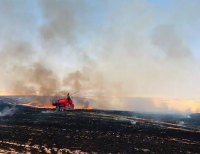
A drone carrying explosives attacked a city in northern Iraq where U.S. troops are stationed. Additionally, air raid sirens wailed across Bahrain on the 24th (local time), just hours after the U.S. military announced the completion of its 13th consecutive night of airstrikes against Iran.
Over the past week, the conflict has intensified as the U.S. has focused its airstrikes on Iran, while Tehran has retaliated by attacking vessels in the Strait of Hormuz and targeting U.S. assets and allies within the region.
The Iranian-backed Houthi rebels further increased pressure this week by attacking two Saudi oil tankers in the Red Sea, effectively acting on their threats to block alternative transit routes for regional crude oil.
The recent clashes highlight the fact that there is no clear end in sight for the war with Iran. The Iranian Ministry of Health reported that 3,434 people have died since the conflict began, a figure that stands in contrast to the 18 U.S. service members killed.
The U.S. and Israel launched attacks against Iran on February 28 with the goal of preventing it from acquiring nuclear weapons. However, the conflict has evolved into a struggle over control of the Strait of Hormuz, as Iran has chosen a strategy of attempting to force concessions by damaging the global economy.
Whenever the focus has shifted to the reopening of the Strait of Hormuz, the Trump administration has reiterated that the primary goal of the conflict is the elimination of Iran’s nuclear ambitions.
According to security officials in northern Iraq, the U.S.-led coalition shot down five explosive-laden drones over Erbil on Friday. No injuries or damages were reported.
An AP reporter in the city, the capital of Iraq's semi-autonomous Kurdish region, heard at least seven explosions and witnessed at least four columns of black smoke rising from or near the local airport base where U.S. troops are stationed.
The state-run Iraqi News Agency, citing the airport's director, reported that flight operations at the airport continued normally.
The Iranian Revolutionary Guard Corps (IRGC) warned residents of neighboring countries to stay away from bases housing U.S. troops. The IRGC claimed it had attacked a U.S. military base in Udairi, Kuwait, setting fire to and completely destroying three ammunition and storage warehouses, and also damaged a surveillance tower of the U.S. Navy's Fifth Fleet stationed in Bahrain.
Bahrain stated on Friday that it had intercepted and shot down an Iranian aerial attack, though it did not disclose any details regarding human or material casualties.
The Jordanian military announced on Friday that it had shot down seven Iranian missiles and six drones.
The semi-official news agencies Fars and ISNA reported that U.S. airstrikes had hit an IRGC naval base in northern Iran. Explosions were also reported overnight in Qeshm Island, an Iranian naval hub for assets including unmanned boats that could be used to attack shipping in the Strait of Hormuz, as well as in Isfahan province, which hosts one of Iran’s major air bases and nuclear facilities.
Additional airstrikes were reported to have hit the southwestern province of Khuzestan and the southern province of Fars.
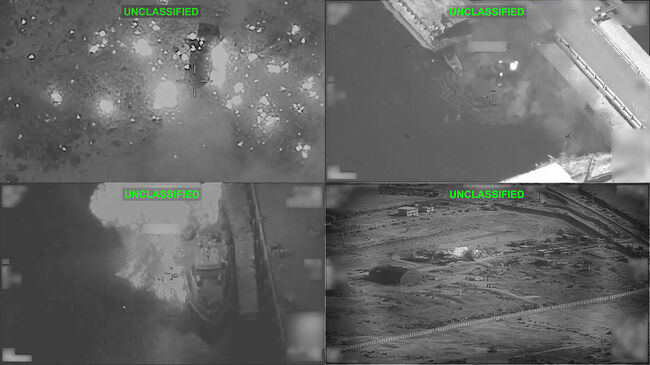
U.S. Central Command announced on Thursday, the 23rd, at 9:20 p.m. (EST) that it had "completed a 13th consecutive night of airstrikes against Iranian military targets." Central Command stated that it had "targeted Iranian military command centers, drone storage facilities, communication networks, coastal surveillance facilities, and maritime capabilities, further degrading Iran’s threats to civilian vessels and merchant ships transiting the Strait of Hormuz."
It also explained that "despite recent attacks by the Iranian Revolutionary Guard, international waterways remain open," adding that "merchant ships are navigating the strait freely with U.S. military support."
Currently, more than 50,000 U.S. troops are operating across the Middle East.
Iran’s ability to effectively blockade the strait equates to the power to disrupt the global economy, a leverage that Tehran believes will grant it immense bargaining power in any future negotiations.
Iran’s proxy force, the Houthi rebels, attempted to strengthen this leverage further by attacking two Saudi oil tankers in the Red Sea on Thursday. The Houthis claimed to have diverted 10 vessels on Thursday.
This has increased the risks for ships passing through another key route for Middle Eastern oil transport, causing international oil prices to spike sharply.
However, it appears the situation is not unfolding exactly as Iran planned.
Brent crude, the international benchmark, surged past $100 per barrel in the aftermath of the attacks, but fell back to around $97 on Friday. According to the American Automobile Association (AAA), the average price of gasoline in the U.S. rose slightly from $4.091 per gallon on Thursday, the 23rd, to $4.105 on Friday, the 24th.
The attack makes good on the Houthi rebels' threat to block the transit of Saudi-related vessels. Located at the southern tip of the Arabian Peninsula, this strait connects the Red Sea to the Gulf of Aden, and about 12% of global trade—including a quarter of the world's container traffic—passes through it.
For Saudi Arabia, which has been diverting millions of barrels of oil per day to the Red Sea port of Yanbu to bypass the Strait of Hormuz, this strait has become more critical than ever.
President Donald Trump has threatened "massive military retaliation" should the Houthi rebels continue their attacks on vessels.
President Trump also warned Iran regarding the ship attacks, stating via social media on Thursday that the U.S. would use seized Iranian sanction funds to pay for the repairs of vessels damaged in the war.
It is estimated that the Iranian funds frozen by the U.S. amount to approximately $100 billion.
To date, there have been no public signs of progress in any negotiation efforts.
Iranian Foreign Minister Abbas Araghchi stated that discussions with China and Russia are underway, referring to both nations as "friends." He vowed that Iran "will not bow to American bullying."
In an interview with the semi-official news agency Tasnim, he said, "We will neither be intimidated by threats nor yield to pressure."
U.S. NNP = Representative Reporter Hong Sung-gu / Special Correspondent NNP info@newsandpost.com

 [Songsan Column | 80-Year History of the Pro-North Korean Left] ㉛ 1991: The Dissolution of the Soviet Union
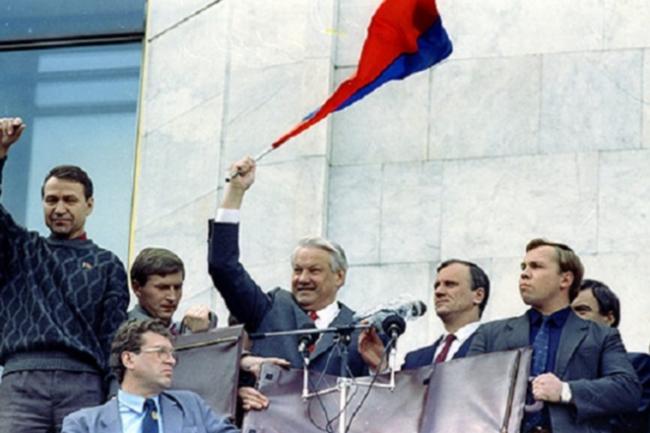
On August 22, 1991, Russian President Boris Yeltsin waves the Russian tricolor flag, calling for resistance against the coup forces. On December 26, 1991, the Soviet Union (USSR), the world’s m
[Songsan Column | 80-Year History of the Pro-North Korean Left] ㉛ 1991: The Dissolution of the Soviet Union
On August 22, 1991, Russian President Boris Yeltsin waves the Russian tricolor flag, calling for resistance against the coup forces. On December 26, 1991, the Soviet Union (USSR), the world’s m
 Trump: "Talks with Iran are underway... preparations for airstrikes are also complete"
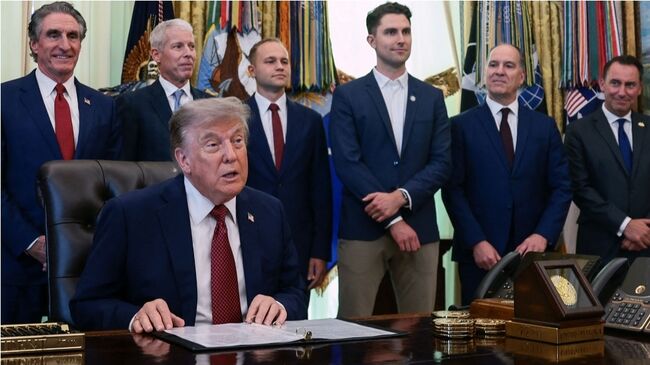
President Donald Trump delivers remarks on U.S. nuclear innovation in the Oval Office at the White House in Washington, D.C., on July 24, 2026. (Reuters/Evelyn Hockstein)U.S. President Donald Trump st
Trump: "Talks with Iran are underway... preparations for airstrikes are also complete"
President Donald Trump delivers remarks on U.S. nuclear innovation in the Oval Office at the White House in Washington, D.C., on July 24, 2026. (Reuters/Evelyn Hockstein)U.S. President Donald Trump st
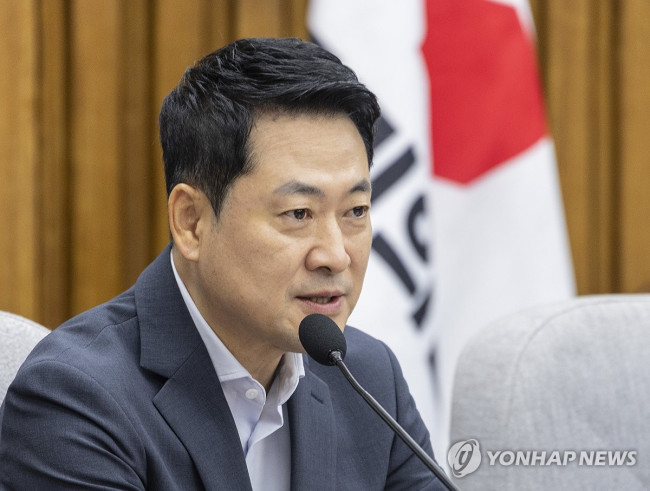 Jang Dong-hyeok to visit Gimhae and Daegu today… to attend a rally condemning the infringement of voting rights
People Power Party leader Jang Dong-hyeok speaks out against government real estate policy at the party's Real Estate Policy Normalization Forum held at the National Assembly on the 24th. [Yonhap News
Jang Dong-hyeok to visit Gimhae and Daegu today… to attend a rally condemning the infringement of voting rights
People Power Party leader Jang Dong-hyeok speaks out against government real estate policy at the party's Real Estate Policy Normalization Forum held at the National Assembly on the 24th. [Yonhap News
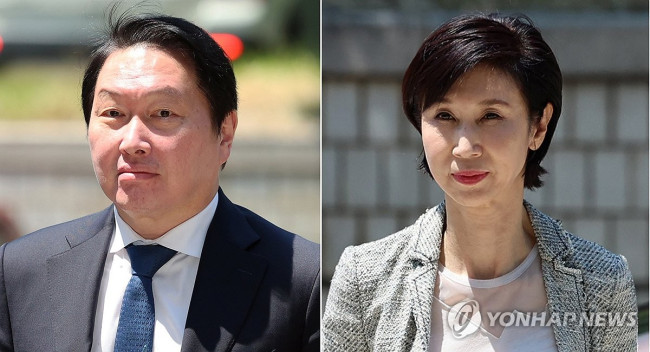 Court Rules: "Chey Tae-won to Pay Roh Soh-yeong 944 Billion Won"... Daily Interest of 130 Million Won
On the 24th, during the remand trial for the property division lawsuit between SK Group Chairman Chey Tae-won and Art Center Nabi Director Roh Soh-yeong held at the Seoul High Court in Seocho-gu, the
Court Rules: "Chey Tae-won to Pay Roh Soh-yeong 944 Billion Won"... Daily Interest of 130 Million Won
On the 24th, during the remand trial for the property division lawsuit between SK Group Chairman Chey Tae-won and Art Center Nabi Director Roh Soh-yeong held at the Seoul High Court in Seocho-gu, the
 FT "South Korean companies flush with cash from 'AI boom' eye U.S. M&A"
Samsung Electronics logo [Reuters=Yonhap News File Photo]South Korean companies, flush with cash from the artificial intelligence (AI) boom, are acquiring U.S. firms to circumvent tariffs expected und
FT "South Korean companies flush with cash from 'AI boom' eye U.S. M&A"
Samsung Electronics logo [Reuters=Yonhap News File Photo]South Korean companies, flush with cash from the artificial intelligence (AI) boom, are acquiring U.S. firms to circumvent tariffs expected und
 [New Book] Approaching the Truth of Gwangju… ‘The Memory of Two Gunshots, the Tears of Two Gwangjus’
Memories of the 5·18 Democratization Movement have long remained scattered, failing to converge into a single, unified meaning. The new book, "Memories of Two Gunshots, Tears of Two Gwangjus," brings
[New Book] Approaching the Truth of Gwangju… ‘The Memory of Two Gunshots, the Tears of Two Gwangjus’
Memories of the 5·18 Democratization Movement have long remained scattered, failing to converge into a single, unified meaning. The new book, "Memories of Two Gunshots, Tears of Two Gwangjus," brings
 [Byun Jong-pil Column] Investigative Authority for Supplementary Inquiries: For Whom Are We Abolishing It?
"Is it truly reasonable from the perspective of the public to abolish prosecutors' supplementary investigation powers based on the simple catchphrase of 'reforming the politically motivated prosecutio
[Byun Jong-pil Column] Investigative Authority for Supplementary Inquiries: For Whom Are We Abolishing It?
"Is it truly reasonable from the perspective of the public to abolish prosecutors' supplementary investigation powers based on the simple catchphrase of 'reforming the politically motivated prosecutio
 [Photo] Evidence of Election Fraud Flooding U.S. Media… Trump Had 2.7 Million Votes Stolen
 [Video] U.S. Semiquincentennial Air Show... 'Art in the Sky' streaks across New York
 [Editorial Cartoon] A Draconian Law That Undermines Freedom of Expression

 List
List